Summary
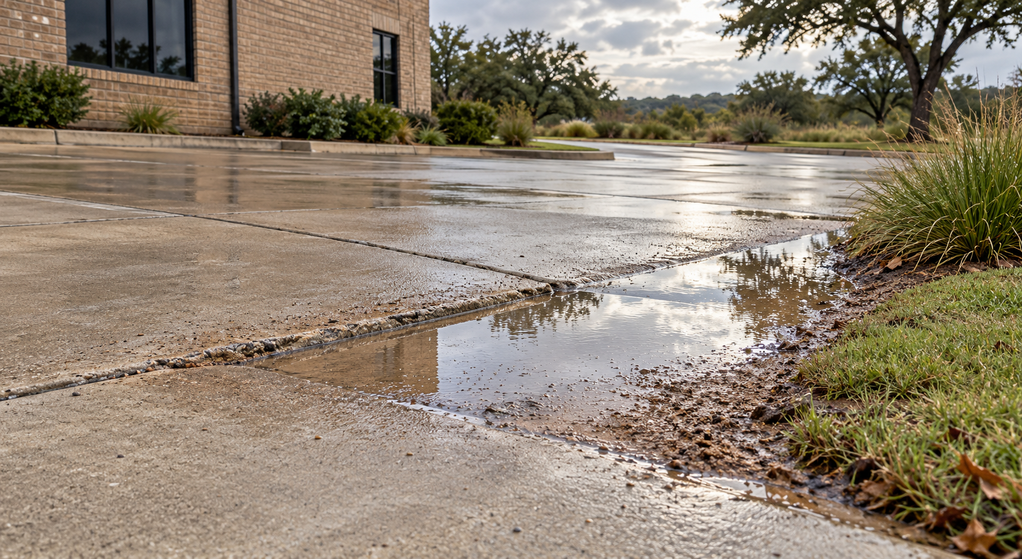
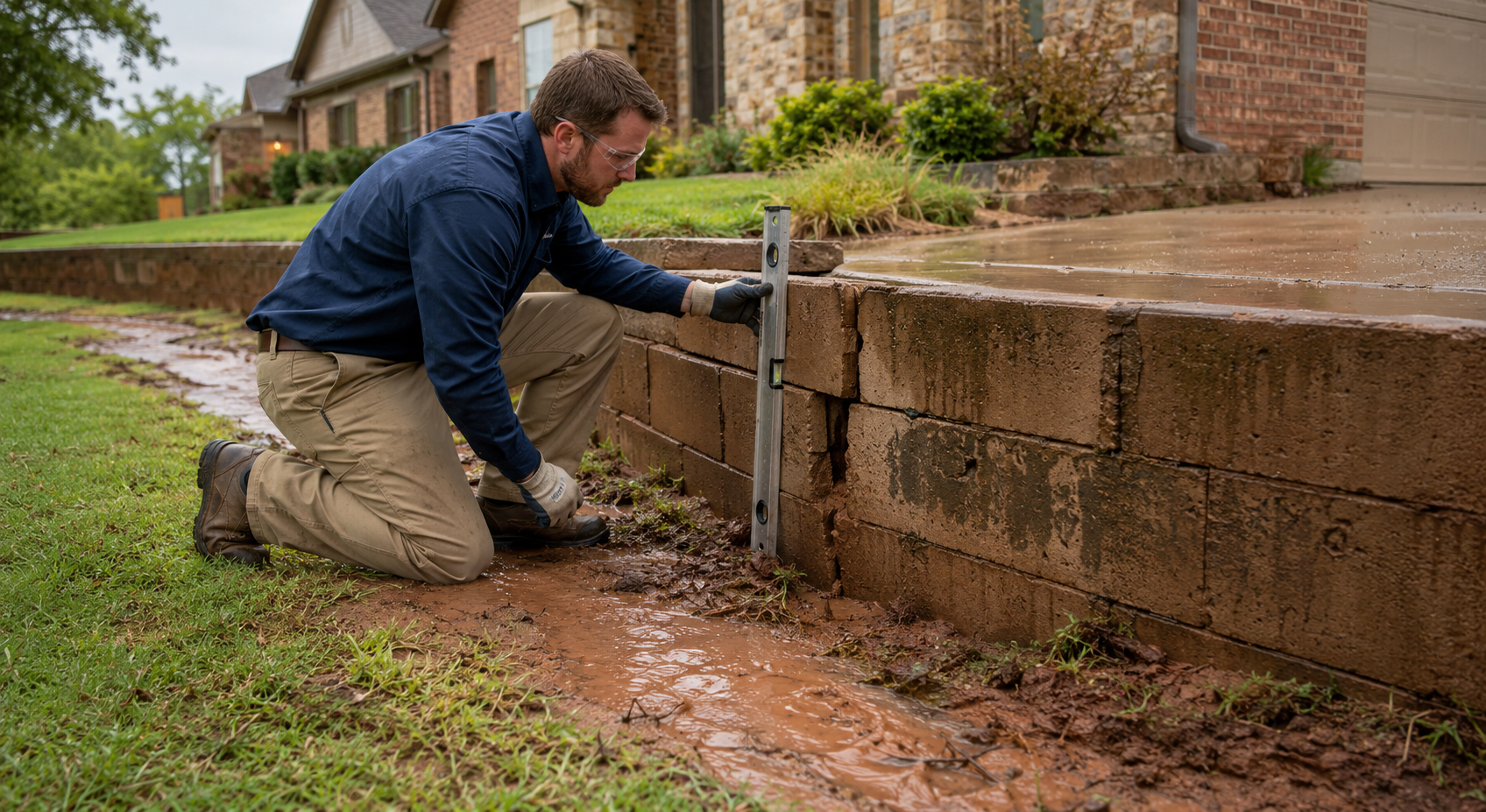
Water pools around concrete slabs when runoff reaches a low area without a workable exit. The cause can be surrounding grades, blocked drainage, concentrated roof or irrigation flow, or slab movement. For Fort Worth properties, the practical fix starts by mapping where water enters, where it stops, and where it should discharge.
A puddle beside a patio, driveway, or commercial slab does not automatically mean the concrete needs replacement. Water may be arriving from elsewhere, getting trapped against the edge, or collecting where the slab has moved. These conditions can look similar but call for different fixes.
Commercial concrete slab and flatwork services in Fort Worth cover projects where pavement elevations, entrances, and surrounding drainage need coordinated planning. Fort Worth Concrete Contractors provides residential and commercial concrete work across the area.
Map Exactly Where the Water Pools
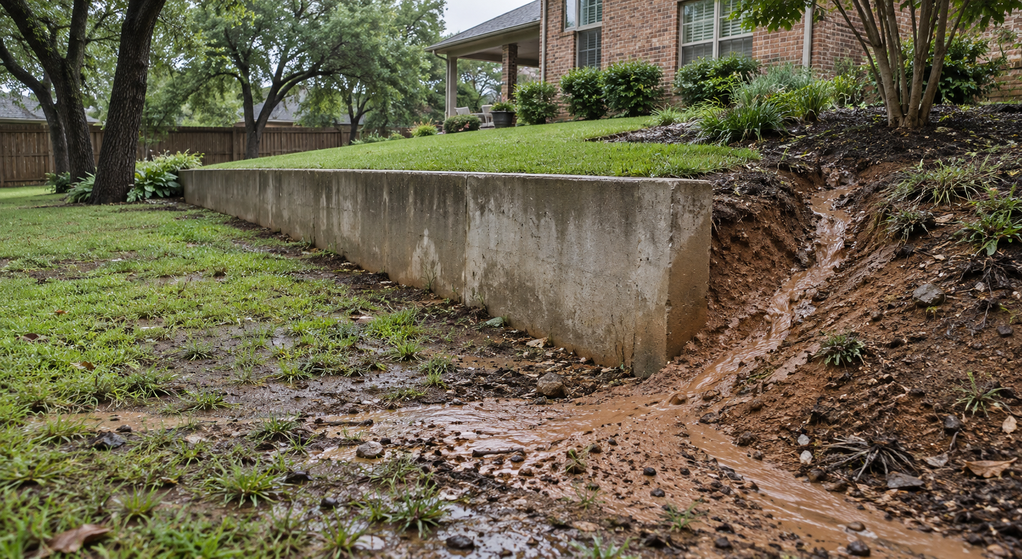
Separate water sitting on the slab from water collecting beside it. A puddle within the slab may indicate a finishing depression or settlement. A wet strip along an edge may point to low surrounding soil, raised landscape edging, or runoff arriving faster than it can leave.
Observe the area during rainfall from a safe location, then photograph it afterward. Record where water enters, the direction it travels, what stops it, and how long the same low area remains wet. Compare the pattern after irrigation as well.
Do not treat one drying-time threshold as a diagnosis. Shade, temperature, storm size, and soil conditions all affect drying. Repeated ponding in the same location is more useful evidence than one photograph.
Trace the Incoming Water Source
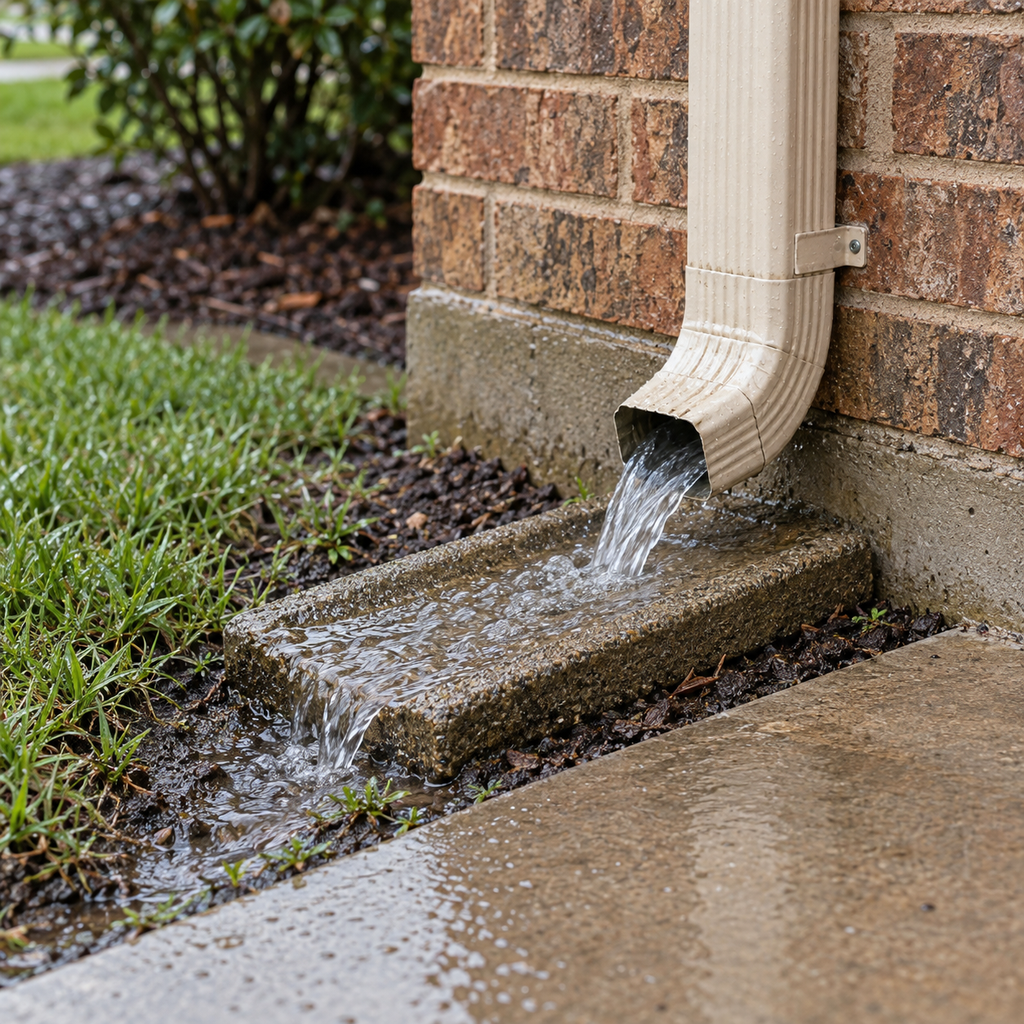
Check roof downspouts, overflowing gutters, irrigation overspray, uphill planting beds, and adjacent pavement that drains toward the slab. Redirecting concentrated water at the source can be more effective than adding another drain where the puddle appears.
A wet area that returns during dry weather deserves a check for irrigation or plumbing leakage before surface grading is changed.
Inspect the Grade and the Entire Exit Route
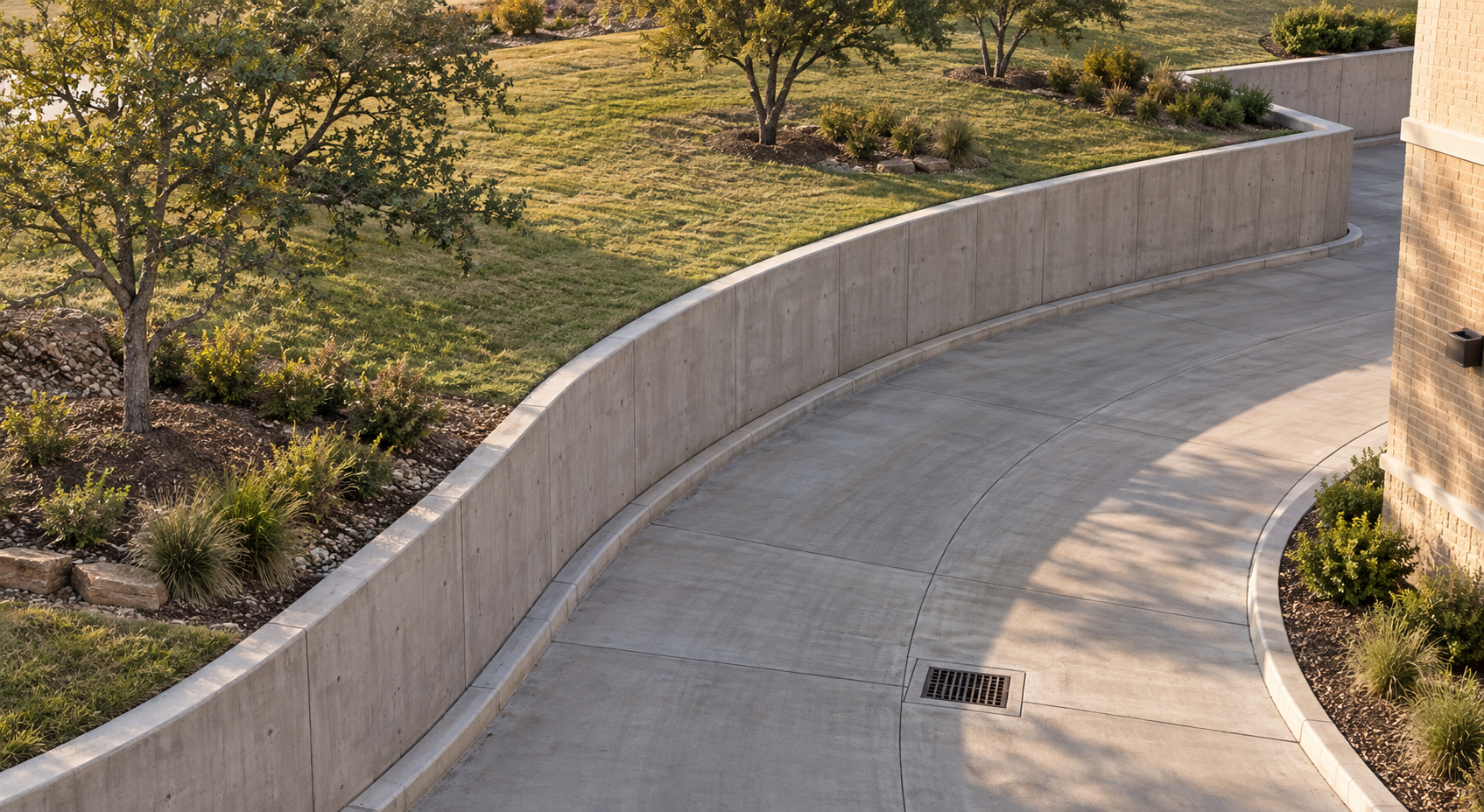
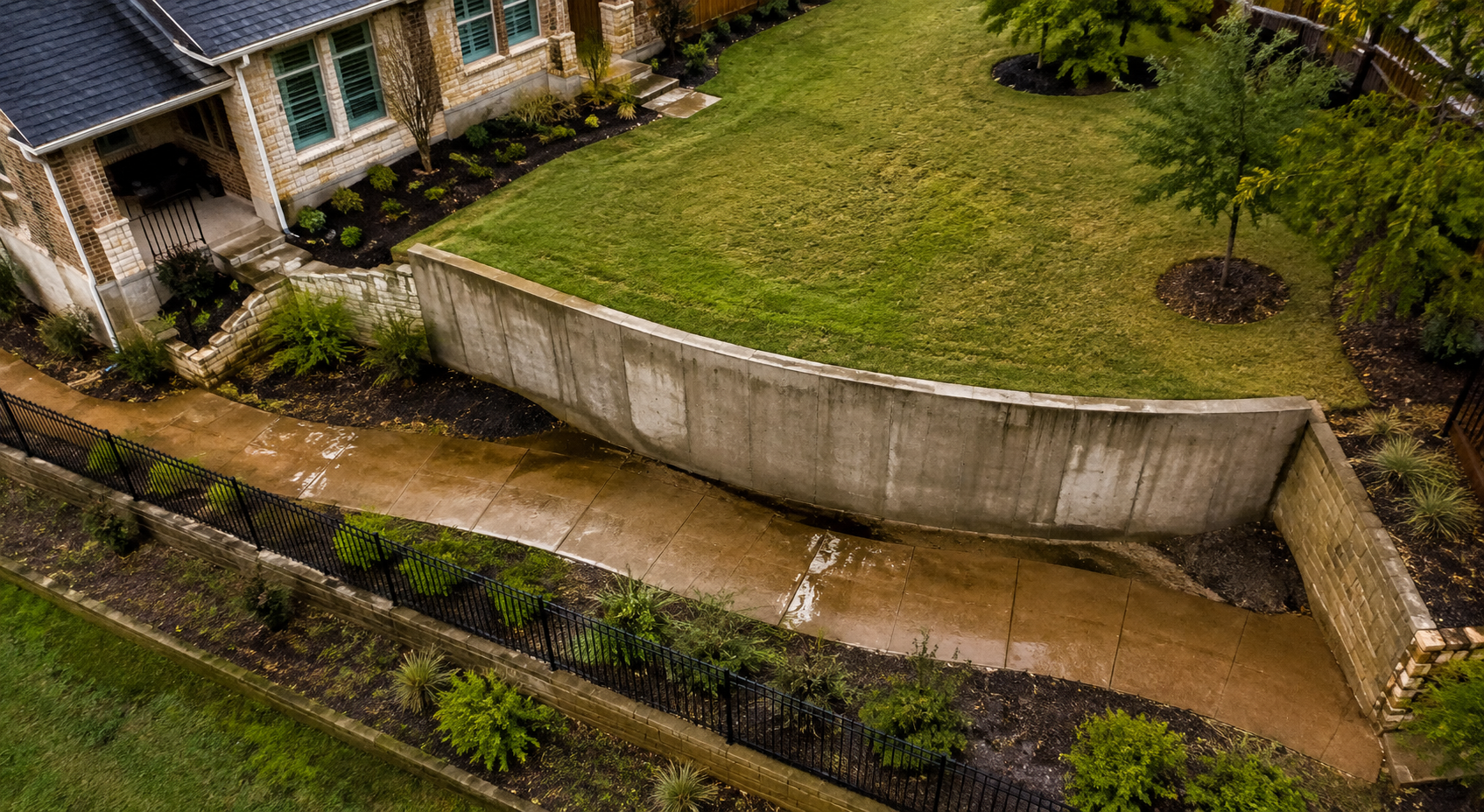
Concrete needs a continuous path that allows water to leave. Problems develop when a slab slopes toward a building, an adjoining surface creates a ridge, or a drain grate sits above the actual low point.
PNNL Building America guidance on grading and drainage around foundations recommends sloping hard surfaces away from foundations or providing drains where needed. The useful principle here is to check the whole route, including where collected water will discharge.
Look for mulch, sediment, leaves, roots, or grass blocking an outlet. A clear grate does not guarantee the downstream pipe is open. Routine inspection after correction fits the broader practices in The Importance of Proper Concrete Maintenance for Fort Worth Homeowners.
Check Whether the Slab or Its Support Has Changed
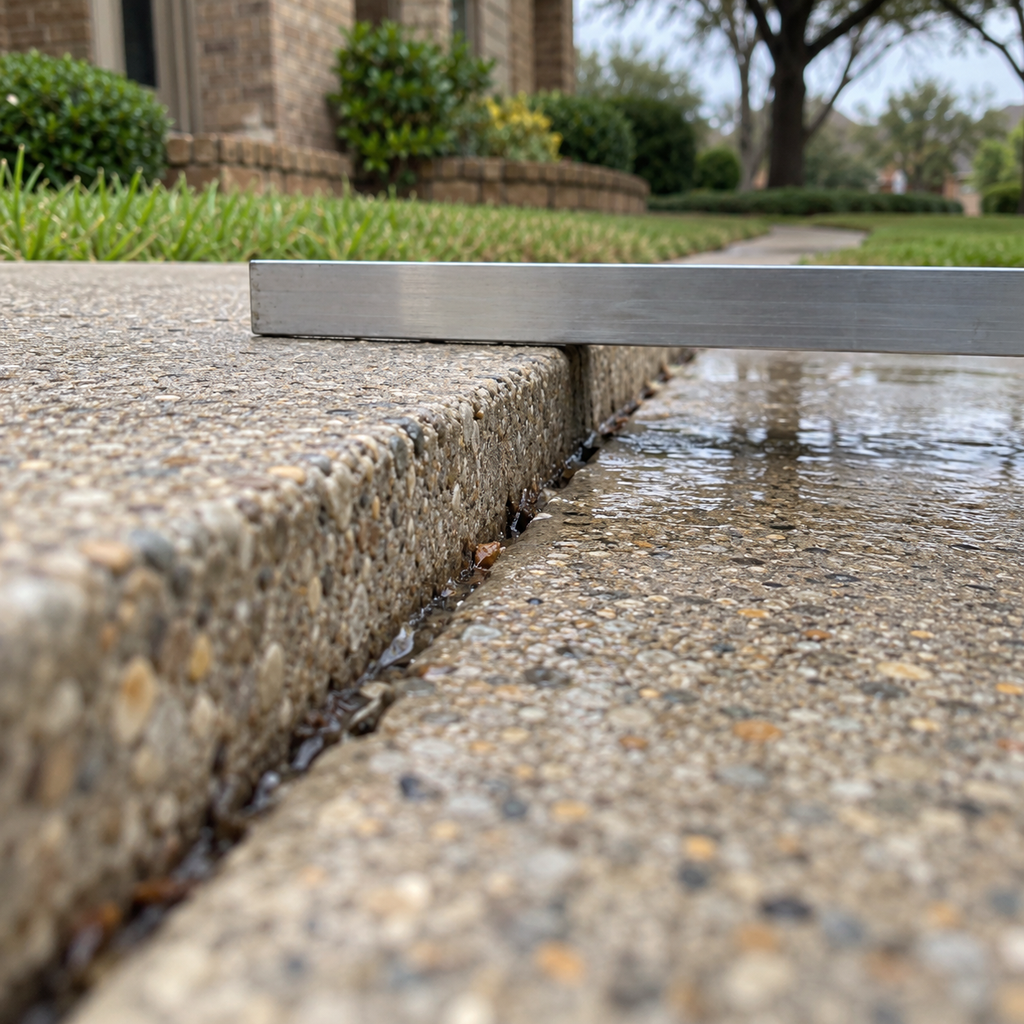
A surface that once drained well but now holds water deserves an elevation check. Poorly compacted fill, lost supporting material, or soil movement can change the relationship between neighboring panels.
Look for raised lips at joints, gaps beneath exposed edges, or cracks with a noticeable height difference. These signs do not establish the cause, but they help distinguish a drainage obstruction from possible movement.
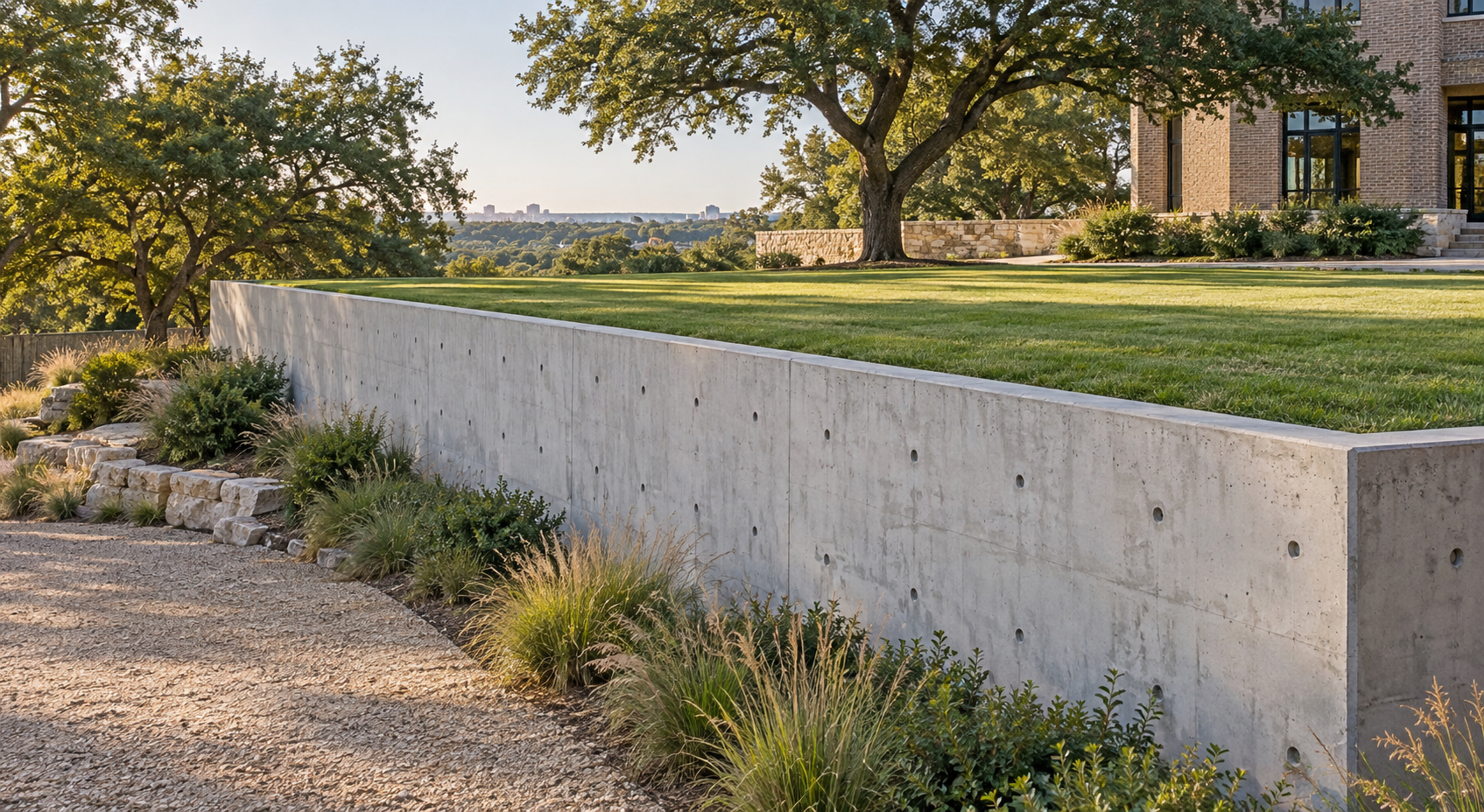
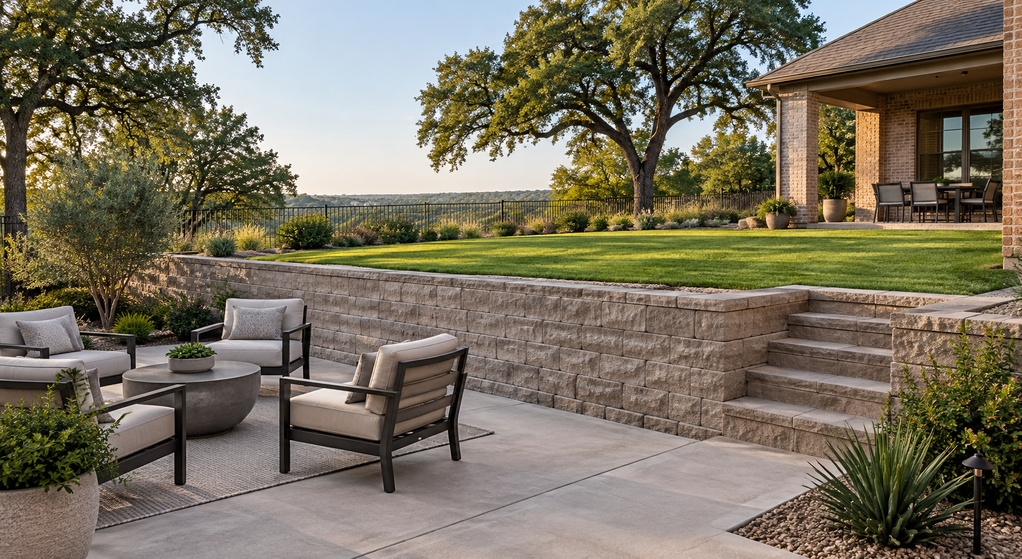
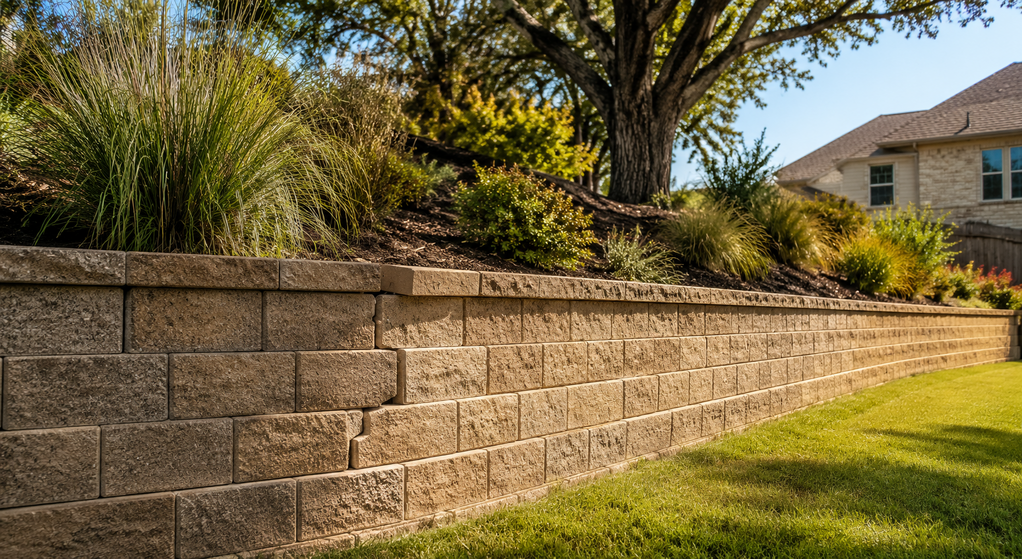
Where the slab sits beside retained ground, Why Soil Is Washing Out Around Your Retaining Wall in Fort Worth is relevant when runoff is carrying soil away from the shared boundary.
Choose the Fix That Matches the Water Route
- Blocked drainage: clean the complete route, not only the visible grate.
- Concentrated roof or irrigation water: correct the source before pavement work.
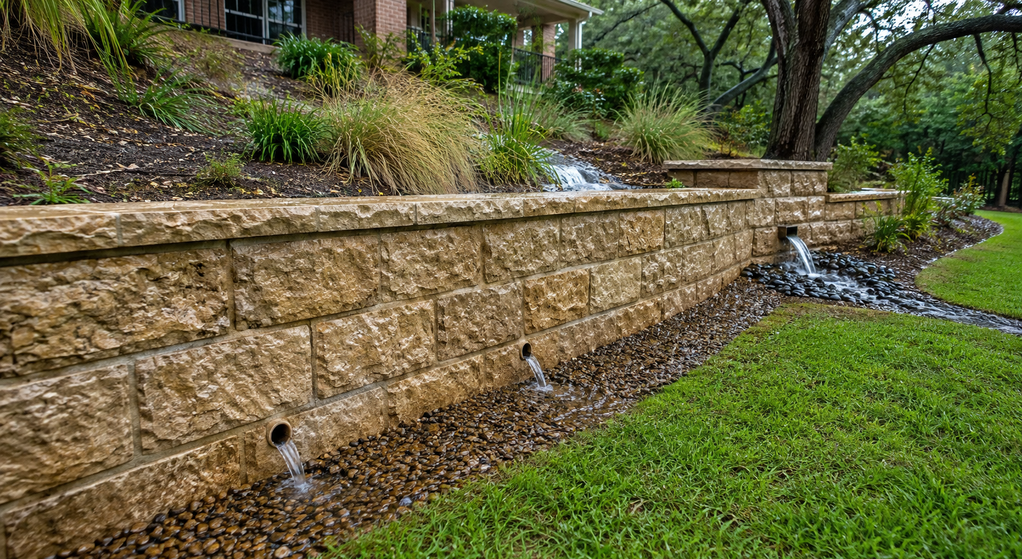
- Incorrect surrounding grade: regrade or add a designed drainage path with a workable outlet.
- Isolated sunken panel: consider professional lifting only if the slab condition, support, connections, and final drainage slope make it suitable.
- Extensive damage or unsuitable elevations: partial replacement may allow the base and finished slope to be rebuilt together.
Sealer and crack filler do not correct a backward slope. A thin surface patch may also fail where movement continues underneath it.
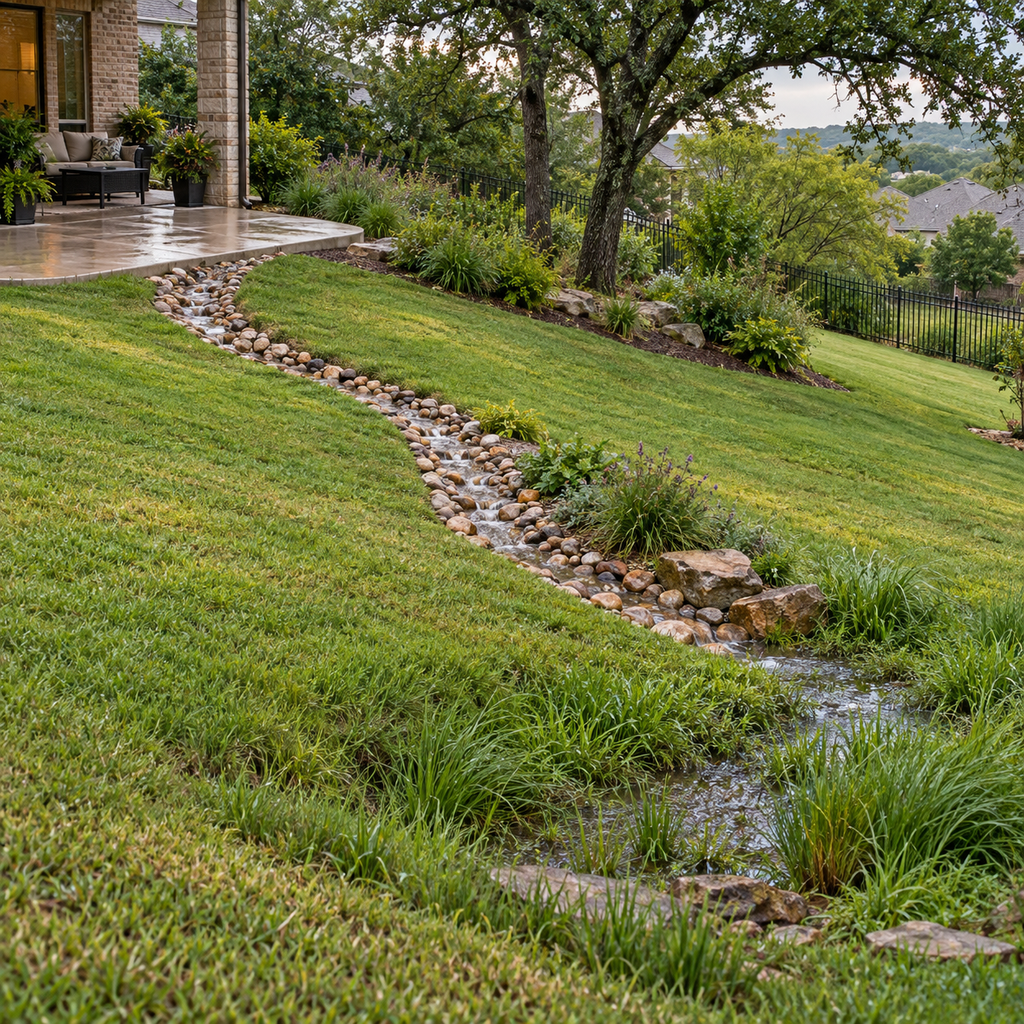
Require a Plan That Shows Where the Water Will Go
Before approving work, ask the contractor to identify the source, measured low points, proposed elevation changes, and discharge destination. For commercial properties, include pedestrian routes, delivery access, and how affected areas will remain usable during construction.
After the work, observe the next rainfall and confirm that water follows the intended route without creating a new ponding or erosion problem elsewhere. A durable correction is a continuous water path, not simply a drier-looking low spot.

Written By:
Kurt Manalastas
Home & Property Research Journalist
Kurt is a Home & Property Research Journalist who creates educational content on home services, property improvement, and residential decision-making. He turns contractor experience, industry standards, and verified research into clear, practical guidance that helps homeowners understand their options and make informed decisions.