Summary
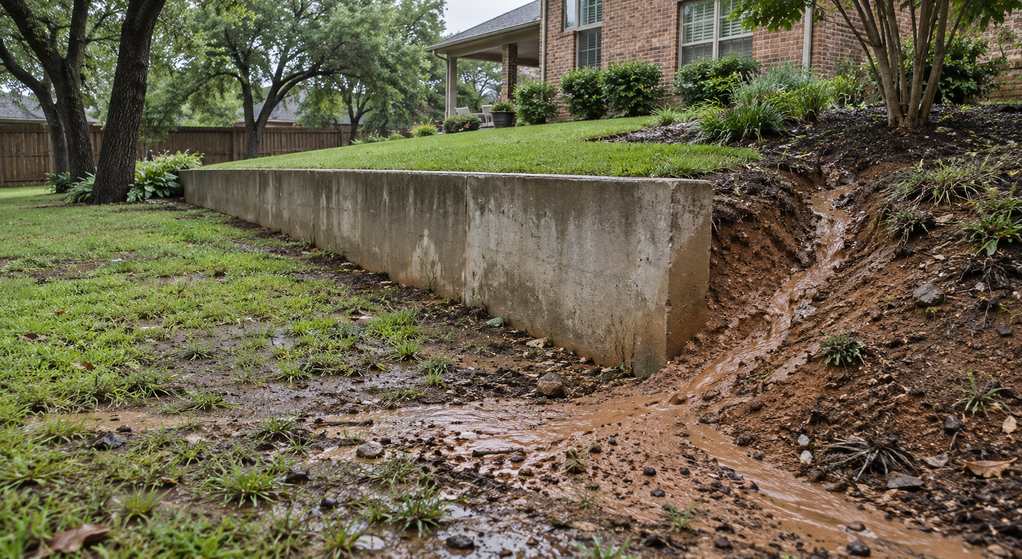
A concrete swale directs surface runoff through a shallow, erosion-resistant channel toward a suitable outlet. For Fort Worth properties, success depends on incoming grades, channel capacity, crossing safety, receiving conditions, and downstream discharge. Unlike a vegetated swale, concrete does not meaningfully infiltrate runoff; its complete route must be evaluated.
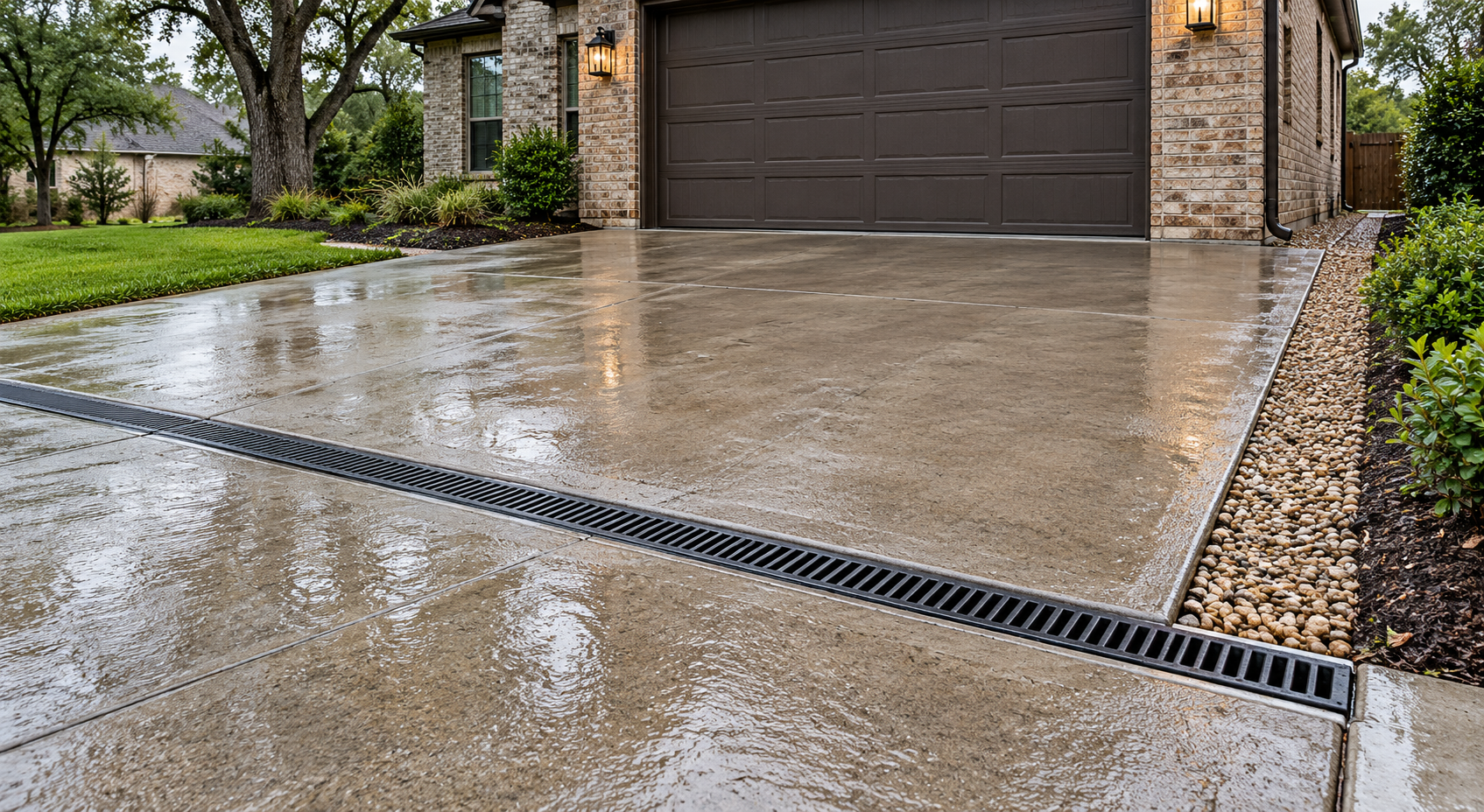
Rainwater crossing a driveway or flowing beside a building needs somewhere to go. A concrete swale provides a defined surface route, helping keep moving water from cutting through unprotected soil or spreading into unwanted areas. Its shallow, depressed shape collects runoff while its lengthwise slope guides the flow.
For properties combining parking, walkways, and buildings, drainage should be coordinated with commercial concrete construction services in Fort Worth. Fort Worth Concrete Contractors provides residential and commercial concrete work, including driveways and foundations. A swale proposal should explain how the channel will function alongside those surfaces, with elevations and a discharge destination established before construction.
For diagnosis before construction, the existing guide on why water pools around concrete slabs and what can be done about it explains where runoff or settlement may originate. The companion guide on when water damage means your concrete needs repair addresses damage already present in the slab. Neither substitutes for the swale hydraulic and outlet design.
What the Concrete Lining Changes
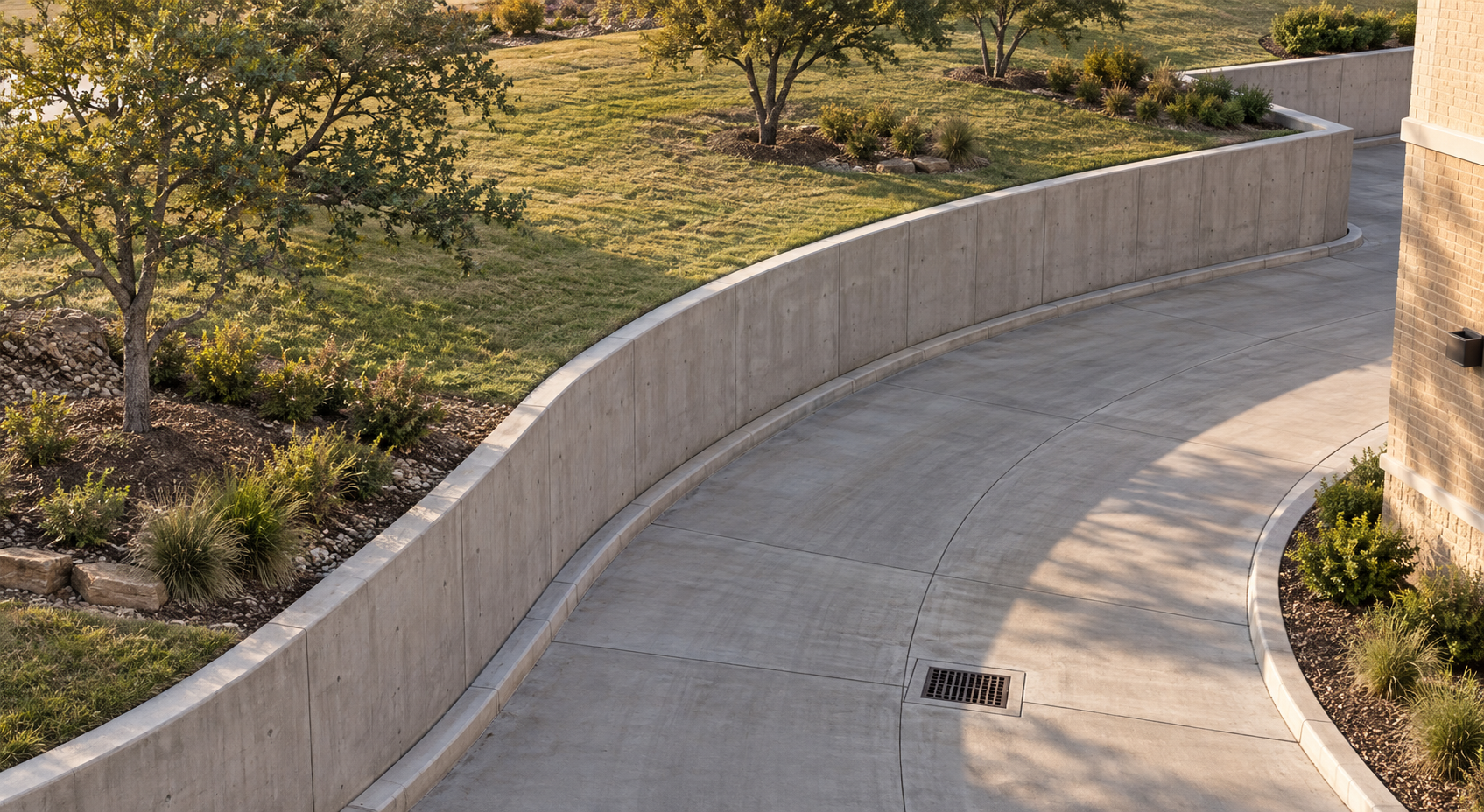
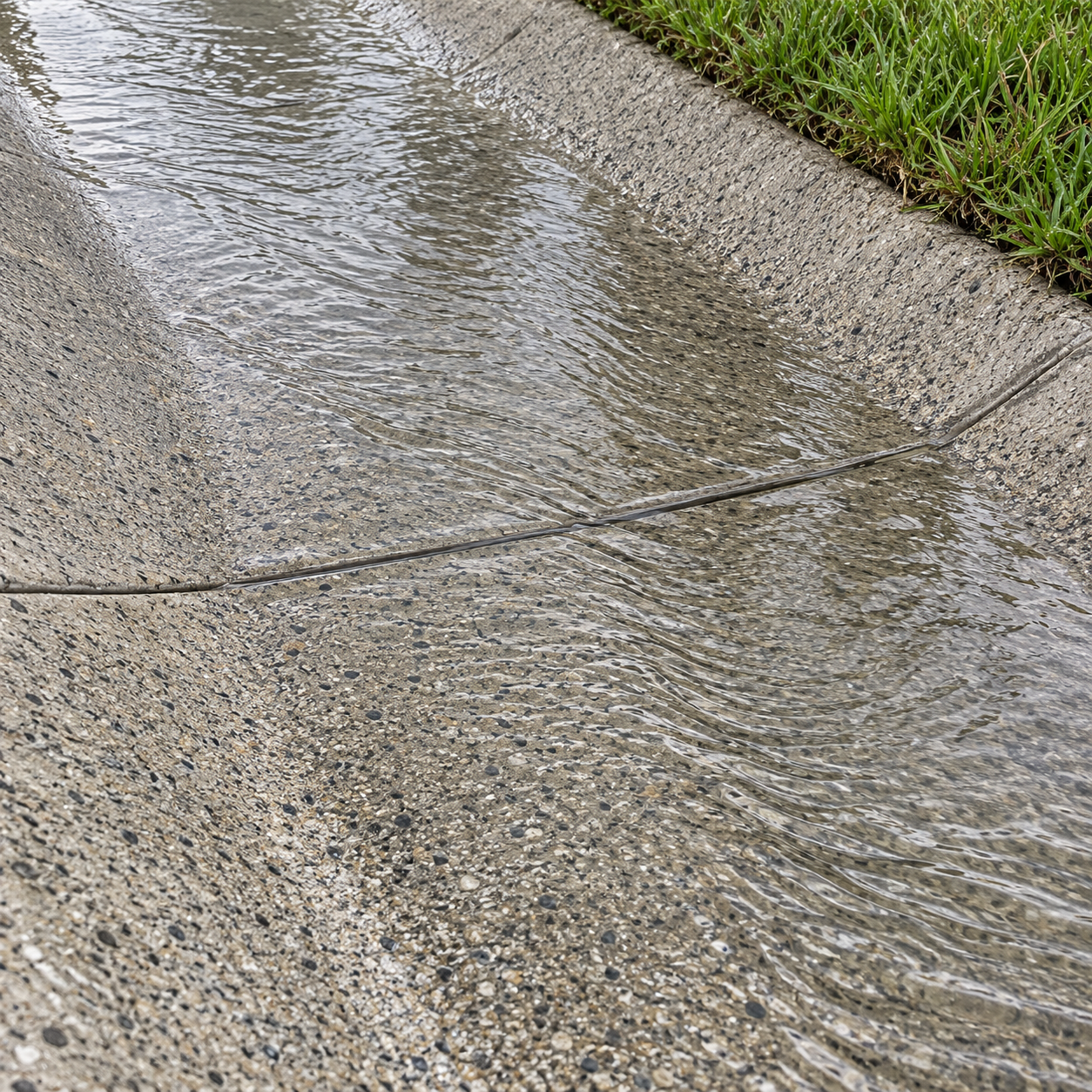
An unlined swale carries water over soil or vegetation. Adding concrete creates a more erosion-resistant flow surface and a defined channel that can be inspected and cleared. This can help where concentrated runoff repeatedly scours an earthen route.
The lining also changes the tradeoff. Concrete provides little infiltration through the channel itself. It moves runoff onward, so the receiving area must accommodate that water. A lined swale should not be treated as a rain garden or assumed to reduce the volume leaving the property.
Smoother conveyance can also produce faster flow than a rough, vegetated route under comparable conditions.
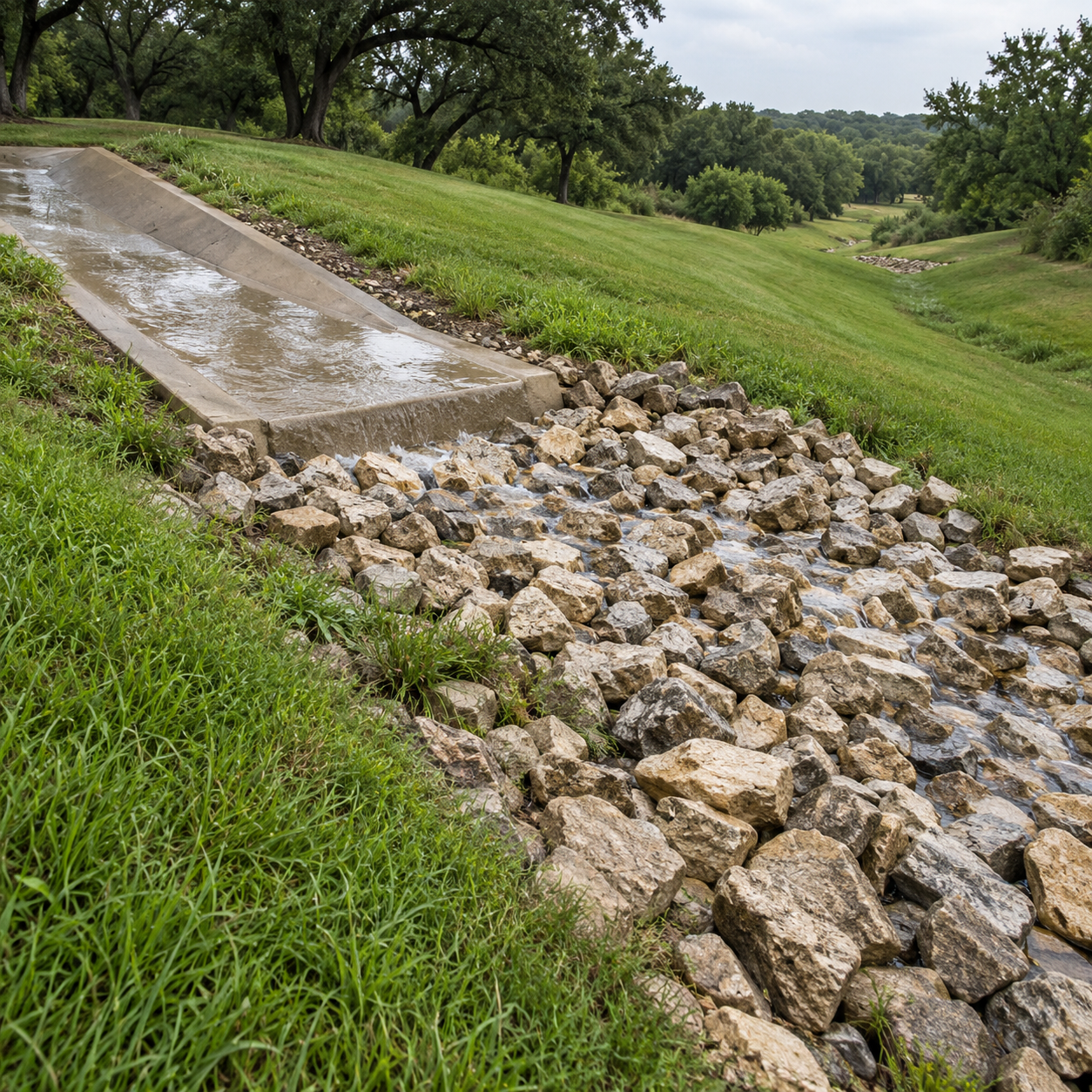
The Massachusetts Department of Transportation’s drainage and erosion control guidance explains that open channels can increase erosion at their outlets. Protecting the channel while leaving its discharge point vulnerable simply relocates the problem.
Decide Whether Surface Conveyance Fits the Problem
A concrete swale is most relevant when water travels across the surface and can be intercepted before it reaches a vulnerable area. Examples include runoff crossing a paved apron or following a recurring erosion path beside hardscape. These situations still require measured elevations to confirm that gravity drainage is workable.
Several other conditions call for a different response:
- Water trapped in a pavement depression: A nearby swale may not help unless water can reach it.
- Persistent underground seepage: Subsurface drainage may be needed instead of, or alongside, surface collection.
- An isolated downspout discharge: Correcting the roof-water route may resolve the issue with less construction.
- A broad landscaped drainage corridor: A vegetated swale may be preferable where vegetation, available space, and expected flows make it suitable.
A Swale Must Work at Its Entrance, Middle, and Exit
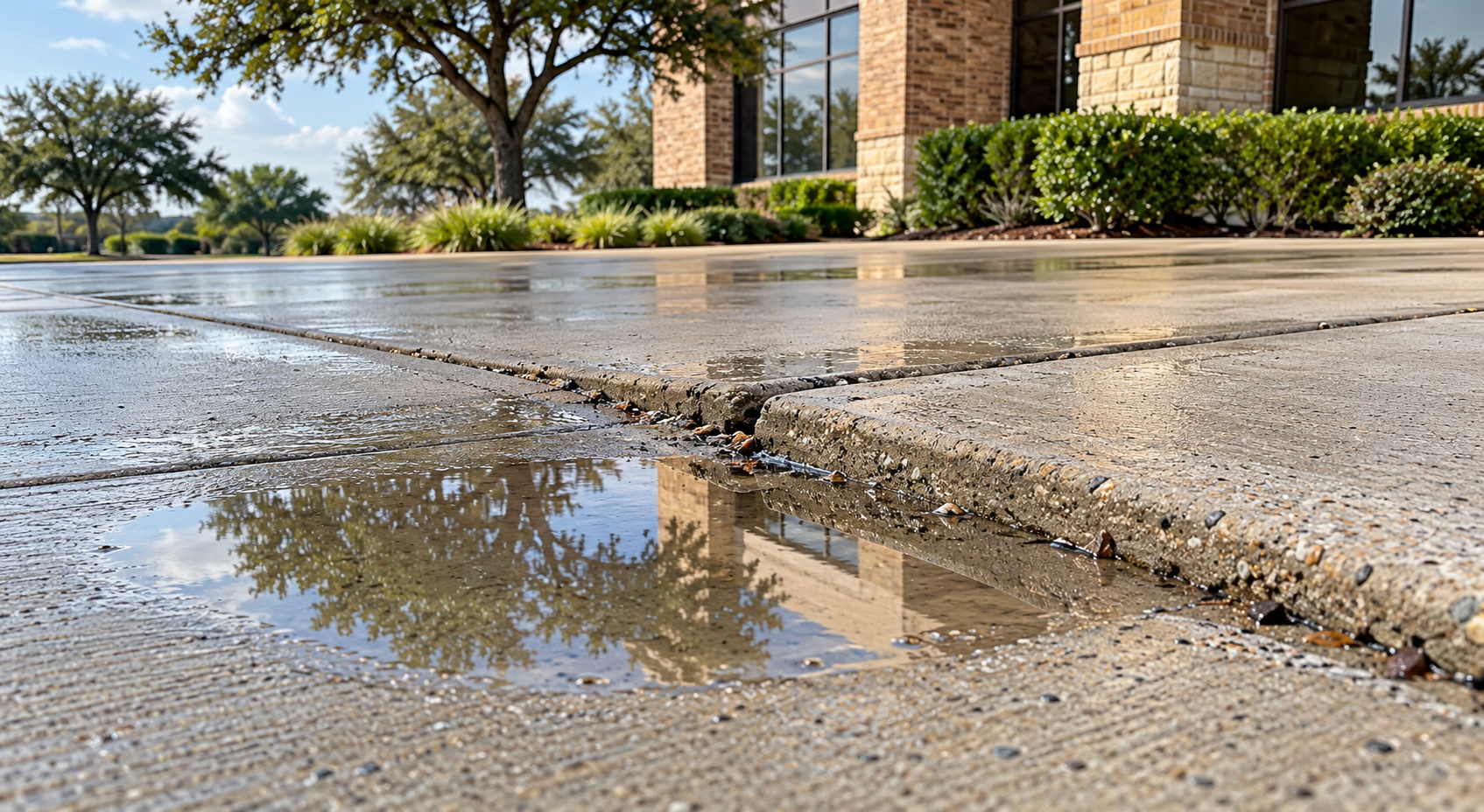
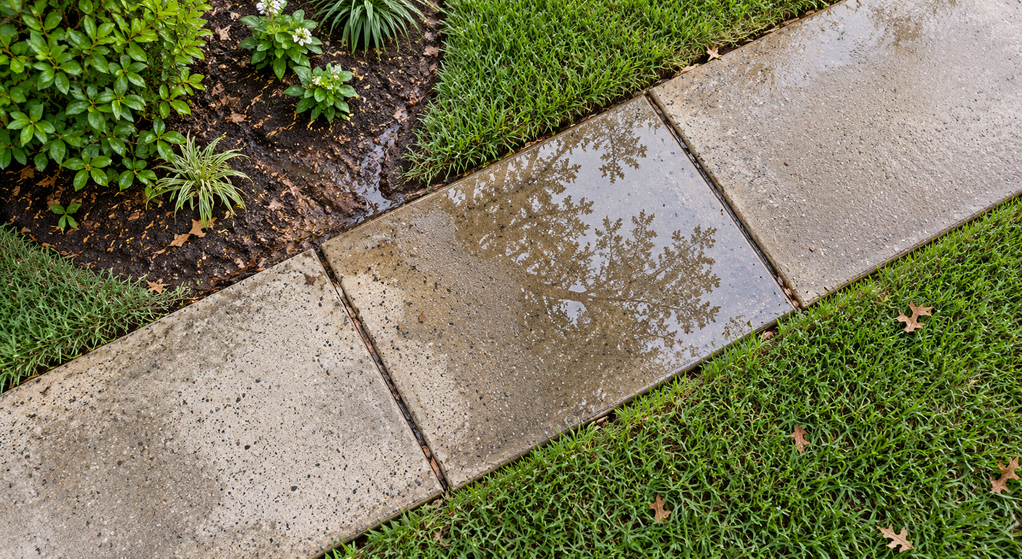
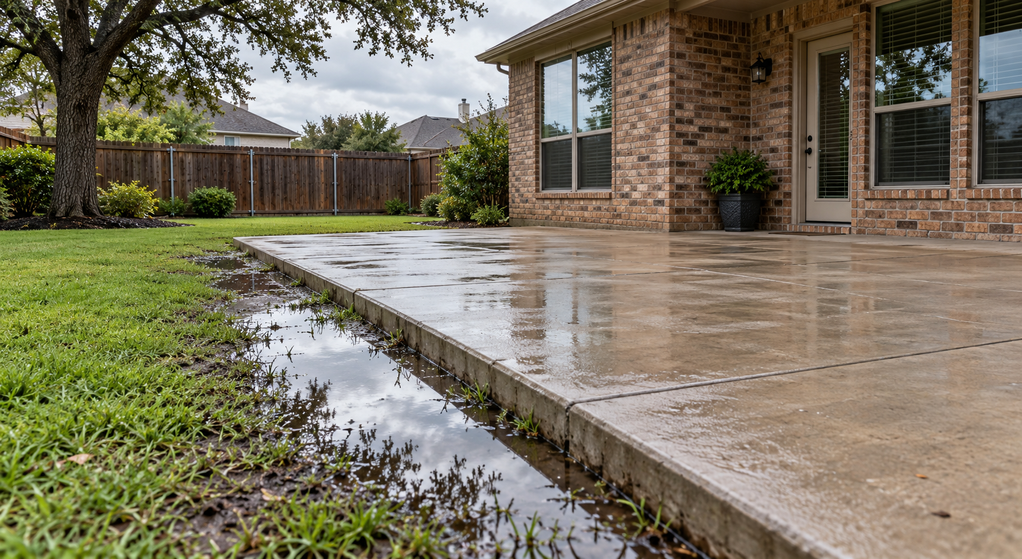
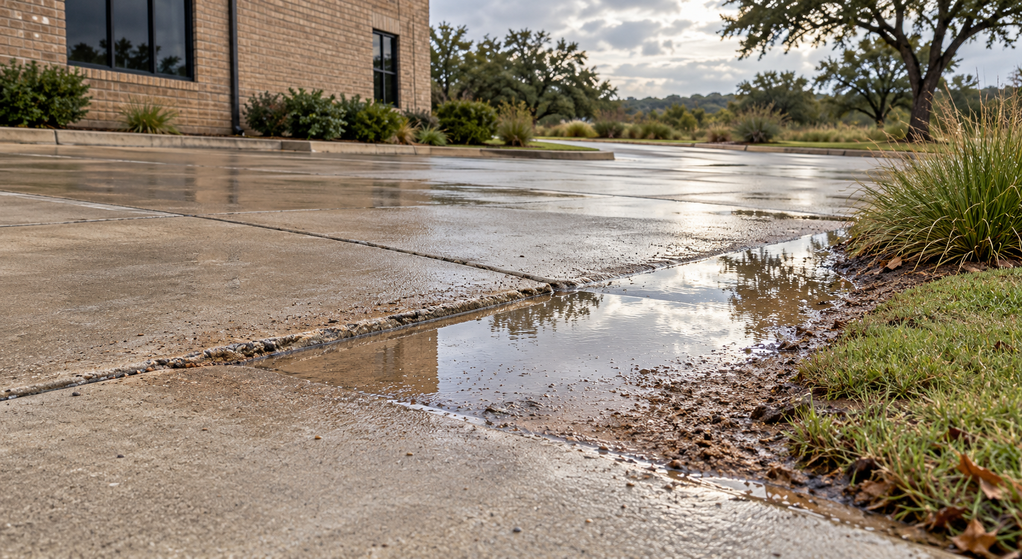
At the entrance, surrounding grades must let water enter. A raised concrete edge can act as a small dam, leaving water beside the swale while the channel stays relatively dry. Mulch beds, edging, and later paving work can create the same obstruction.
Through the middle, the channel needs a continuous fall without unintended depressions. Width, depth, shape, slope, and surface roughness affect capacity. The area contributing runoff matters too: a channel receiving a large paved parking area faces a different demand from one collecting water along a small patio. Choosing dimensions by appearance alone leaves that demand unanswered.
Crossings deserve separate attention. A swale through a walking route can introduce awkward slopes or a wet crossing. Across vehicle access, its profile must accommodate tires and vehicle clearance, while the concrete structure must suit expected loading. These needs should be resolved together, rather than flattening the drainage profile after it has been designed.
At the exit, check both elevation and receiving capacity. An outlet that becomes submerged during storms can restrict drainage upstream. Ask where excess water will travel if a storm exceeds the system’s capacity or debris blocks the route.
Fort Worth Discharge Decisions Extend Beyond the Property Edge
An apparently convenient endpoint is not automatically an acceptable outlet. Routing concentrated flow toward adjoining land, a sidewalk, or the street requires checking the downstream consequences and any applicable approvals.
Before changing a drainage outlet, confirm the relevant review and discharge requirements directly with Fort Worth Stormwater Development Services. Ask the responsible department which requirements apply to this particular project. Do not assume every private swale needs the same permit or that every project is exempt.
Where elevations are tight, neighboring properties are affected, or substantial paved areas contribute runoff, a civil engineer can assess the route and receiving system before concrete work is priced.
Keep the Flow Path Usable After Installation
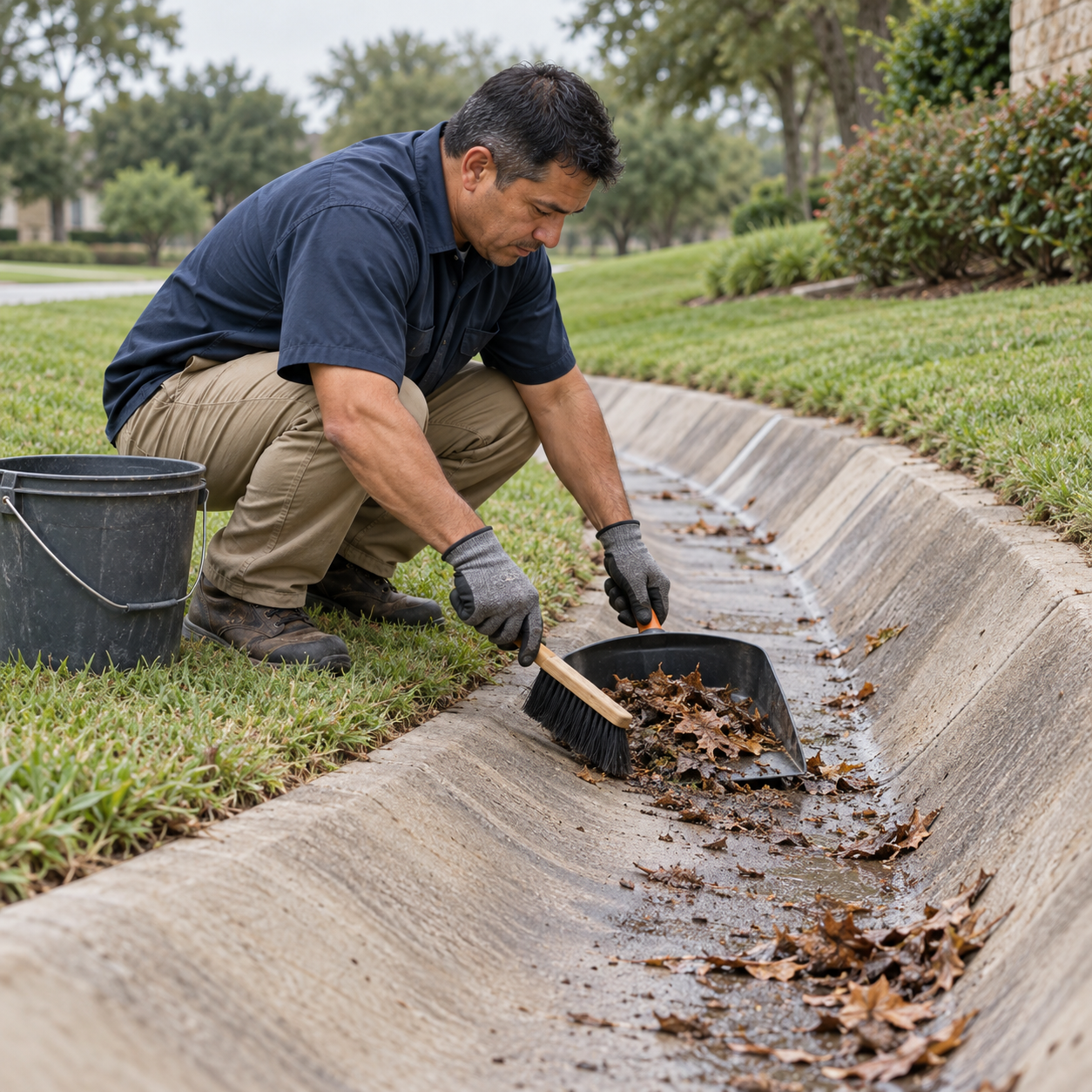
Leaves, sediment, and grass clippings can accumulate in a shallow channel, particularly at transitions or outlets. Inspect the route after significant rainfall and remove obstructions without washing them farther downstream.
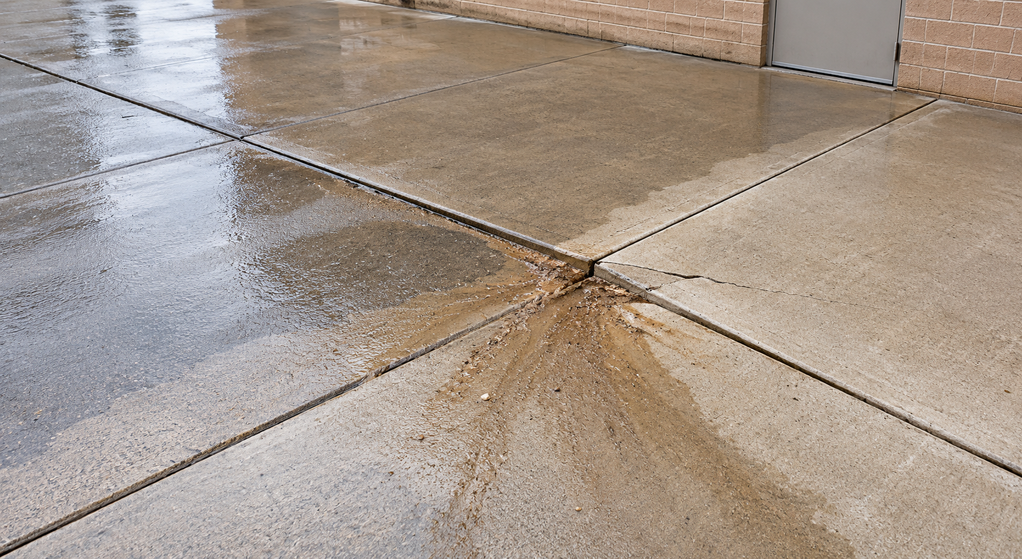
Look for recurring puddles, displaced joints, exposed soil beneath edges, and erosion where the lining ends. A crack alone does not establish failure, but movement that creates a lip or opens a path beneath the lining deserves assessment.
What to Request Before Approving the Work
Ask for a drawing showing contributing runoff areas, channel elevations, crossings, the outlet, and the overflow route. The scope should also identify base preparation, concrete construction details, outlet protection, and maintenance access.
A useful concrete swale connects the collection to a suitable destination. Approve the complete drainage route, with its effect on surrounding surfaces understood, rather than judging the proposal only by the length of concrete being installed.

Written By:
Kurt Manalastas
Home & Property Research Journalist
Kurt is a Home & Property Research Journalist who creates educational content on home services, property improvement, and residential decision-making. He turns contractor experience, industry standards, and verified research into clear, practical guidance that helps homeowners understand their options and make informed decisions.