Summary
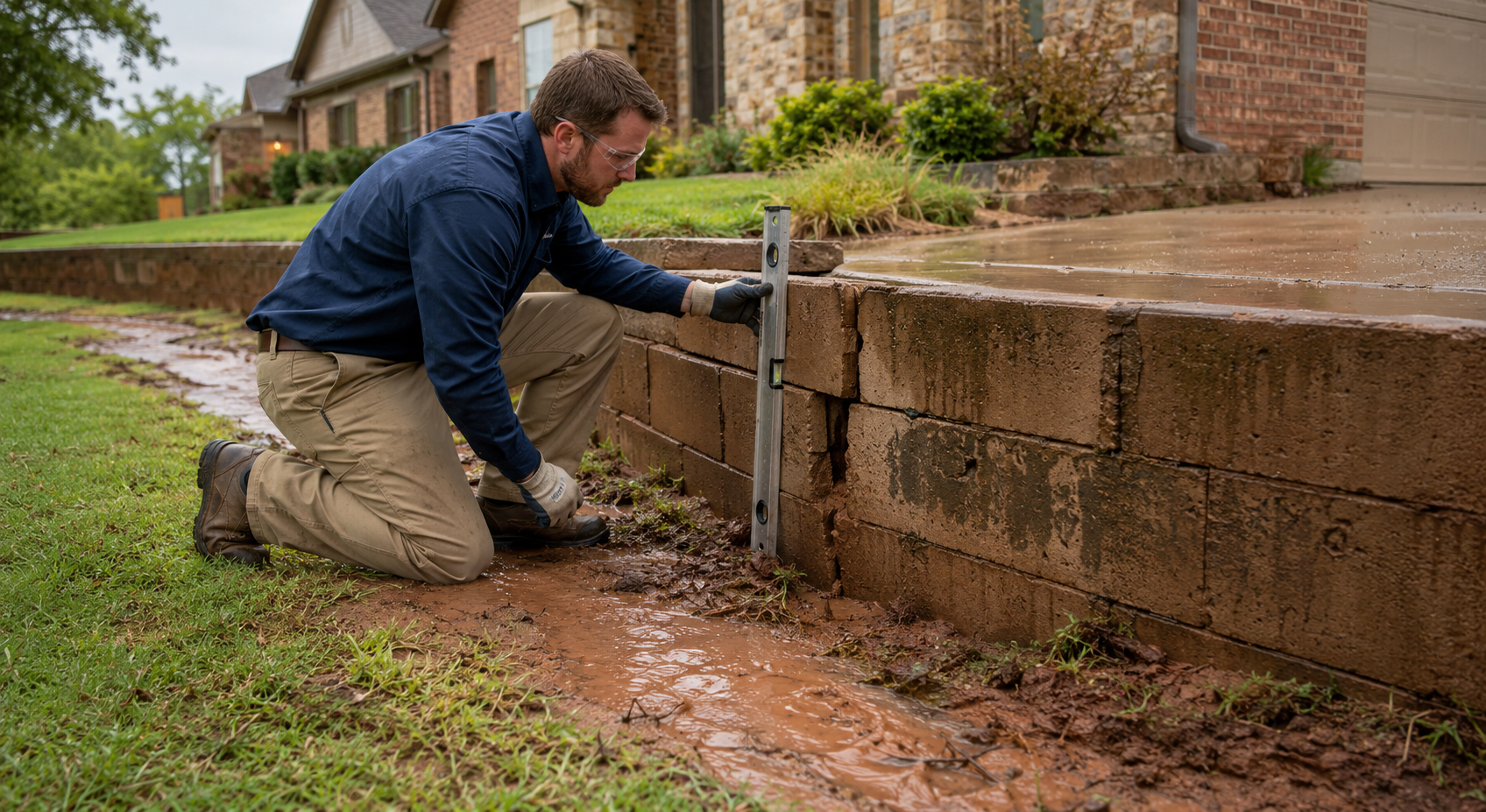
Water beneath a concrete slab can soften moisture-sensitive support, carry soil away, or cause susceptible clay to swell. The concrete may then crack, settle, bridge a void, or become uneven. For Fort Worth properties, the key is to identify the water source and determine what the supporting ground is doing before selecting a surface repair.
Water under concrete does not automatically mean the slab needs replacement. The concern is whether moisture is changing the material that supports it. A wet area beneath a lightly used patio and an eroded area beneath a delivery lane can have very different consequences.
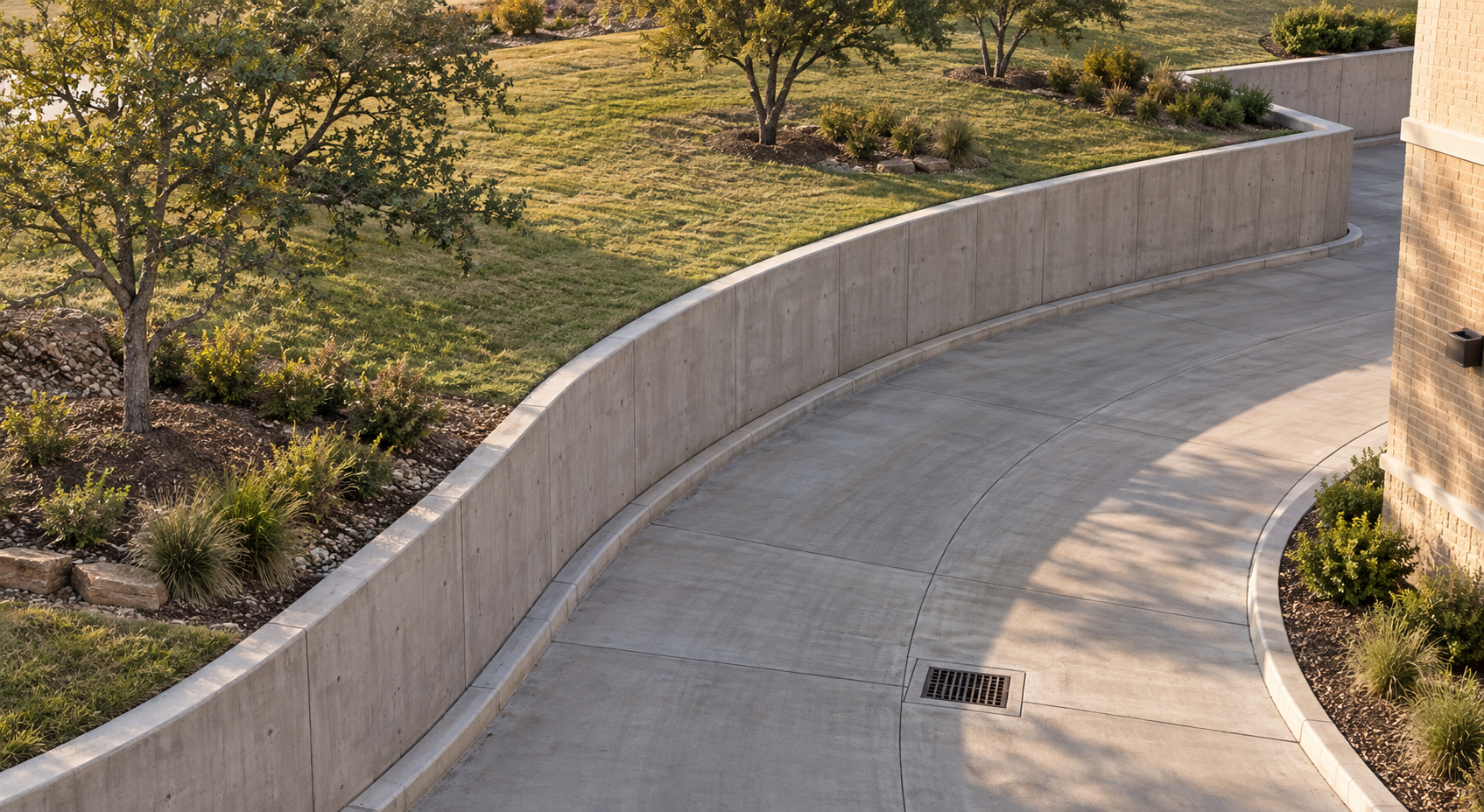
Planning commercial concrete slabs, parking lots, and sidewalks in Fort Worth requires considering the concrete and its supporting ground together. Fort Worth Concrete Contractors provides residential and commercial concrete work across the area.
Water First Needs a Path Beneath the Slab
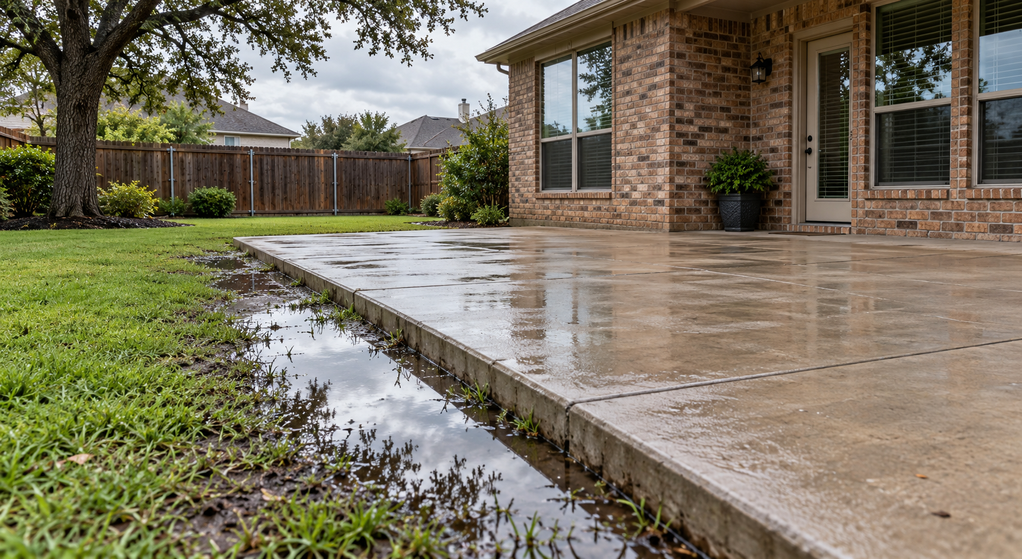
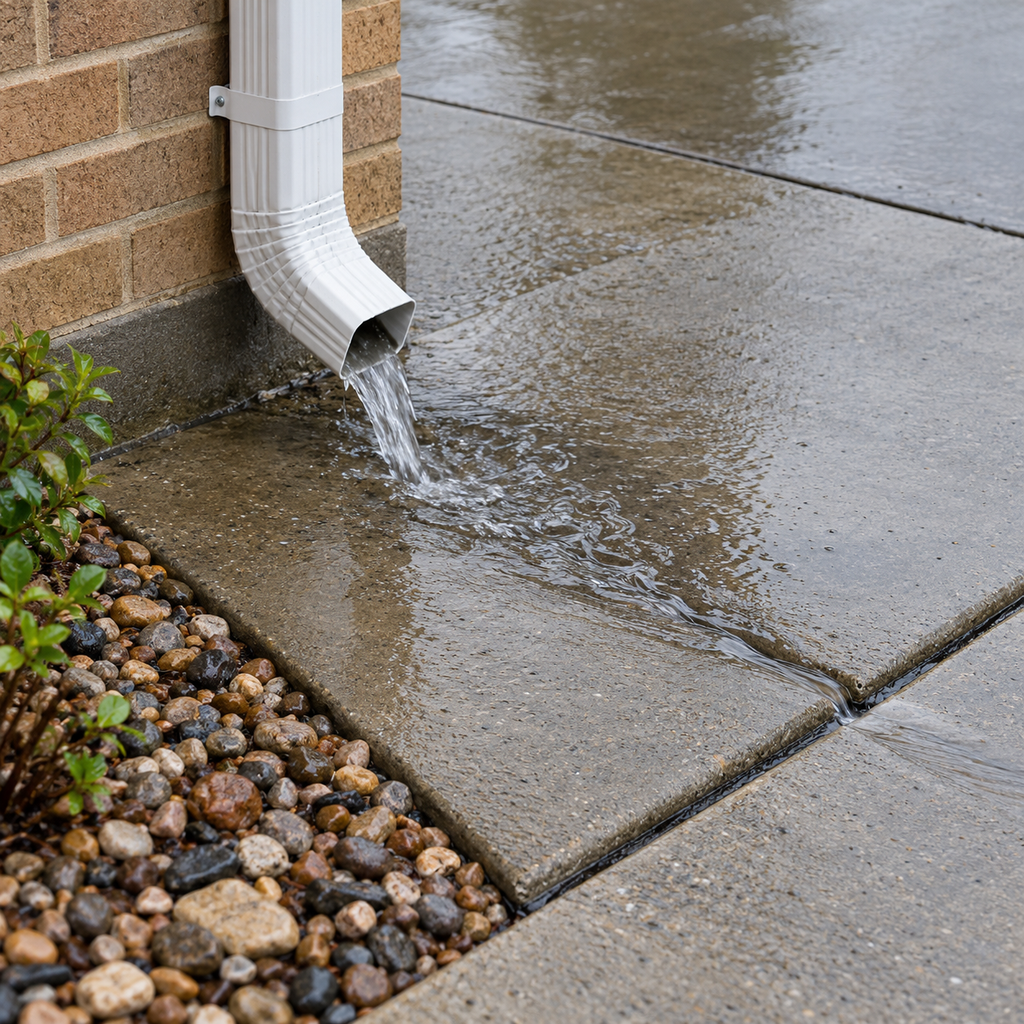
Rain can enter through open joints, cracks, exposed edges, or poorly drained adjoining areas. Runoff may also reach the slab from landscaping, downspouts, or pavement that slopes toward it. Below ground, plumbing leaks, irrigation leaks, and groundwater create different moisture patterns.
The top can look dry while support remains wet. Conversely, a puddle on the surface does not prove a concealed void exists. Note whether dampness follows rainfall, irrigation, or neither. Recurring wetness during dry weather deserves investigation for an ongoing source.
Saturation Can Make Support Less Stable
A slab transfers loads into the material beneath it. When moisture-sensitive soil or base material becomes saturated, it can lose stiffness and deform more under loading. The slab then receives less uniform support.
FHWA’s guidance on subsurface water and pavement damage explains that excessive moisture can destabilize pavement materials and that moving water can transport soil particles, erode supporting material, and pump fines.
Loading changes the consequence. A lightly used patio with damp support is not equivalent to a delivery lane carrying repeated vehicle loads. Record whether distress follows truck routes, dumpster approaches, or other heavily loaded areas.
Moving Water Can Remove Material and Create Void
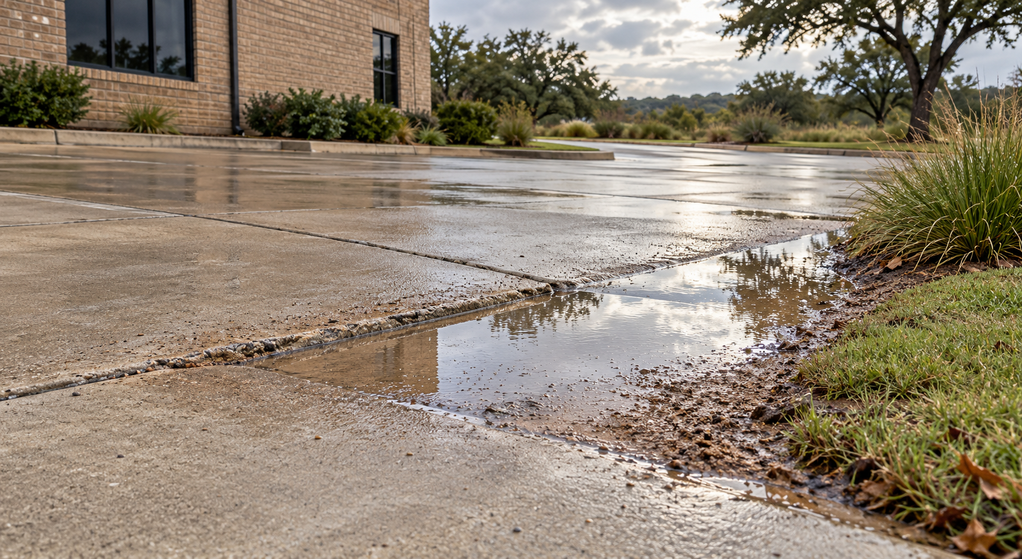
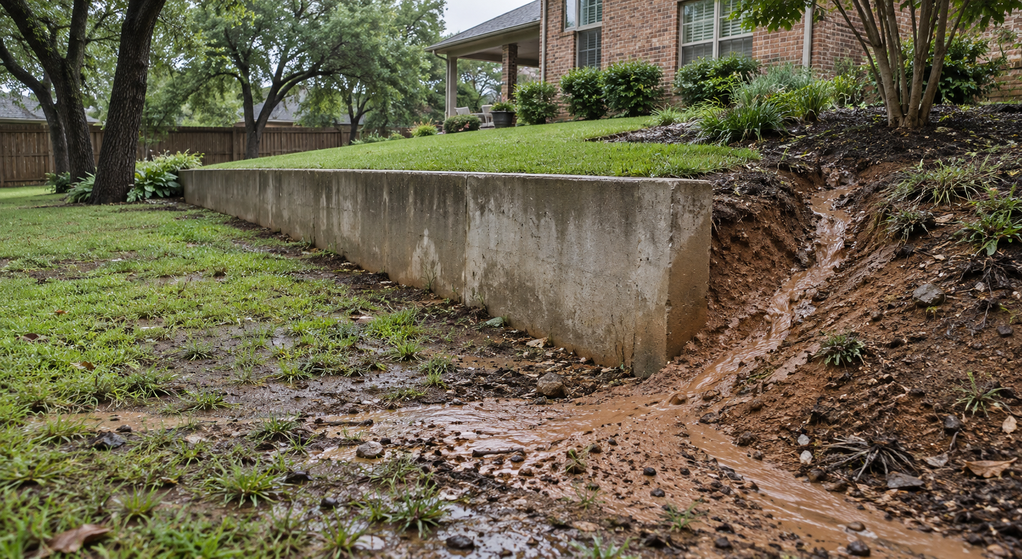
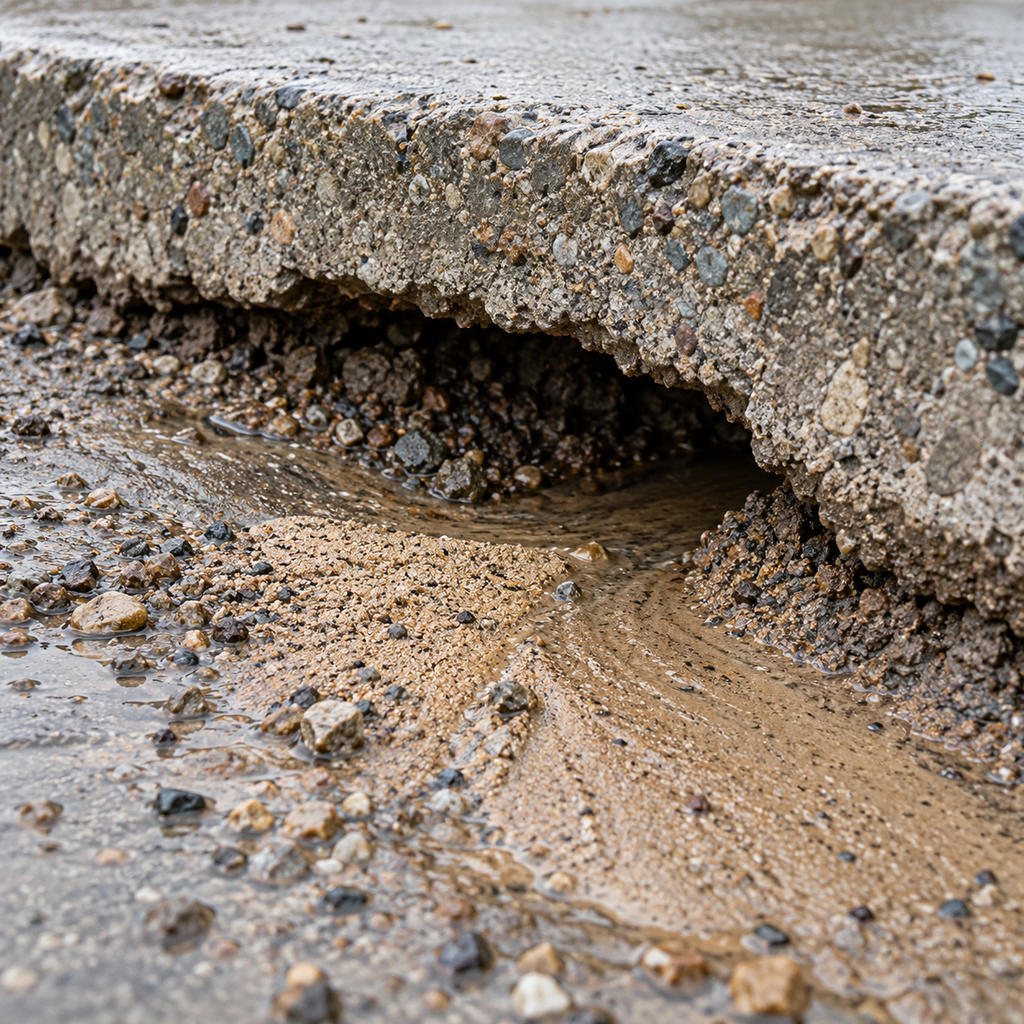
Where water flows through erodible material, it can carry particles away. As support disappears, a slab may bridge the gap temporarily and later crack, fault, or drop when load is applied.
Look for deposited sediment, exposed slab edges, or a depression that keeps returning beside the pavement. Photograph the deposit before removing it, including any visible route back toward the slab.
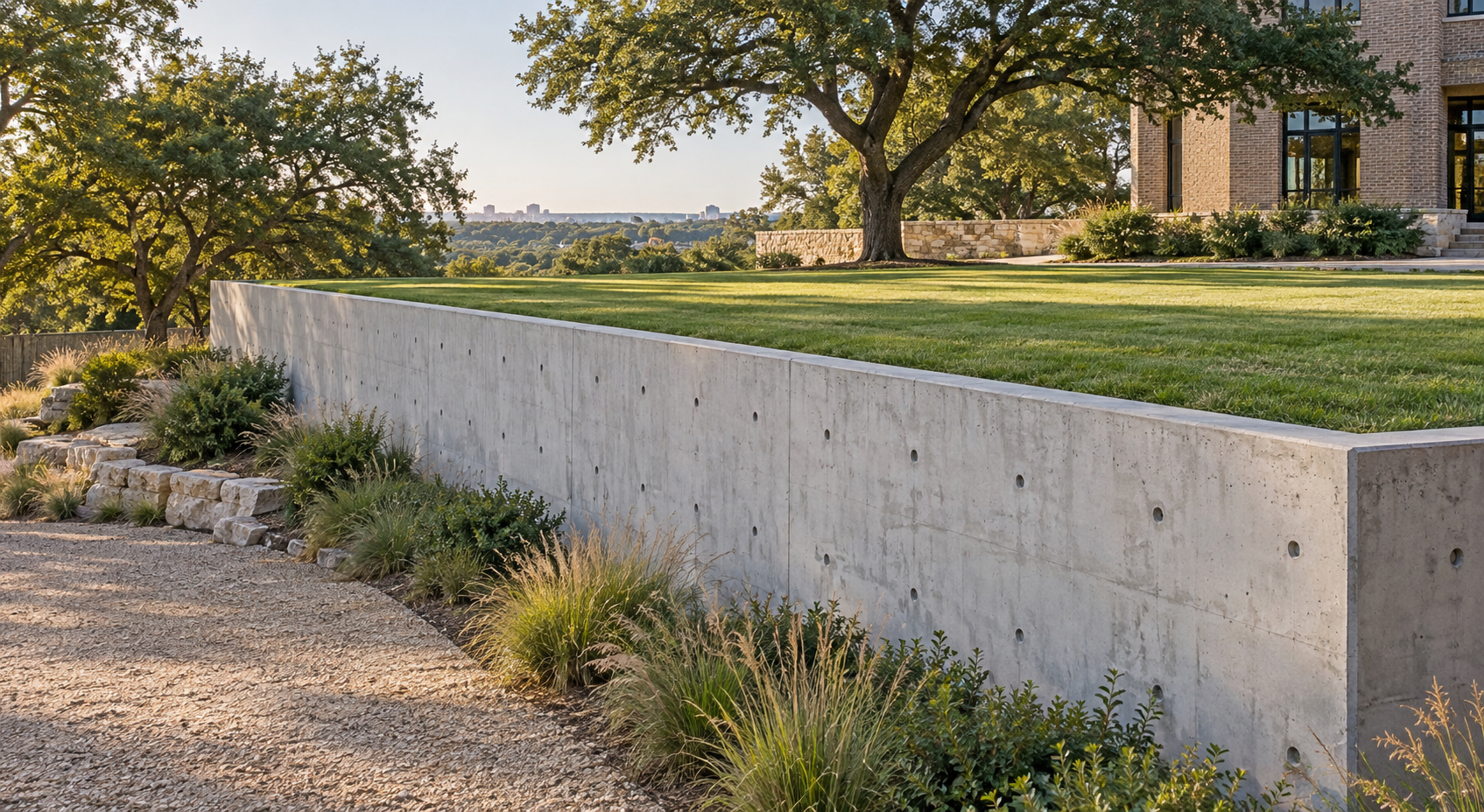
If retained ground borders the slab, Why Soil Is Washing Out Around Your Retaining Wall in Fort Worth helps explain why the water path and missing material need evaluation together. Adding loose dirt beside an opening does not prove support farther beneath the slab has been restored.
Water Can Also Make Susceptible Clay Push Upward
Water-related movement is not always downward. Expansive clay can swell as moisture rises and shrink as it dries. Where moisture changes unevenly, one part of the supporting ground may move differently from another.
This matters when discussing leveling. A section that appears low beside a raised panel has not necessarily settled. Ask which section moved and what measurements support that conclusion before authorizing a repair intended to raise it.
Surface Clues Show Distress, Not the Hidden Cause
Record new height differences, gaps beneath exposed edges, sediment emerging after rain or vehicle use, cracks that reopen, water collecting where the surface previously drained, and wet areas that recur during dry weather.
These signs justify assessment, but they do not identify the mechanism by themselves. A hollow sound also cannot establish the size or significance of a concealed void. Keep people and vehicles away from visibly undermined or moving sections.
Match the Investigation to the Suspected Mechanism
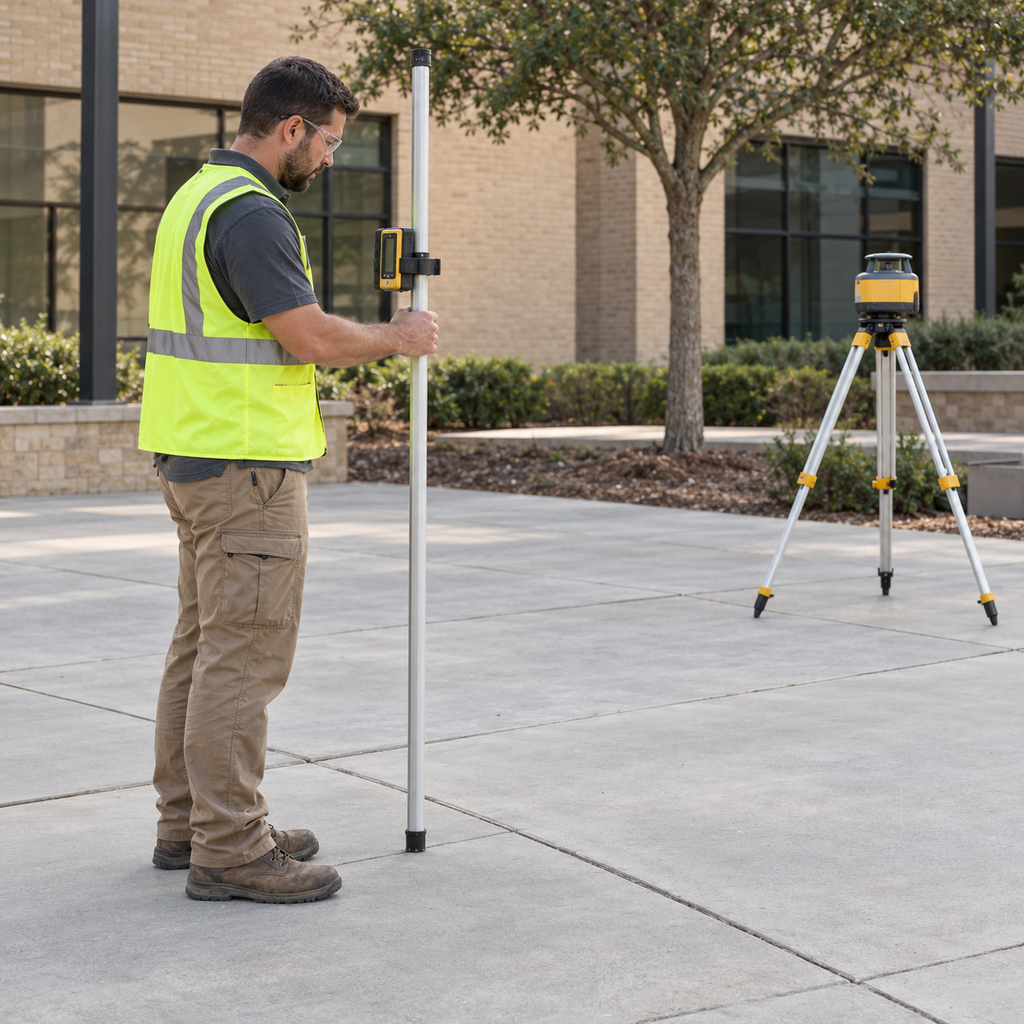
Give the evaluator dated photographs, a sketch of affected areas, drainage locations, previous-repair records, and changes in site use. Ask whether the next step is checking a suspected leak, measuring slab elevations, examining drainage, or investigating the supporting soil.
For recurring ground movement or planned reconstruction, The Role of Geotechnical Testing in Designing Long-Lasting Residential Courts provides a related example of using soil information before selecting slab details. The investigation for a commercial slab must still match its own loads and conditions.
Correct the Water and Support Problem Before Finishing the Surface
A repair proposal should explain how it addresses the source of water, affected support, and damaged concrete. Depending on the findings, work may involve leak repair, drainage correction, stabilization, lifting, or replacement of deteriorated sections.
Crack filling alone does not restore missing support. Raising a panel without addressing continuing erosion may also leave the reason for movement unresolved. Water beneath a slab is therefore a reason to investigate the support system before treating only the visible surface.

Written By:
Kurt Manalastas
Home & Property Research Journalist
Kurt is a Home & Property Research Journalist who creates educational content on home services, property improvement, and residential decision-making. He turns contractor experience, industry standards, and verified research into clear, practical guidance that helps homeowners understand their options and make informed decisions.