Summary
Poor drainage usually damages concrete through a chain of events rather than one isolated puddle. Concentrated water can saturate or erode support, change slab elevations, and let traffic accelerate cracking or faulting. On Fort Worth properties, understanding that progression helps owners correct the water route before repeated patching hides a continuing support problem.
Poor drainage is easier to understand as a progression than as a single symptom. A puddle may be the first visible clue, but the important question is what repeated water is doing to the route around the slab, the support beneath it, and the loads the concrete carries.
Commercial concrete construction services in Fort Worth include slabs and flatwork whose performance depends on conditions beneath and around them. Fort Worth Concrete Contractors provides residential and commercial concrete services under the leadership of Lahi Kautai.
Stage 1: Water Becomes Concentrated Instead of Dispersed
Drainage trouble often starts when roof runoff, irrigation, uphill pavement, landscaping, or a blocked outlet concentrates water at one edge of a slab. A drain grate can look clear while its pipe is obstructed, and a new planting bed can interrupt a former drainage path.
At this stage, water may still be mostly a routing problem. Document where it enters, where it slows, and where it is supposed to leave. Correcting the source early can prevent the next stages from developing.
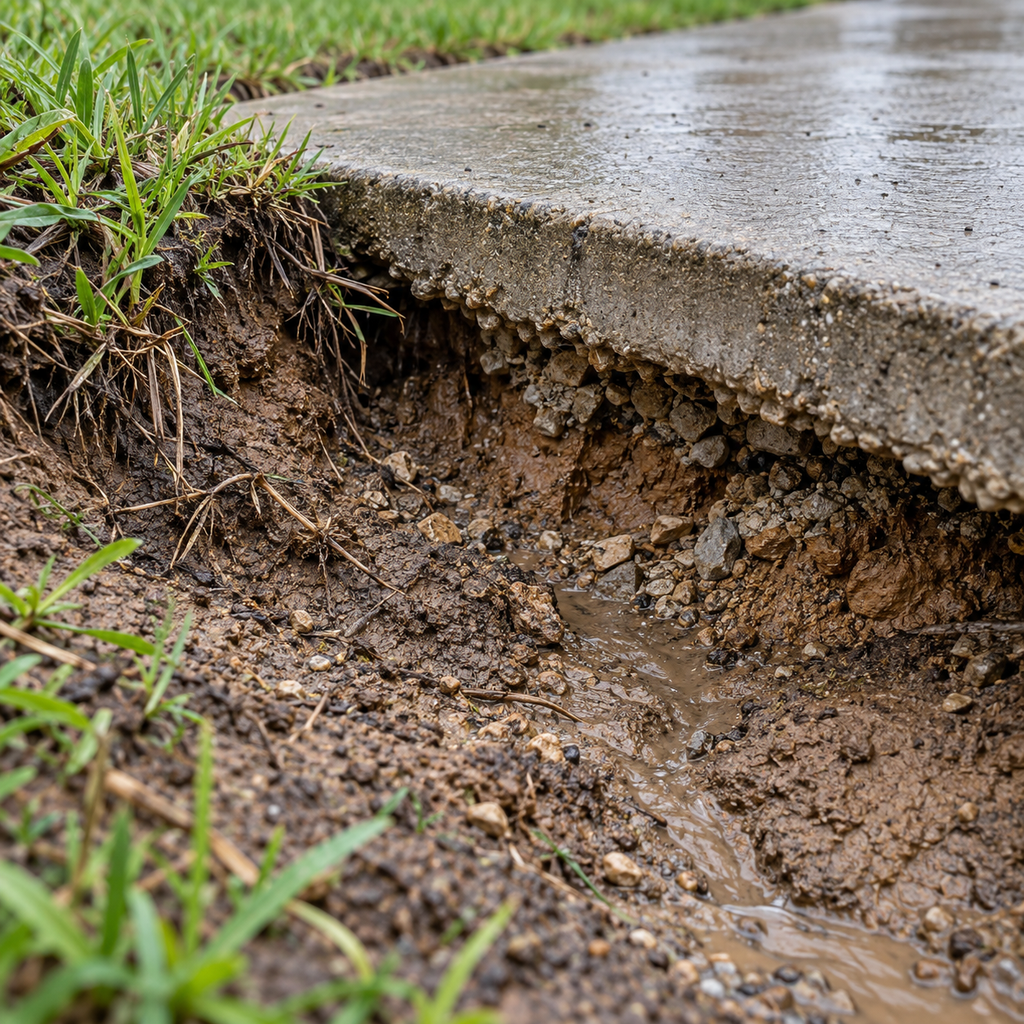
Stage 2: Supporting Material Stays Wet or Begins to Erode
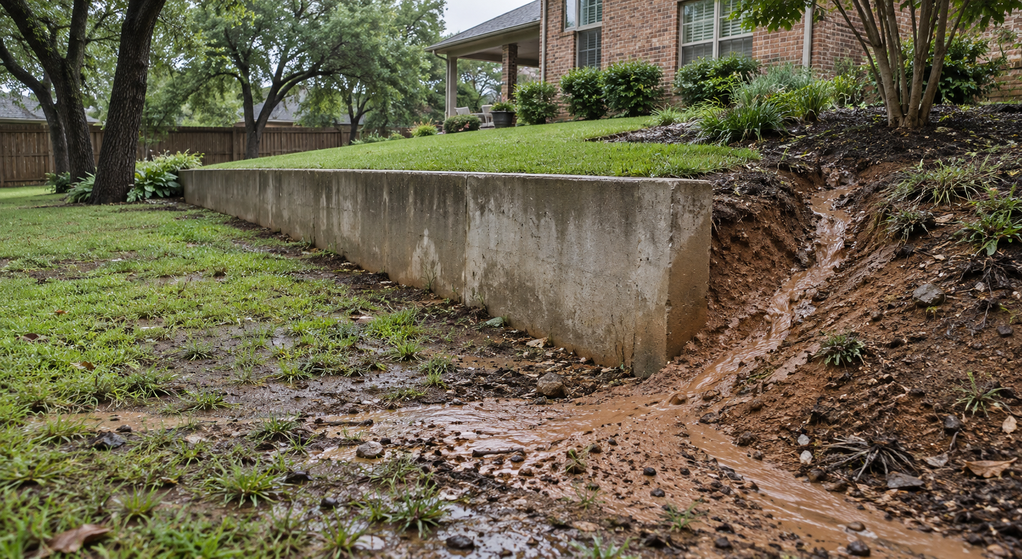
Water entering edges, joints, or cracks can change the supporting material. Some soils lose stiffness when excessively wet, while flowing water can carry loose particles away and create uneven support.
TxDOT’s pavement base and subgrade preparation guidance states that pavement foundations need adequate, moisture-resistant strength and notes that Texas has highly expansive soils that contribute to pavement distress. Those are pavement-foundation principles, not a residential-slab code, but they illustrate why support and moisture must be considered together.
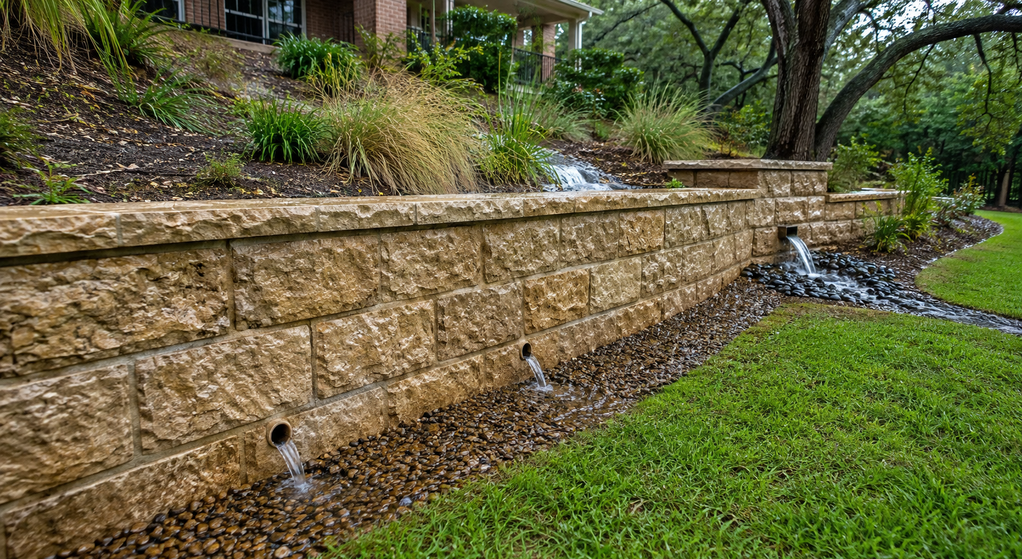
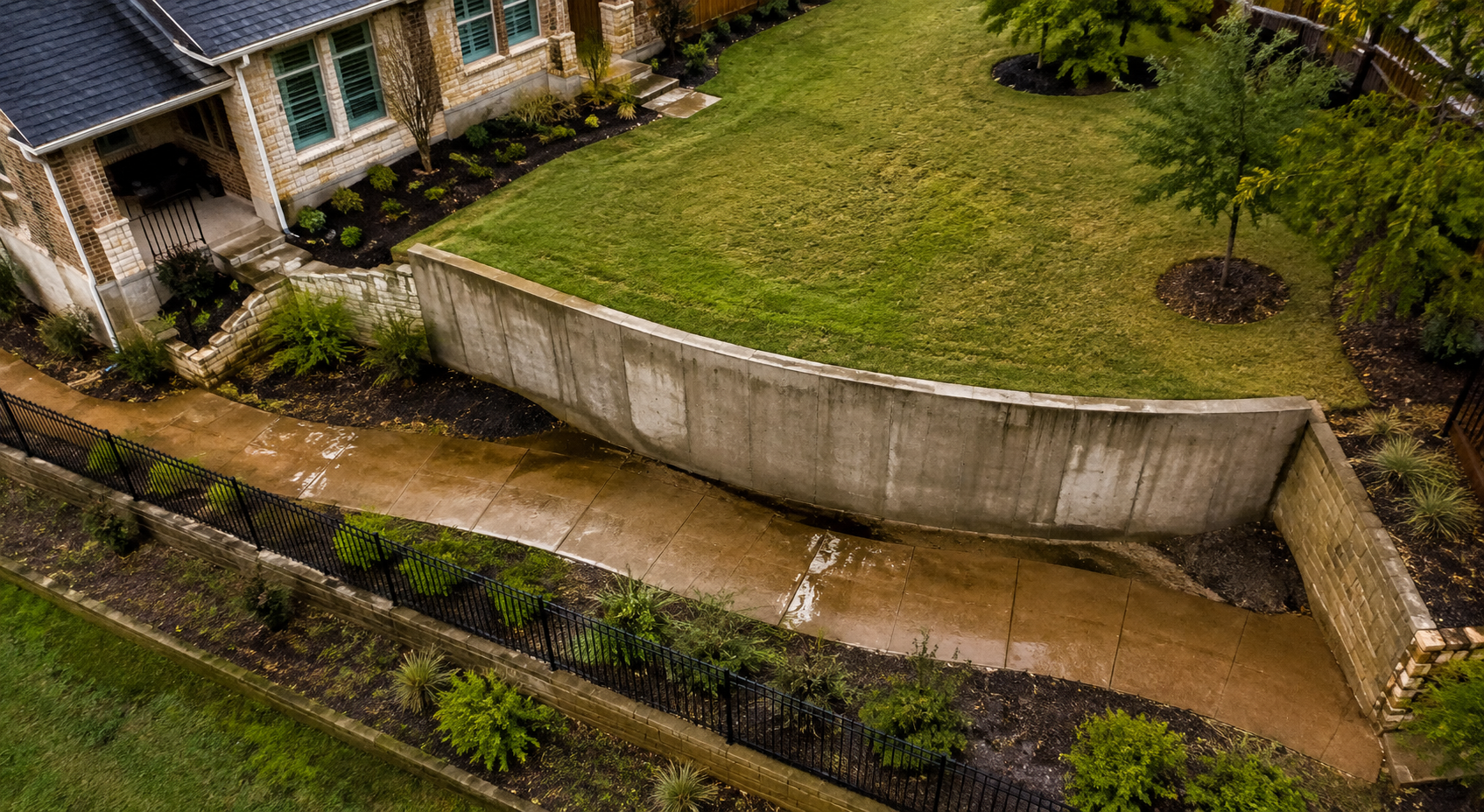
Where concrete borders a retaining wall or retained grade, Why Soil Is Washing Out Around Your Retaining Wall in Fort Worth explains how runoff and escaping soil can become a support problem at the shared boundary.
Stage 3: The Slab’s Elevation or Drainage Geometry Changes
As support becomes uneven, one edge can settle, another can rise with expansive-soil movement, or a joint can develop a height difference. A surface that used to drain may begin holding water because the geometry has changed.
This creates a feedback loop: movement creates a low area, the low area collects more water, and the additional water may worsen the supporting conditions. The presence of a puddle still does not prove the exact mechanism, so elevations and drainage need to be measured rather than guessed.
Stage 4: Repeated Loading Can Accelerate the Distress
A delivery lane, parking area, or driveway places more demand on weakened support than a lightly used patio. Repeated vehicle loading can increase differential movement where support is inconsistent.
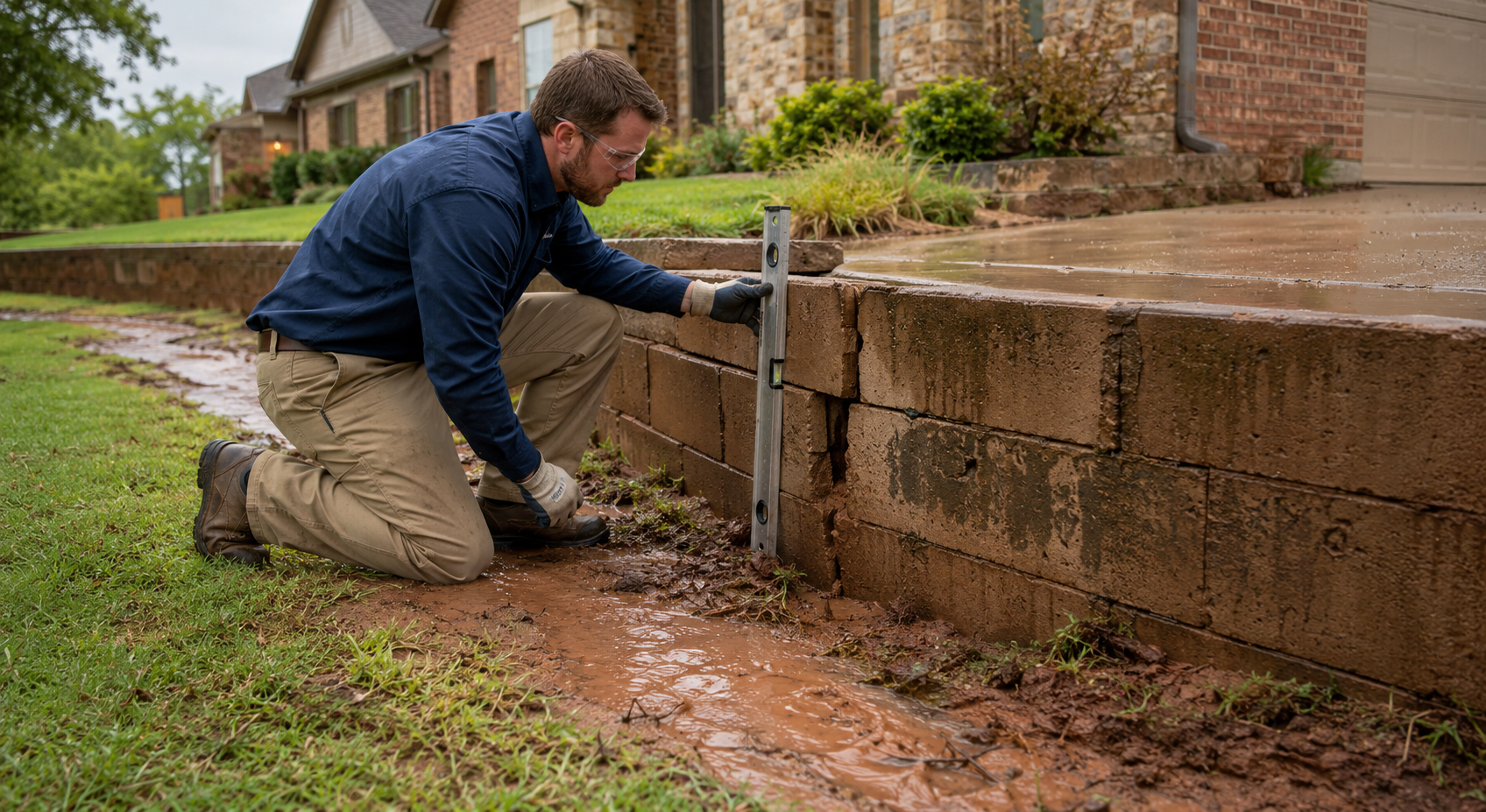
Look for muddy residue emerging at joints, fresh sediment trails, reopened repairs, or a growing height difference along the wheel path. These observations help connect loading, water, and support loss without assuming that traffic alone caused the problem.
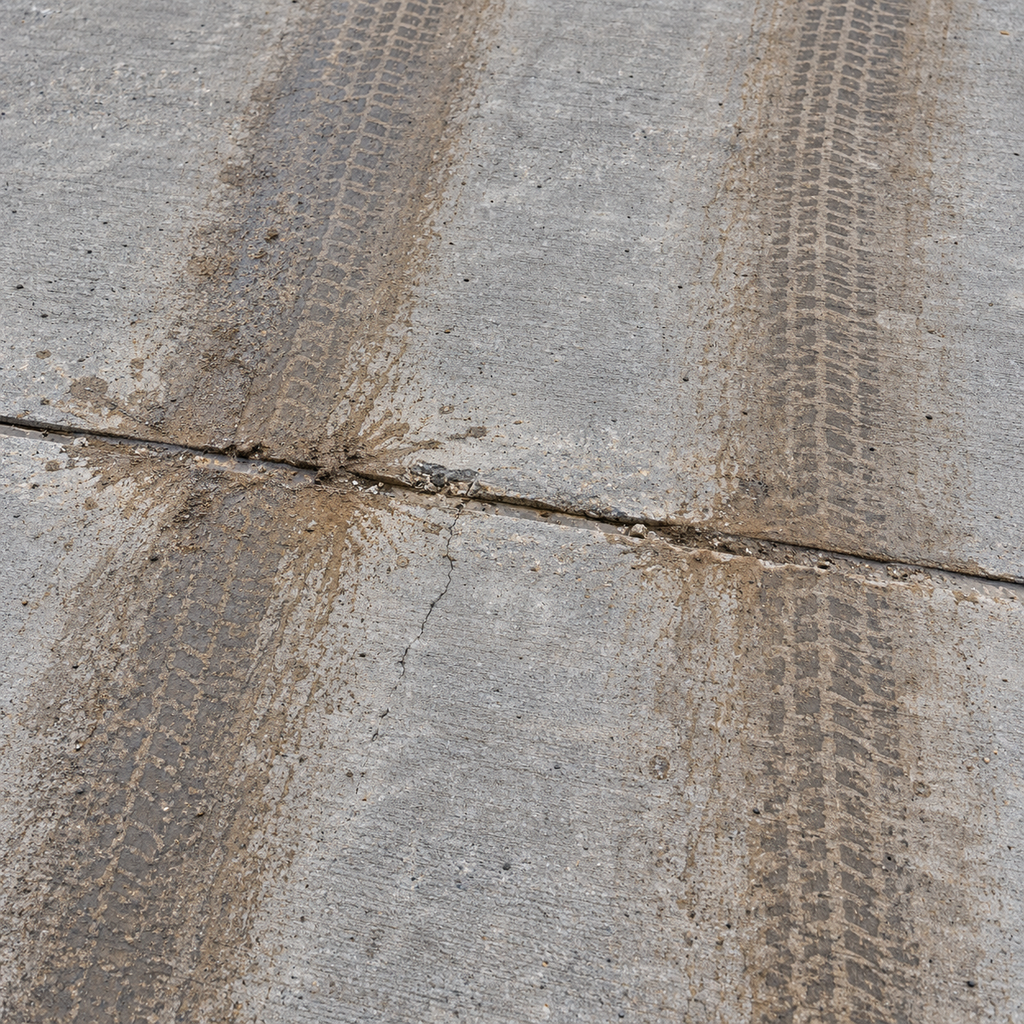
Stage 5: Visible Concrete Damage Appears
Cracks, broken edges, spalling, cavities, or recurring ponding can appear once the support and elevation problems have progressed. Surface symptoms show that something changed, but they do not identify the cause by themselves.
Keep traffic away from visibly undermined or unstable sections. Movement involving a building foundation, retaining structure, or multiple connected panels warrants assessment by an appropriately qualified professional, with engineering evaluation where structural stability is in question.
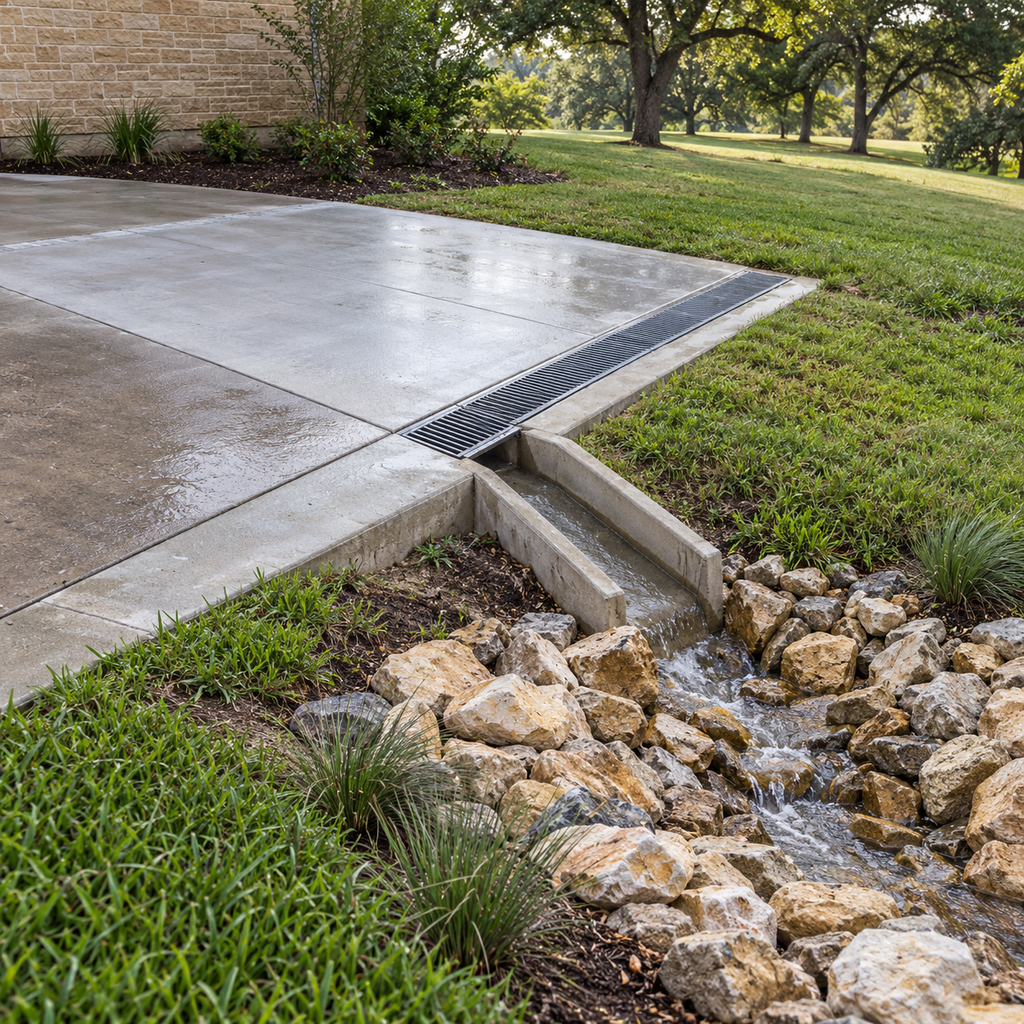
Stage 6: The Repair Must Break the Drainage-Damage Chain
A durable repair should explain which stage is being corrected. Clearing an obstruction may resolve a simple routing problem. A sunken panel may need lifting or replacement. Lost support may require stabilization or base reconstruction. The water source or outlet still needs correction where it contributed to the failure.
Crack sealing cannot restore missing support, and a surface sealer cannot correct pavement that slopes toward a doorway. A new drain also needs a workable discharge route so collected water does not create erosion beside another slab.
After repairs, observe the next rainfall from the same photo locations. Confirm that water reaches the intended outlet and that nearby areas have not developed new ponding. Ongoing inspection fits the broader practices in The Importance of Proper Concrete Maintenance for Fort Worth Homeowners.
The objective is not simply to remove a puddle or close a crack. It is to interrupt the progression from poor drainage to support change to concrete distress, then verify that the new water route continues to work.

Written By:
Kurt Manalastas
Home & Property Research Journalist
Kurt is a Home & Property Research Journalist who creates educational content on home services, property improvement, and residential decision-making. He turns contractor experience, industry standards, and verified research into clear, practical guidance that helps homeowners understand their options and make informed decisions.