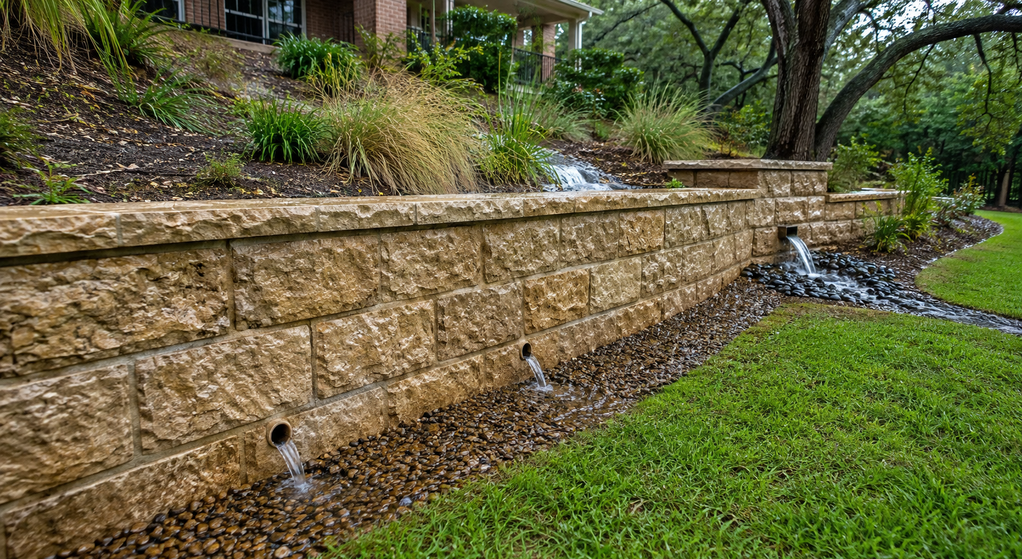
Summary
Water on concrete does not automatically mean the slab needs repair. Fort Worth property owners should look for material loss, changing elevations, recurring leakage, and damage that progresses between storms. The repair decision depends on whether water is only revealing a surface condition or is associated with failed concrete, support, or structural function.
A puddle after rain can reveal a drainage problem without proving that the concrete itself has failed. Conversely, a slab may look dry today while broken edges, recurring leakage, or a sunken corner show that repair deserves attention. The useful question is whether water is leaving temporary evidence or accompanying a physical change.
For business properties, commercial concrete services in Fort Worth cover slabs, parking lots, sidewalks, and other surfaces with different loading and access requirements. Fort Worth Concrete Contractors serves residential and commercial properties and is led by Lahi Kautai, whose concrete background spans more than 20 years.
Decision Gate 1: Has Water Left Physical Damage?
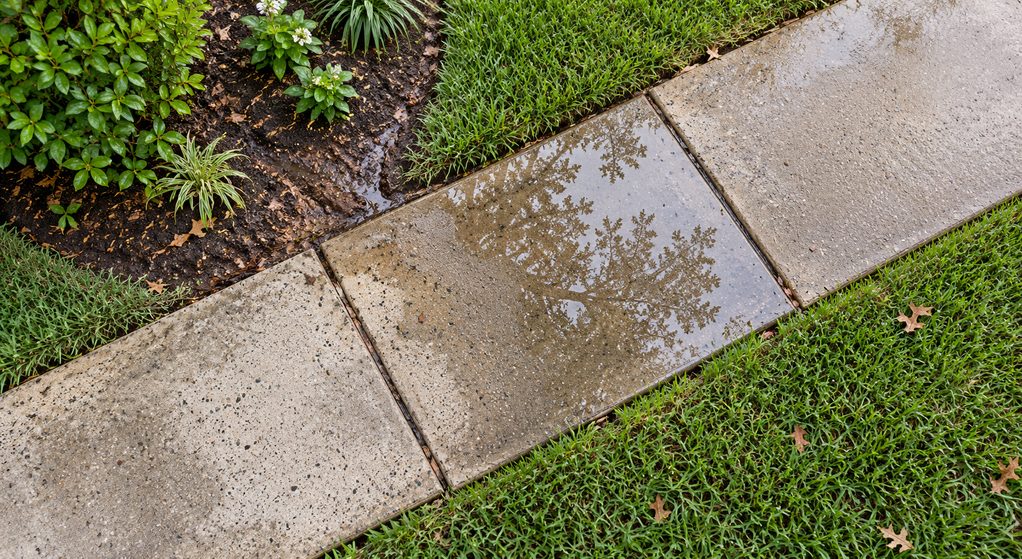
Darkening that disappears as concrete dries is not, by itself, evidence that repair is needed. Compare the affected area with nearby concrete under similar shade and weather conditions. A patch that stays wet after surrounding surfaces dry deserves investigation, especially if it also appears during dry weather.
White deposits also need context. The Concrete Society’s guidance on lime leaching distinguishes cosmetic lime bloom from lime weeping caused by water leaking through concrete, often at cracks or joints. Significant leakage may indicate a more serious durability problem.
Photograph the condition before cleaning. If the visible evidence disappears but the same leakage path returns after the next rain, cleaning has addressed appearance rather than the cause.
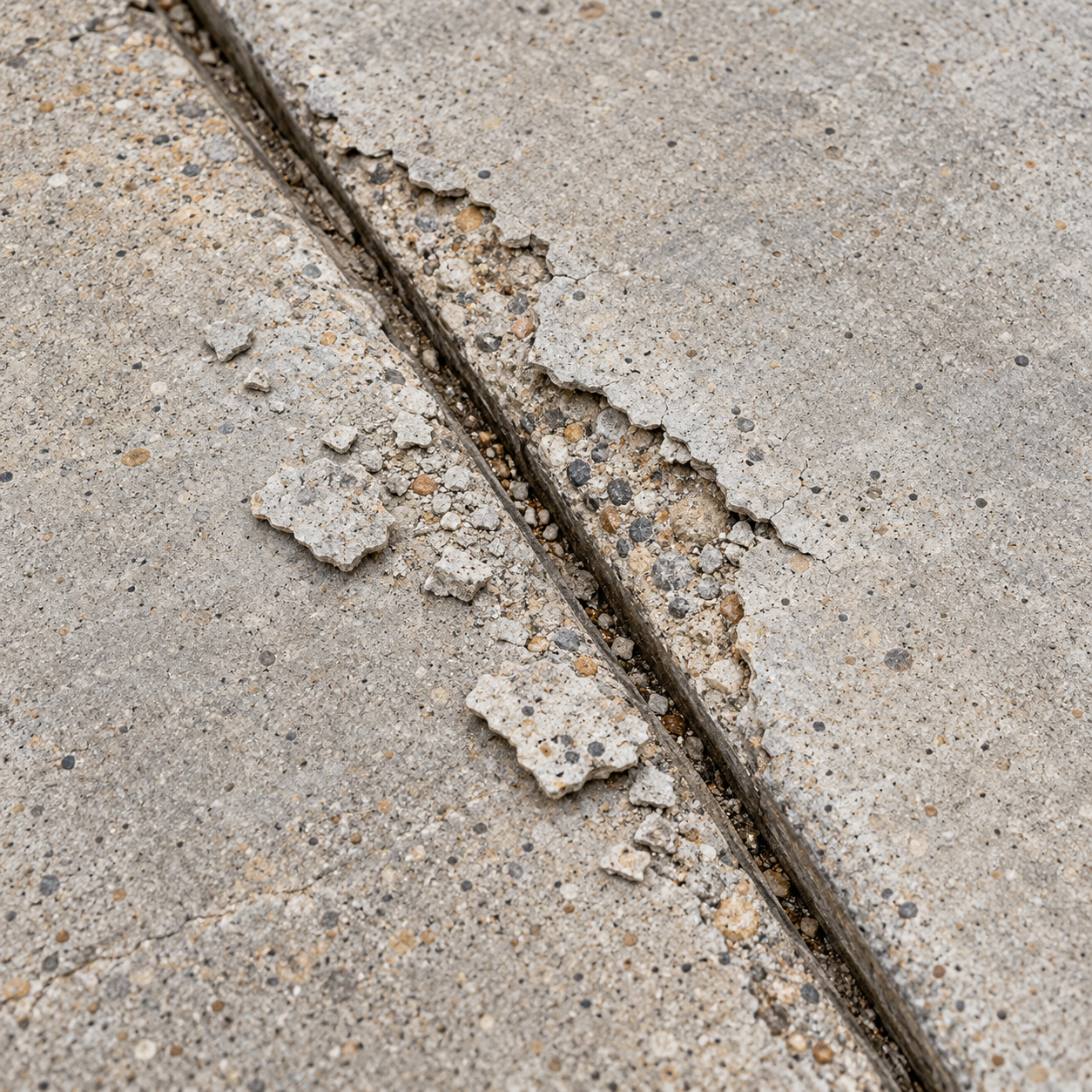
Decision Gate 2: Is the Concrete Losing Material or Changing Elevation?
Repair becomes more likely when moisture accompanies measurable deterioration. Look for four types of change:
- Flaking, crumbling, deteriorating joint edges, or patches that continue shedding concrete.
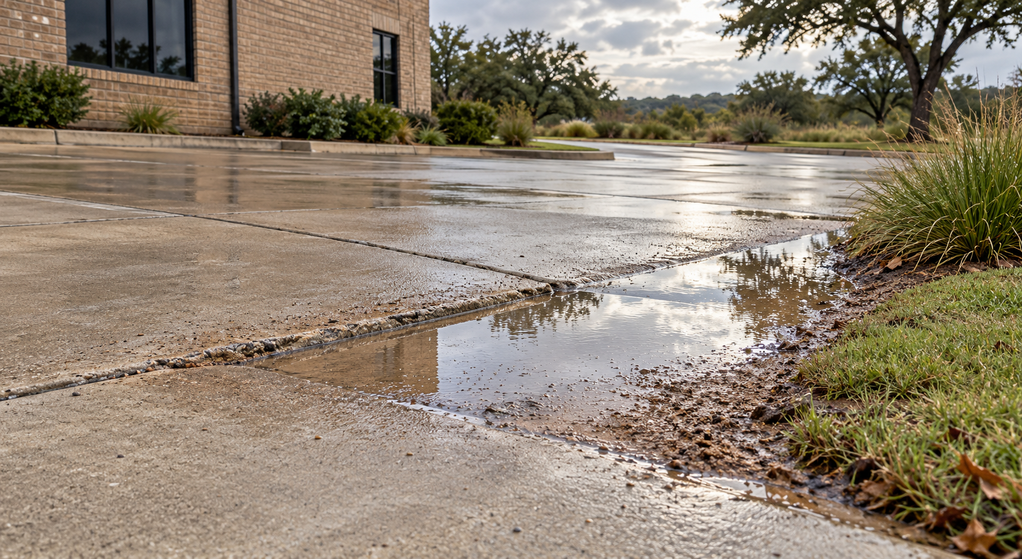
- A developing height difference, such as a sunken corner or raised edge that changes drainage or creates a trip point.
- Cracks that widen, extend, reopen after repair, or develop vertical displacement.
- Rust staining combined with broken concrete or exposed reinforcement, rather than a surface stain alone.
Avoid judging urgency from crack width by itself. A narrow crack with vertical displacement at a busy entrance can matter more immediately than a wider, stable crack in an unused corner.
Decision Gate 3: Is Water the Cause or a Consequence?
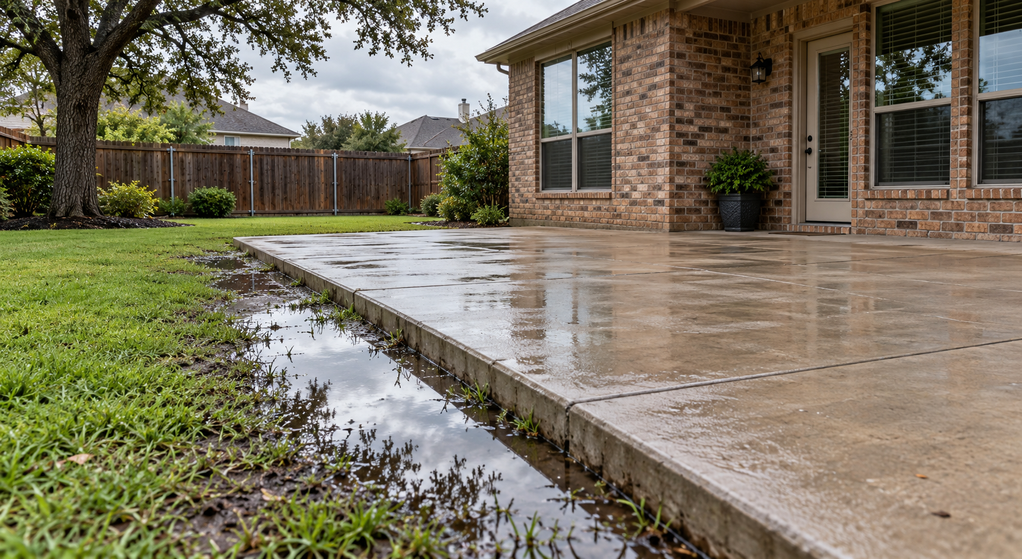
A low slab collects water, but collecting water does not explain why the slab became low. Settlement may have existed before the puddle appeared. In other cases, concentrated runoff or escaping water may have disturbed the supporting ground.
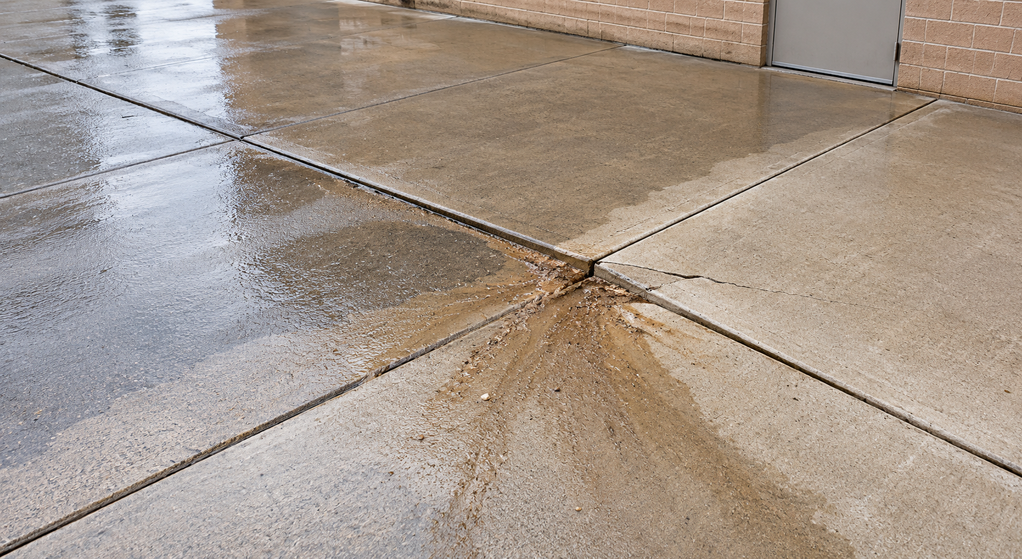
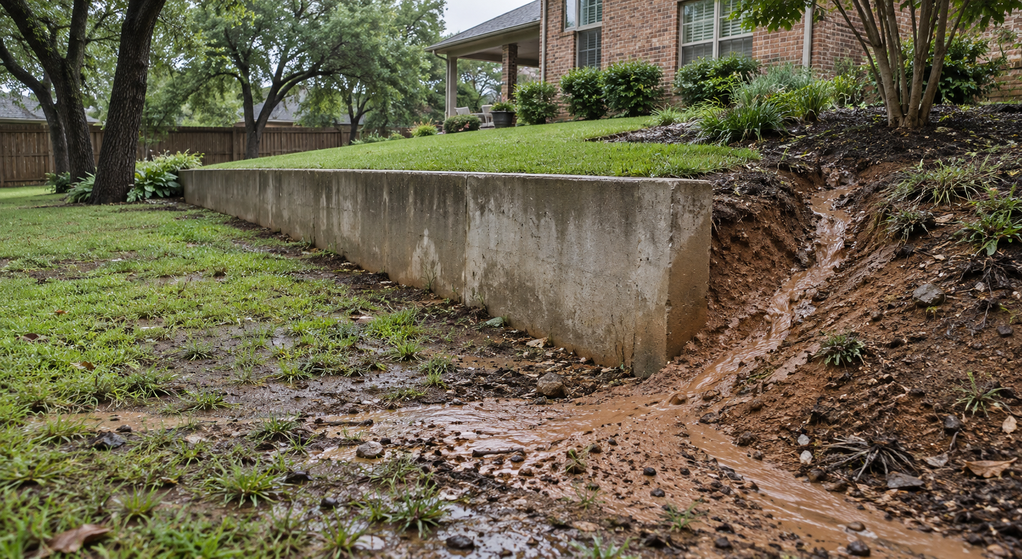
Observe where water arrives during the next safe opportunity. Check downspouts, irrigation, nearby planting beds, blocked drainage routes, and sediment trails. Visible gaps beneath slab edges, soil carried onto pavement, or muddy water emerging at joints justify professional investigation.
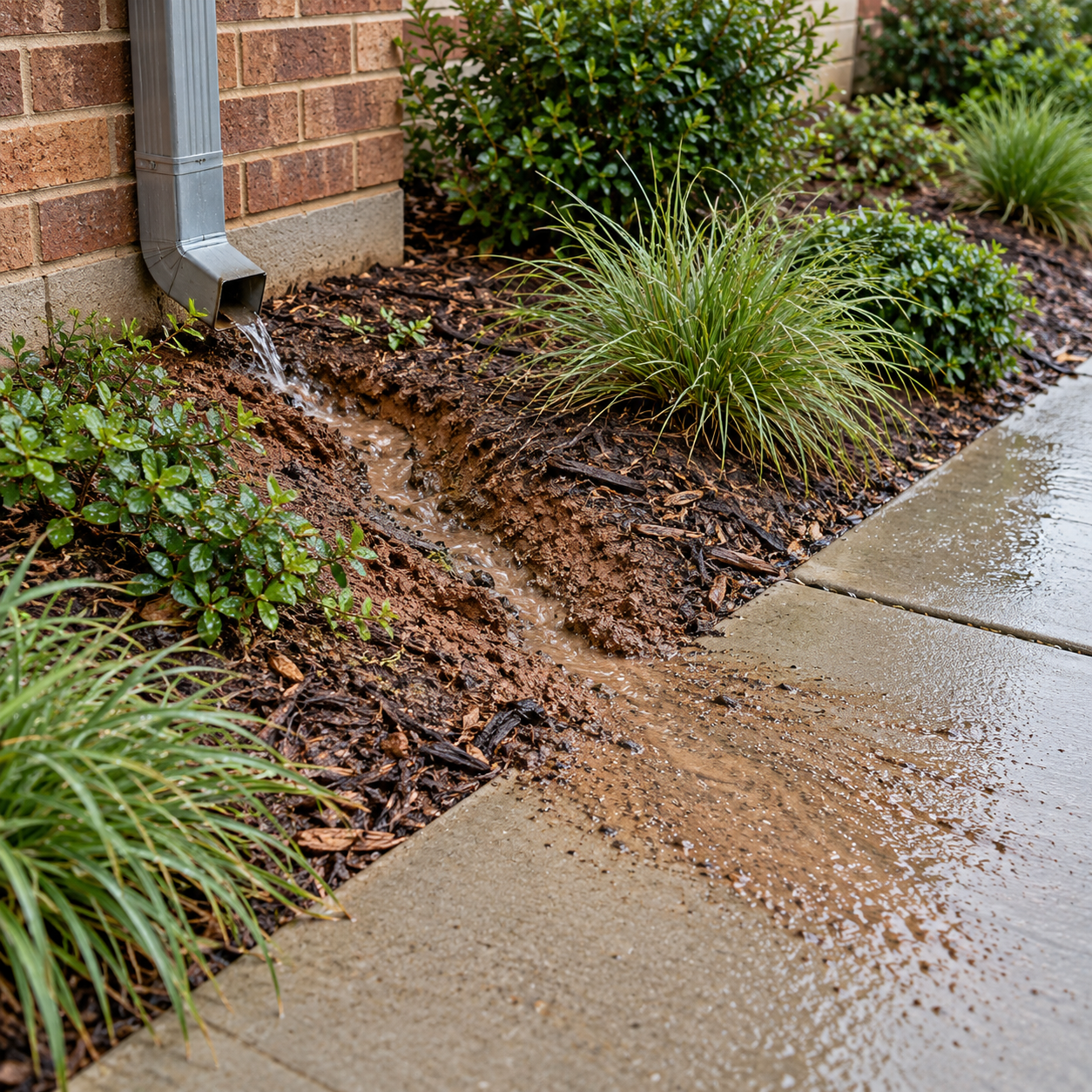
If a retaining wall borders the affected pavement, Why Soil Is Washing Out Around Your Retaining Wall in Fort Worth explains a related erosion and support-loss pathway. The wall and pavement may need coordinated assessment where they share the same drainage route.
Decision Gate 4: What Exactly Has Failed?
Ask the evaluator to distinguish among surface deterioration, joint or crack leakage, lost ground support, and structural damage. These findings lead to different repair scopes.
- Localized surface deterioration may suit a bonded repair after unsound material is removed and the remaining concrete is confirmed sound.
- A leaking joint may need a compatible joint treatment after movement and moisture conditions are assessed. A rigid patch is not a universal substitute for a joint designed to move.
- Settlement requires evaluation of support and drainage before deciding whether lifting, stabilization, or replacement is appropriate.
- Extensive deterioration or damaged structural concrete may require replacement or an engineer-designed repair.
Be cautious about coating-only proposals where concrete is crumbling, moving, or persistently wet. A new finish cannot restore missing support or resolve continuing leakage.
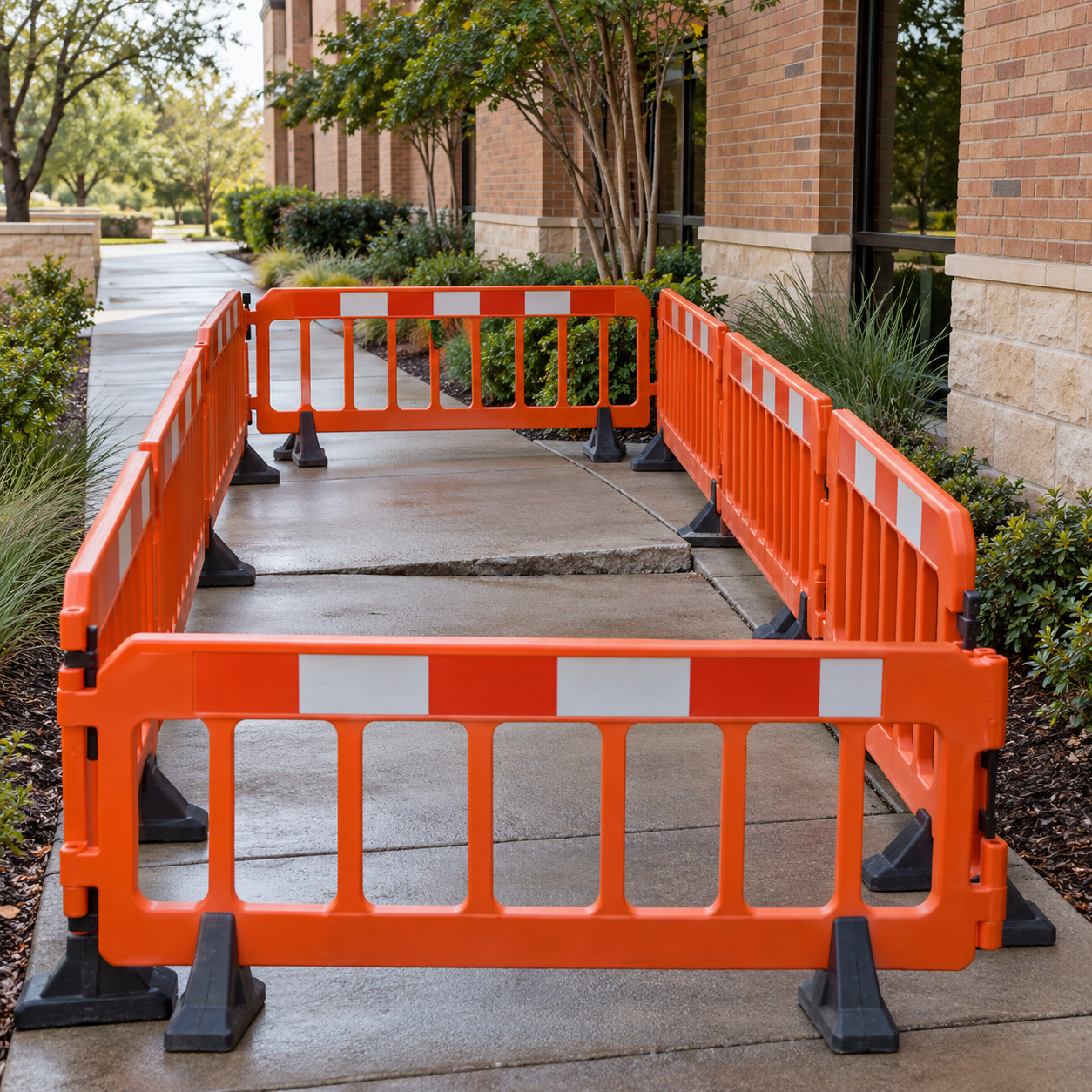
Decision Gate 5: How Quickly Does the Condition Need Attention?
Restrict access around loose pieces, unstable edges, visibly undermined sections, or displaced walking surfaces. Arrange prompt assessment for rapid movement, exposed reinforcement, or deterioration involving structural slabs, columns, overhead concrete, or building foundations.
For stable conditions, prepare dated wet-and-dry photographs, note when moisture appears, and identify the vehicles or equipment using the area. Ask for a written scope covering the suspected cause, repair limits, drainage work, preparation, and reopening requirements.
After repair and water-source correction, The Importance of Proper Concrete Maintenance for Fort Worth Homeowners provides broader maintenance context. The repair decision should follow evidence of what failed, not the presence of water alone.

Written By:
Kurt Manalastas
Home & Property Research Journalist
Kurt is a Home & Property Research Journalist who creates educational content on home services, property improvement, and residential decision-making. He turns contractor experience, industry standards, and verified research into clear, practical guidance that helps homeowners understand their options and make informed decisions.