Summary
Soil washing out around a retaining wall usually means water is carrying exposed earth away, escaping with backfill through openings, or eroding the wall’s support. The location of the missing soil helps narrow the cause. Correct the water path and assess stability before adding fill or patching the wall.
A muddy streak below your retaining wall may look like a landscaping problem. A hollow forming behind it or an exposed base deserves closer attention. Both involve missing soil, but they can require very different repairs.
An evaluation should establish where the soil started, how water moved it, and whether the wall has shifted. Available retaining wall construction and repair services in Fort Worth cover work on the structure as well as planning for its surrounding conditions.
Fort Worth Concrete Contractors is a family-owned business led by Lahi Kautai, with more than 20 years of concrete experience across Dallas–Fort Worth. For an existing wall, the useful starting point is a clear description of the erosion and when it appears.
Locate the Missing Soil Before Choosing a Fix
Look at the pattern from stable ground without walking onto a depression or leaning over the wall.
Channels above or around an end: Water may be running across bare ground and bypassing the wall.
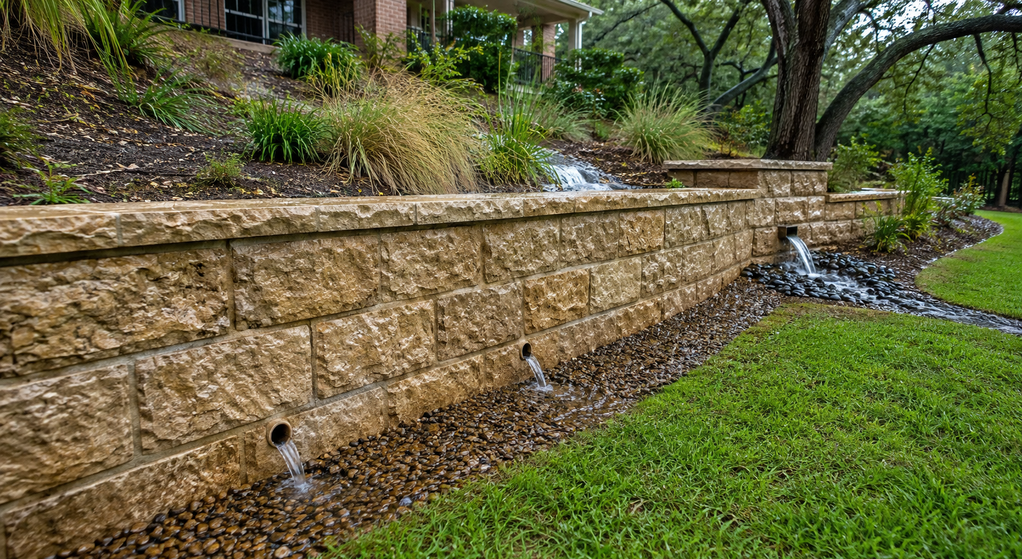
Sediment below joints or drain openings: Water may be carrying soil from behind the wall through an unprotected path.
A depression behind the top: Backfill may have escaped or settled. A depression alone does not establish which occurred.
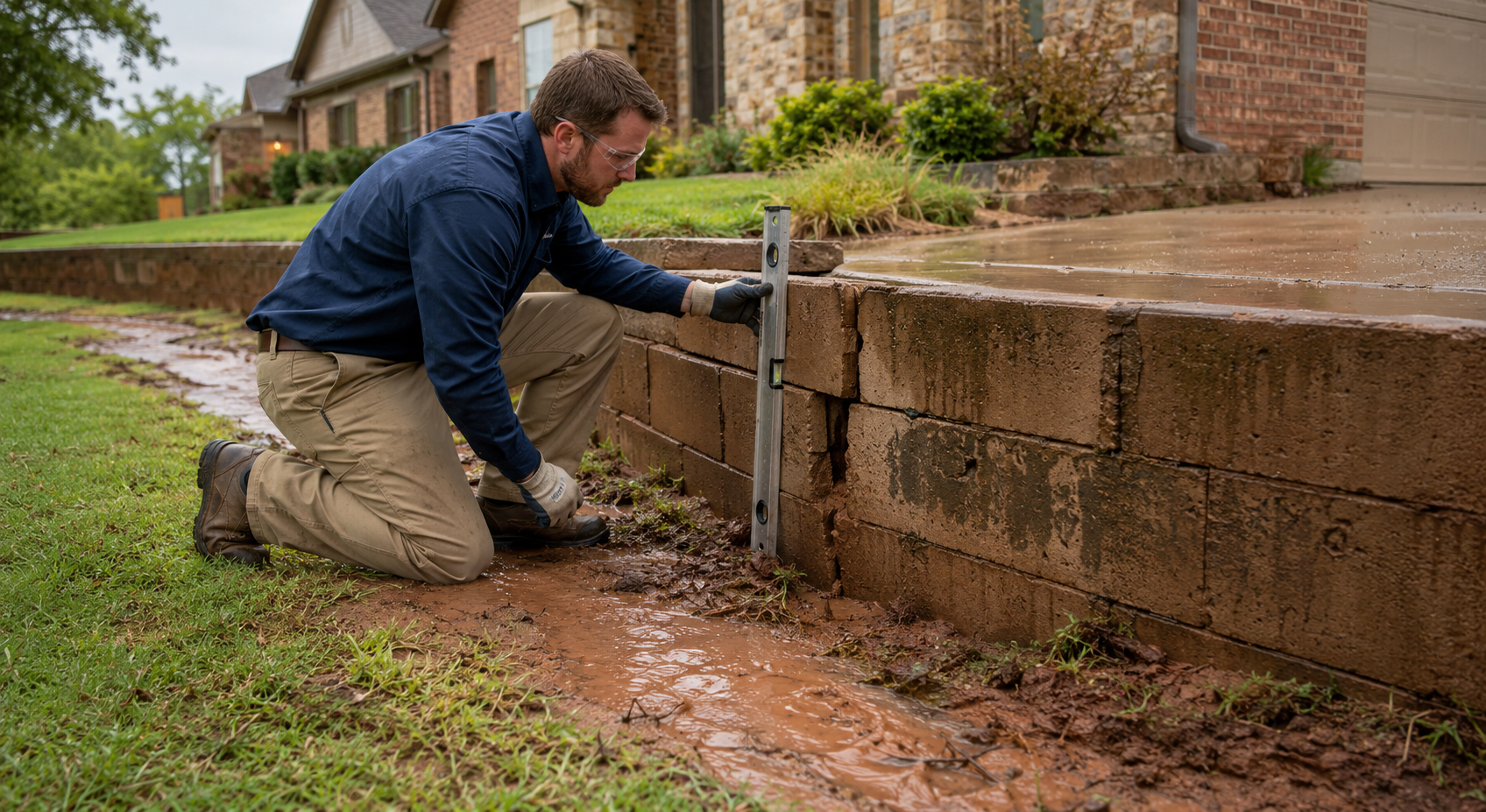
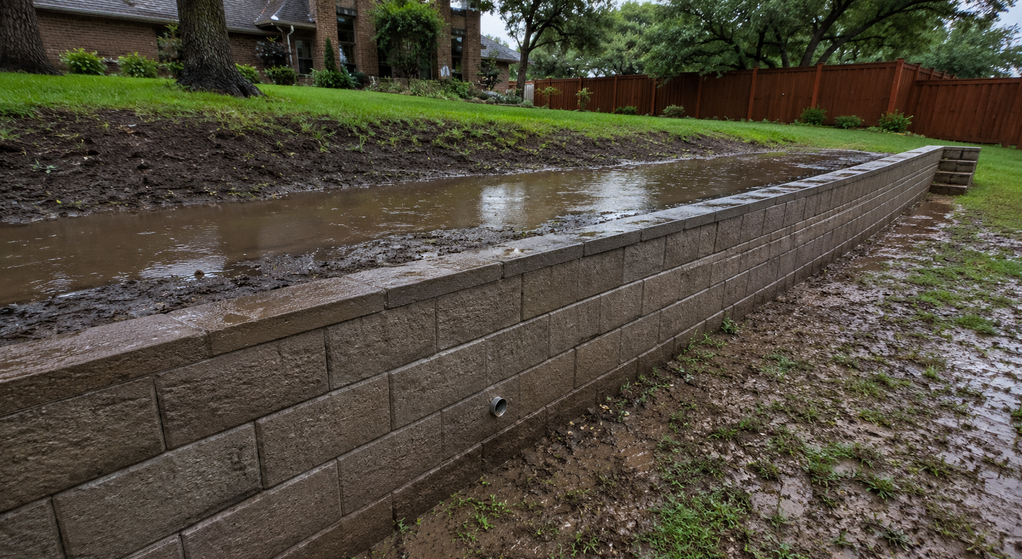
A trench along the front or an exposed underside: Flow may be removing soil beside or beneath the wall’s base.
Also consider where deposited dirt came from. Mud below a wall can arrive from an uphill planting bed without passing through the wall itself. Photograph both the deposit and any trail leading toward it before cleaning up.
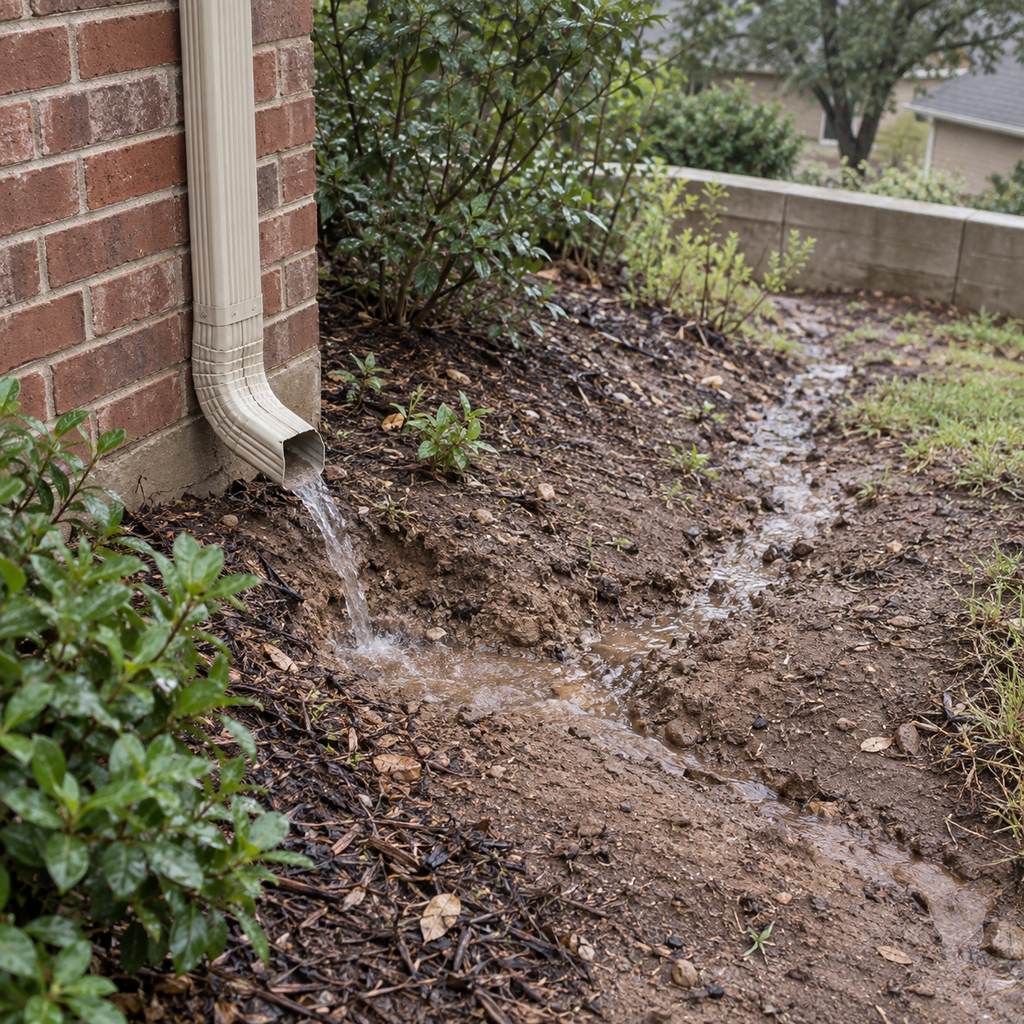
Concentrated Runoff Can Overwhelm Surface Protection
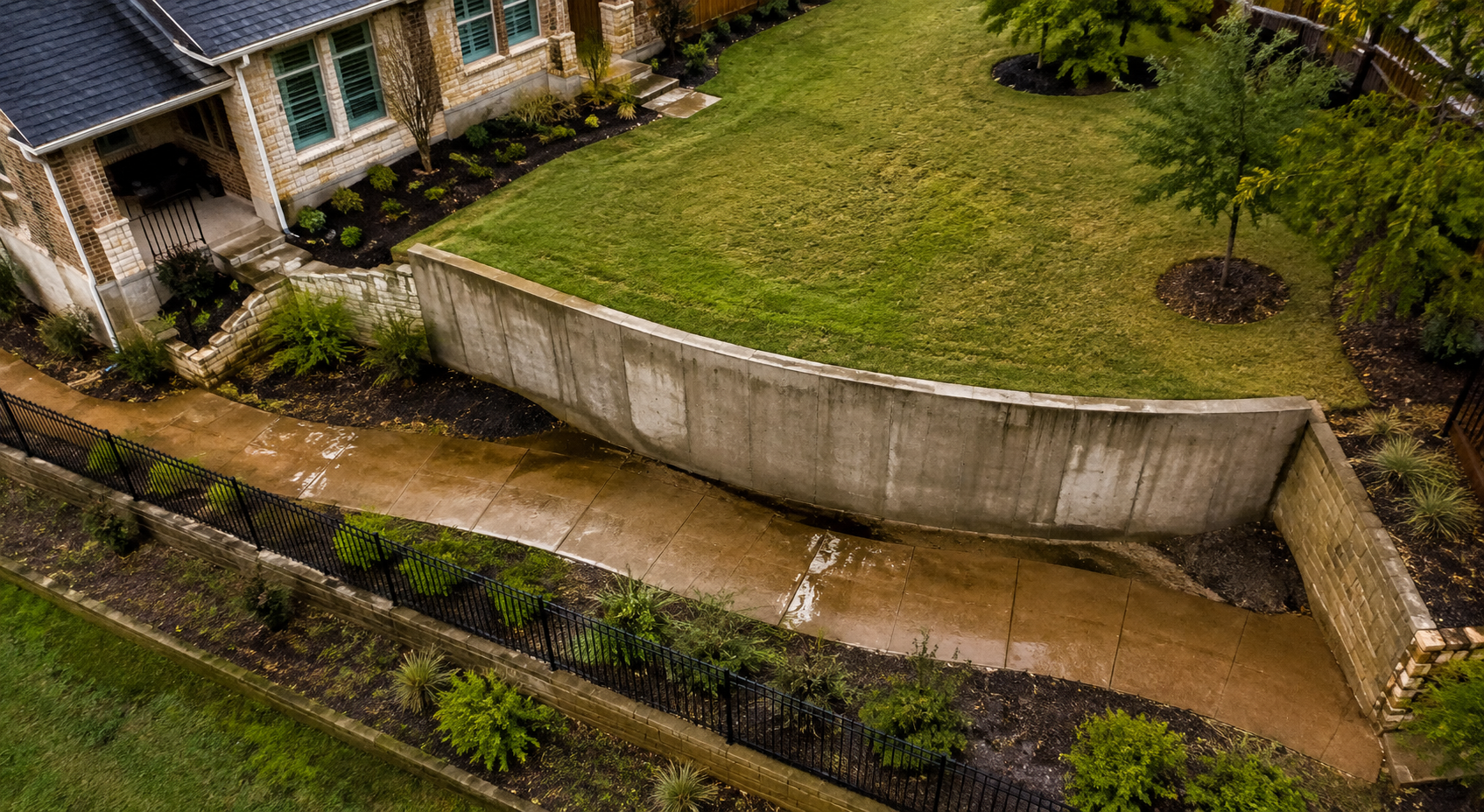
A downspout, sloping driveway, overflowing gutter, or narrow passage between buildings can concentrate water onto one patch of soil. The wall may hold the slope while runoff cuts around its end or over its top.
For a Fort Worth property, compare what happens during rainfall with what happens during scheduled irrigation. Erosion that appears only after storms points toward a different water source than a wet channel that returns on dry mornings. A damaged sprinkler line or misdirected head may keep supplying water between rains.
Before replacing plants or mulch, trace where roof and pavement runoff enters the retained area. A proposed
diversion should identify a suitable destination for the water. Sending it toward another part of the wall, a foundation, or a neighboring lot simply relocates the problem.
Groundcover can help protect exposed soil, but planting alone will not correct a concentrated discharge.
Water May Be Carrying Backfill Through the Wall
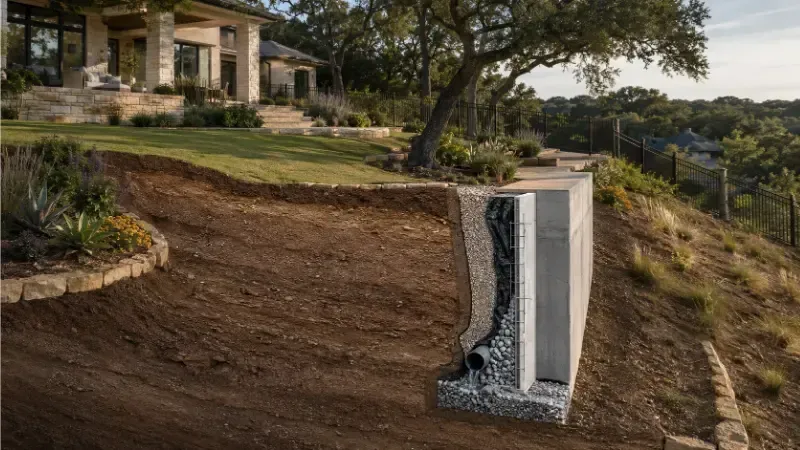
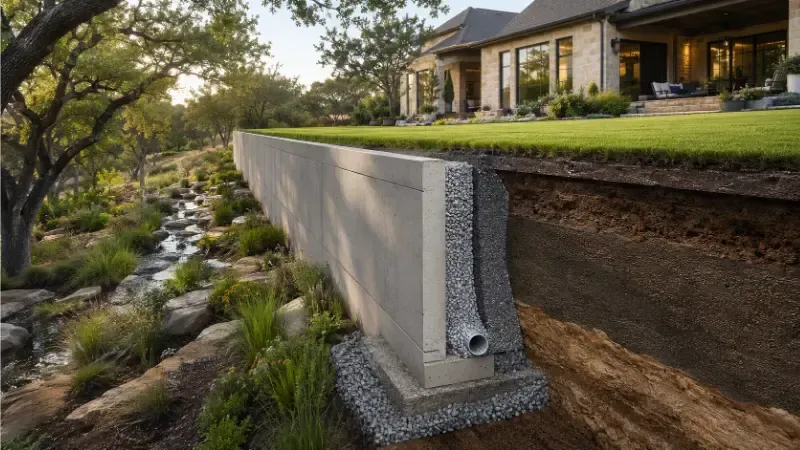
Drainage needs to release water while retaining soil. When those functions become separated, water can carry particles through joints or other openings and leave hidden voids behind the face.
The Texas Department of Transportation’s guidance on retaining-wall backfill and filter fabric explains that flowing water can erode certain backfills and that gaps in filter fabric can allow fill to escape. Its panel-wall guidance illustrates why soil retention matters alongside drainage; residential wall details must suit the actual wall system.
Recurring sediment discharge paired with sinking ground
warrants investigation of the concealed materials. Possible
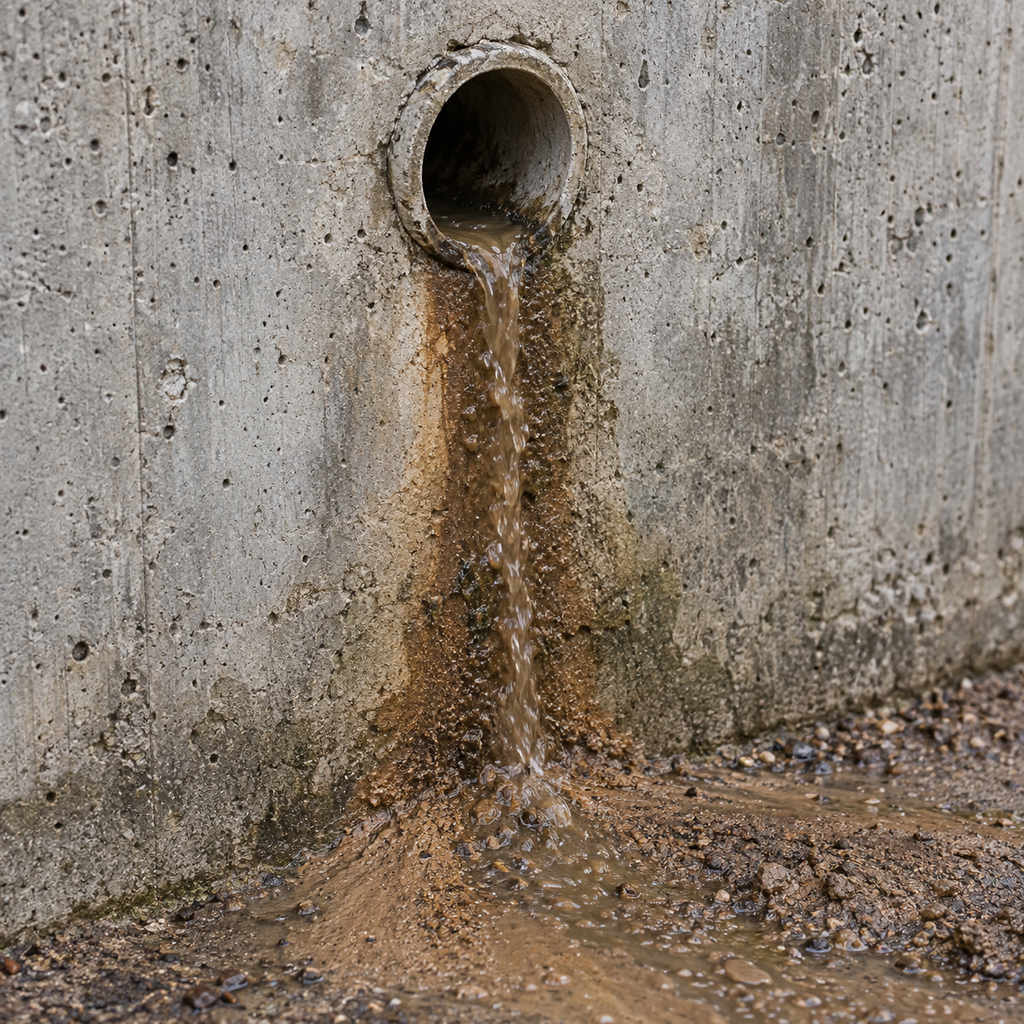
issues include missing or damaged filtration, unsuitable backfill, or a disconnected drainage component. A visible opening does not reveal the condition behind it.
Understanding how weep holes, gravel, and drainage pipes work together in Fort Worth retaining walls helps distinguish the water outlet from the components that collect water and keep soil in place.
Adding Dirt or Sealing Openings Can Hide the Cause
Filling a hollow restores the surface temporarily, but it does not explain where the original material went. If the escape path remains open, replacement soil may follow it.
Likewise, plugging a weep hole because muddy water comes out can interfere with intended drainage. Randomly drilling new holes is not a dependable substitute for understanding the wall’s construction.
Loose gravel poured into a depression is also not a complete repair specification. The appropriate material, placement, compaction, and drainage details depend on what is missing and what the wall requires.
Ask for the cause to be documented before evidence disappears beneath fresh soil, mulch, or a cosmetic patch.
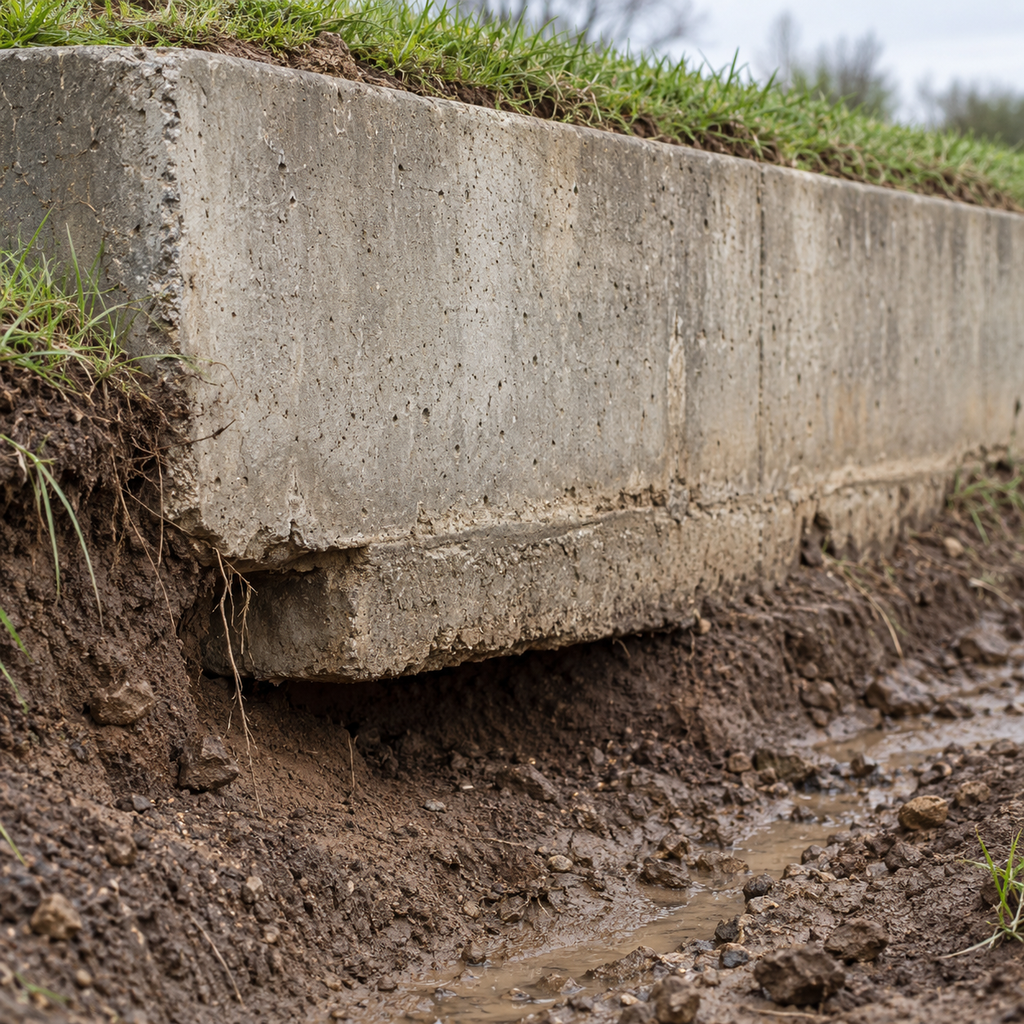
Decide Whether the Problem Includes Lost Support
Erosion near a wall becomes more consequential when it accompanies leaning, bulging, widening cracks, displaced blocks, or a growing gap behind the top. An exposed footing or cavity beneath the base also needs prompt assessment.
Keep people away from visibly unstable sections and seek an engineer’s evaluation when movement or undermining is present, particularly where the wall supports a driveway, building, or occupied area. Avoid digging beside the base to investigate it yourself.
A limited drainage defect and a wall with extensive support loss should not receive the same repair proposal. The guide to whether a damaged retaining wall in Fort Worth can be saved explains the factors that separate localized repair from reconstruction.
Prepare for an Inspection That Answers the Right Questions
Collect dated photographs, note rainfall or irrigation timing, and identify nearby downspouts, paved areas, and visible outlets. Include previous repairs and whether the same hollow keeps returning.
Ask the evaluator to explain:
- Where the escaping soil originates.
- Which water source drives the loss.
- Whether the base and retained ground remain stable.
- What the repair changes and where water will discharge afterward.
The goal is to retain soil while giving water a controlled route away. Restoring the surface comes after understanding the loss and addressing any damage to the wall’s support.

Written By:
Kurt Manalastas
Home & Property Research Journalist
Kurt is a Home & Property Research Journalist who creates educational content on home services, property improvement, and residential decision-making. He turns contractor experience, industry standards, and verified research into clear, practical guidance that helps homeowners understand their options and make informed decisions.