Summary
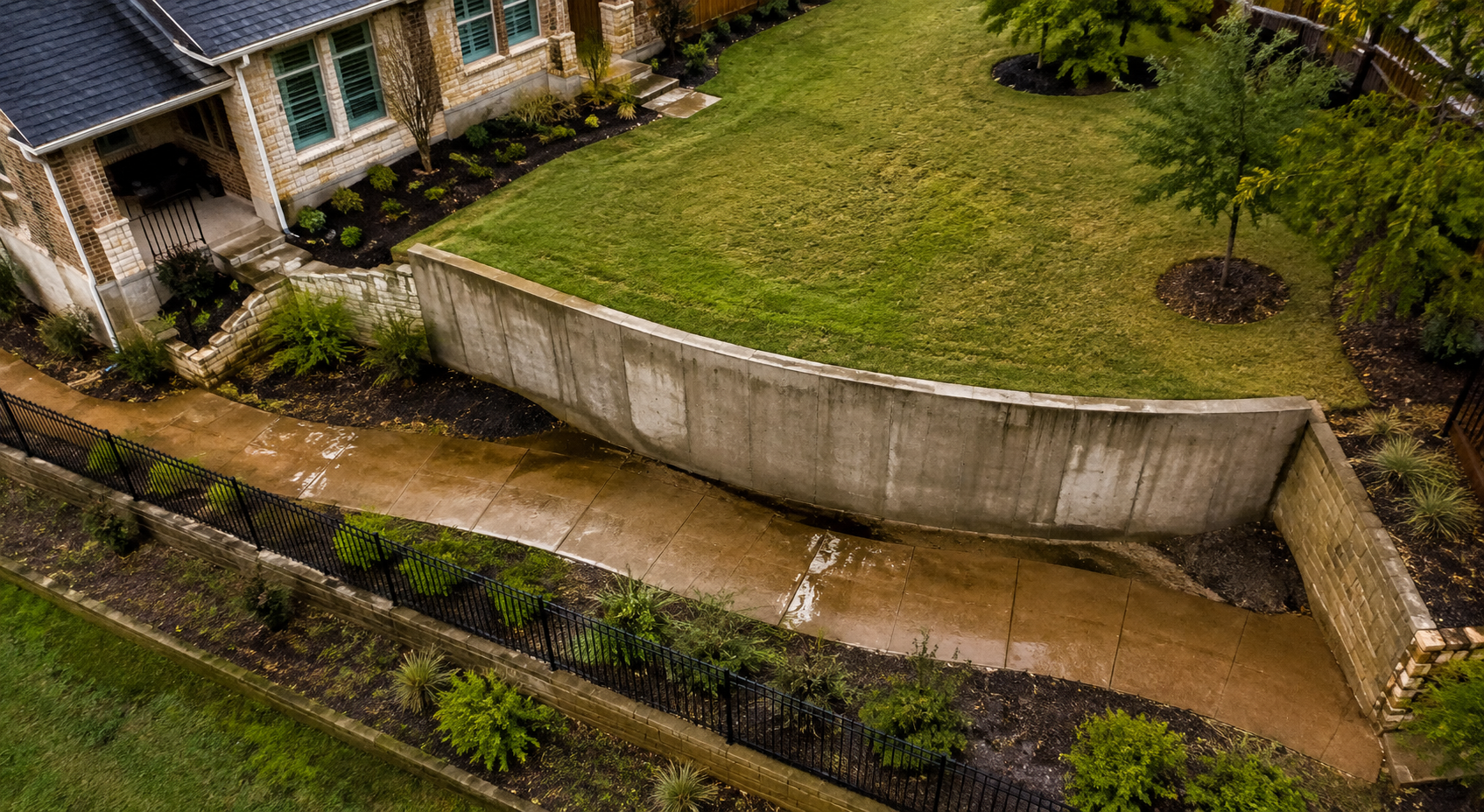
Concrete can appear to sink after heavy rain when water erodes supporting material, softens moisture-sensitive ground, or exposes poorly compacted fill. On Fort Worth properties, expansive soil can complicate the picture. Confirm that the slab actually moved, then identify the support and drainage mechanism before deciding whether lifting, stabilization, or replacement makes sense.
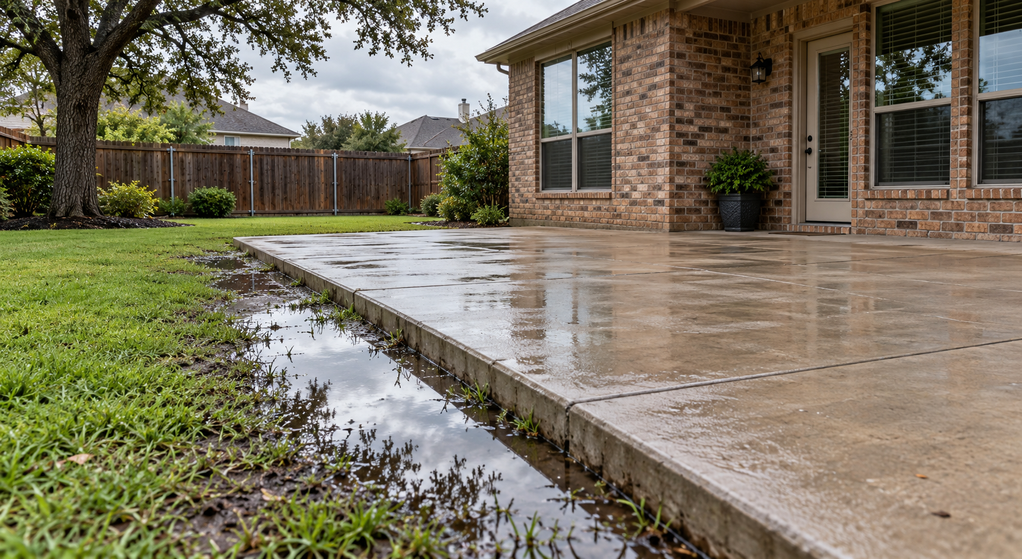
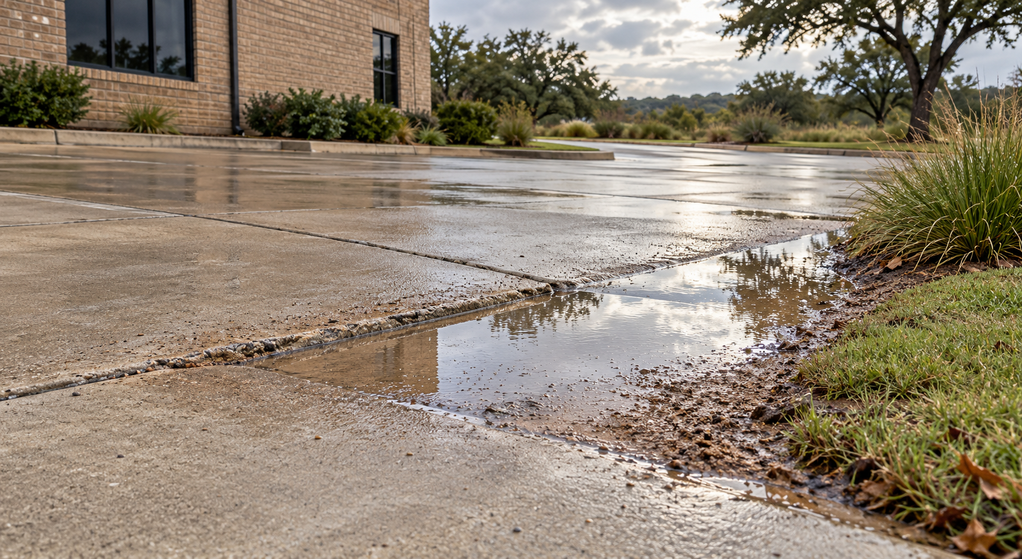
A driveway edge that looks lower after a storm or a sidewalk that suddenly holds water deserves more than a surface patch. The concrete may still be intact while the material beneath it no longer provides even support.
For vehicle-bearing and business surfaces, commercial concrete slab and flatwork services in Fort Worth involve drainage, ground support, and loading together. Fort Worth Concrete Contractors provides residential and commercial concrete work across the area.
Step 1: Confirm That the Concrete Actually Moved
A puddle alone does not prove recent settlement. Rain can reveal an old finishing depression, and a blocked drain can create ponding on concrete that has not moved. Compare the affected panel with adjoining joints, thresholds, and earlier photographs.
A newly uneven joint, widening separation, changed slope, or measured elevation difference is stronger evidence than standing water alone. Where the amount or direction of movement is uncertain, a professional elevation survey can help distinguish broader movement from a shallow surface depression.
Step 2: Identify the Support-Loss Mechanism
Heavy rain can expose several weaknesses beneath concrete:
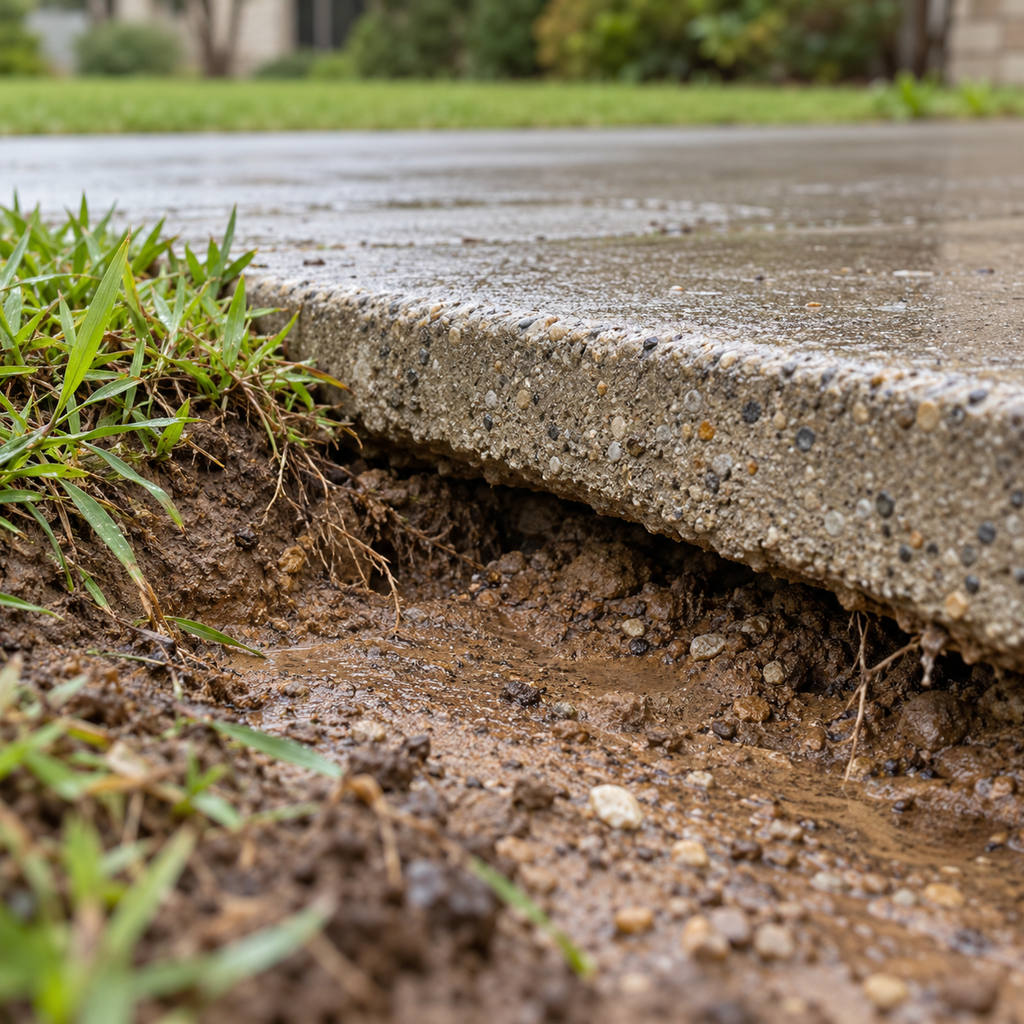
- Erosion: concentrated runoff or water entering cracks, joints, or exposed edges can carry fine supporting material away.
- Saturation and softening: some soils and base materials lose stiffness as moisture rises, allowing the slab to deform more under loading.
- Poorly compacted fill: loose material beneath a slab or utility trench can compress after wetting and repeated use.
- Pumping under traffic: water and fines can be forced from beneath loaded pavement, leaving voids.
FHWA’s concrete pavement foundations and drainage guidance describes pumping as repeated vehicle loads forcing water and fine material from beneath pavement, eventually creating a void and contributing to joint faulting.
Step 3: Distinguish Settlement From Nearby Heave
Fort Worth-area soils can include expansive clay, but site conditions vary. Clay can swell as it gains moisture and shrink as it dries. One panel may therefore look low because it settled, because the neighboring ground or slab rose, or because both moved differently.
Do not approve a lifting plan solely because one edge appears lower. Ask which section moved, what measurements support that conclusion, and whether soil conditions are uncertain enough that further investigation would change the repair design.
The inventory article on The Role of Geotechnical Testing in Designing Long-Lasting Residential Courts provides related context for when soil information can influence outdoor slab design.
Step 4: Trace the Water Path Before Covering the Evidence
Once conditions are safe, look beyond the lowest part of the concrete. A downspout may discharge beside the opposite edge, runoff from a higher planting bed may enter a joint, or irrigation may keep the same area wet even between storms.
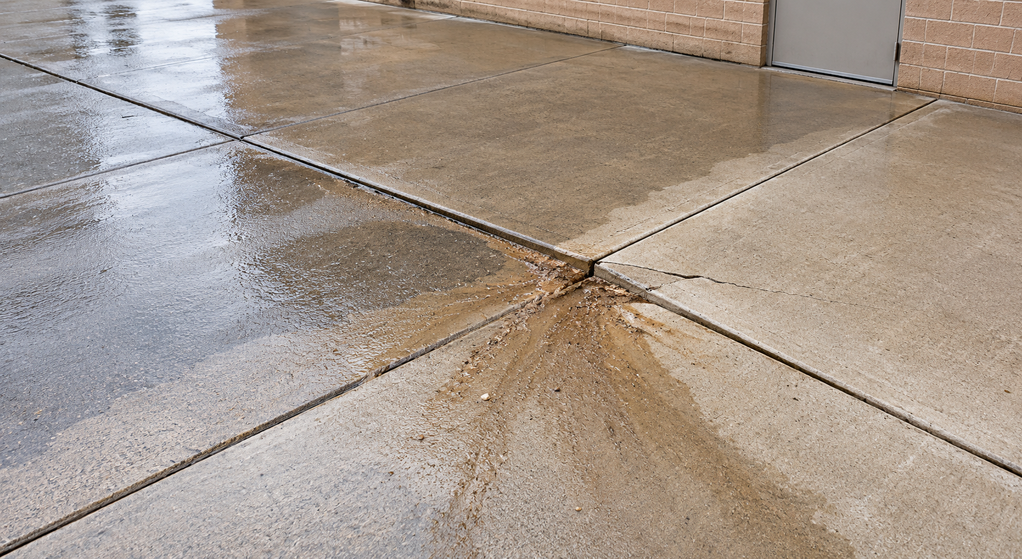
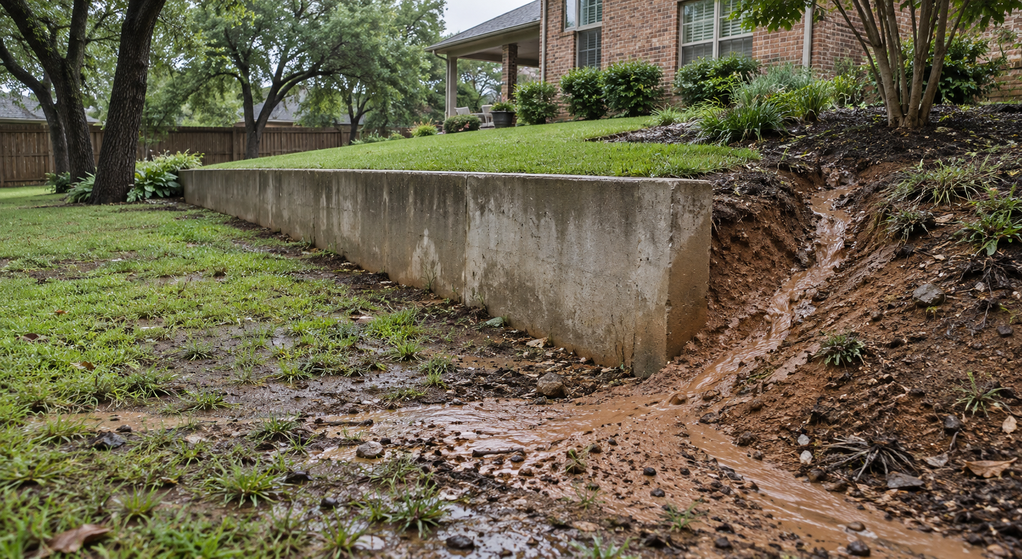
Record where water arrives, where it collects, and where it leaves. Fresh sediment, exposed slab edges, channels in adjacent soil, and muddy residue at joints are useful clues. Photograph them before cleanup removes the evidence.
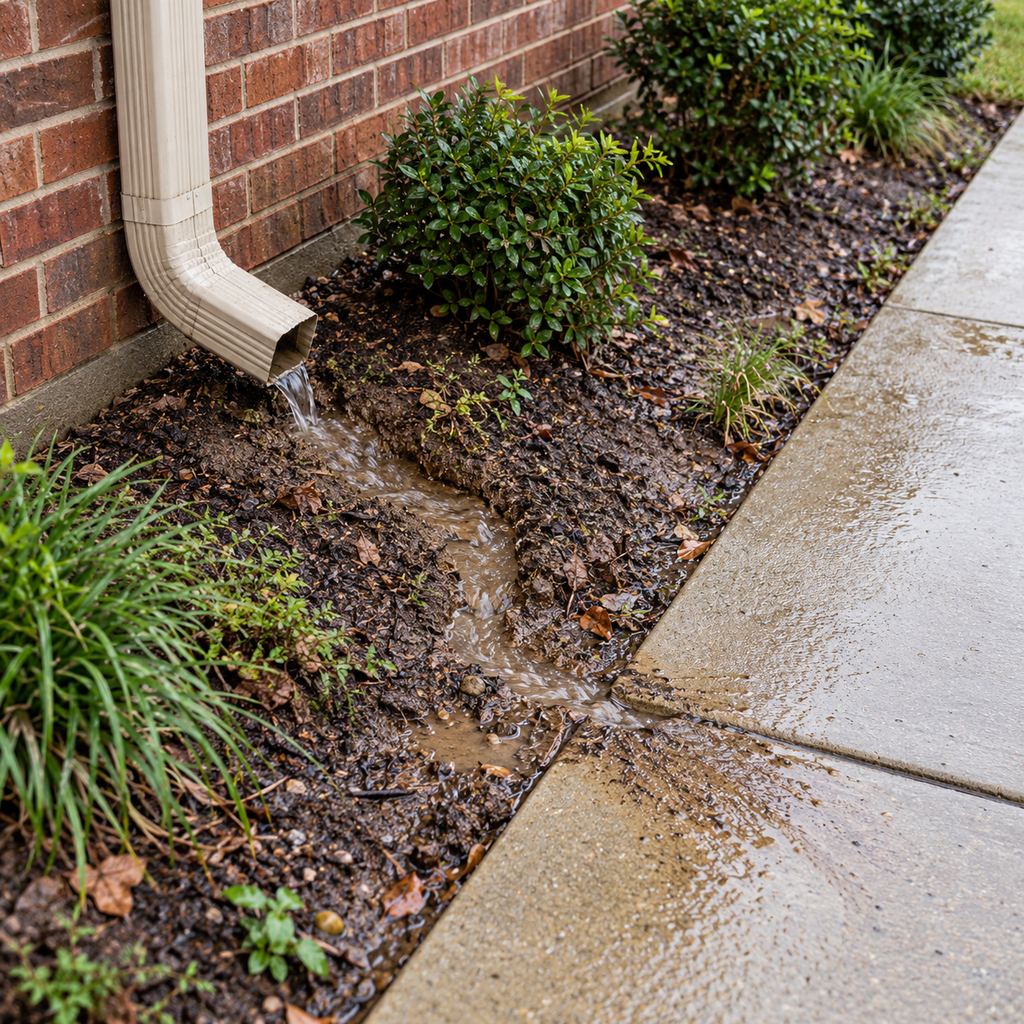
Where runoff is visibly carrying soil away, Why Soil Is Washing Out Around Your Retaining Wall in Fort Worth explains a related erosion pathway. Avoid packing loose soil into a visible edge gap as a substitute for restoring support farther beneath the slab.
Step 5: Match the Repair to the Support Failure
The appropriate repair depends on the slab’s condition, amount of movement, underlying support, connected structures, and whether the water source can be controlled.
- Drainage correction can reduce continued erosion or saturation, but it does not automatically return a settled panel to its original elevation.
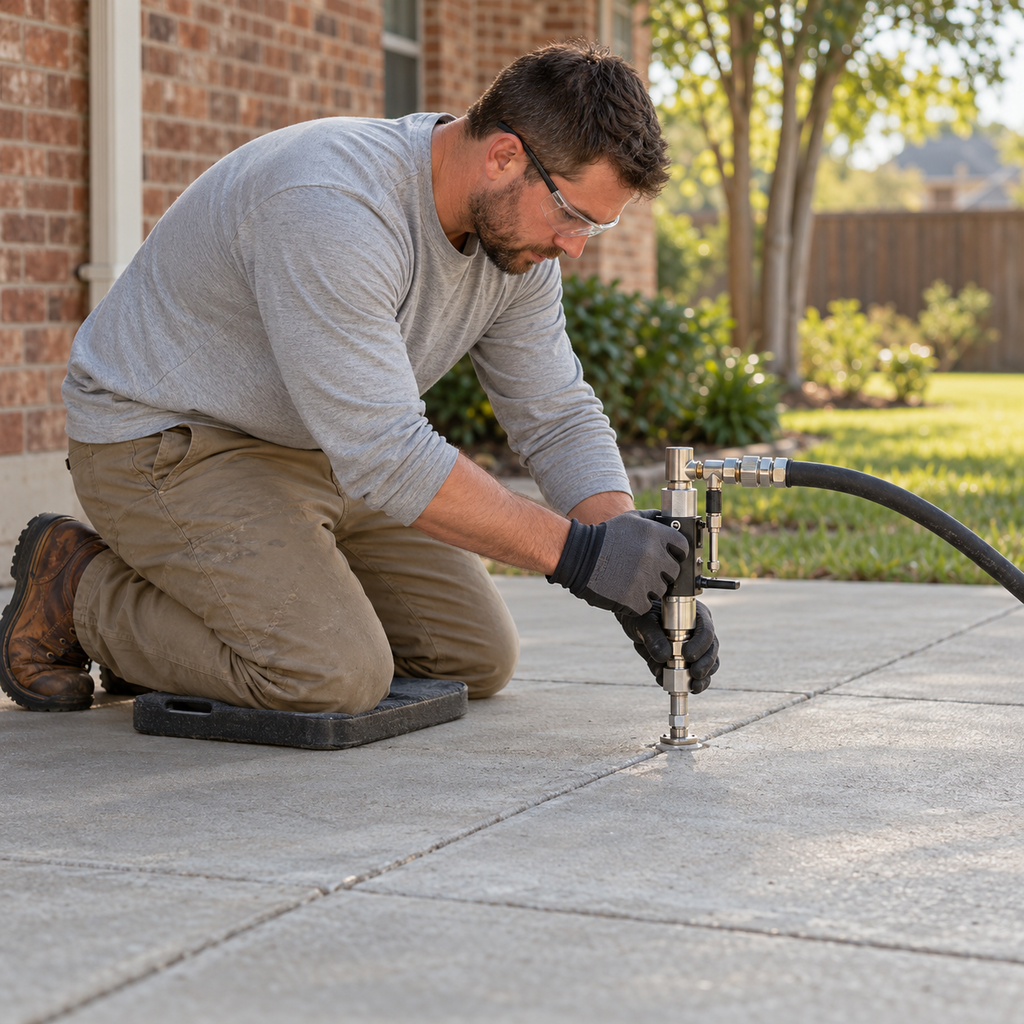
- Slab lifting or stabilization may suit relatively intact concrete where the support problem is correctable and the finished drainage slope can be restored.
- Removal and replacement may be appropriate where concrete is badly fractured, the base needs reconstruction, or the existing geometry cannot drain correctly.
Grinding a raised joint can reduce a localized lip, but it does not restore support beneath the lower panel. A surface overlay similarly cannot stop active settlement.
Before the next storm, keep traffic away from visibly undermined areas and bring dated photographs plus a simple water-path sketch to the assessment. The repair should address both the visible elevation change and the mechanism that allowed support to change.

Written By:
Kurt Manalastas
Home & Property Research Journalist
Kurt is a Home & Property Research Journalist who creates educational content on home services, property improvement, and residential decision-making. He turns contractor experience, industry standards, and verified research into clear, practical guidance that helps homeowners understand their options and make informed decisions.