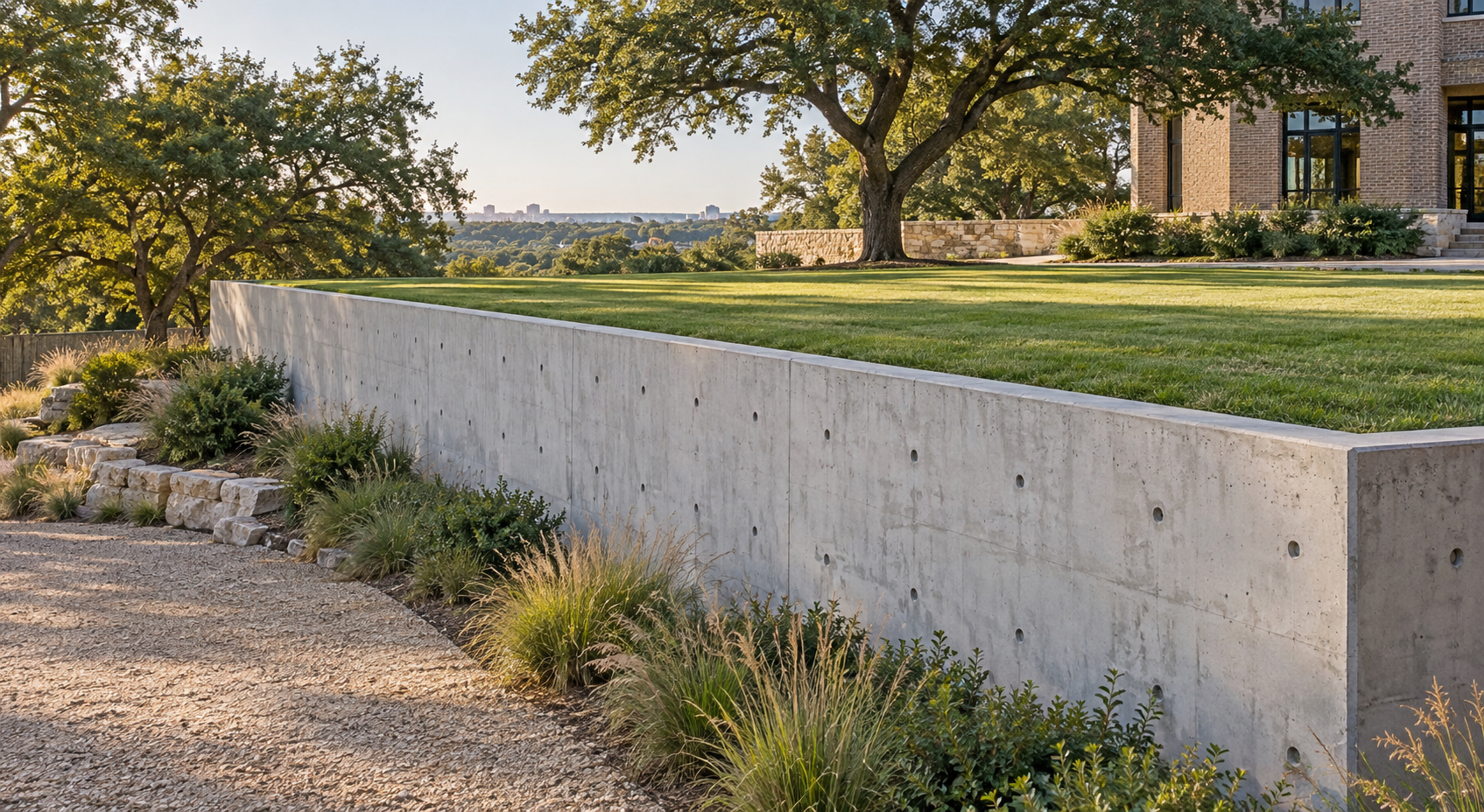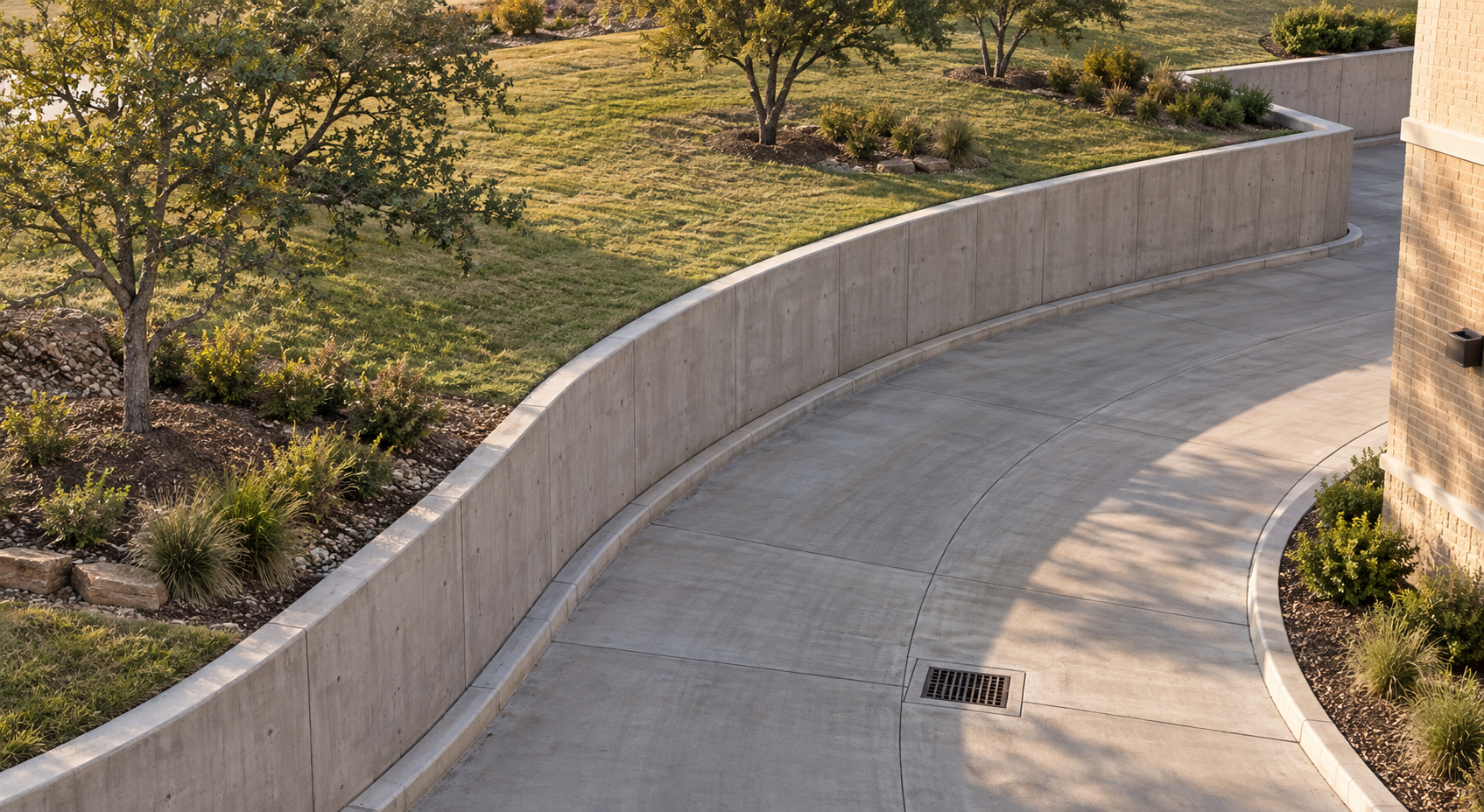
Summary
Commercial retaining walls do more than hold back soil. They help protect parking areas, access routes, buildings, utilities, and usable land. Durability depends on site-specific engineering, drainage, foundations, reinforcement, materials, and maintenance, especially where North Texas soils and concentrated runoff place changing pressure on the structure.
A commercial retaining wall may support soil beside a parking lot, loading area, sidewalk, building, or neighboring property. If it moves, lost access, damaged pavement, exposed utilities, and safety restrictions can interrupt normal operations.
For owners evaluating durable concrete retaining wall construction and repair in Fort Worth the useful question is not simply how the finished wall will look. It is whether the proposed system fits the soil, water, loads, layout, and service life of the property.
Fort Worth Concrete Contractors provides residential and commercial concrete services and is led by Lahi Kautai, who brings more than 20 years of hands-on concrete experience in the Dallas-Fort Worth Metroplex. The company is licensed and insured.

A Commercial Wall Protects More Than the Slope
Vehicle traffic, stored materials, dumpsters, pavement, and nearby structures may create surcharge loads above or behind a commercial wall. These loads must be considered in the design rather than treated as ordinary landscaping.
A dependable wall can preserve usable space, support stable grades, and keep soil away from paved or occupied areas. A poorly matched wall may create secondary problems. A leaning section can affect a sidewalk, while erosion below it may undermine a drive aisle.
The business case for durability includes continued access, public safety, drainage performance, maintenance demands, and usable land.
Durability Starts With Site Conditions and Design Loads
Wall type and material matter, but neither can compensate for an incomplete site assessment. Design should account for wall height, retained slope, soil properties, groundwater or runoff, footing conditions, utilities, property boundaries, and loads near the top of the wall.
Texas Department of Transportation’s retaining-wall design procedures identify geometry, drainage, utilities, equipment access, excavation or shoring, and construction phasing as factors in wall selection and constructability. Those categories show why one generic detail is not enough for every commercial site.
A low wall beside an open lawn has different demands from a wall below a parking lot. The second condition may involve vehicle surcharge, limited excavation space, buried utilities, and a need to keep part of the property open. Those constraints influence engineering, access, scheduling, and cost.
Drainage Must Work as a Complete System
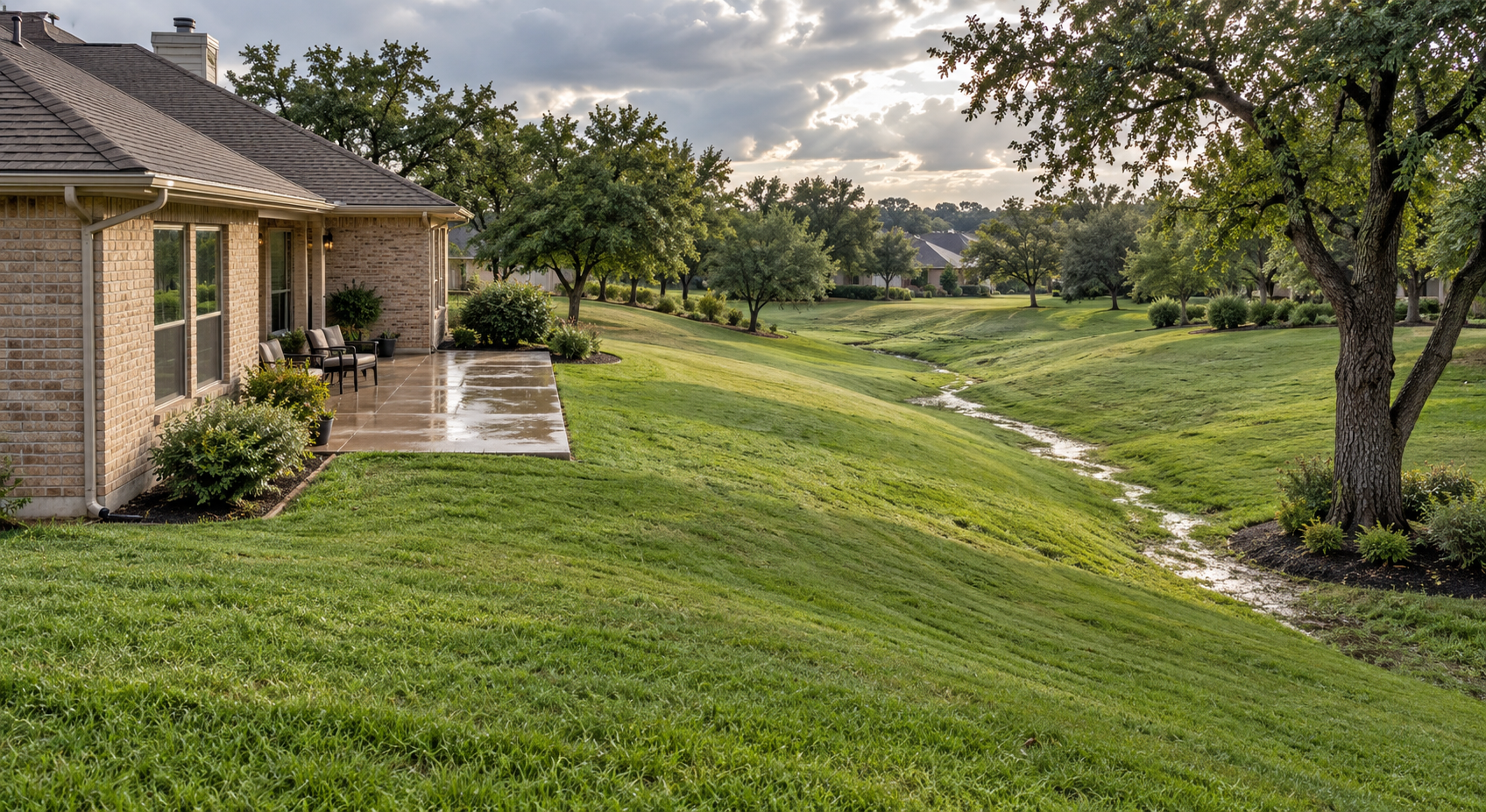
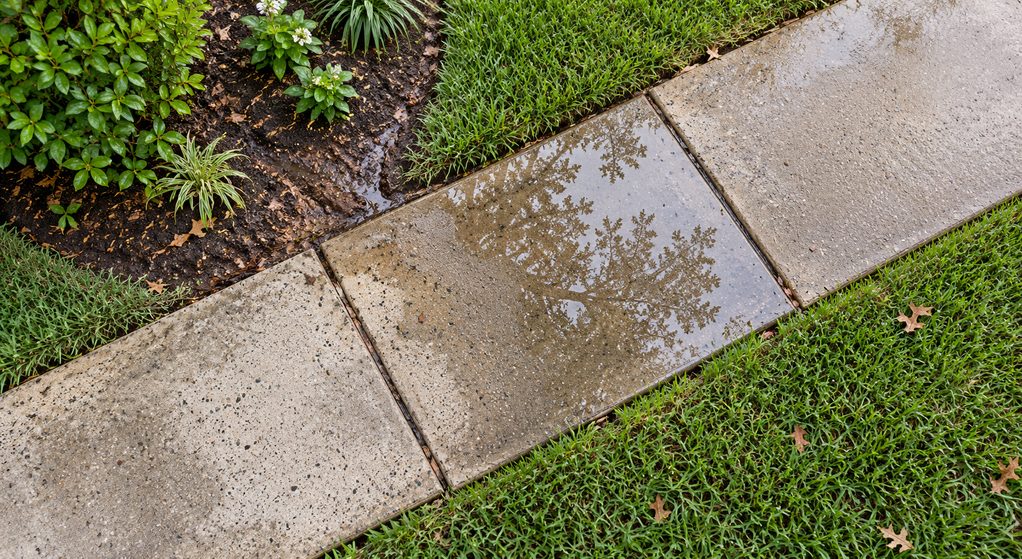
Soil pushes laterally against a retaining wall. Water within the retained soil can add hydrostatic pressure, while runoff can erode the base or carry away backfill. On Fort Worth sites with clay-rich or moisture-sensitive soils, changes between dry and wet conditions can further alter soil behavior. Actual conditions still need to be determined for the property.
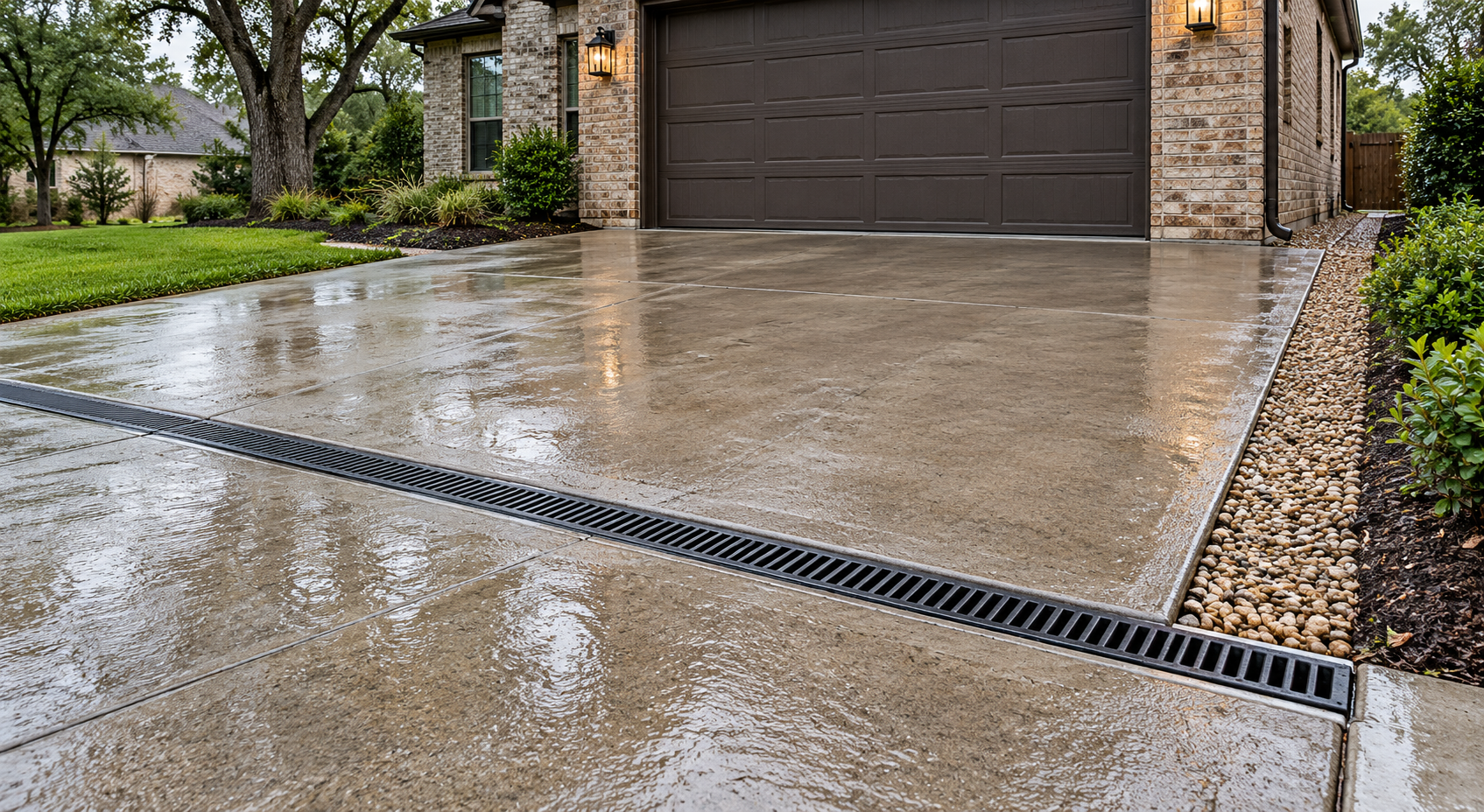
Durable drainage may include surface grading, free-draining aggregate, filter fabric, perforated pipe, weep holes, and a protected outlet. Each component has a different purpose. A pipe without adequate fall will not discharge properly, and open weep holes cannot compensate for clogged backfill.

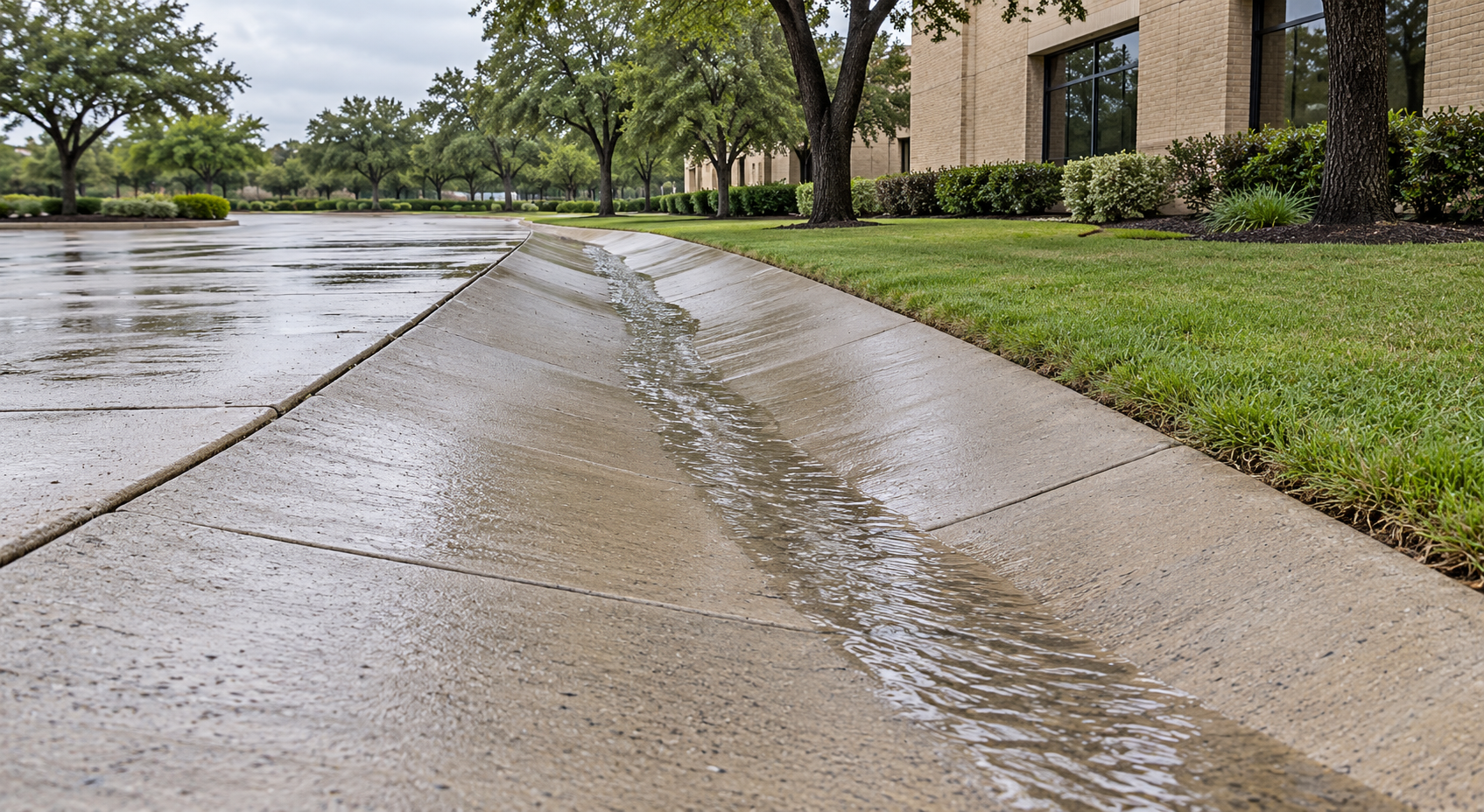
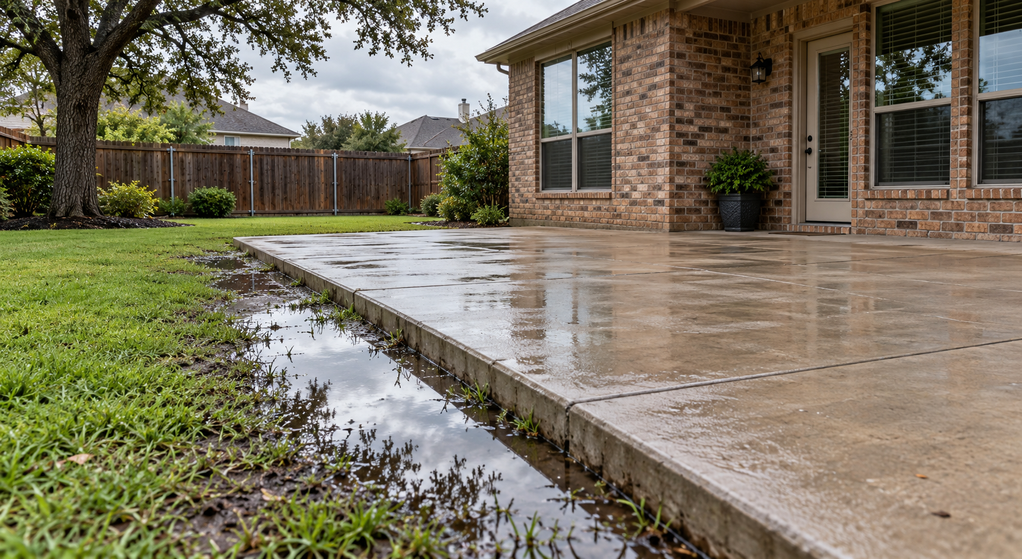
Owners should identify where roof drains, parking-lot runoff, and irrigation discharge. Concentrated water sent behind the wall can overload its drainage. The outlet must release water without eroding the footing, flooding a walkway, or affecting adjacent land.
For a closer look at common causes of saturation, the guide to why water pools behind retaining walls in Fort Worth explains how grading, irrigation, clay soil, and blocked drainage can contribute to recurring water buildup.
The Lowest Bid May Leave Important Work Undefined
Proposals with similar wall dimensions can cover very different scopes. One may include excavation, engineered details, base preparation, reinforcement, drainage, utility coordination, and restoration. Another may price only the visible wall.
Before comparing totals, ask each bidder to define:
- The assumed soil and loading conditions
- The wall system, footing, reinforcement, and backfill
- The complete drainage route and outlet
- Engineering and permitting responsibilities
- Protection of utilities, pavement, buildings, and neighboring property
- Site access, work-zone control, and construction phasing
- Restoration, inspection, and maintenance requirements
A durable solution may cost more initially because it addresses hidden work below grade. That scope matters when failure could close parking, restrict deliveries, or require reconstruction beside an occupied building.

Warning Signs Deserve Early Attention
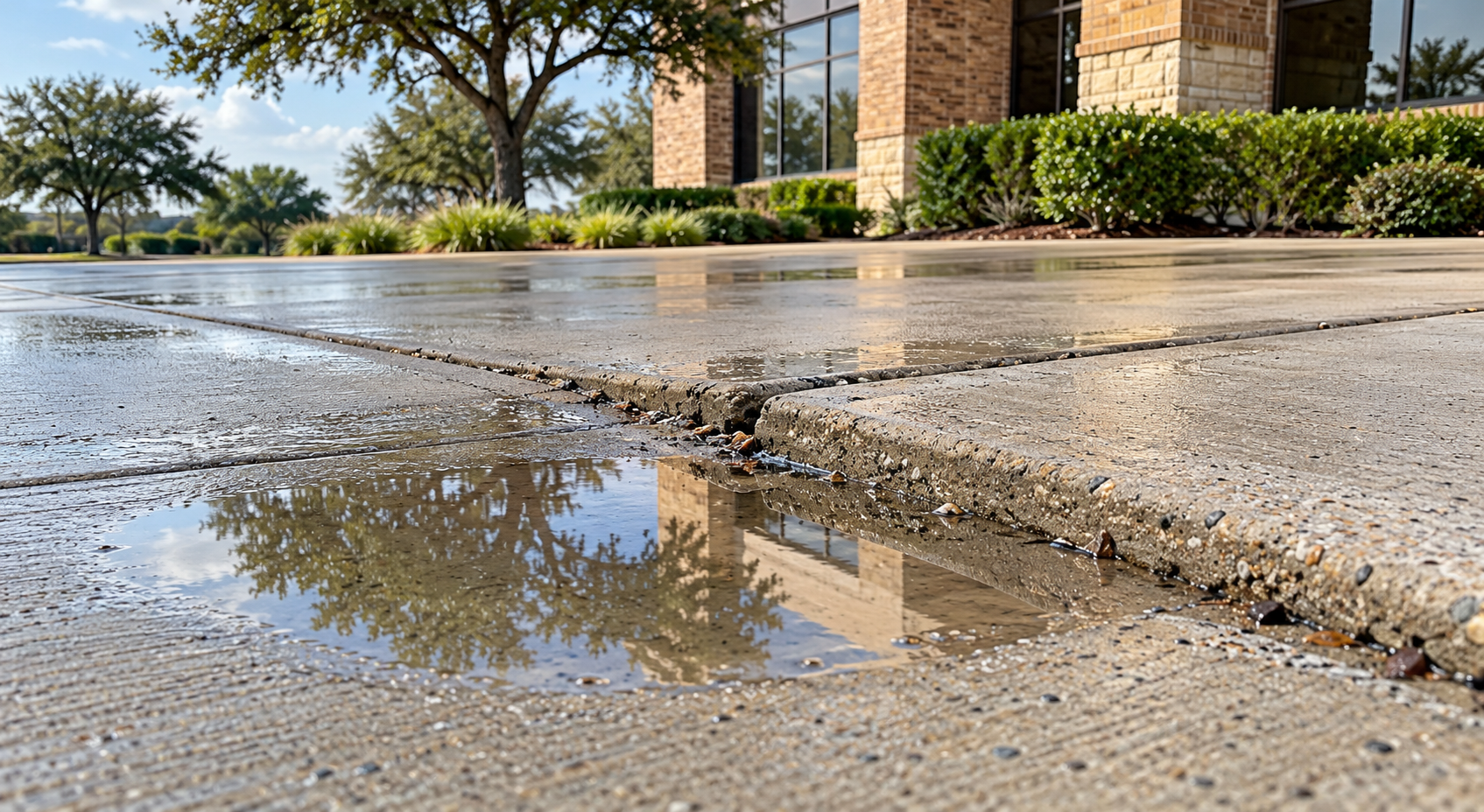
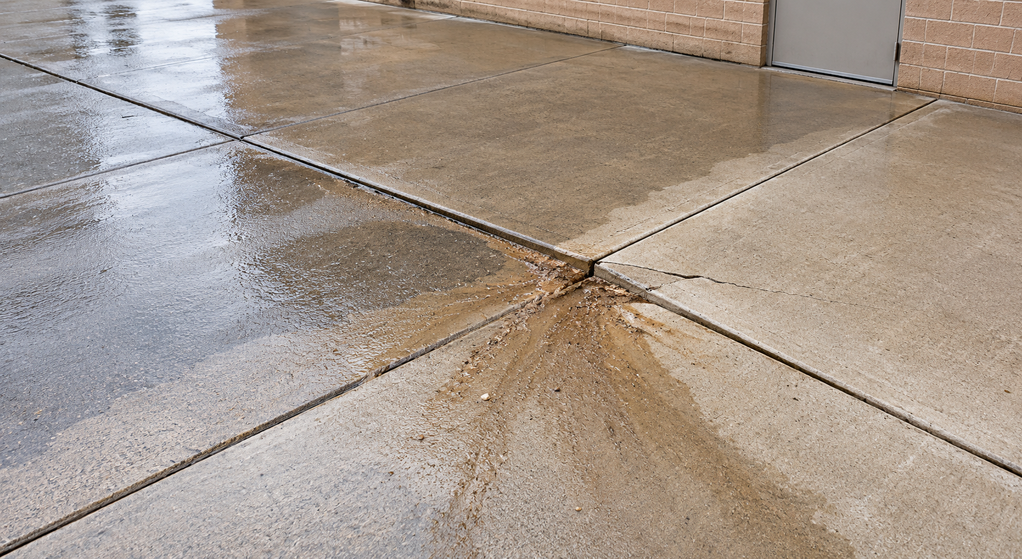
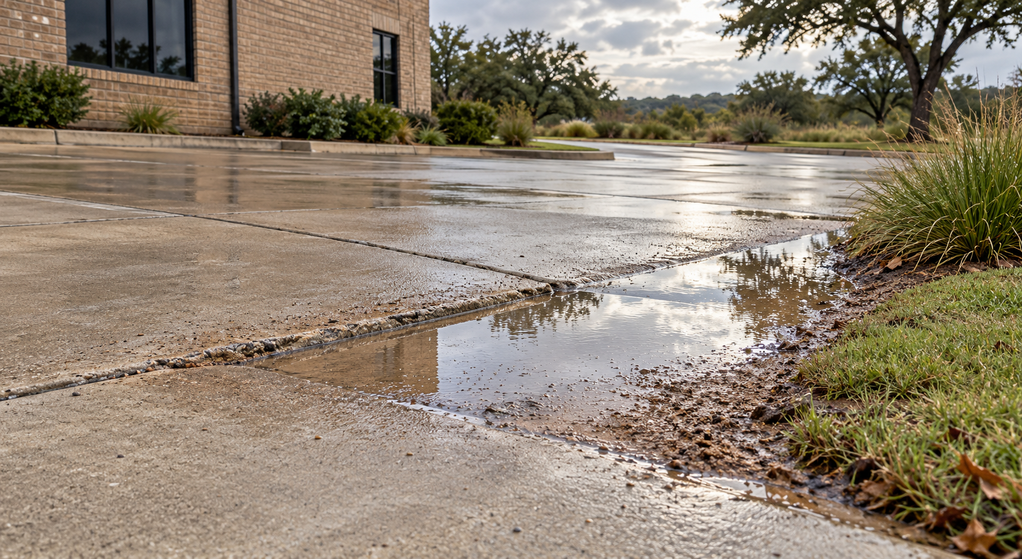
Existing walls should be checked after heavy rain and during routine property inspections. Warning signs include leaning or bowing, widening cracks, separated blocks, sinking sections, blocked outlets, persistent wet soil, muddy seepage, erosion at the base, and pavement or fencing moving above the wall.
These symptoms do not all require replacement, but cosmetic patching can hide evidence without correcting the cause. The guide to Fort Worth retaining wall repair warning signs explains which changes may indicate drainage, footing, soil, or structural problems. Prompt evaluation is especially important near an occupied area, accessible route, utility, driveway, or neighboring property.
Plan the Project Around the Property's Operations
Start with a site review that documents wall dimensions, cracks, drainage points, utilities, nearby loads, and changes after rainfall. Ask whether a geotechnical or structural engineer should be involved, then confirm permit, easement, and stormwater requirements before finalizing the design. The City of Fort Worth notes that retaining walls in drainage easements require Storm Water approval, making early records review important.
Construction planning also matters. Decide how customers, employees, deliveries, emergency access, and drainage will be handled while work is underway. A technically sound wall can still create avoidable disruption if excavation, material storage, or cure time conflicts with normal site use.
Choose Long-Term Performance Over Surface Appearance Alone
A commercial retaining wall earns its value by remaining stable, draining reliably, and supporting the surrounding property without frequent intervention. Appearance and material choice still matter, but they should follow the site's structural and operational requirements. A site-specific design, clearly defined scope, and regular inspection give Fort Worth businesses a stronger basis for protecting both the slope and the activity around it.

Written By:
Kurt Manalastas
Home & Property Research Journalist
Kurt is a Home & Property Research Journalist who creates educational content on home services, property improvement, and residential decision-making. He turns contractor experience, industry standards, and verified research into clear, practical guidance that helps homeowners understand their options and make informed decisions.