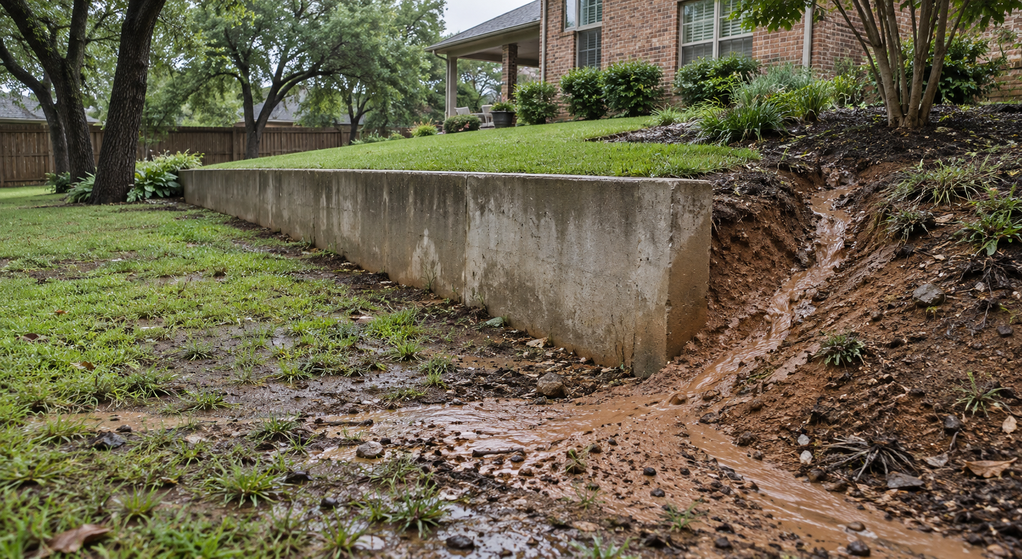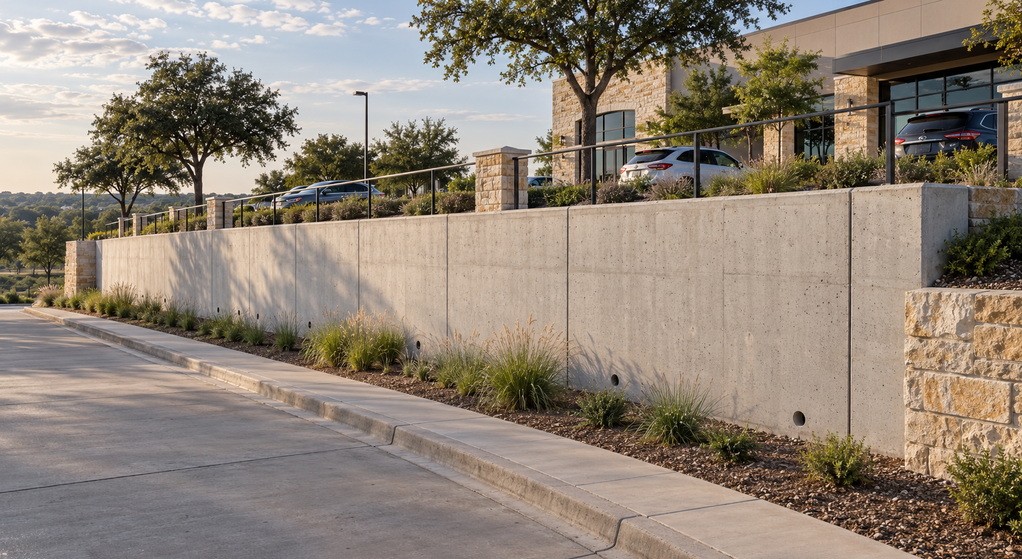
Repair or Replace?
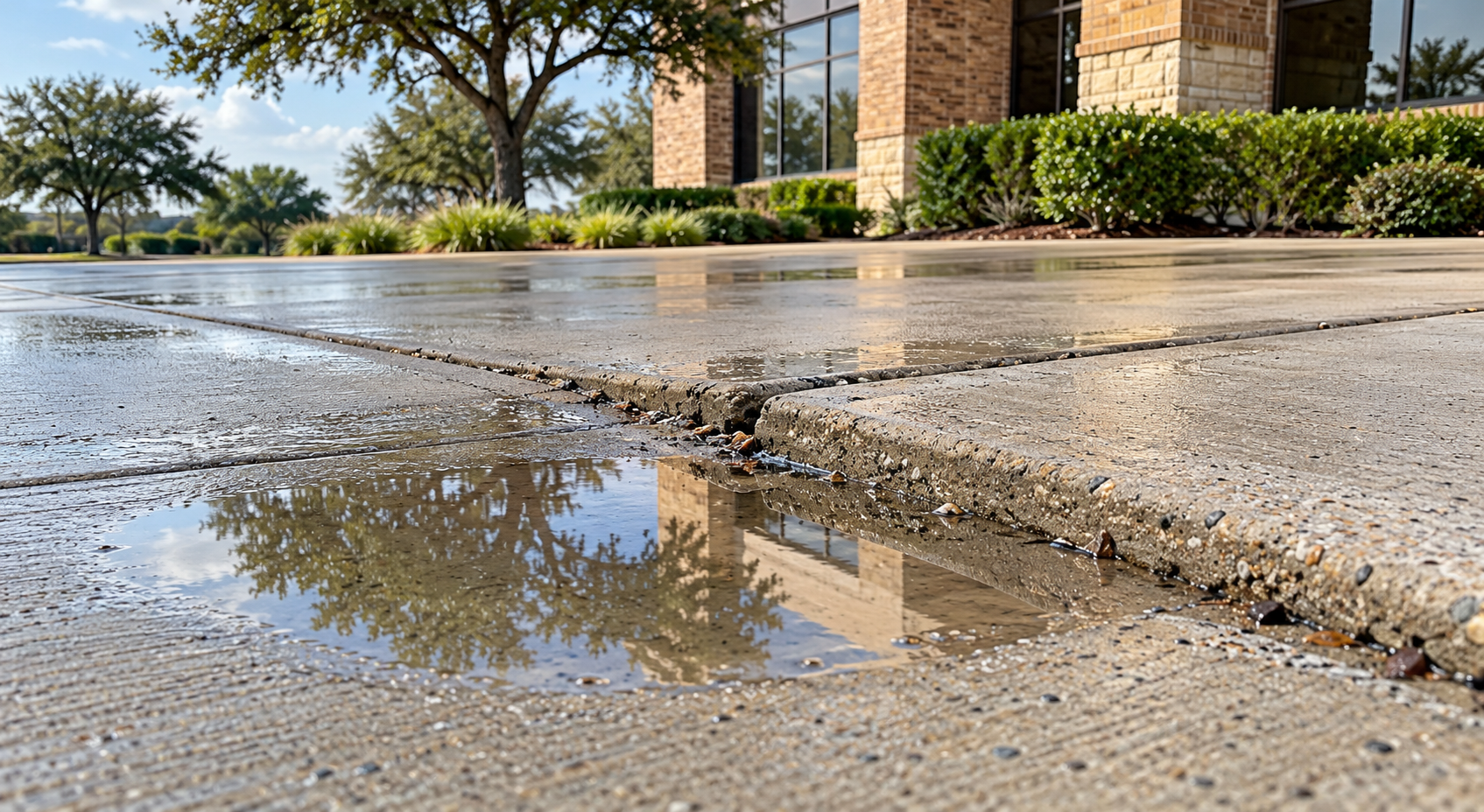
A damaged retaining wall in Fort Worth can often be saved when movement is limited, the footing remains stable, and drainage or localized construction problems can be corrected. Replacement may be more appropriate when the wall is severely leaning, widely cracked, poorly supported, or carrying loads that increase the consequences of failure.
A damaged retaining wall in Fort Worth can sometimes be repaired without rebuilding the entire structure, but the repair must address the condition that caused the damage.
Filling cracks or covering a leaning section may improve appearance temporarily, but those measures do not restore stability when the footing has settled, backfill is moving, or water is accumulating behind the wall.
Property owners considering
retaining wall services in Fort Worth should therefore begin with an assessment rather than assume complete replacement is necessary. Some walls need drainage improvements and localized reconstruction. Others have moved far enough that rebuilding provides the more dependable long-term solution.
Start With the Cause, Not the Crack
In retaining-wall work across the Dallas-Fort Worth Metroplex, Fort Worth Concrete Contractors has seen walls that appeared severely damaged remain repairable once drainage, backfill, or a localized support problem was corrected. We have also seen relatively small cracks accompany larger movement when a wall was rotating or settling from the base.
Similar-looking damage can therefore require very different solutions.
A retaining wall must resist pressure from the soil it supports. Conditions become more demanding when the backfill becomes saturated, heavy loads are placed near the top, erosion removes support, or the foundation begins to settle.
That is why repairing only the visible face can be misleading. Before deciding whether a wall can be saved, the inspection should determine what is happening behind and beneath it.
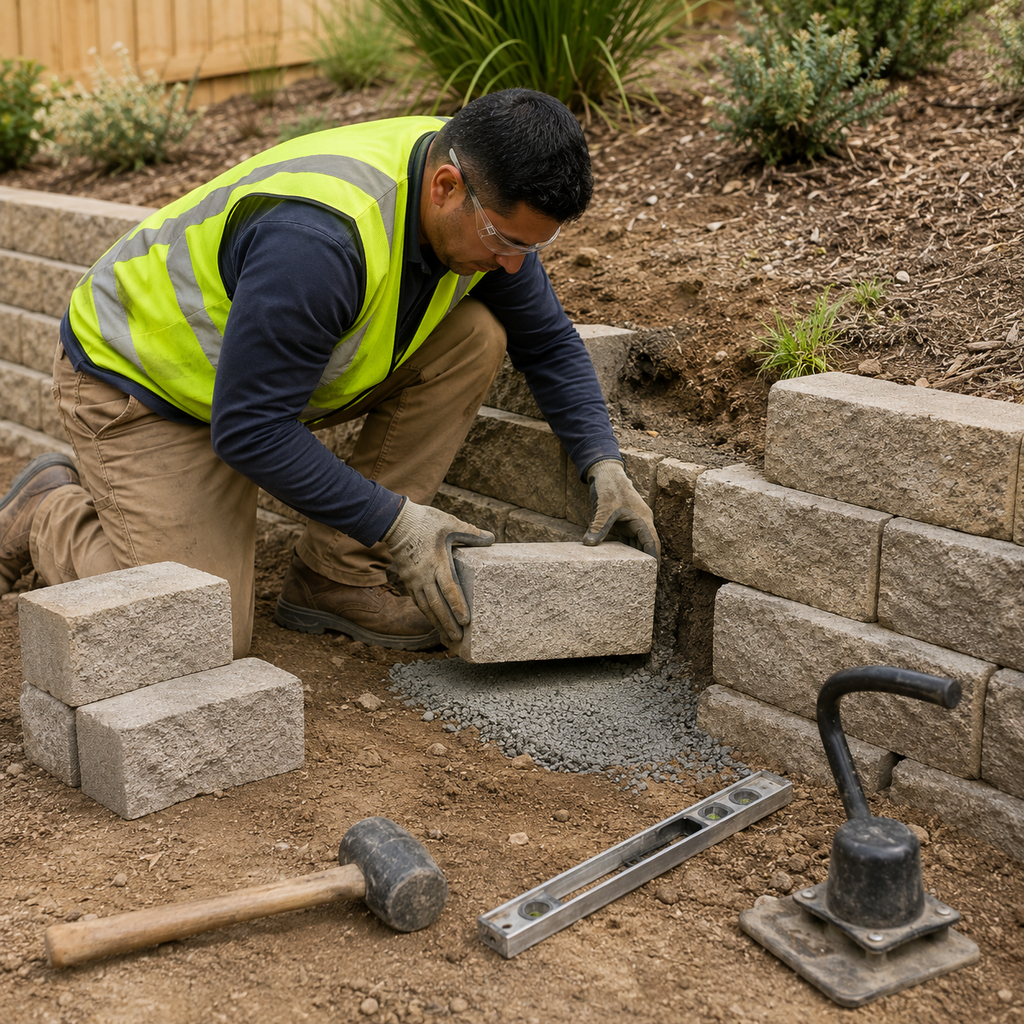
When a Retaining Wall Can Usually Be Repaired
Repair is more practical when movement is limited, the foundation remains dependable, and the damaged area can be stabilized without rebuilding most of the structure.
Examples may include:
- deteriorated mortar joints
- chipped or locally damaged concrete
- damaged caps
- isolated block displacement
- clogged drainage outlets or weep holes
- erosion affecting a limited area
- stable cracks that are not continuing to widen
- localized backfill or drainage defects
The repair itself depends on the cause.
A stable crack may require sealing or localized reconstruction. A displaced section may need to be dismantled so the base can be corrected. Poor drainage may require excavation behind the wall, replacement of drainage aggregate, repair of a drainpipe, or changes to grading.
Certain leaning walls may also be candidates for structural stabilization, depending on the wall type, soil, degree of movement, available space, and loads being retained. Structural anchors or similar systems should not be treated as universal solutions simply because they can avoid complete demolition.
The wall must still be capable of accepting the repair safely.
Warning Signs That Point Toward Replacement
Replacement becomes more likely when damage affects the wall as a complete structural system rather than one repairable section.
Warning conditions include:
- severe or progressing lean
- widespread bowing
- sliding at the base
- large sections moving independently
- extensive stair-step cracking
- exposed or deteriorated reinforcement
- repeated soil washout
- a widening gap behind the wall
- substantial footing settlement
- inadequate or missing foundation support
Reconstruction may also be more appropriate when the original wall lacks the reinforcement or foundation needed for the height, slope, or load it supports.
The consequences of failure matter as well.
A damaged wall supporting a driveway, building area, pool deck, steep slope, frequently occupied space, or other significant load deserves a more conservative evaluation than a small decorative landscape wall.
Trying to push a failed wall back into position while keeping the same unstable footing, drainage system, and backfill does not correct the underlying problem. Even if the wall temporarily looks straighter, the forces that moved it are still present.
Fort Worth Soil and Drainage Conditions Matter
Retaining-wall repair decisions in Fort Worth cannot be separated from soil and water conditions.
Clay-rich soils can change as moisture levels rise and fall. Extended dry periods may reduce soil volume, while later rainfall can increase moisture and alter both pressure behind the wall and support beneath it. Heavy rainfall can also saturate backfill when drainage is restricted.
Texas Department of Transportation retaining-wall guidance
emphasizes evaluating actual soil and groundwater conditions and recognizes that rainfall, water infiltration, backfill conditions, drainage, and loss of support can materially affect retaining-wall stability.
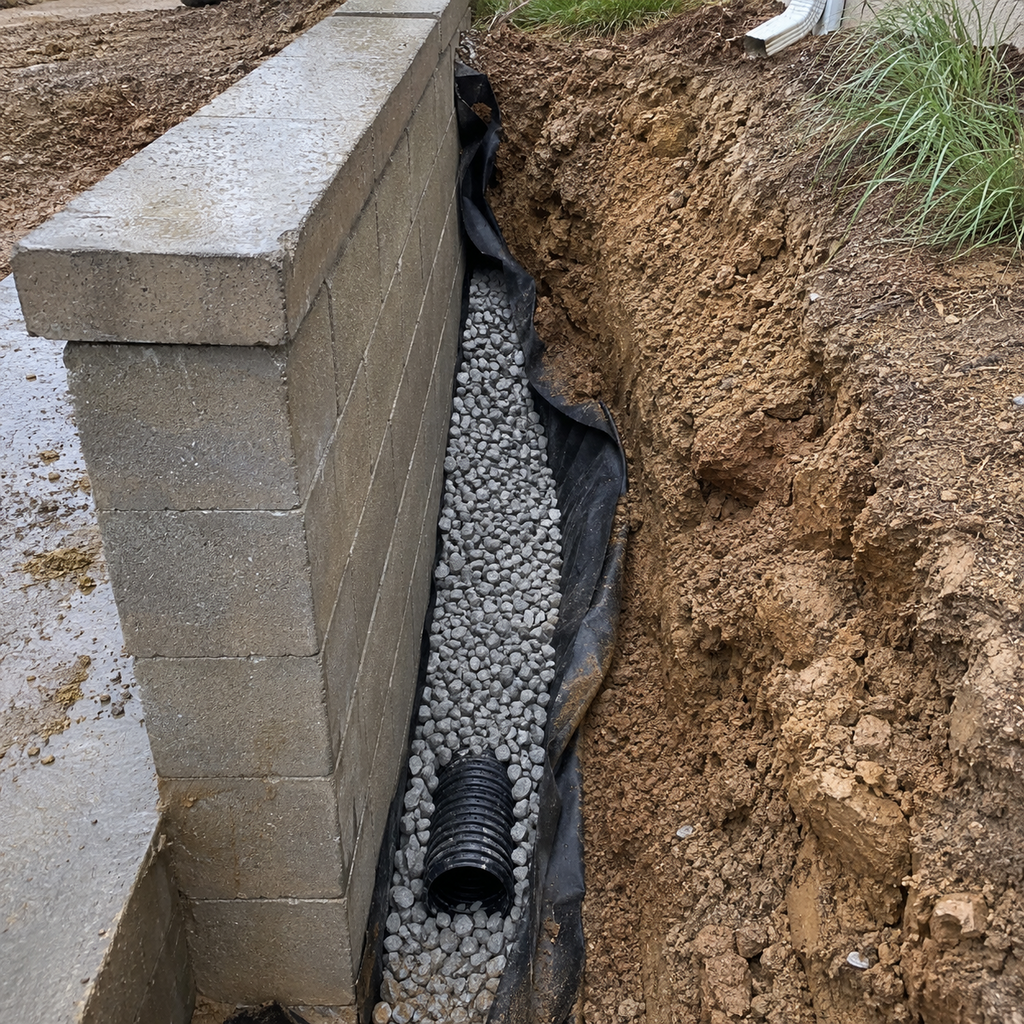
That principle matters when repairing an existing wall because restoring the concrete, masonry, or blocks without correcting the surrounding water problem may only reset the visible symptoms.
A repaired wall needs a dependable way to manage water. Depending on the existing system, that may involve drainage aggregate, filter fabric, drainpipe, weep holes, grading, or a site-specific combination.
Roof downspouts, irrigation systems, paved surfaces, and uphill areas should also be evaluated because they can direct additional runoff toward the retained soil.
What a Proper Evaluation Should Include
A credible retaining-wall evaluation should examine more than the most visible crack.
The inspection should consider:
- wall height
- wall material and construction type
- direction and amount of lean
- crack pattern
- drainage outlets
- backfill condition
- foundation or footing condition
- soil erosion
- surface grading
- water flow
- loads above the wall
- nearby structures or improvements
The result of the inspection should be a clear recommendation to monitor, repair, reinforce, partially rebuild, or replace the wall.
It should also explain why that option makes sense.
A stable cosmetic defect may require limited work. An actively leaning wall, failing foundation, or rapidly changing crack may require a very different response.
These factors are particularly important when evaluating retaining wall solutions for hillside properties, where slope, drainage, erosion, and retained soil can interact across a larger portion of the property.
Check Whether the Repair Requires a Permit or Engineering
Repairability is not only a construction question. The proposed work may also affect permitting or engineering requirements.
Fort Worth's Administrative Code also requires retaining walls that need permits to have plans prepared by an engineer licensed in the State of Texas.
This becomes particularly important when a repair changes the wall's structural system, reinforcement, foundation, or load-carrying configuration.
Property owners should confirm applicable requirements before committing to major reconstruction rather than assuming that existing construction automatically exempts the repair.
City of Fort Worth residential permitting guidance states that retaining walls greater than four feet tall, measured from the bottom of the footing to the top of the wall, require a building permit.
Avoid Repairs That Only Hide the Damage
One of the biggest mistakes is choosing a repair because it improves appearance without asking whether it restores stability.
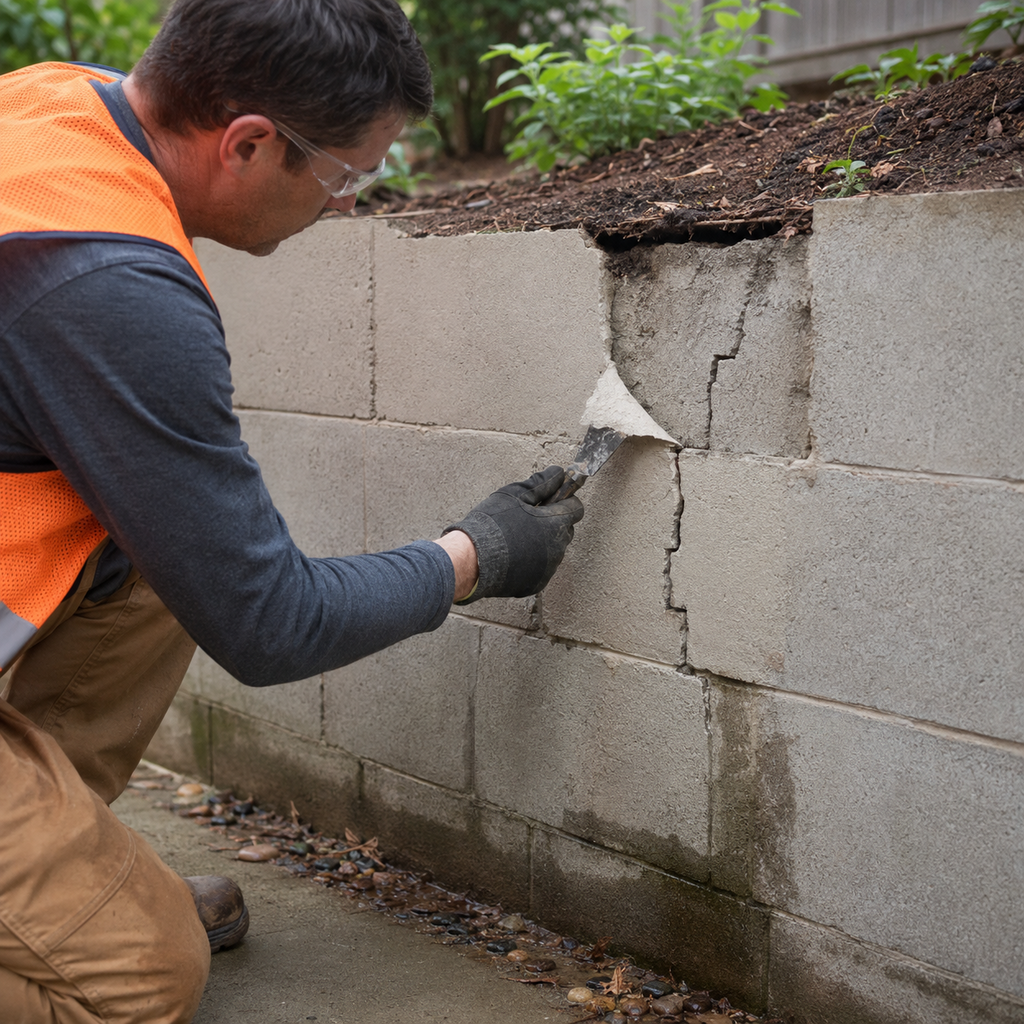
Applying mortar over a moving crack, coating the face of a damaged wall, or stacking new blocks in front of a leaning section can hide warning signs while the original problem continues.
Drainage work can fail for the same reason.
Adding a drain at the front of the wall does little if water is trapped in the soil behind it.
A new outlet cannot solve the problem if the pipe is blocked, the backfill does not drain, or surrounding grading continues directing runoff toward the wall.
Excavation may be necessary to access the actual problem. That can mean removing saturated soil, replacing poor backfill, restoring drainage, repairing the foundation, or rebuilding part of the wall.
The more disruptive repair is sometimes the more appropriate one because it provides access to the condition that caused the visible damage.
Compare Repair With Replacement as Complete Solutions
The decision should not be based only on which option has the lower immediate price.
A localized repair may make sense when most of the wall remains structurally dependable and the underlying problem can be corrected without rebuilding the entire system.
Replacement may provide better long-term value when repeated repairs would leave:
- an inadequate foundation
- widespread structural movement
- failed reinforcement
- poor drainage
- unsuitable wall construction
- significant loads that the original wall was never designed to support
Homeowners should compare what each option actually corrects.
A repair that fixes the cause and preserves a sound structure is very different from a patch that simply postpones rebuilding.
Likewise, replacement should not be recommended automatically when a smaller repair can restore stability and address the drainage or foundation problem responsibly.
The Final Decision
Yes, many damaged retaining walls in Fort Worth can be saved.
Repair makes sense when movement is limited, usable portions of the wall remain stable, and the drainage, foundation, or localized construction problem can be corrected. Replacement becomes more appropriate when failure is widespread, the footing is unreliable, or the wall supports a high-consequence load.
Property owners comparing those options can review how retaining wall design, drainage, and construction work together to understand why the foundation, backfill, materials, reinforcement, and water-control system must be considered together before a repair strategy is chosen.
Have the wall evaluated before movement accelerates.
Ask what caused the damage, which parts of the wall remain dependable, how the proposed repair will restore stability, how water will be controlled, and whether engineering or permits are required.
A sound recommendation should explain not only whether the wall can be saved, but why repair or reconstruction is the more appropriate long-term solution for that particular Fort Worth property.

Written By:
Kurt Manalastas
Home & Property Research Journalist
Kurt is a Home & Property Research Journalist who creates educational content on home services, property improvement, and residential decision-making. He turns contractor experience, industry standards, and verified research into clear, practical guidance that helps homeowners understand their options and make informed decisions.