What You Need to Know
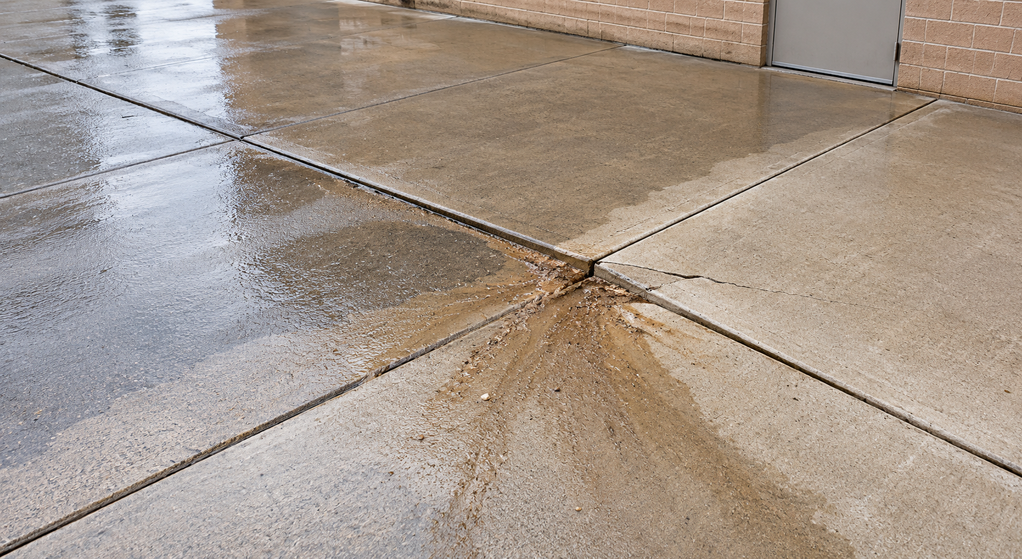
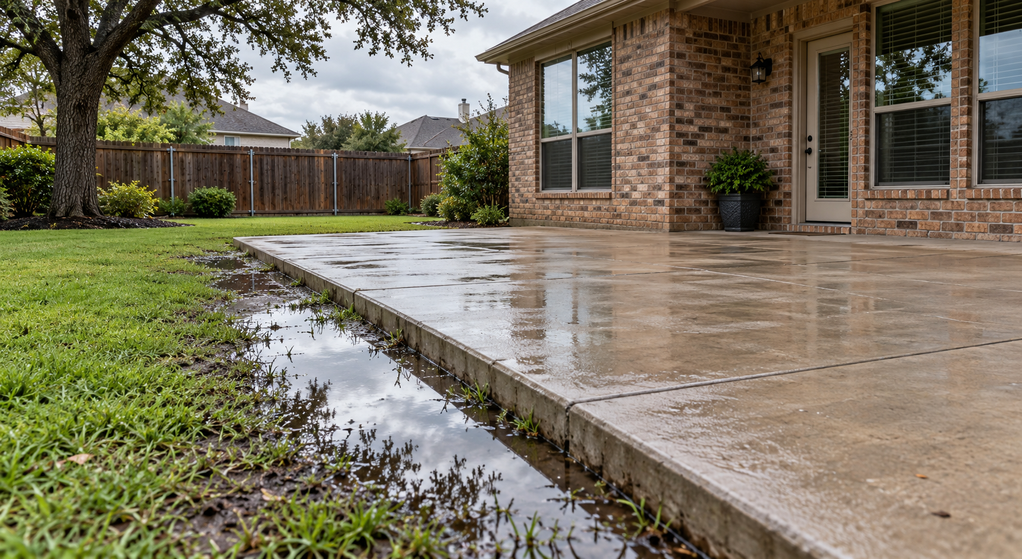
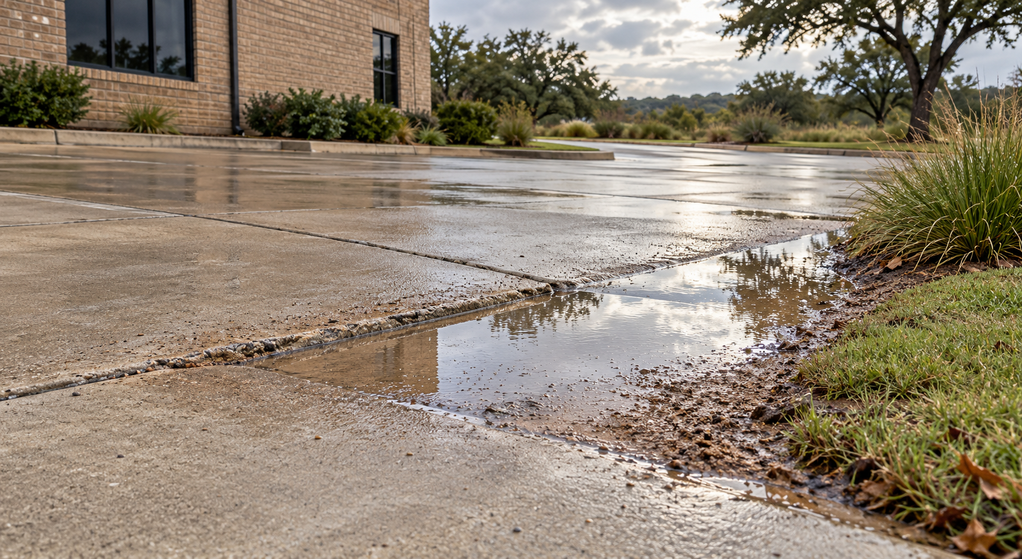
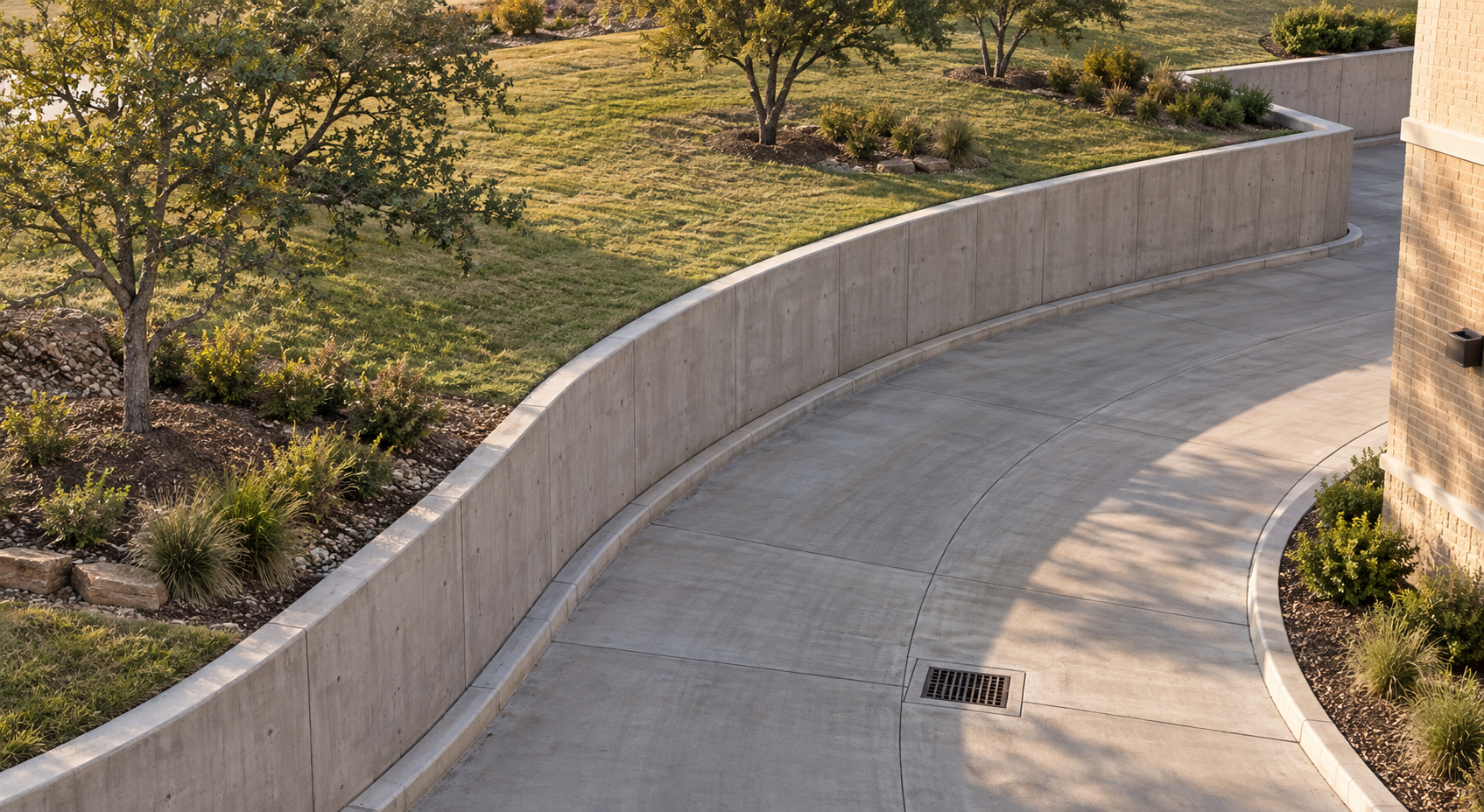
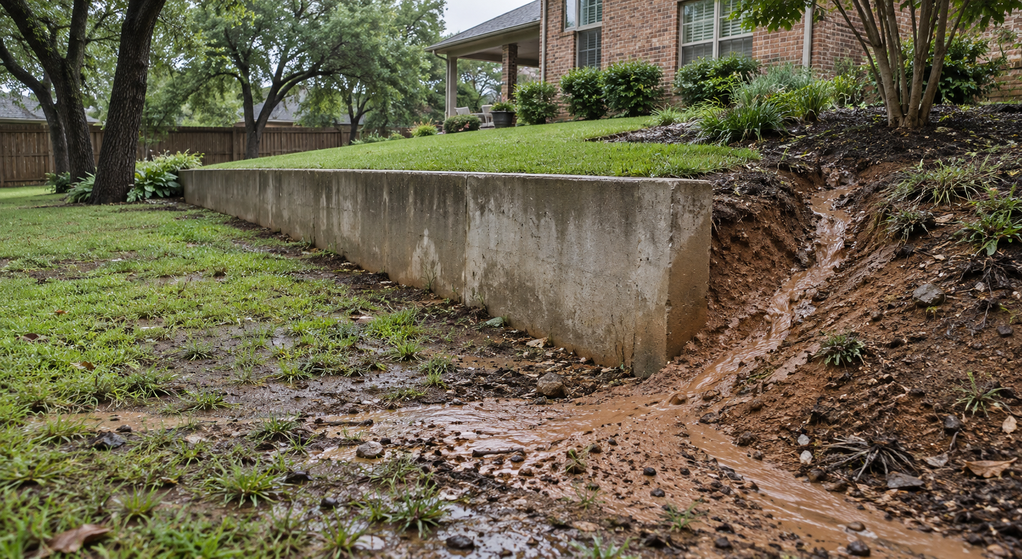
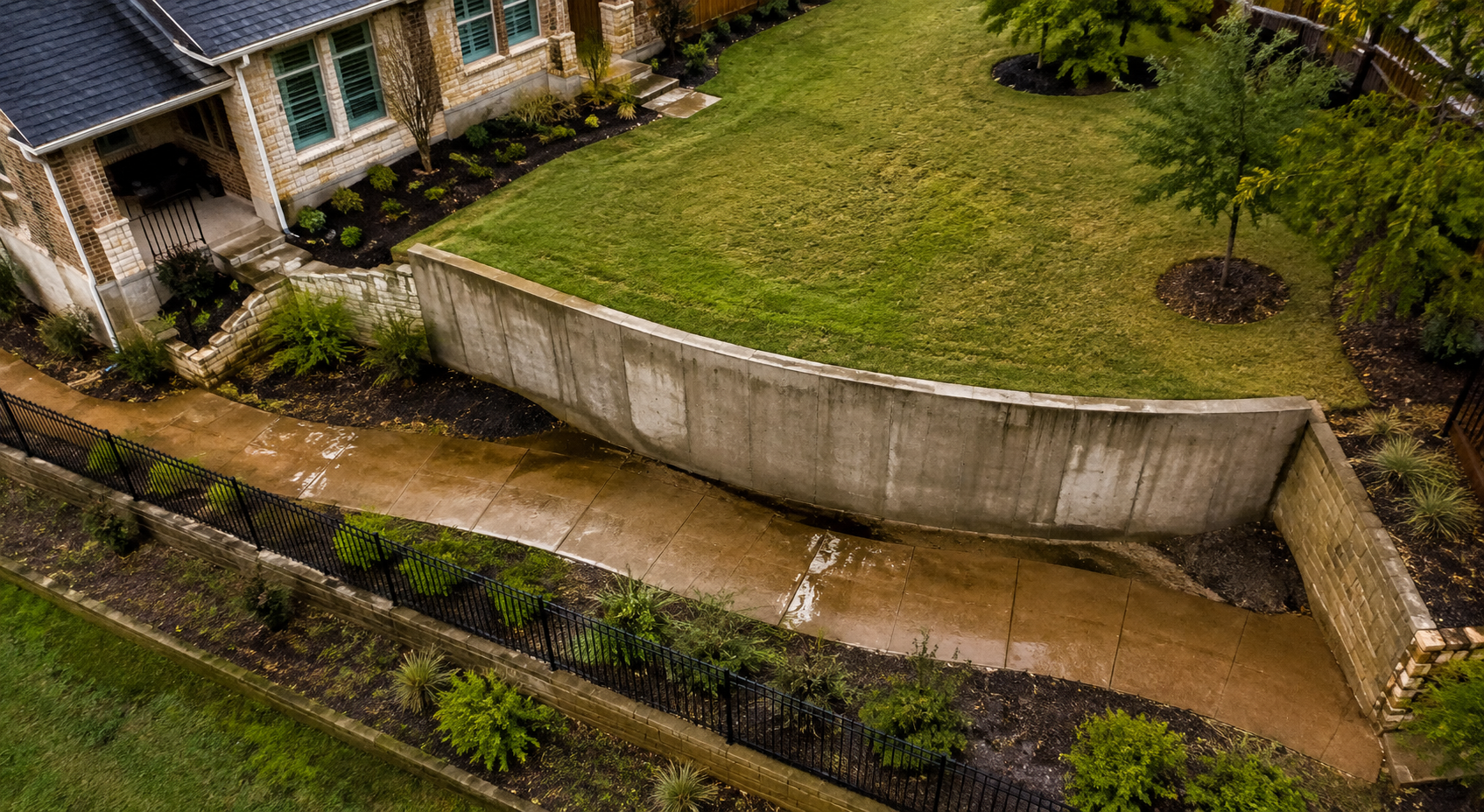
Water pooling behind a retaining wall in Fort Worth usually means the drainage system is blocked, overloaded, poorly installed, or missing. Clay soil, improper grading, clogged pipes, blocked weep holes, and irrigation leaks can trap moisture, increase pressure, and eventually cause cracking, bowing, erosion, or wall movement.
Water pooling behind a retaining wall should never be dismissed as a normal result of heavy rain. It is usually evidence that water is not draining correctly, and the longer it remains trapped, the more pressure it places on the wall. Homeowners comparing retaining wall services in Fort Worth should pay close attention to standing water, soggy soil, leaking joints, and erosion because these conditions often appear before visible structural movement begins.
Fort Worth properties face a difficult combination of expansive clay soil, intense storms, prolonged dry periods, and rapid changes in ground moisture. Clay absorbs water slowly, holds it for extended periods, and expands as moisture increases. When water collects behind a retaining wall, the saturated soil becomes heavier and pushes harder against the structure. A drainage issue that appears minor after one storm can gradually lead to cracks, bowing, settlement, or complete wall failure.
Poor Drainage Is Usually the Main Cause
Based on more than 20 years of concrete work throughout the Dallas-Fort Worth Metroplex, Fort Worth Concrete Contractors have repeatedly seen drainage defects cause more wall movement than ordinary surface wear. A retaining wall may appear solid from the front while water is silently building pressure behind it.
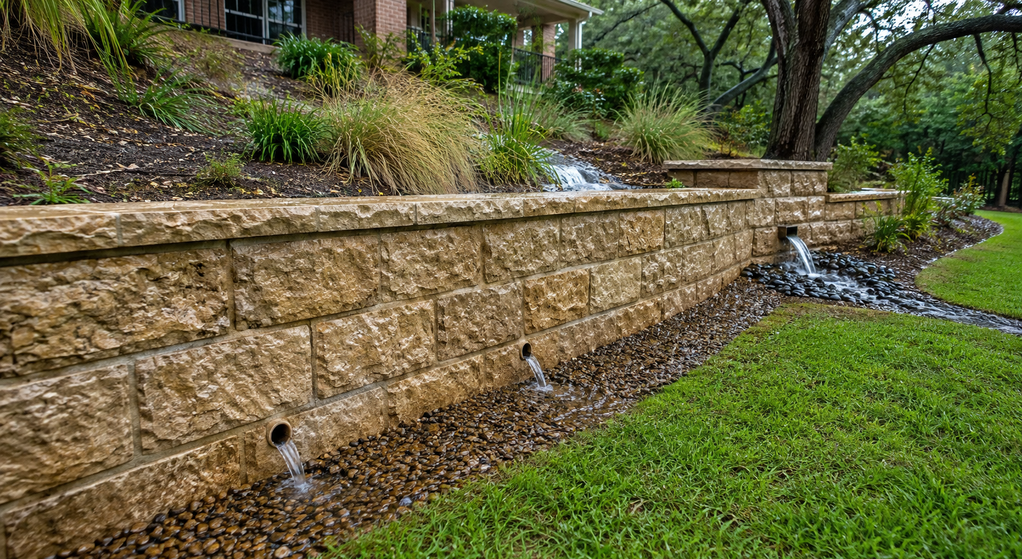
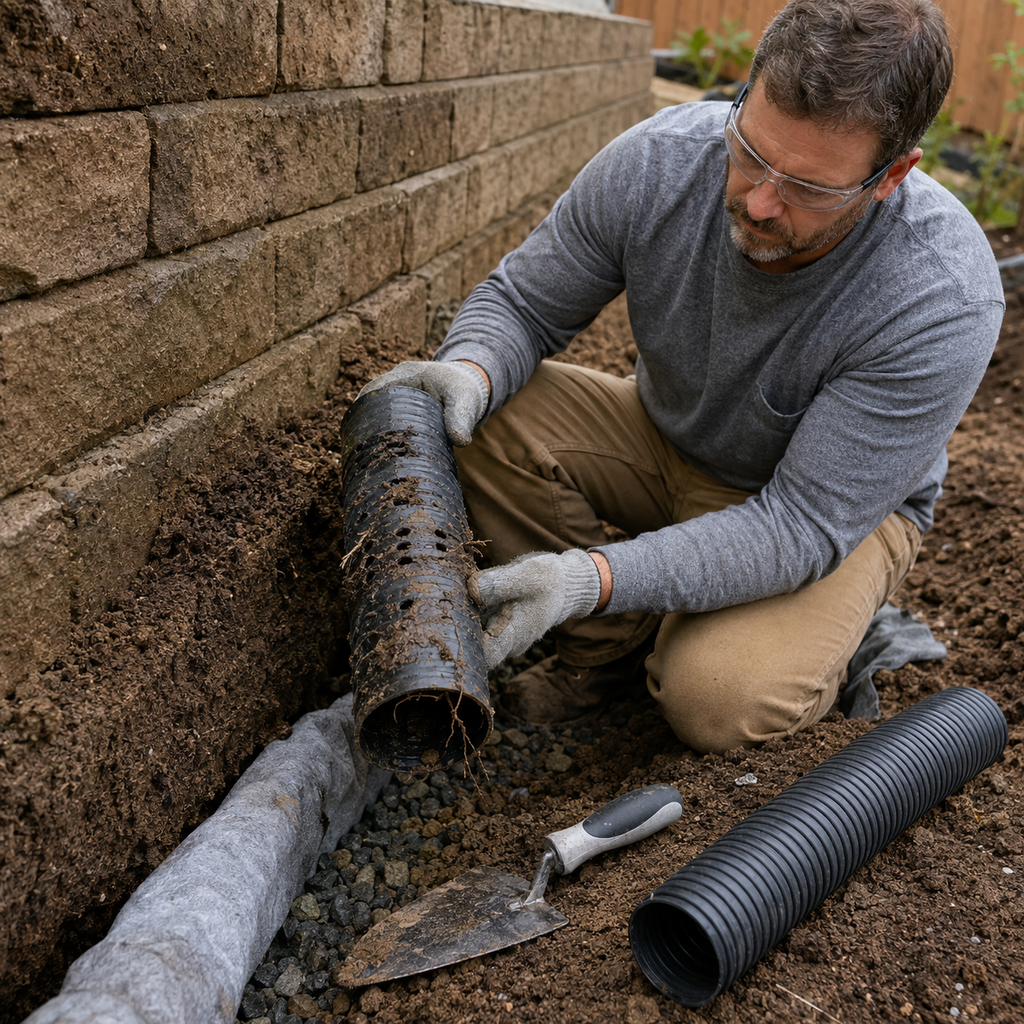
A properly constructed retaining wall typically needs a layer of clean, free-draining gravel, a perforated drainage pipe, filter fabric, and a suitable outlet. These components work together to collect water and carry it away before pressure increases. Problems develop when one or more of these features are missing, undersized, poorly positioned, or improperly installed. Some walls are backfilled almost entirely with native clay soil.
That approach may reduce initial construction work, but it creates poor drainage and leaves the wall exposed to repeated moisture pressure.
Texas Department of Transportation retaining-wall guidance emphasizes controlling water around retaining-wall backfill because infiltration, groundwater, and backfill loss can increase pressure and reduce wall stability.
Fort Worth Clay Soil Holds Water
North Texas clay soil behaves differently from sandy or gravel-rich soil. It drains slowly and expands when wet. During dry conditions, it shrinks and may pull away from the wall or footing. When heavy rain returns, the soil absorbs water, swells, and presses against the structure again.
This repeated wet-and-dry cycle matters because retaining walls are designed to resist a calculated amount of soil pressure. Saturated clay can produce considerably more force than relatively dry backfill. Water trapped within the soil also reduces stability and may allow sections of the retained ground to shift.
For a deeper understanding of retaining wall performance and construction, see our ultimate retaining wall guide. This is why drainage details that might seem optional in another setting are essential in Fort Worth. A wall that performs adequately during a dry summer may reveal serious weaknesses after several days of rainfall.
The Drainpipe May Be Clogged or Damaged
A visible drain outlet does not guarantee that the drainage system is functioning. Perforated pipes can become blocked by clay, fine sediment, plant roots, or debris. Pipes may also collapse, separate at a connection, or lose the slope needed to carry water toward the outlet.
One common mistake is installing a drainpipe without surrounding it with clean drainage gravel and filter fabric. Native soil eventually enters the perforations and restricts water flow. Another mistake is routing the pipe to a low area where discharged water collects and flows back toward the wall.
A drainage outlet should be inspected during or shortly after rainfall. Little or no discharge, despite obvious pooling behind the wall, may indicate a blockage or installation problem.
Yard Grading May Be Sending Water Toward the Wall
Even a well-built drainage system can become overwhelmed when the surrounding property directs excessive runoff toward it. The ground should generally guide surface water away from the retained area whenever site conditions allow.
Water may collect behind the wall when:
- The yard slopes directly toward the wall
- Low spots have developed from soil settlement
- Roof downspouts discharge nearby
- A driveway or patio drains toward the retained area
- Landscaping borders trap runoff
- Water enters from an uphill neighboring property
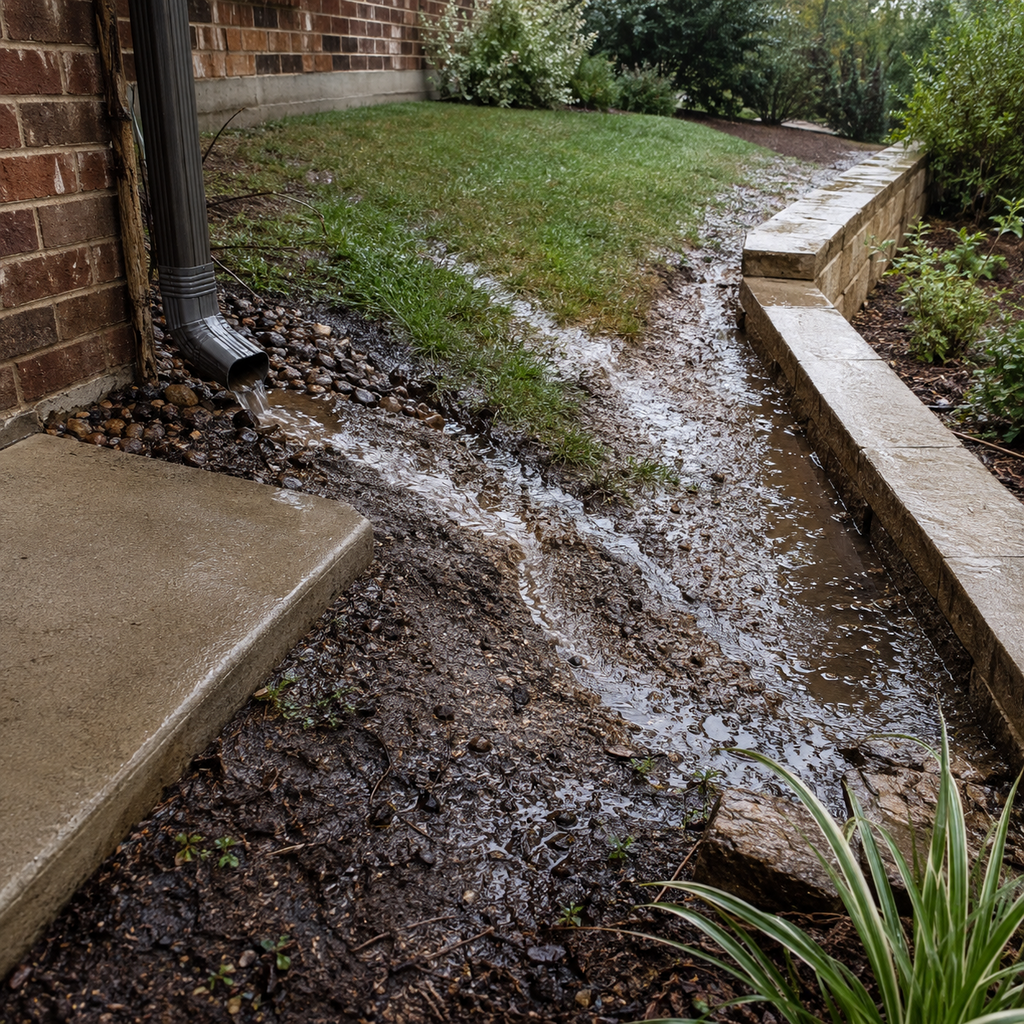
Redirecting surface water is often more effective than simply increasing the size of the underground drain. The smarter approach is to reduce the amount of water reaching the wall while also providing a reliable path for unavoidable groundwater and rainfall.
Missing Gravel Can Trap Moisture
Retaining wall backfill should allow water to move downward toward the drainage pipe. Clean, angular gravel creates open spaces through which water can travel. Compacted clay does the opposite.
Insufficient gravel, gravel contaminated with soil, or fine material placed directly behind the wall can prevent drainage. Filter fabric is also important because it separates native soil from the gravel while still allowing water to pass through.
There is a tradeoff to consider. Excavating behind an existing wall to replace poor backfill can be disruptive, especially near fences, patios, utilities, or landscaping. However, repeatedly patching cracks without relieving the water pressure is rarely a lasting solution. The drainage defect must be corrected if the wall is expected to remain stable.
Weep Holes May Be Blocked
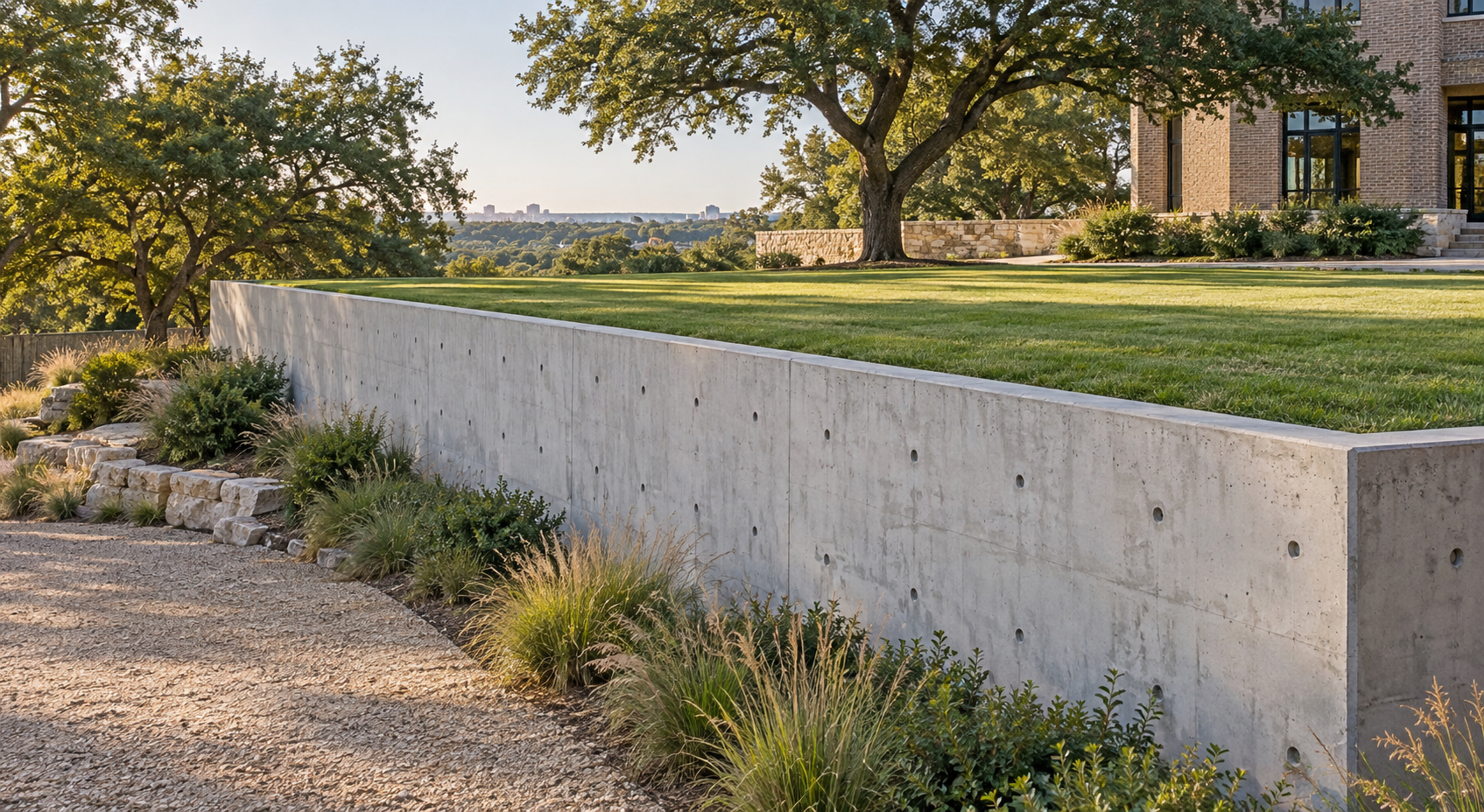
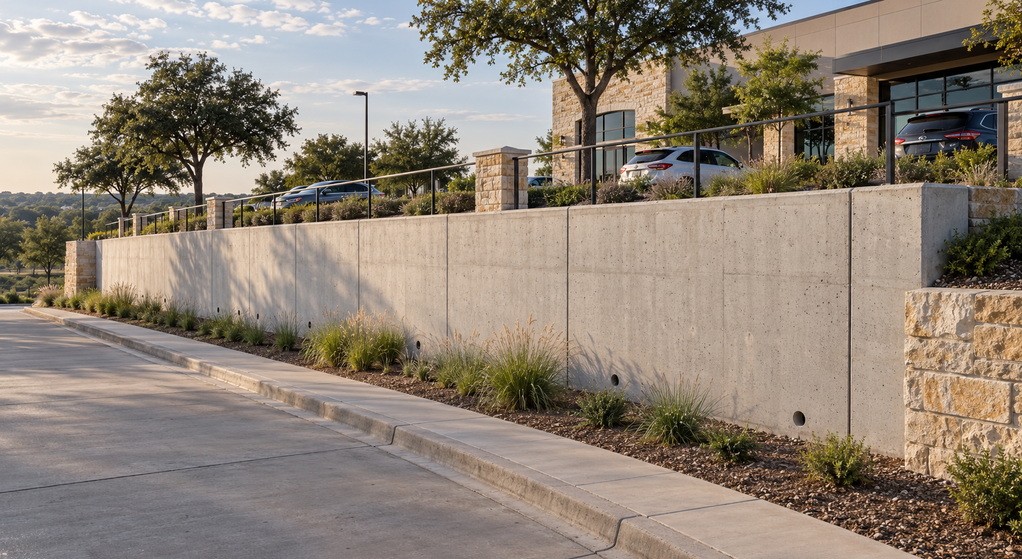
Some concrete and masonry retaining walls include weep holes that allow water to escape through the face. These openings can become blocked by sediment, roots, mineral deposits, or compacted soil.
Clearing a blocked weep hole may improve drainage, but it should not be treated as a complete repair without further inspection. If the gravel layer and drainpipe behind the wall are also clogged, opening one outlet may only release a small portion of the trapped water.
Homeowners should also avoid drilling random holes into a wall without understanding its reinforcement, construction, and drainage layout. An incorrectly placed opening can damage reinforcement or create uncontrolled soil erosion.
Irrigation or Plumbing May Be Contributing
Water pooling during dry weather often points to an irrigation or plumbing issue rather than rainfall. A broken sprinkler line, leaking hose connection, damaged underground pipe, or excessive watering schedule can keep the soil behind a retaining wall permanently saturated.
Look for unusually green vegetation, soft soil, continuous dripping, or pooling that returns even when sprinklers are not visibly running. Irrigation zones should be tested individually, and nearby water lines may need to be inspected if moisture continues without an obvious source.
Why Trapped Water Is Dangerous
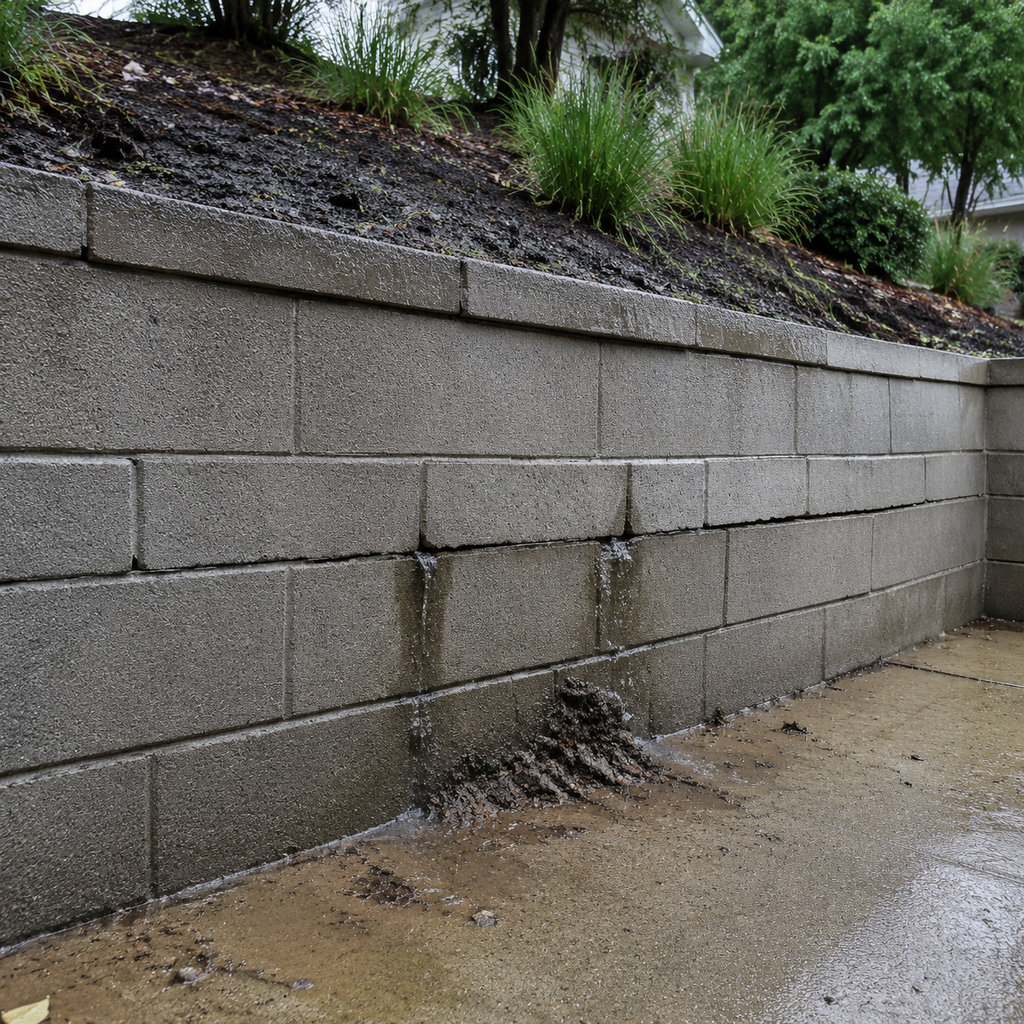
Water creates hydrostatic pressure, which is force produced by standing or trapped water. Retaining walls are commonly built to resist soil loads, but they should not be expected to act like watertight dams.
Warning signs that pressure is already affecting the wall include:
- Horizontal or stair-step cracks
- Bulging through the middle
- Leaning away from the retained soil
- Water flowing through joints
- Soil washing out near the base
- Gaps between wall sections
- Sunken ground above the wall
Surface patching may hide a crack temporarily, but it does not reduce the pressure causing it. Once a wall begins leaning or bowing, drainage improvements may need to be combined with structural repair or partial reconstruction.
What Fort Worth Homeowners Should Do Next
Begin by identifying where the water is coming from. Check downspouts, irrigation lines, yard grading, drainage outlets, and nearby paved surfaces. Observe the area during rainfall when possible because water flow patterns are easier to recognize while they are active.
A professional assessment becomes important when pooling happens after every storm, cracks are growing, soil is washing away, or the wall has visibly moved. The inspection should evaluate the wall, footing, backfill, drainpipe, outlets, grading, and surrounding improvements rather than focusing on one symptom.
Property owners dealing with runoff or slope movement can also review how retaining walls help control erosion and protect sloped Fort Worth properties to understand how drainage, soil retention, and wall placement work together across the larger site.
Water pooling behind a retaining wall is a warning that the drainage system is failing, overloaded, or absent. In Fort Worth’s expansive clay soil, waiting usually allows pressure and movement to worsen. The sensible next step is to locate the water source, restore proper drainage, and determine whether the wall is still structurally stable.

Written By:
Kurt Manalastas
Home & Property Research Journalist
Kurt is a Home & Property Research Journalist who creates educational content on home services, property improvement, and residential decision-making. He turns contractor experience, industry standards, and verified research into clear, practical guidance that helps homeowners understand their options and make informed decisions.