Slope Protection Insight:
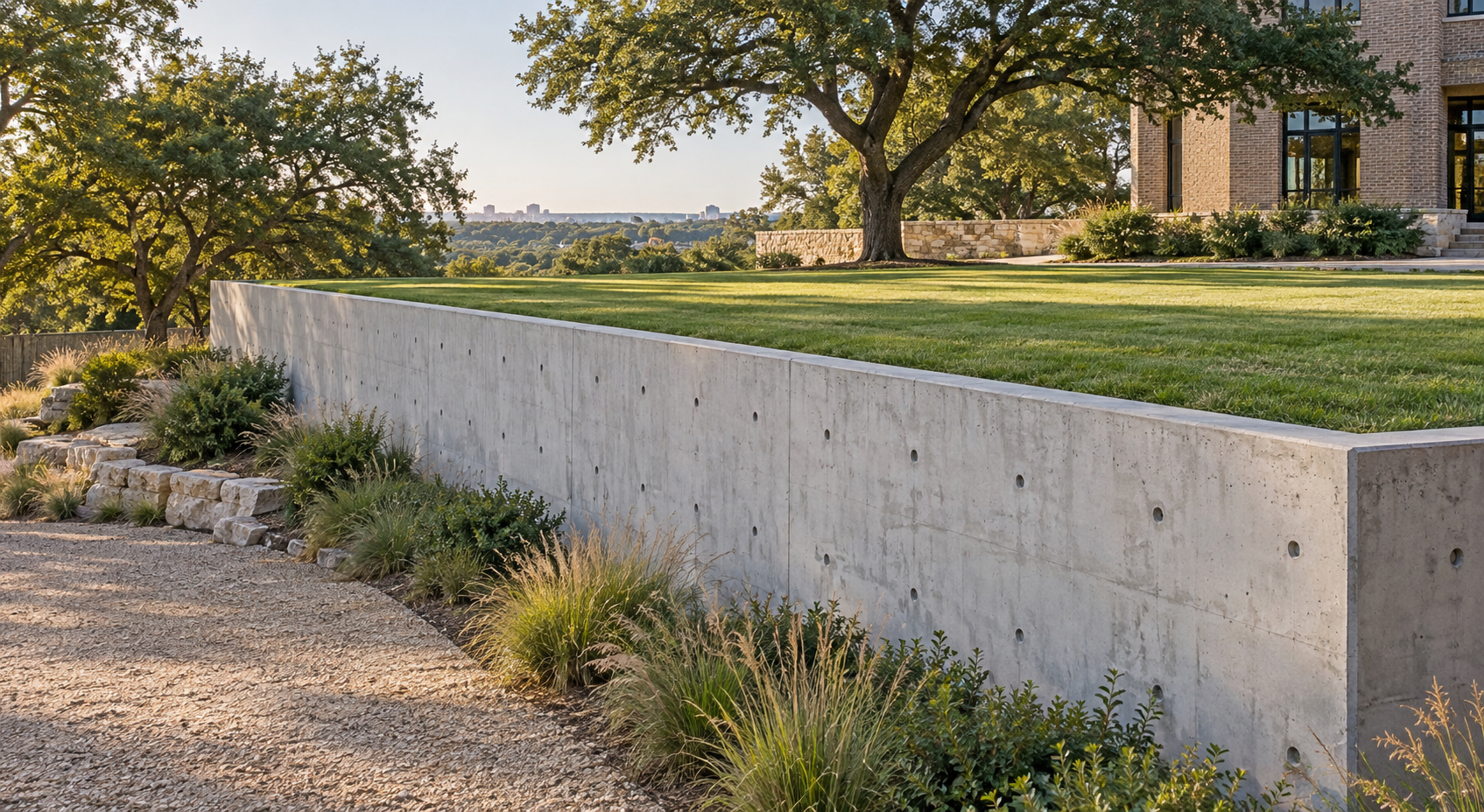
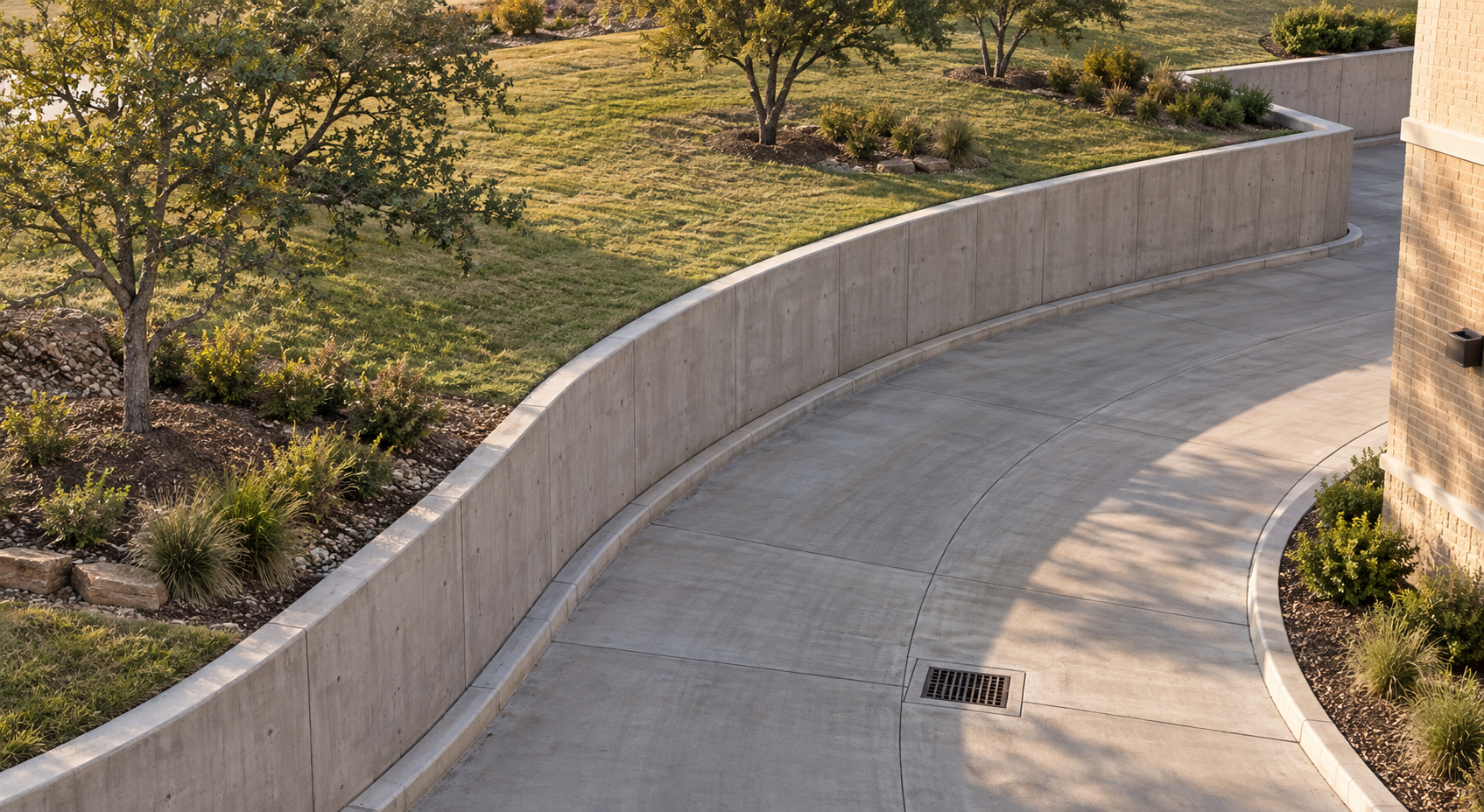
Retaining walls help Fort Worth homeowners protect sloped yards by controlling erosion, stabilizing soil, and directing runoff before it threatens flatwork or foundations. The best results depend on proper placement, drainage, base preparation, reinforcement, and site-specific planning for North Texas clay and stormwater conditions.
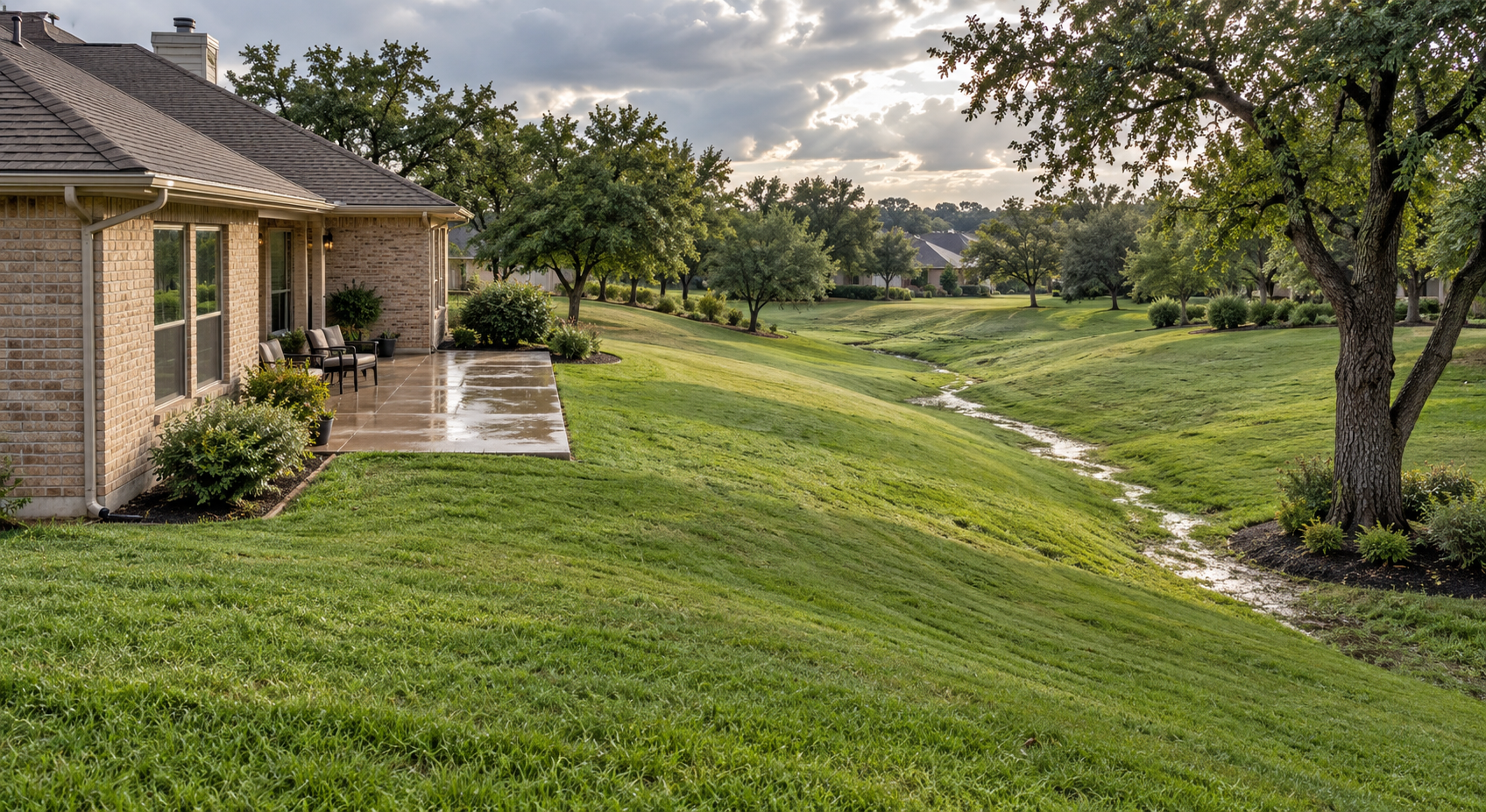
A sloped yard can quietly work against a home every time water runs downhill. The damage may start as washed-out soil or a messy low spot in the lawn, but the bigger concern is what happens when that movement gets closer to the foundation. How much ground can shift before the home starts paying the price? That is the real reason Fort Worth Concrete Retaining Wall services matter. A retaining wall helps hold the yard together, manage runoff, and protect the parts of the property that depend on stable soil.
Sloped Fort Worth Yards Need Soil Control First
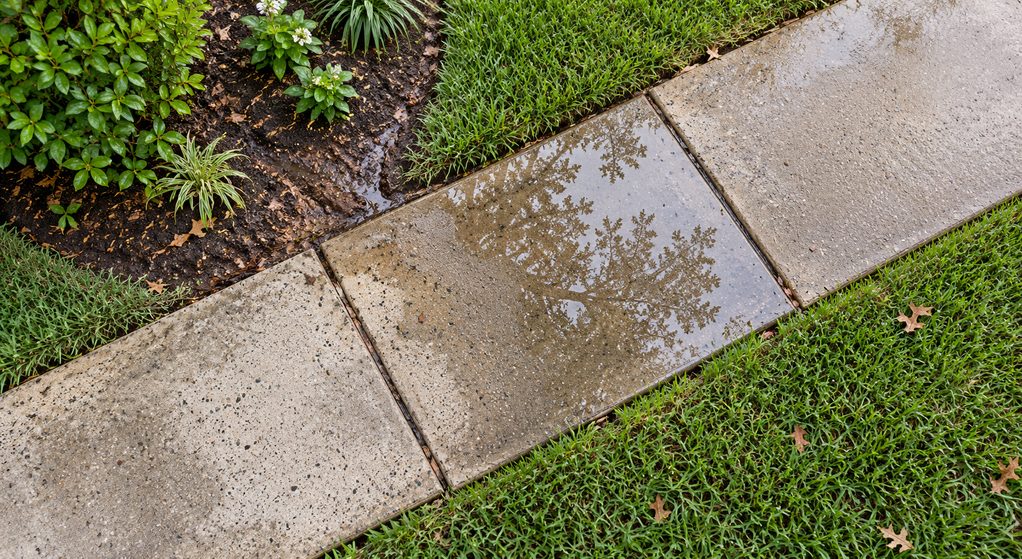
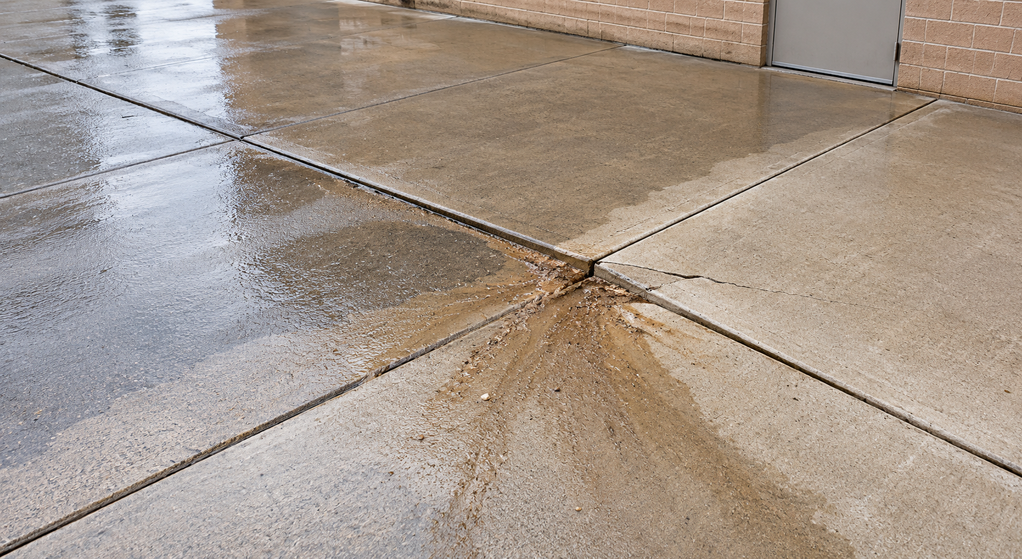
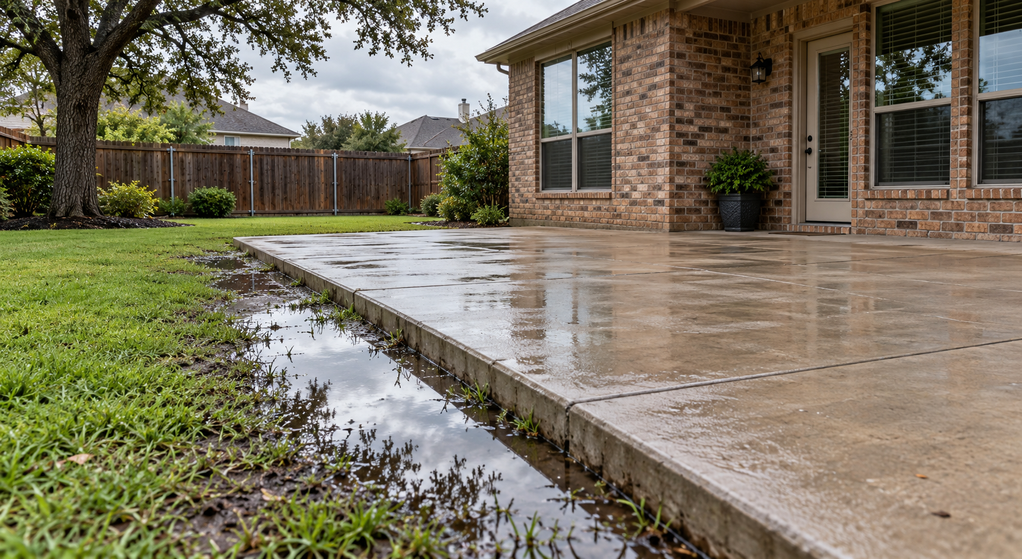
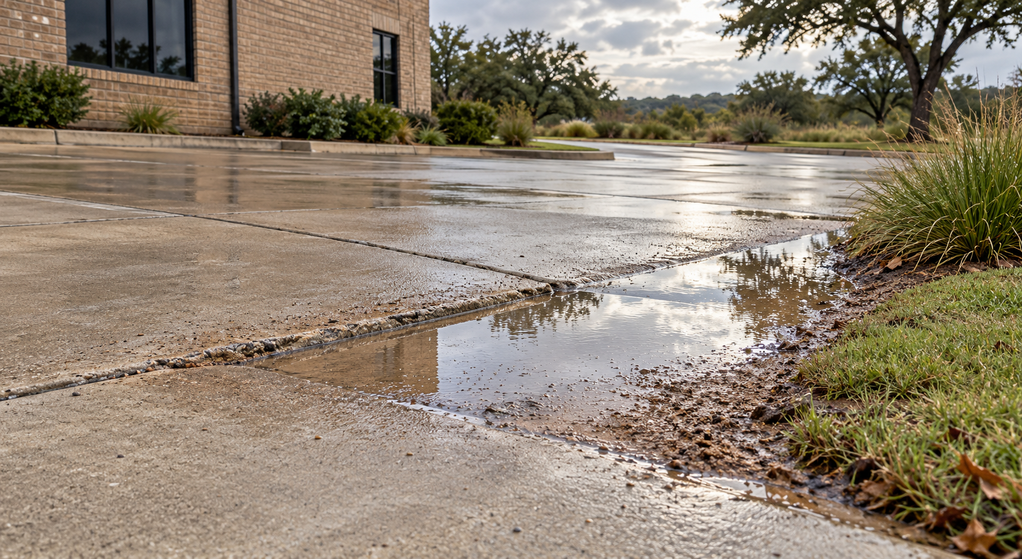
At Fort Worth Concrete Contractors, our retaining wall specialists have seen that serious slope problems usually begin with small warnings. Soil washes out near a fence. Mulch slides downhill. Water pools at the bottom of the yard after a storm. These issues often mean the grade is no longer controlling soil and water properly.
A retaining wall resists lateral soil pressure and creates a stable edge where the ground would otherwise keep shifting. That matters because erosion rarely stays isolated. When a slope keeps losing soil, flatwork can lose support, and water can move toward areas that should stay protected.
Fort Worth code generally limits fill material to a three horizontal to one vertical slope unless a compliant retaining wall system is in place. The same section also refers to positive drainage, which supports a simple rule: a wall and drainage plan should be designed together.
Retaining Walls Slow Erosion Before It Becomes Expensive
Erosion is one of the strongest reasons to build a retaining wall on a sloped lot. Rainwater gains speed as it moves downhill, carrying loose soil with it. Over time, runoff can cut channels through the yard, expose roots, wash out landscape beds, and leave bare areas where grass struggles to grow.
A retaining wall breaks that downhill movement. It holds soil in place and can create flatter sections that are easier to drain, plant, and maintain. For Fort Worth homeowners, this is especially useful on rear slopes, side-yard drop-offs, and lots where the yard falls toward a driveway, patio, or neighboring property. For a deeper look at how retaining walls function and when they're needed, see our complete retaining wall guide.
The mistake is waiting until the slope looks badly damaged. By the time deep ruts, leaning fence posts, or washed-out corners appear, the repair usually becomes more involved. A wall installed at the right location can preserve more soil and keep a manageable yard issue from becoming a structural concern.
Drainage Is the Detail That Decides Whether the Wall Lasts
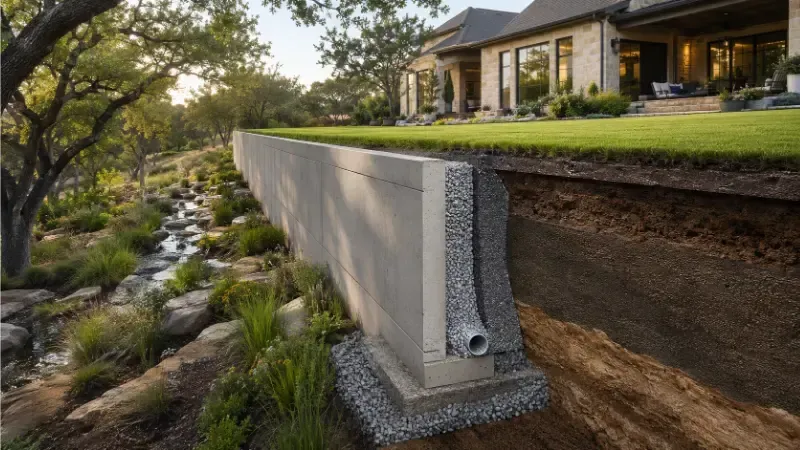
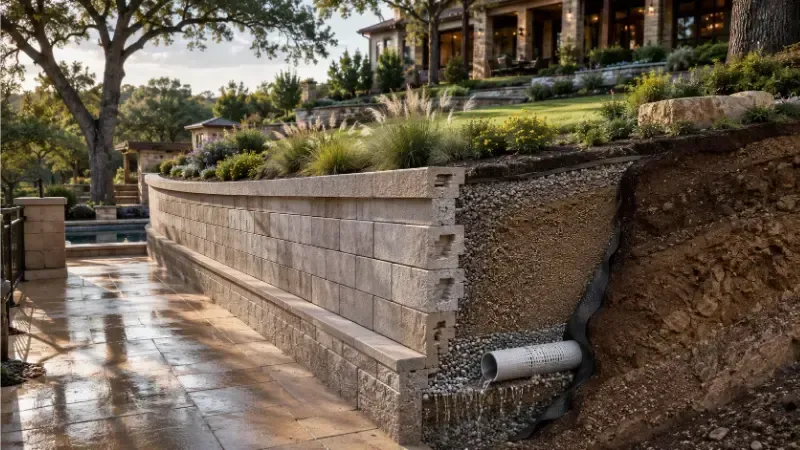
A retaining wall that traps water behind it is a weak solution. Water adds weight and pressure. When that pressure builds, the wall can lean, crack, bulge, or fail. This is why drainage is part of the wall’s ability to do its job.
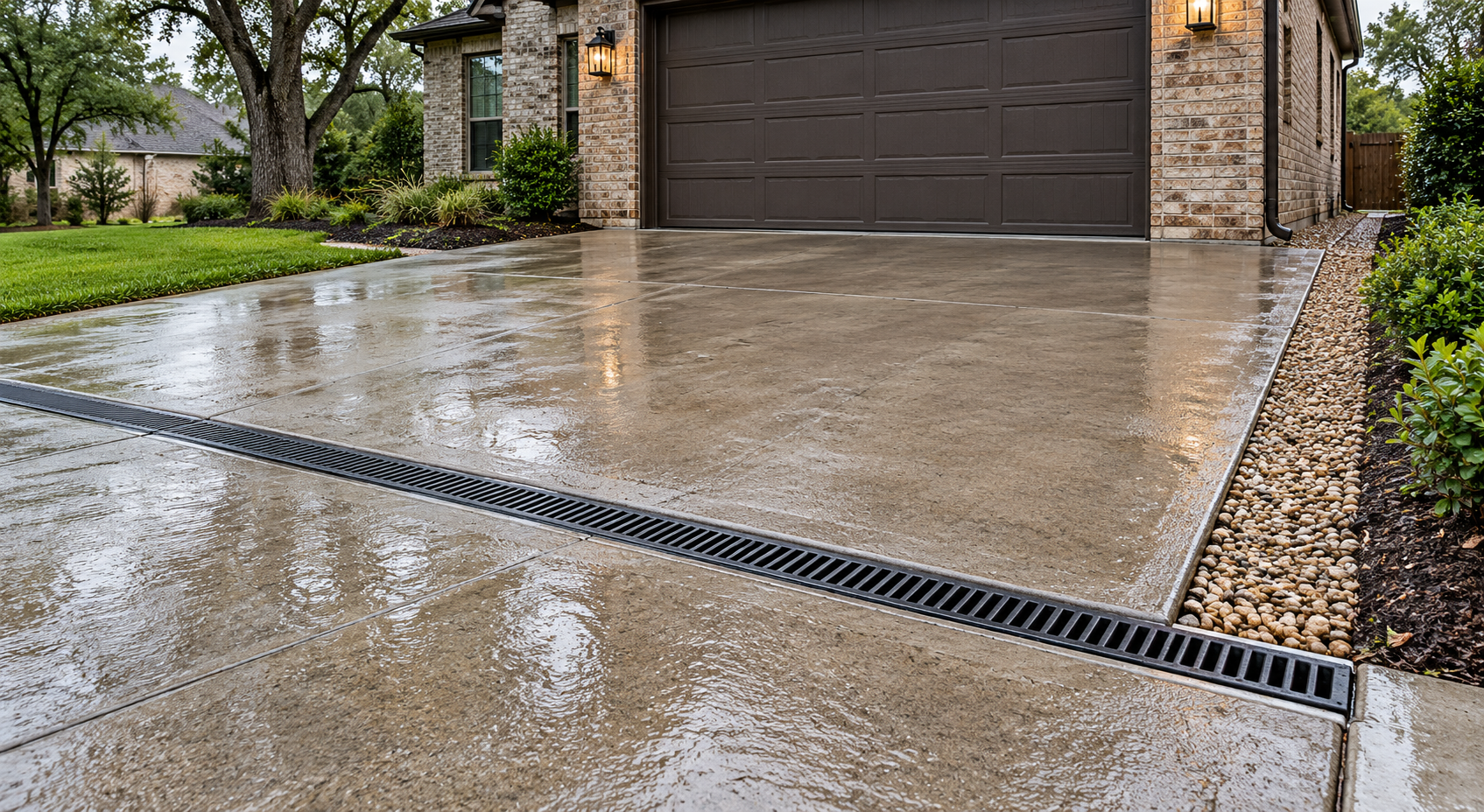
A proper wall plan should consider gravel backfill, drainage pipe, weep holes where appropriate, base preparation, and the discharge point for water leaving the system. The goal is to relieve pressure and move water safely away from the house, driveway, and lower yard.
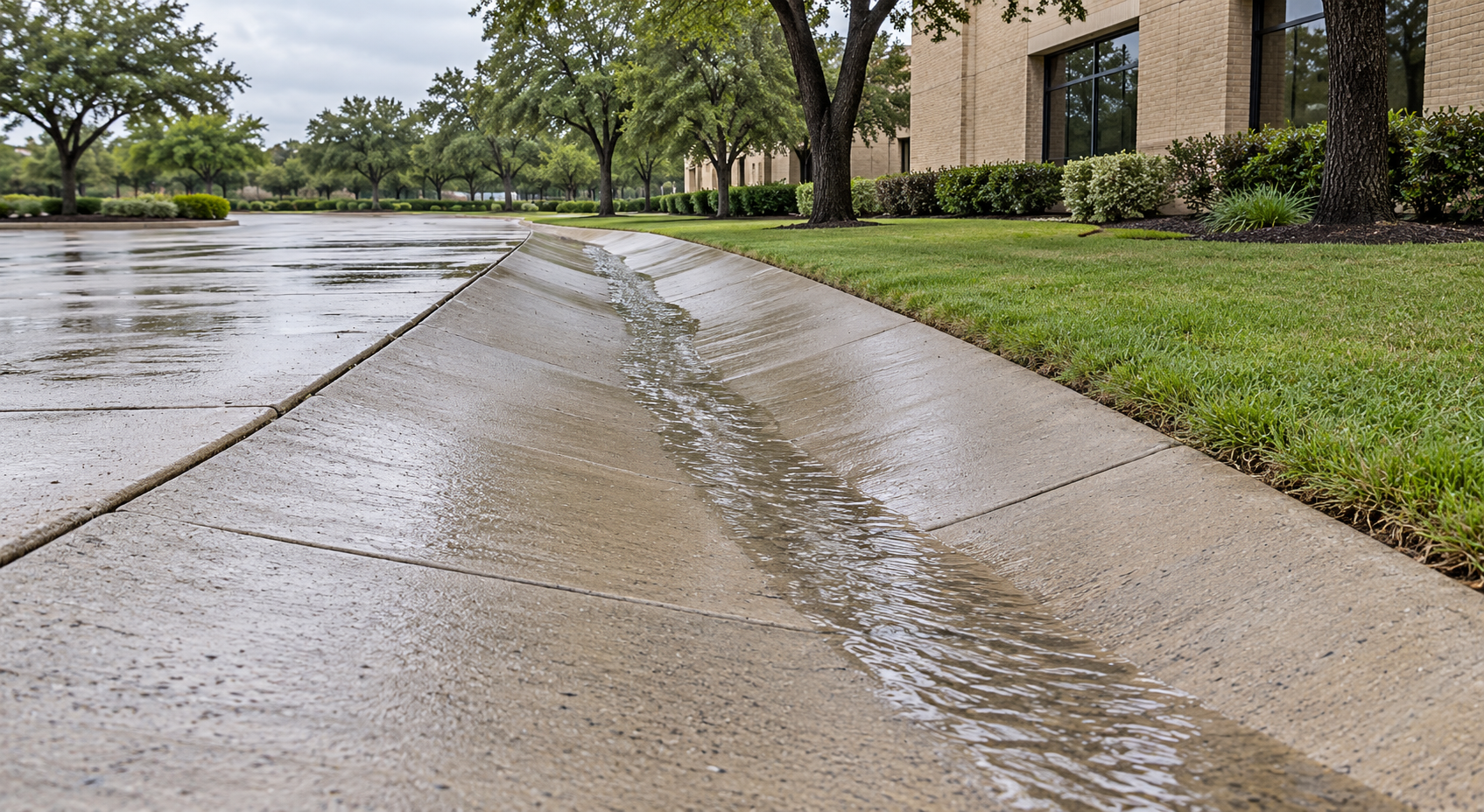
This matters in Fort Worth because drainage can affect more than one property. The city’s stormwater criteria and stormwater management rules address drainage systems, easements, and runoff planning. Homeowners should be cautious when walls are near drainage easements, creeks, flood-prone areas, or established runoff paths.
Why Foundation Protection Matters in North Texas Soil
Retaining walls do not replace foundation repair, but they can reduce some foundation stress conditions. North Texas is known for expansive clay soil that changes as moisture levels rise and fall. When clay gets wet, it expands. When it dries, it shrinks. That movement can affect soil support around slabs and pier-and-beam foundations.
On a sloped yard, water may not spread evenly. One side of the home may stay wetter than the other. Soil near the uphill side may push toward flatwork or foundation areas. Downhill sections may lose support as soil washes away. A retaining wall, when properly placed, can help stabilize grade and guide water movement before it concentrates near the home.
The tradeoff is that the wall must match the site. A short landscape wall is different from a structural wall holding back several feet of soil. Taller walls, driveways above the wall, nearby structures, weak soils, and heavy runoff all increase the load. In those situations, the wall may need stronger reinforcement, deeper base preparation, engineering input, or a more complete drainage system.
Common Mistakes Homeowners Should Avoid
The biggest mistake is treating a retaining wall as a stack of blocks instead of a soil, base, and drainage system. A wall can look straight when finished and still be poorly built if the base is shallow, the backfill is wrong, or water has no controlled exit.
Another mistake is building the wall where it looks best instead of where it solves the slope problem. If runoff comes from roof downspouts, an uphill yard, a driveway, or a side-yard swale, the wall should be planned around that water source. Wall height matters because terraced walls can sometimes manage pressure and drainage better than one tall wall. For homeowners comparing practical wall layouts for sloped properties, our article on
retaining wall ideas that work beautifully in Fort Worth explains how concrete, block, stone, drainage, and reinforcement choices affect long-term performance in North Texas soil.
Final Takeaway
For sloped yards in Fort Worth, a retaining wall is one of the most direct ways to control soil movement before it affects the rest of the property. The real value comes from proper placement, drainage, base preparation, reinforcement, and site-specific soil judgment.
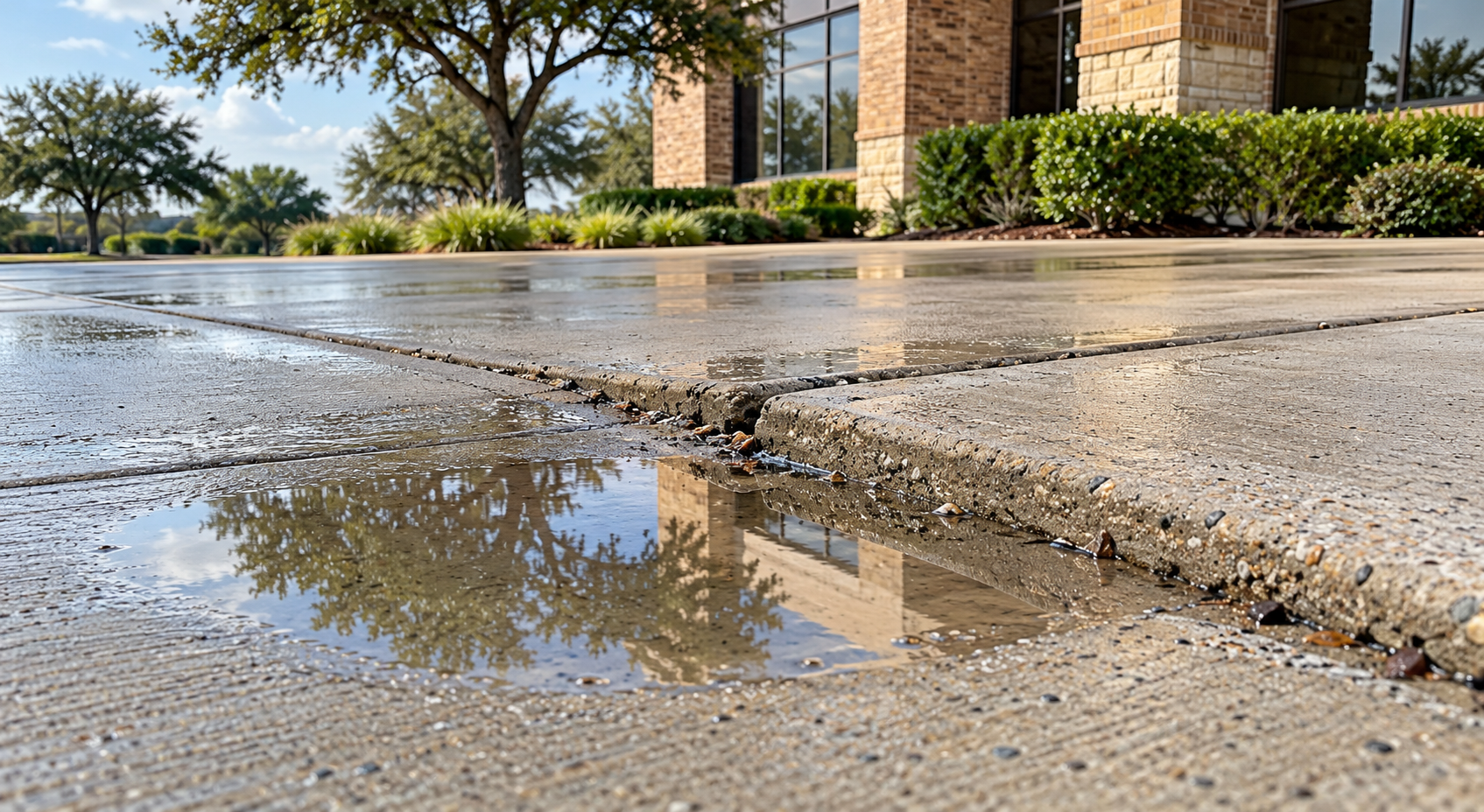
Homeowners should watch for soil washing downhill, standing water, leaning fences, cracking flatwork, exposed roots, or grade changes near the foundation. When those signs appear, evaluate the slope, drainage pattern, and wall location before the damage spreads.

Written By:
Kurt Manalastas
Home & Property Research Journalist
Kurt is a Home & Property Research Journalist who creates educational content on home services, property improvement, and residential decision-making. He turns contractor experience, industry standards, and verified research into clear, practical guidance that helps homeowners understand their options and make informed decisions.