What You Need to Know:
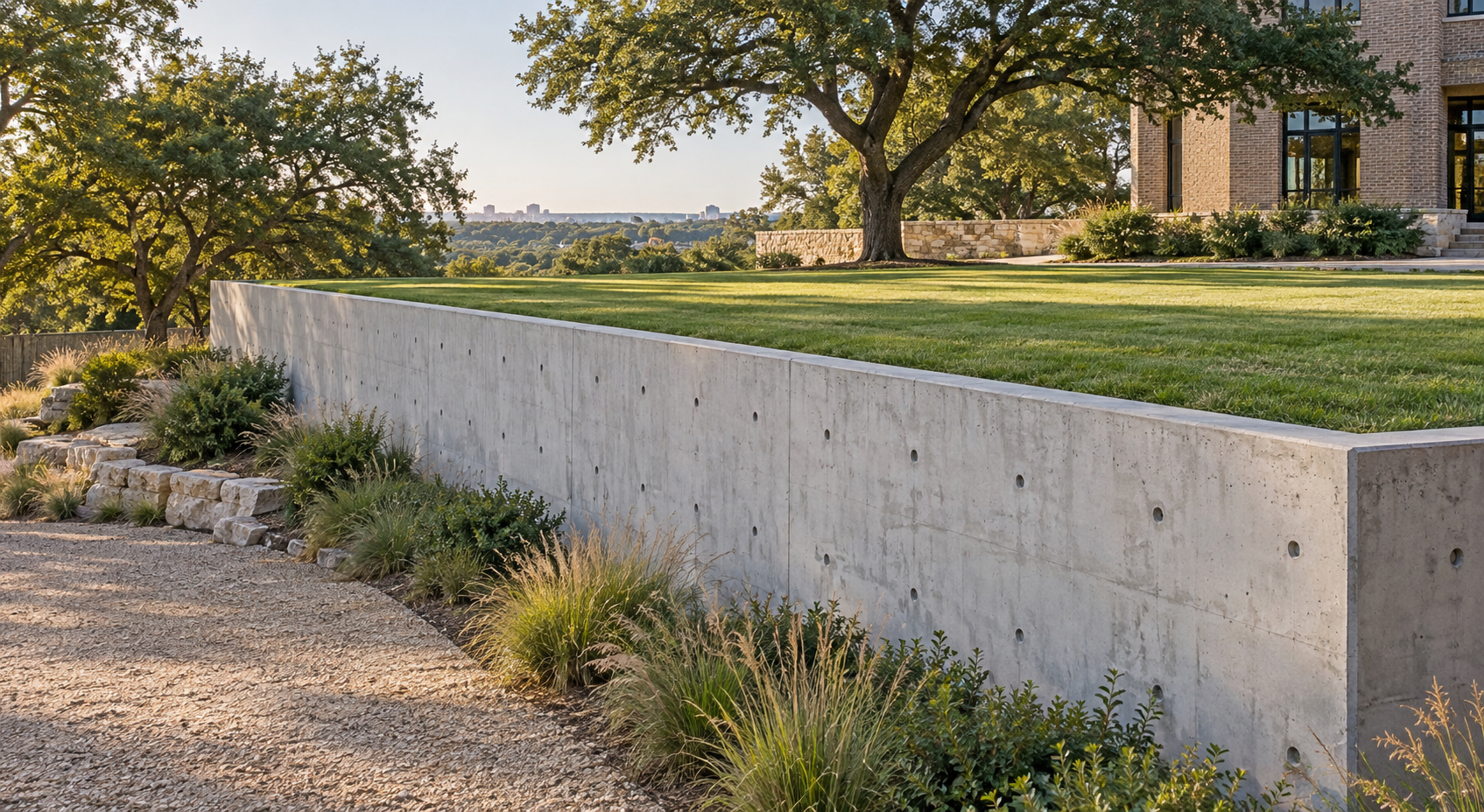
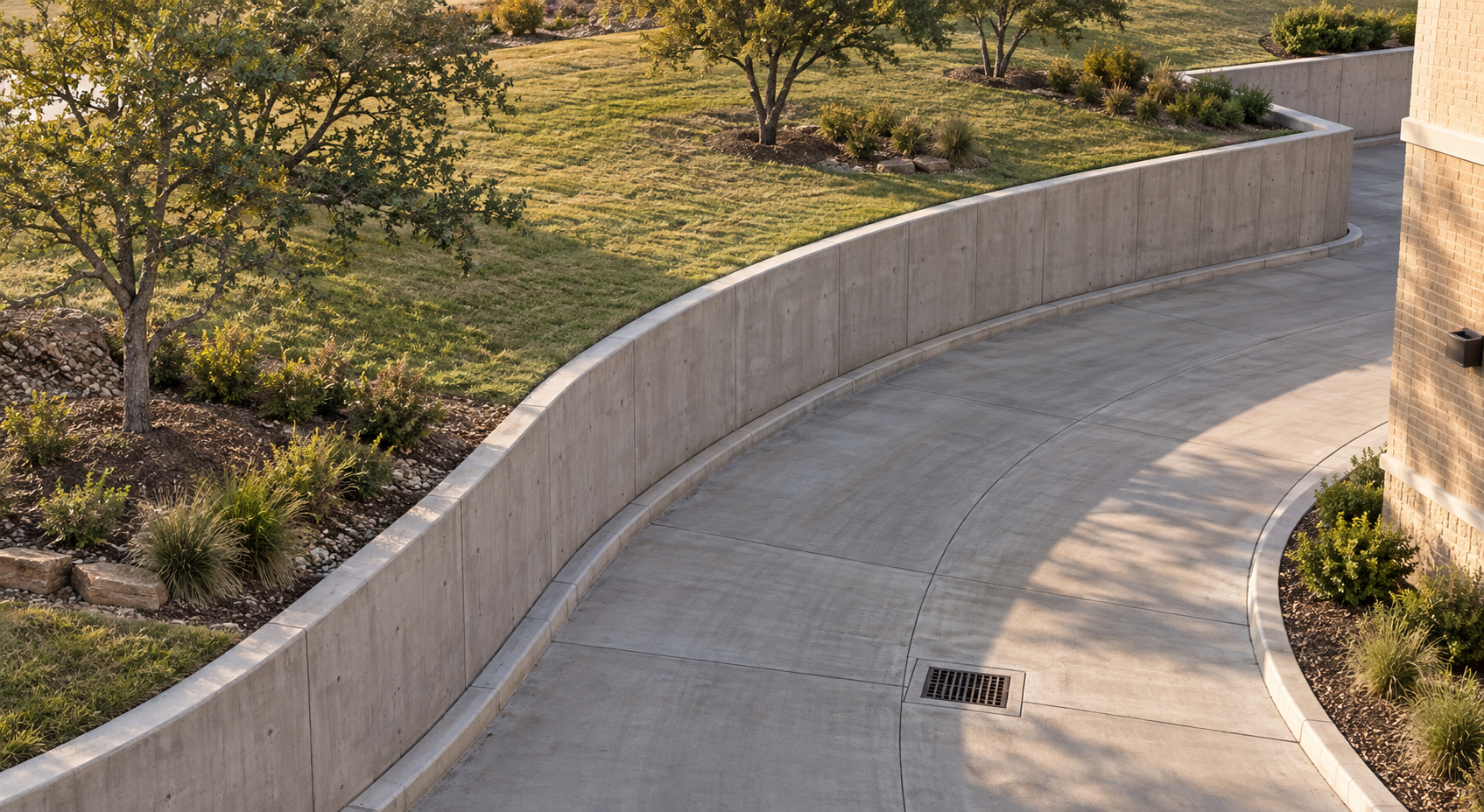
Retaining walls solve real Fort Worth property problems, including erosion, unstable slopes, poor drainage, and soil movement near structures or landscaping. The warning signs usually appear before serious damage occurs, and recognizing them early keeps the solution manageable while preventing more expensive consequences later.
Most Fort Worth homeowners do not think about retaining walls until erosion, drainage, or slope movement makes the issue visible. By then, the erosion has taken a noticeable chunk of the yard, the slope has shifted in a way that is visibly unstable, or water from a heavy storm has done something to the landscape that was not there before. None of these outcomes are surprising when you look at the conditions that created them — but they are almost always preventable when the early signs are recognized and acted on.
Fort Worth’s combination of expansive clay soil, varied terrain across the DFW Metroplex, and the intense rainfall events that North Texas receives during storm season creates conditions where retaining walls earn their value. Here is how to tell whether your property is showing the signs that one is needed, and what those signs are actually telling you about what is happening with your soil and drainage.
Visible Soil Erosion on Sloped Areas
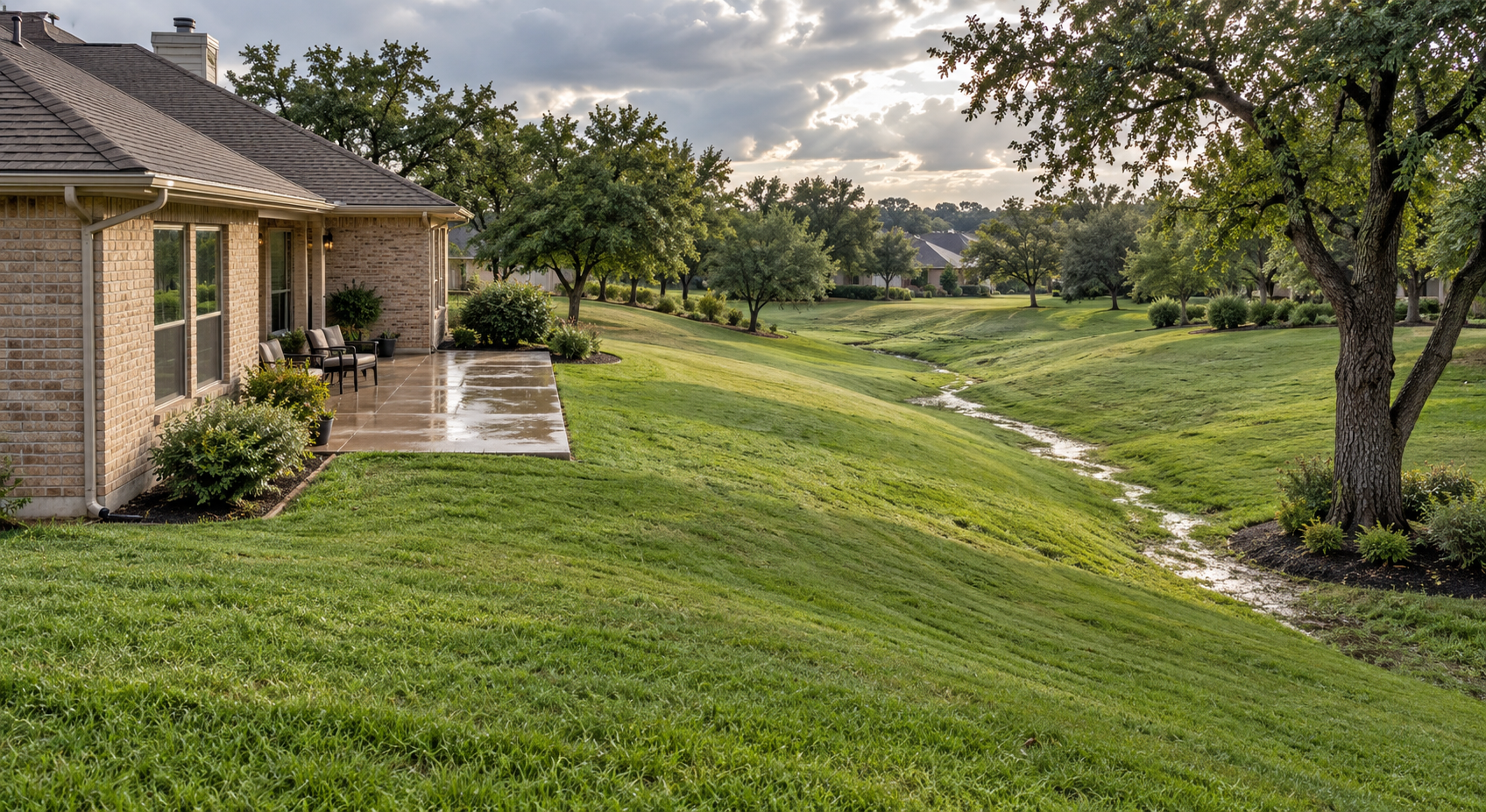
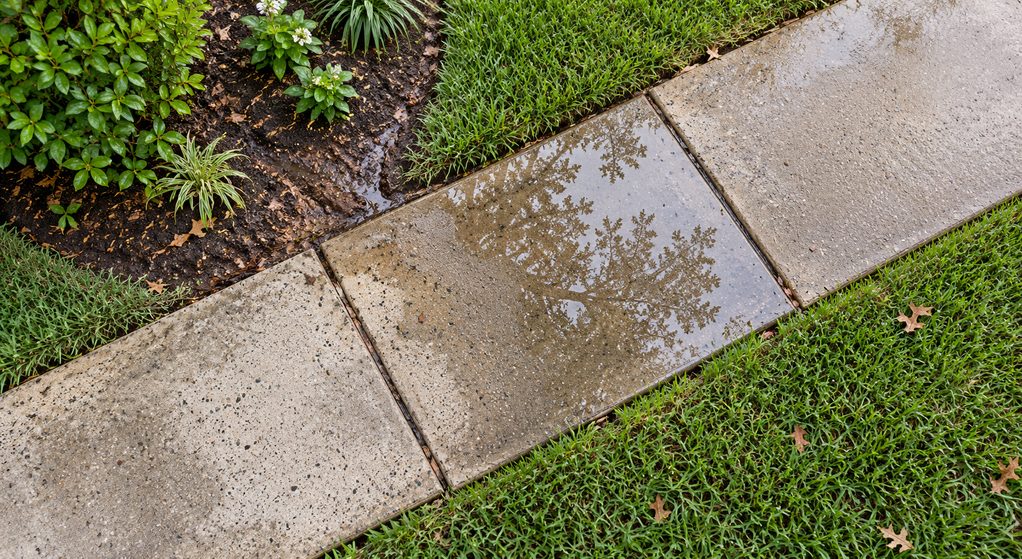
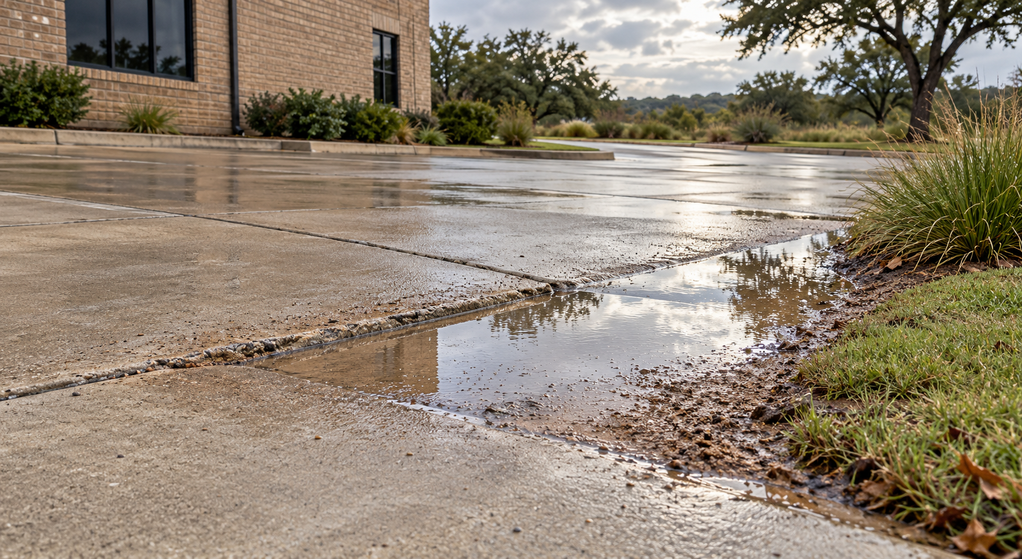
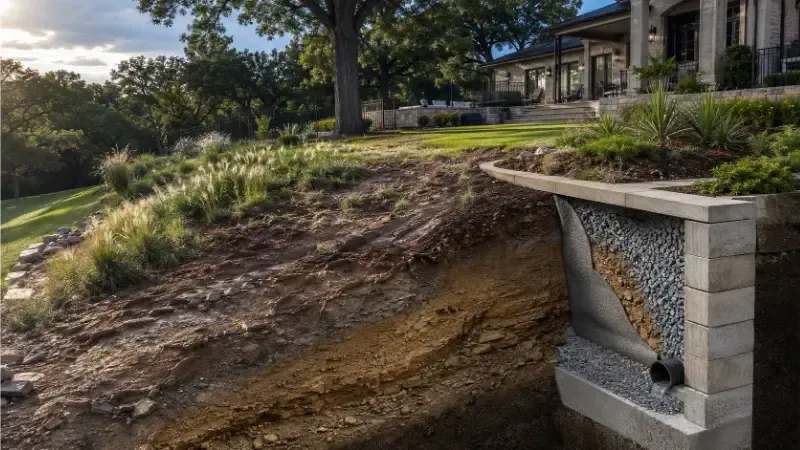
Erosion is the most straightforward sign that a slope on your property is not stable enough to retain soil without help. If you can see rills — small channels carved into the soil by water running off a slope — bare patches where grass or ground cover has been washed away, or accumulated sediment at the base of a slope that was not there before, erosion is actively occurring. In Fort Worth, where heavy storm events can deliver significant rainfall in short periods, erosion can happen quickly and worsen dramatically with each successive storm if the slope is not stabilized. Professional concrete retaining wall services in Fort Worth address the underlying slope instability rather than just restoring the surface — because replanting eroded areas without retaining the soil behind them produces landscaping that washes away again with the next significant rain.
Erosion is not always dramatic. Sometimes it presents as a gradual thinning of the turf on a slope, soil that is slowly migrating toward the base of a grade change, or landscape beds that require more frequent replenishing than they used to. These subtler forms of erosion are easy to dismiss as normal maintenance until gradual soil loss reaches the point where more significant intervention is needed. Catching the pattern early, before it reaches that threshold, keeps the solution proportionate to the problem.
A Slope That Has Started to Move or Shift
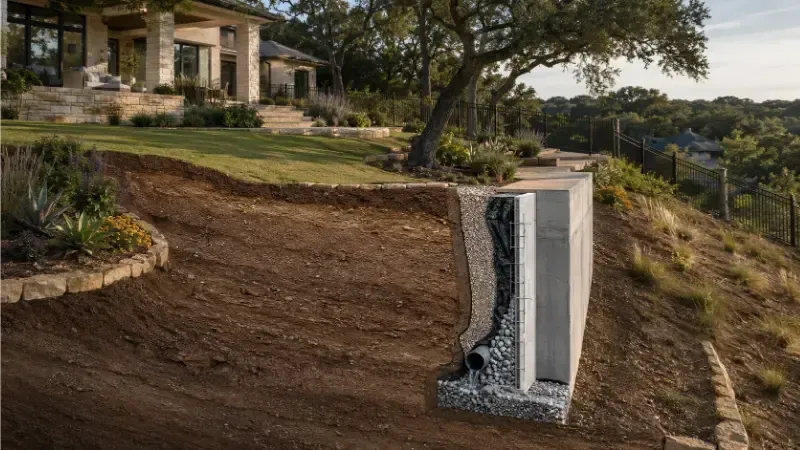
Soil movement on a slope is different from erosion and more serious. Erosion removes material from the surface. Slope movement shifts the soil mass itself, and when that happens the signs are more structural: the grade of the slope changes visibly, objects placed on the slope — fence posts, garden structures, trees — begin to lean or tilt, and the soil at the toe of the slope may show signs of being pushed outward rather than washed away. In Fort Worth, where expansive clay soil responds to moisture changes by expanding and contracting, even slopes that seemed stable during dry conditions can begin to move after a period of sustained rain that saturates the clay and reduces its shear strength.
This kind of movement is a warning that the slope does not have the structural support to remain stable under the moisture and load conditions it is experiencing. A retaining wall that provides lateral support — holding the soil mass in place rather than simply covering the surface — is the appropriate response. A surface treatment alone, like erosion control netting or replanting, does not address the movement of the soil mass beneath the surface and will not prevent it from continuing.
Water Pooling Near Your Foundation
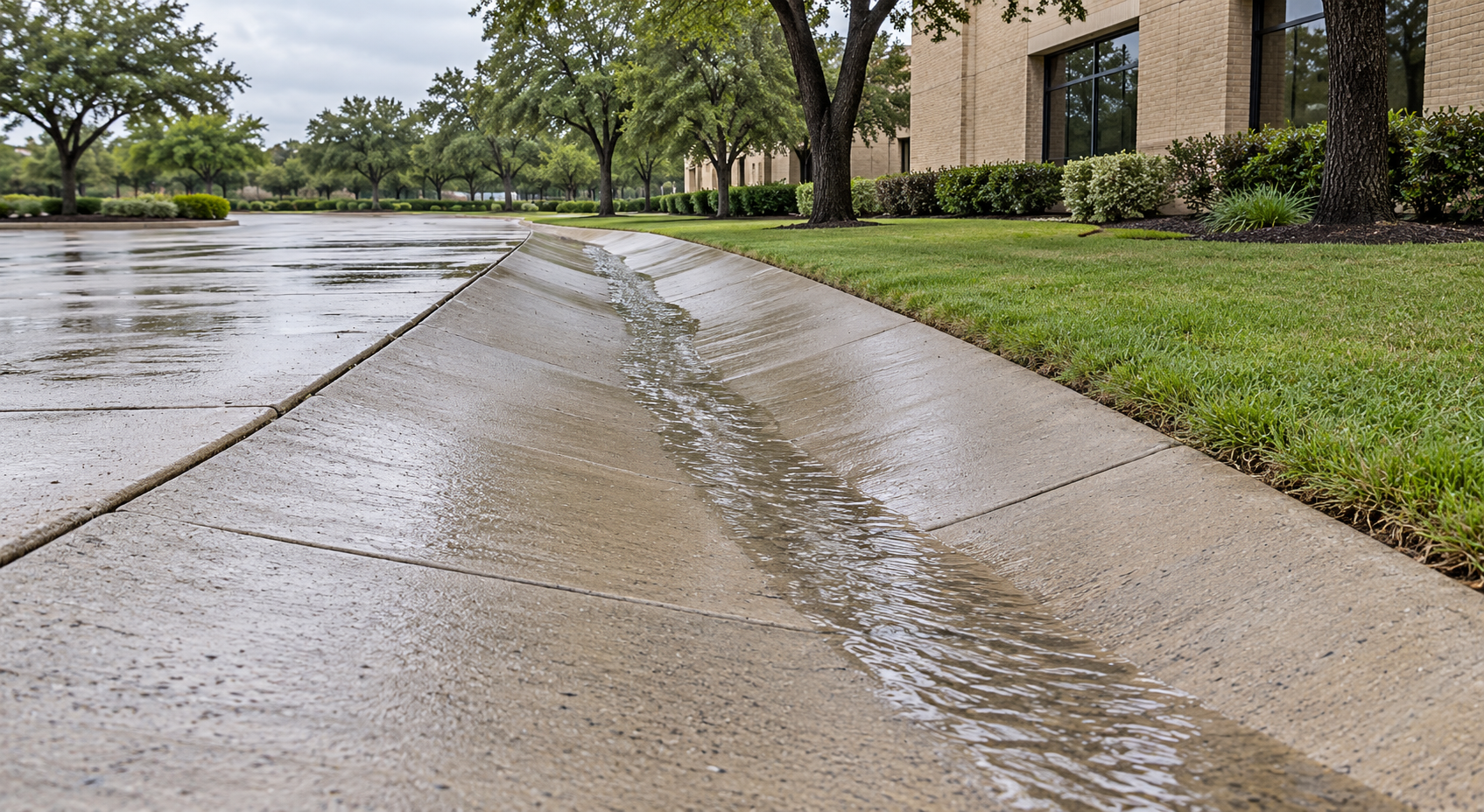
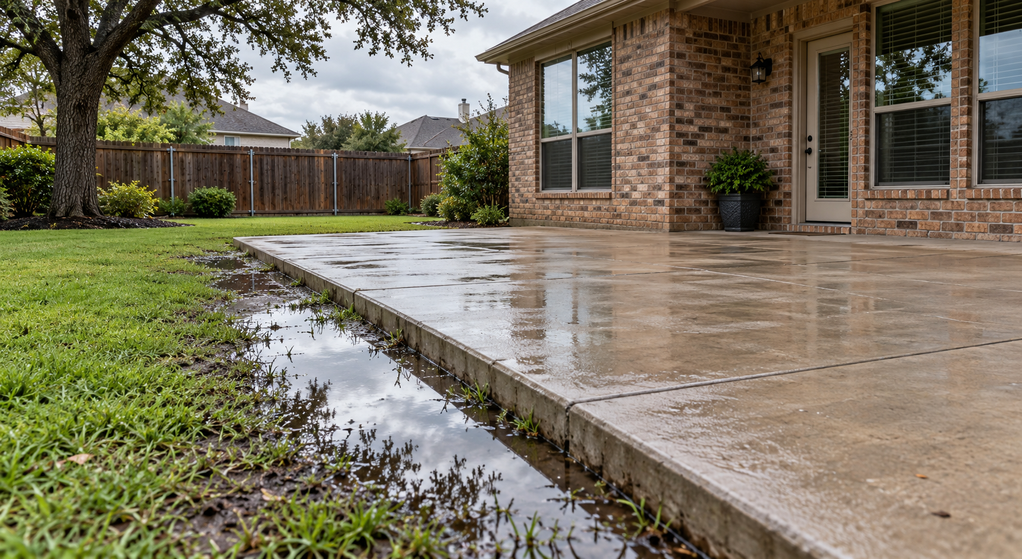
If water consistently accumulates near your home’s foundation after rain events, the grade of your yard may be directing water toward the house rather than away from it. This is a drainage problem with foundation implications, and a retaining wall used in conjunction with drainage corrections can redirect that water before it reaches the foundation. In Fort Worth’s clay soil, water that sits against the foundation saturates the adjacent soil and drives the expansion and contraction cycle that stresses the foundation — which is why persistent foundation moisture in North Texas properties is one of the primary contributors to the foundation movement that Dallas and Fort Worth homeowners deal with so commonly.
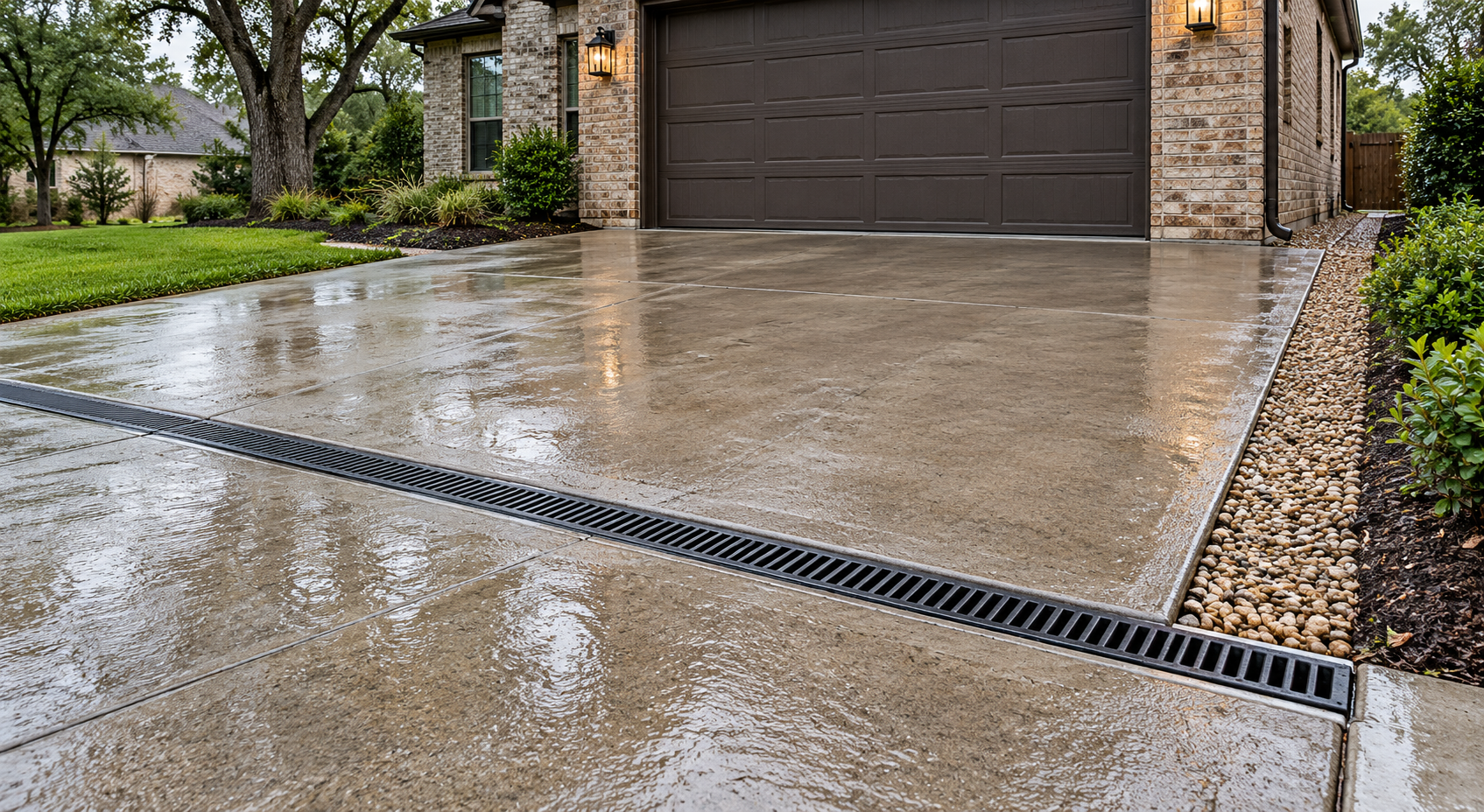
A retaining wall that creates a level terrace above the drainage problem area, combined with proper grading behind the wall and a drainage outlet that moves water away from the foundation, addresses the source of the water accumulation rather than just the symptom. This combined approach — retaining wall plus drainage design — is more effective than either element alone and is the standard approach for properties where the topography is directing water toward structures.
Landscape Beds That Keep Washing Out
Landscape beds on slopes or at the base of grade changes are one of the most common indicators of a retaining wall need that homeowners overlook for years. If you find yourself replacing mulch, soil, or plants in the same area repeatedly after storms, the landscape is telling you that the grade behind it is losing material faster than the planting can stabilize it. Retaining walls designed to enclose and support raised landscape beds eliminate this cycle, hold the soil and amendment that makes the beds productive, and create a more defined, finished appearance than a continuously eroding open slope provides.
This is one of those situations where a retaining wall transitions from a structural necessity to a design element — defining garden areas, creating visual interest through terracing, and turning an erosion problem into a landscaping feature. At
Fort Worth Concrete Contractors, Lahi Kautai and the team approach retaining wall projects with the same values they bring to every job: honesty about what the site actually needs, quality materials that hold up to Fort Worth’s conditions, and workmanship that treats every client’s property the way they would want their own treated. A retaining wall built right does not just solve the erosion problem — it adds lasting value to the property.
Fence Posts Leaning or Pulling Away
Fence posts that have begun to lean, especially posts on slopes or near grade changes, are a visible indicator of soil movement that is often dismissed as a fence maintenance issue when it is actually a soil stability issue. Fence posts are anchored in the soil and move with it. If the soil beneath them is shifting — whether from erosion, settlement, or the expansion and contraction of Fort Worth’s clay soil through wet and dry cycles — the fence posts follow. Resetting fence posts in moving soil produces posts that need to be reset again within a few seasons, because the soil condition that caused the movement has not changed.
When fence post movement is concentrated along a slope or at a specific grade change on the property, and when the posts have been reset more than once without lasting improvement, a retaining wall that stabilizes the soil in that area is the solution that actually addresses the cause rather than the symptom. The fence posts will stay stable when the soil they are anchored in is stable, and a properly designed retaining wall creates that stability in a way that periodic post resetting never does.
Cracking in Driveways or Walkways Near Grade Changes
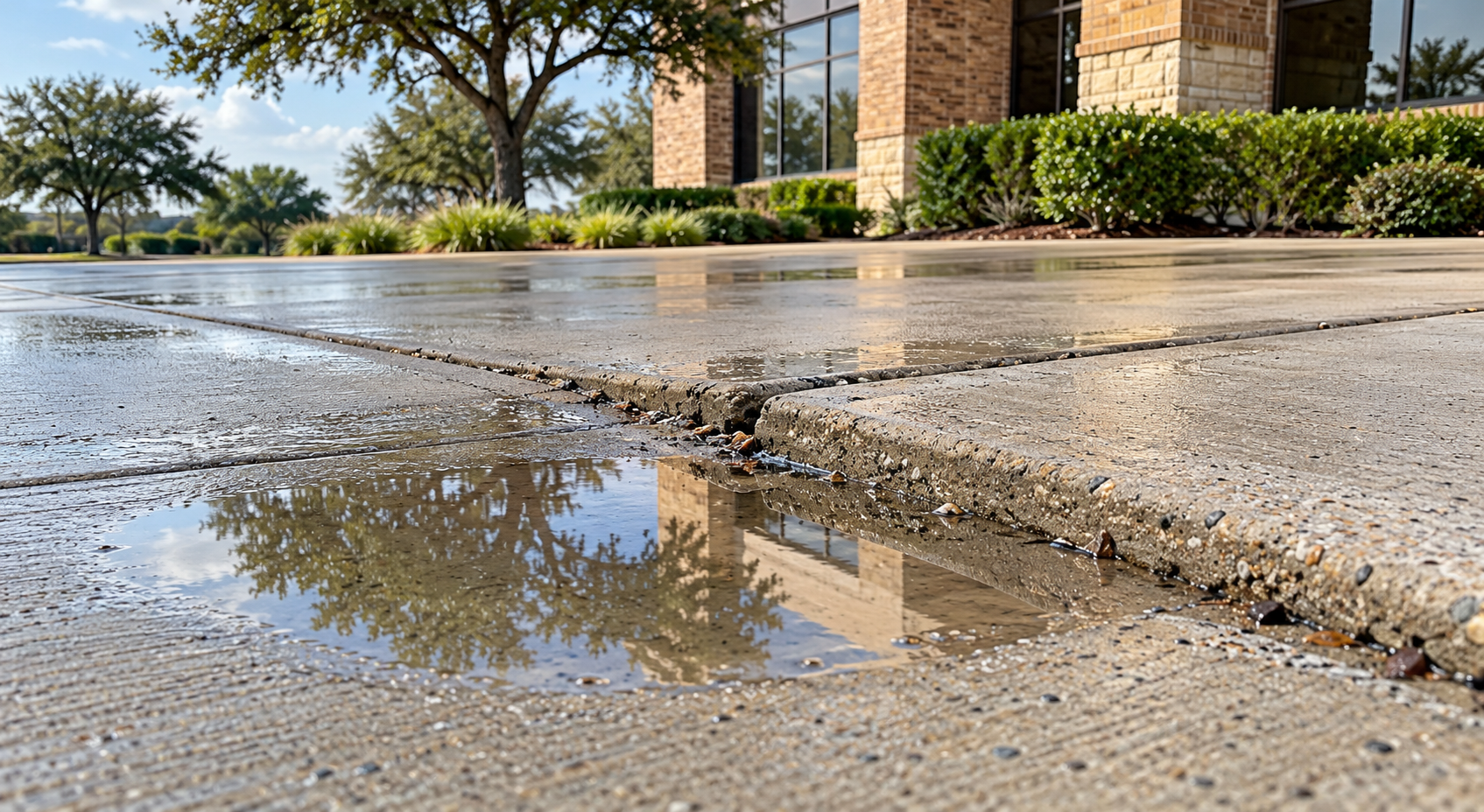
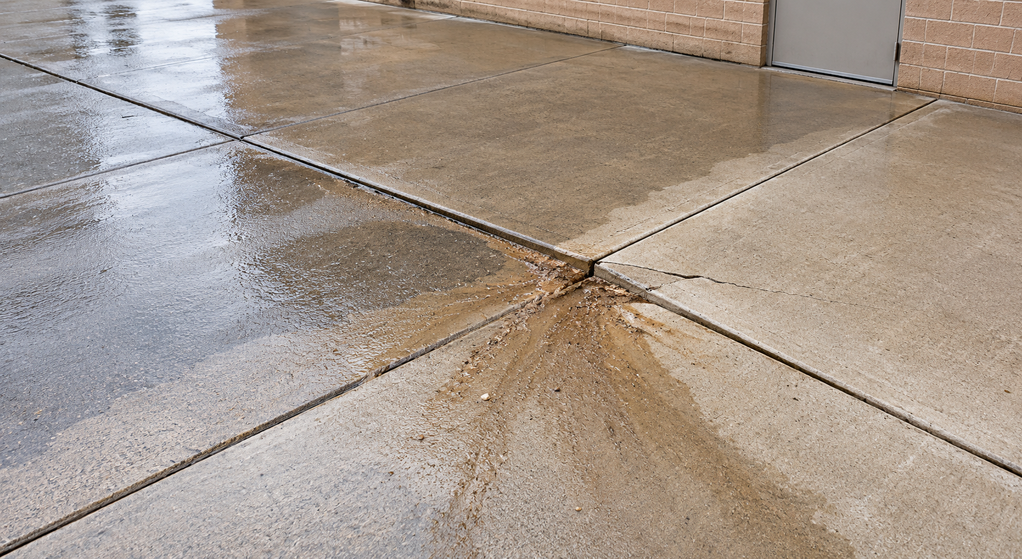
Concrete driveways and walkways that run near or across grade changes are subject to the differential soil movement that those grade changes produce. When one section of the concrete is supported by stable soil and an adjacent section is near a slope where the soil is moving, the slab experiences the bending stress that differential settlement creates — and that stress produces cracking in the concrete that is often dismissed as a normal concrete issue rather than a symptom of the underlying soil instability.
If concrete on your Fort Worth property is cracking consistently near a slope or grade change, and if the crack pattern or the displacement between crack faces suggests that one section of the slab has moved relative to an adjacent section, the soil condition at the grade change is likely a contributing factor. Repairing the concrete without addressing the slope instability that is driving the movement will produce repairs that fail again in the same locations, because the cause of the movement remains active.
For Fort Worth homeowners evaluating any concrete contractor for retaining wall or related concrete work, understanding what distinguishes a quality contractor from a less capable one is practical preparation. Our article on
what to look for in a Fort Worth concrete contractor covers the five qualities that matter most for concrete projects in this market — a useful reference before committing to any significant scope of work.
What a Retaining Wall Project Actually Involves
Understanding what a retaining wall project involves helps Fort Worth homeowners evaluate proposals and set realistic expectations. A properly engineered retaining wall includes not just the wall itself but a drainage system behind it — typically a gravel backfill layer and a perforated drain pipe at the base — that manages the water that would otherwise build up behind the wall and create hydrostatic pressure that the wall was not designed to resist. Walls installed without drainage provisions are at a disadvantage from the day they are built.
The footing design, wall thickness, reinforcement, and height are all determined by the lateral load the wall needs to resist — which in turn depends on the height of the retained soil, any surcharge loads from vehicles or structures above the wall, and the soil’s specific weight and drainage characteristics. In Fort Worth, where clay soil is heavier and behaves differently when saturated than sandy or loamy soils, these calculations need to reflect local conditions rather than generic assumptions. A wall designed for Fort Worth’s clay soil will be specified differently than one designed for more granular soils, and that difference matters for how long the wall performs without movement, cracking, or drainage failure.
For homeowners developing a budget for a retaining wall project, understanding the cost factors that affect concrete retaining wall work in Fort Worth helps set realistic expectations before the first contractor conversation. Our article on
understanding concrete service pricing in Fort Worth breaks down the variables that most affect project cost in this market — a practical starting point for anyone planning a retaining wall or related concrete work on a Fort Worth property.

Written By:
Domenique Bomediano
Home Improvement Research Specialist
Domenique Jose Bomediano produces research-focused educational content on home renovation, construction, concrete services, and property improvement. He translates technical concepts, contractor workflows, and industry practices into clear, practical insights that help homeowners make informed decisions about projects, budgeting, and property planning.