Structural Warning Check
A bowing retaining wall in Fort Worth can be dangerous because visible bulging, leaning, or cracking often means soil pressure, trapped water, or structural weakness is pushing the wall beyond its design limits. Early inspection helps determine whether drainage repair, stabilization, engineering review, or full reconstruction is needed.
A bowing retaining wall should never be dismissed as a cosmetic problem. When a wall begins curving, bulging, or leaning outward, it is showing that the forces behind it are becoming greater than the structure can safely resist. Homeowners considering retaining wall services in Fort Worth should treat visible movement as an early warning of structural distress, particularly when the wall supports a driveway, building, elevated yard, or neighboring property.
The wall may remain standing for some time, but that does not make it stable. Delaying an inspection gives soil pressure, trapped water, and foundation movement more opportunities to worsen the damage.
Why a Retaining Wall Begins to Bow
In our work across the Dallas–Fort Worth Metroplex, Fort Worth Concrete Contractors has seen bowing develop most often when drainage, soil preparation, reinforcement, or footing design fails to match actual site conditions. A retaining wall must resist the sideways force of the soil behind it while allowing water to escape. Once that balance is lost, the wall may begin moving outward.
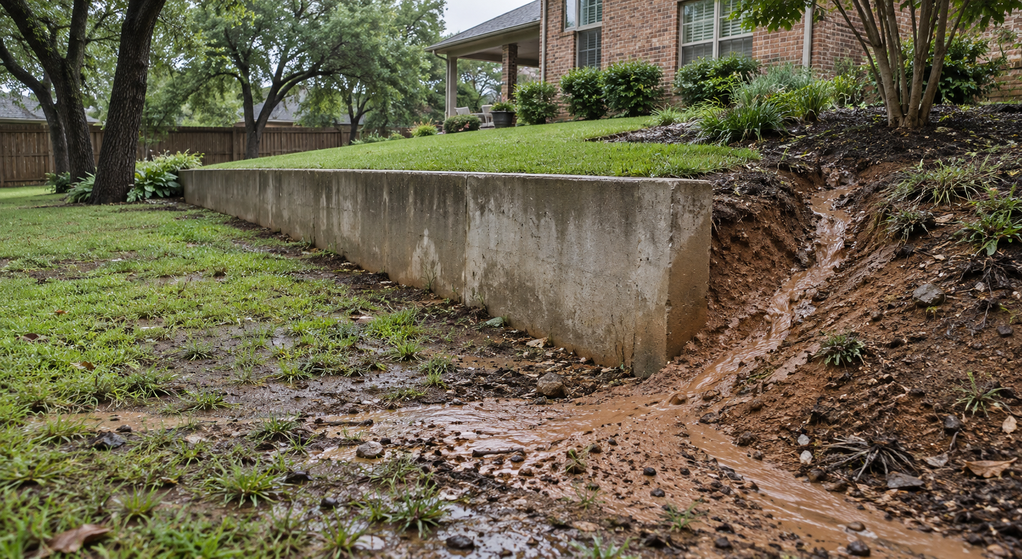
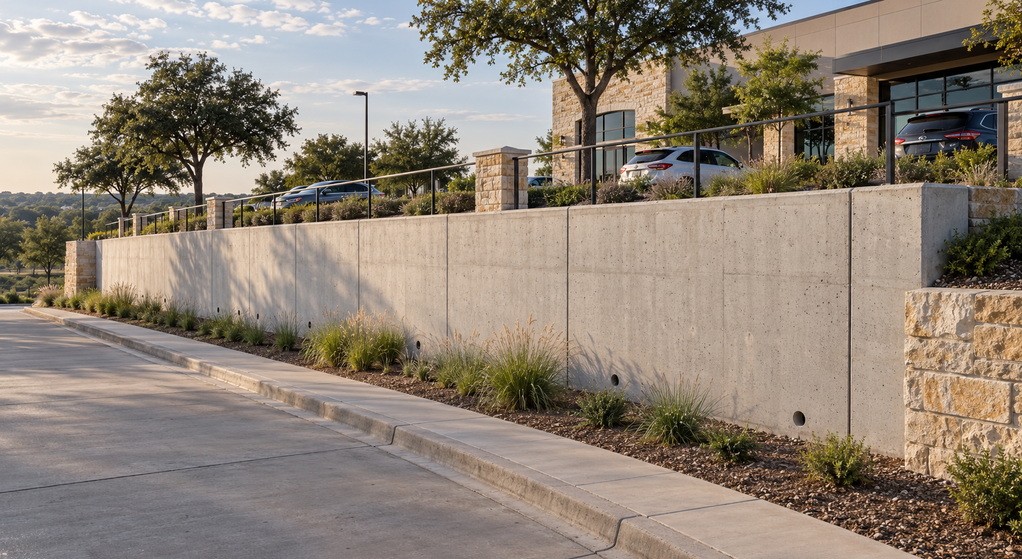
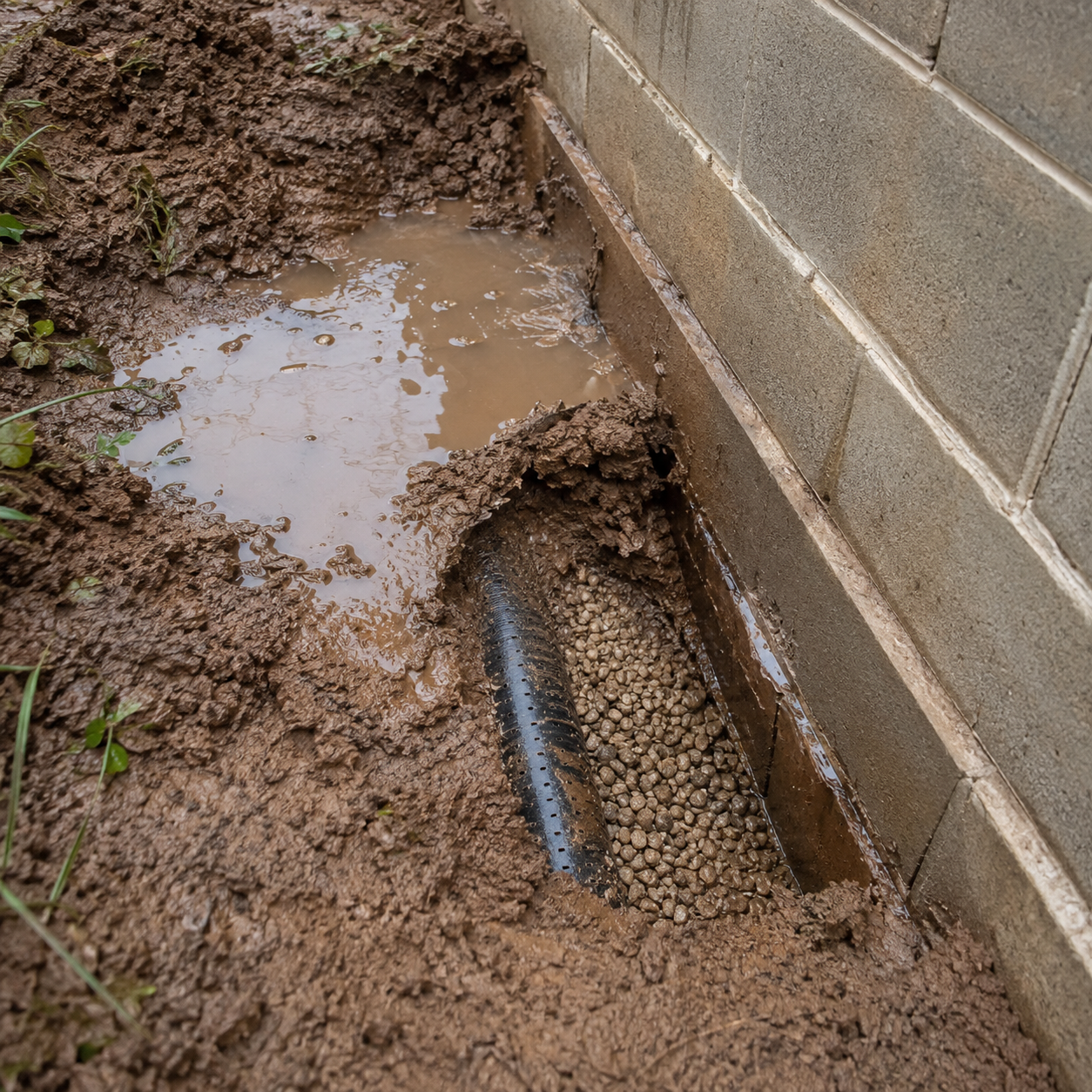
Water is frequently the main trigger. Saturated soil becomes heavier and creates hydrostatic pressure behind the wall. Without functional drainpipes, gravel backfill, filter fabric, or weep holes, that pressure has nowhere to go.
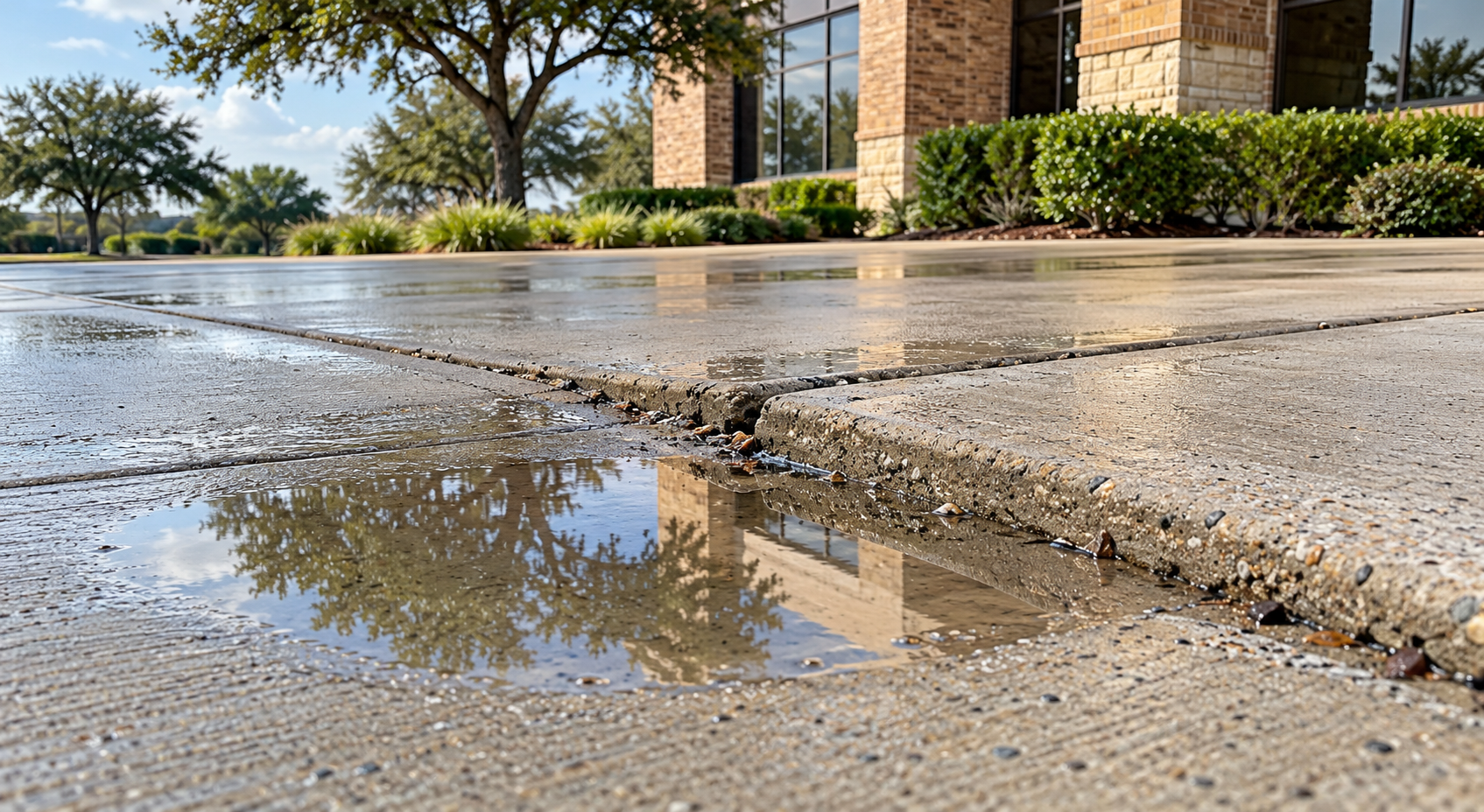
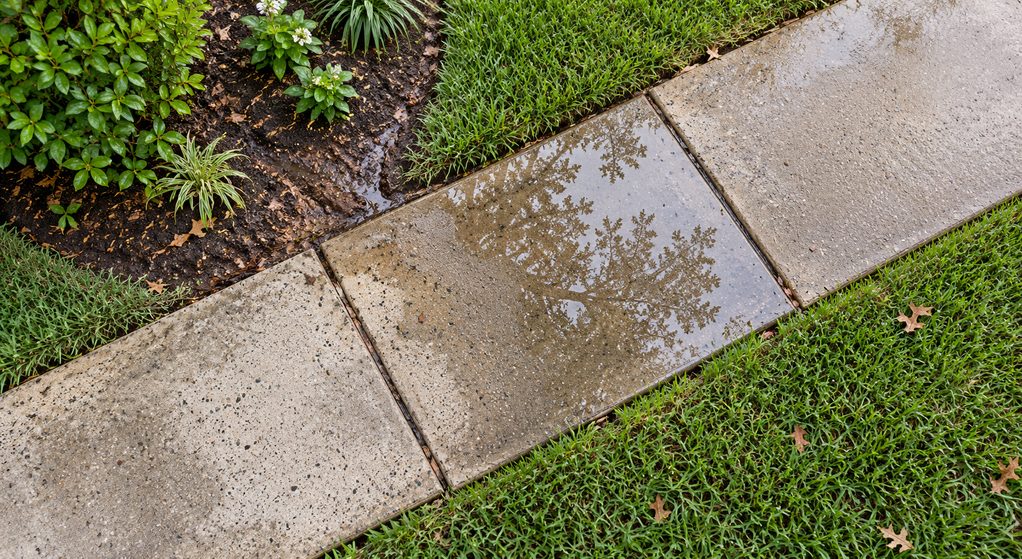
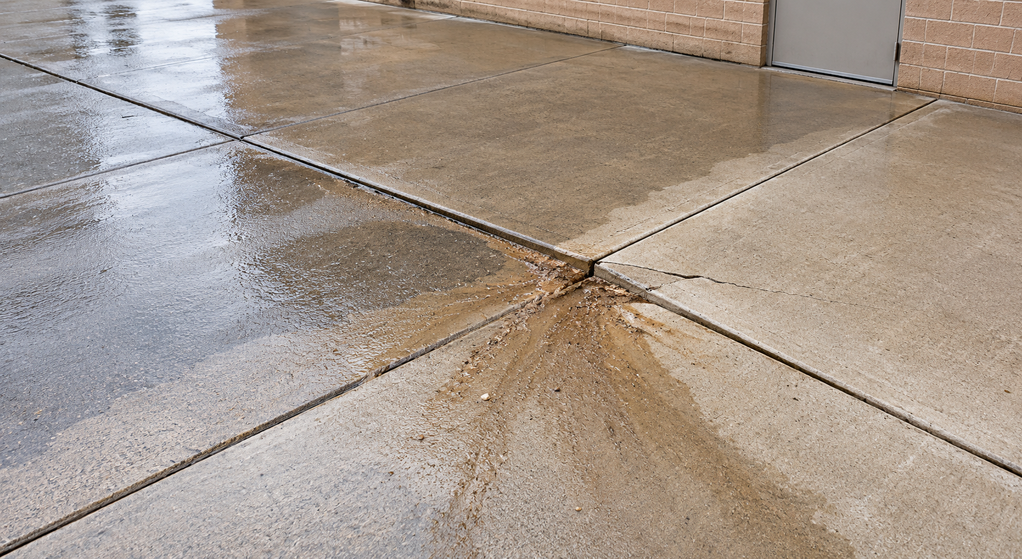
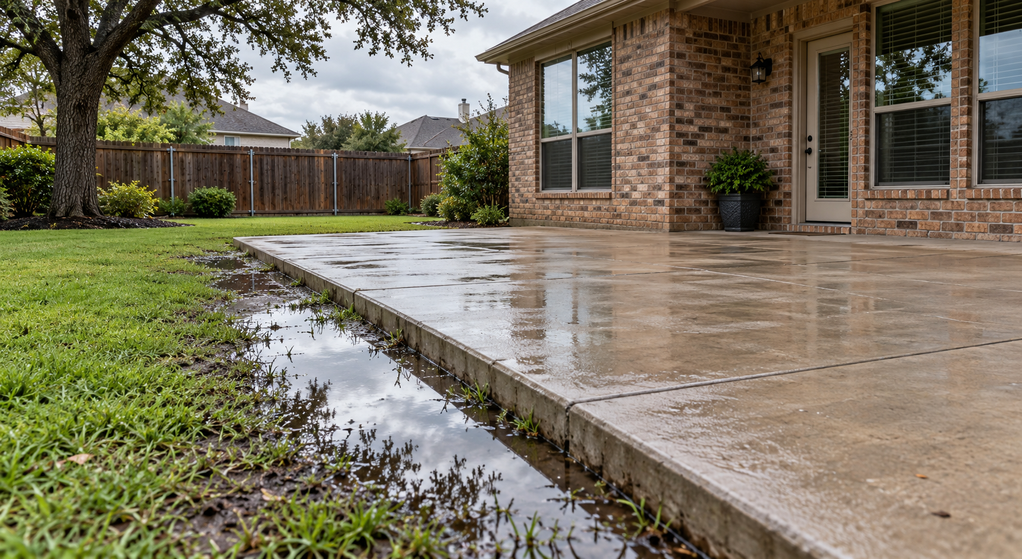
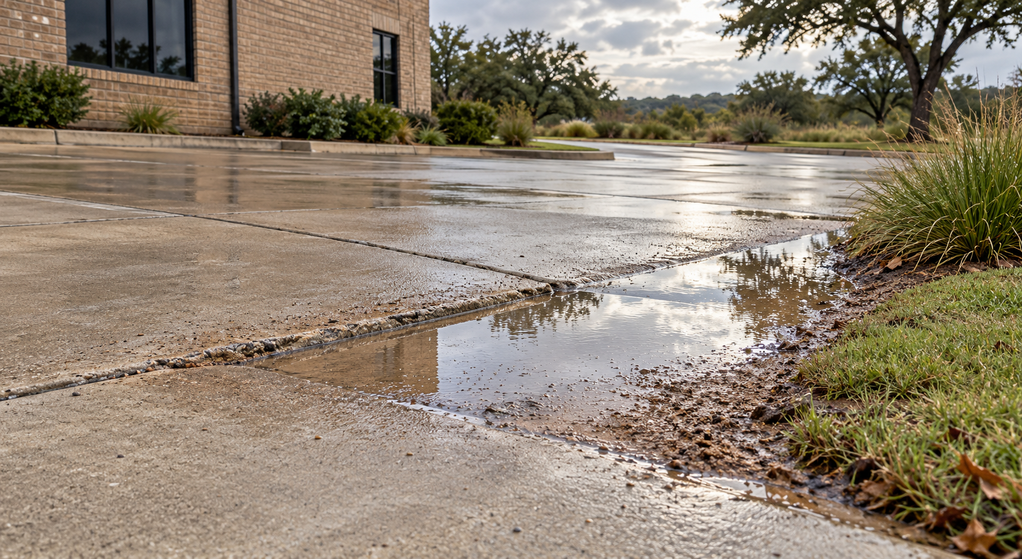
The City notes that runoff from hard surfaces such as roofs and driveways cannot soak into the ground and may contribute to flooding and erosion when it is not properly managed.
Other causes include an undersized footing, insufficient reinforcement, poorly compacted backfill, erosion near the base, or additional weight placed too close to the wall. A driveway, parked vehicle, storage shed, pool, or newly added landscaping can create a surcharge load that an older wall was never designed to carry.
Fort Worth’s stormwater guidance recognizes that uncontrolled runoff can contribute to flooding and erosion problems, which helps explain why drainage around retaining structures deserves serious attention.
How Dangerous Is a Bowing Retaining Wall?
The level of danger depends on the wall’s height, material, location, rate of movement, and what it supports. A slight curve in a short landscape border is different from a pronounced bulge in a six-foot concrete wall holding back a sloped yard.
Still, any visible bowing means the wall is no longer behaving as intended. For a better understanding of how retaining walls are designed to function and what causes them to fail, see our retaining wall guide.
A failing wall can release soil, concrete, stone, or masonry with little warning. The danger increases when people regularly walk below it or when the wall sits beside a home, driveway, sidewalk, patio, utility line, or neighboring lot. Collapse may also remove support from the ground above, causing sections of the yard or pavement to settle.
Based on more than two decades of hands-on concrete experience in North Texas, one practical rule remains reliable: visible movement deserves investigation. Waiting for the wall to develop a dramatic lean or wide cracks usually means the repair has become more complicated and costly.
Warning Signs That Require Prompt Attention
Bowing rarely appears alone. Homeowners should inspect the surrounding area for additional evidence of movement or water pressure.
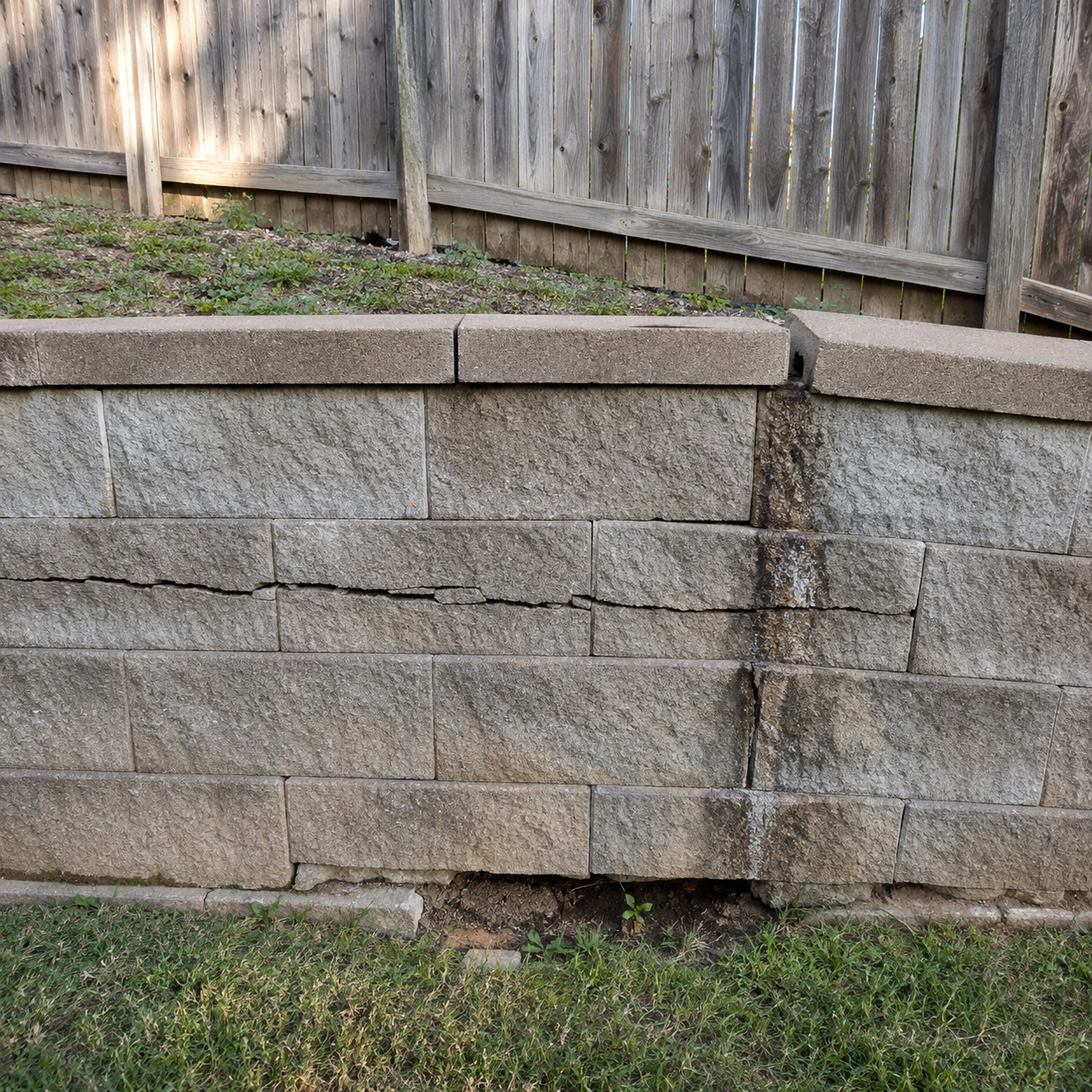
Horizontal cracking is especially concerning because it can indicate that the center of the wall is being pushed outward. Stair-step cracks in block walls may show differential movement between sections. Gaps between the wall and nearby soil, separated caps, displaced blocks, or cracks that widen after storms also deserve attention.
Other warning signs include:
- Water seeping through joints or cracks
- Soil washing out near the footing
- Sunken ground behind the wall
- A leaning fence installed above it
- Doors, pavement, or nearby structures shifting
- New bulging after heavy rainfall
- Cracking sounds or loose masonry
- Drain outlets that remain dry during wet weather
A wall that is actively moving, shedding material, or making noises should be treated as an immediate safety concern. Keep people, pets, and vehicles away from both the lower side of the wall and the ground directly above it.
If repairs are no longer practical, choosing the right retaining wall can help prevent recurring structural issues and improve long-term stability.
Why Fort Worth Conditions Matter
Retaining-wall advice cannot be separated from local soil and weather conditions. North Texas properties may experience long dry periods followed by intense rain. Soil moisture can therefore change significantly throughout the year, contributing to expansion, contraction, settlement, and shifting pressure against concrete structures.
Fort Worth also experiences runoff that can move quickly across roofs, driveways, patios, and compacted yards. When grading directs that water toward a retaining wall, even a properly built structure may experience unnecessary pressure. Drainage problems often become more obvious after thunderstorms, but the damage may have been developing quietly for months.
Fort Worth’s Administrative Code also requires retaining walls for which a permit is required to have plans prepared by an engineer licensed by the State of Texas.
These requirements reflect the structural consequences involved when a wall retains a substantial amount of soil.
City of Fort Worth residential permitting guidance requires a building permit for retaining walls greater than four feet tall, measured from the bottom of the footing to the top of the wall.
Common Repair Mistakes That Make the Problem Worse
The most common mistake is patching cracks without correcting the pressure behind the wall. Fresh mortar or surface coating may improve appearance temporarily, but it does not restore structural capacity or relieve trapped water.
Trying to push a bowed wall back into position without an engineered plan can also be dangerous. The soil behind it may shift suddenly, and damaged reinforcement may no longer provide dependable support. Excavating behind the wall without proper bracing presents similar risks.
Another mistake is adding a drain at the base while ignoring the grading above. A drain cannot perform properly if it is clogged, incorrectly sloped, surrounded by compacted clay, or overwhelmed by runoff from the property.
Repairing one section while leaving an unstable footing untouched may simply move the problem elsewhere. The wall, drainage system, footing, backfill, reinforcement, and nearby loads must be evaluated together.
Can a Bowing Wall Be Repaired?
Some walls can be stabilized, but others require partial or complete reconstruction. The right approach depends on the cause and severity of movement.
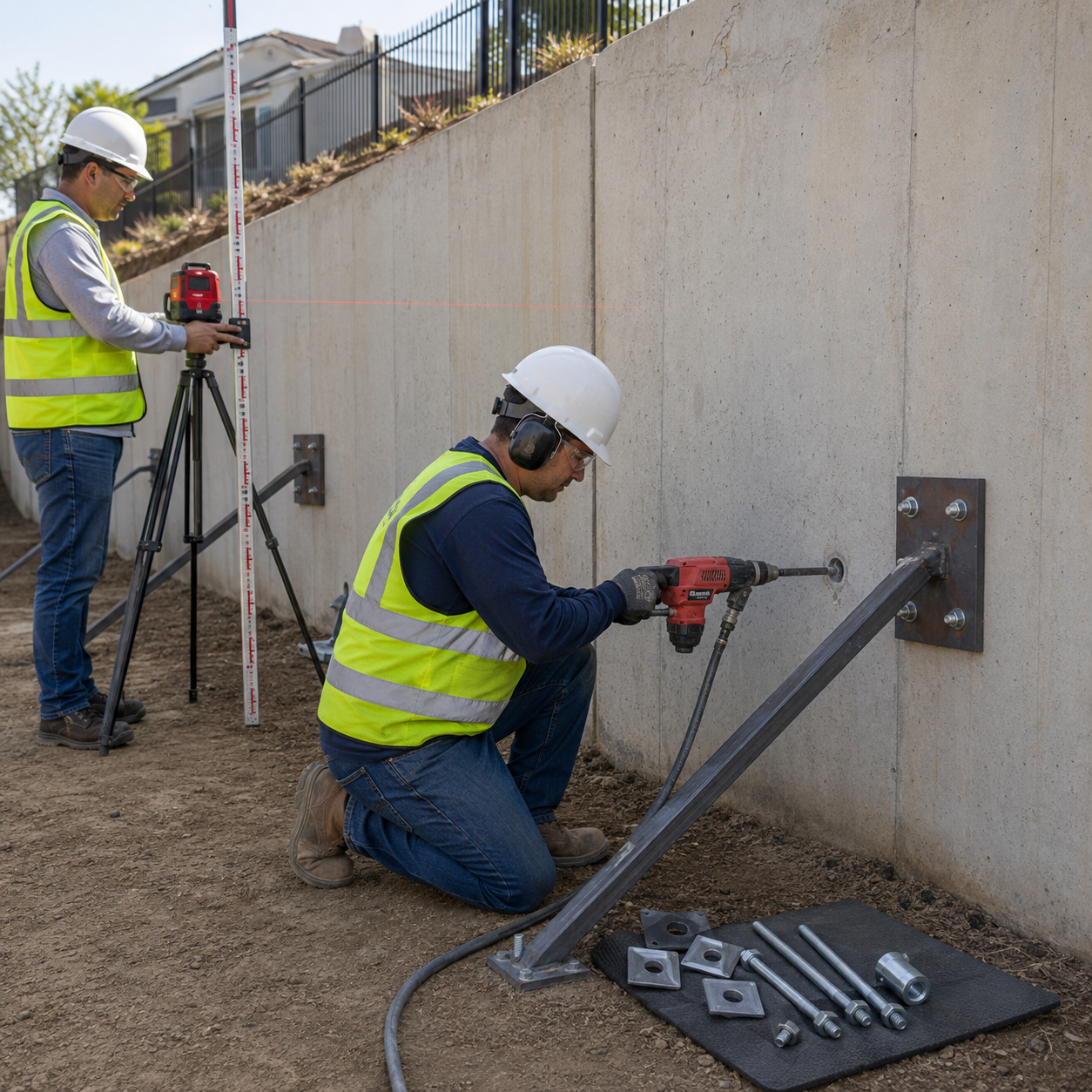
Possible solutions include improving drainage, reducing loads near the top, installing structural anchors, rebuilding damaged sections, or replacing the wall with a properly reinforced system.
The tradeoff is important. Stabilization may reduce disruption and cost when the wall remains structurally sound enough to save.
Reconstruction is usually the smarter decision when the footing has rotated, reinforcement has failed, masonry is extensively cracked, or the wall was inadequately designed from the beginning.
A qualified contractor can identify visible construction issues, while a licensed structural or geotechnical engineer may be needed when the wall is tall, severely displaced, or supporting a major load.
What Fort Worth Property Owners Should Do Next
Document the wall with clear photographs and measure visible cracks or displacement. Check it again after rain, but do not stand directly below a questionable section. Keep heavy vehicles, equipment, and stored materials away from the top until the condition is evaluated.
A bowing retaining wall in Fort Worth can be dangerous, especially when movement is progressing or the wall supports an occupied area. The safest decision is to investigate early, identify why the wall is moving, and choose a repair that addresses the soil, drainage, footing, and structural system together.
Acting before failure protects the surrounding property and gives owners more practical repair options.

Written By:
Kurt Manalastas
Home & Property Research Journalist
Kurt is a Home & Property Research Journalist who creates educational content on home services, property improvement, and residential decision-making. He turns contractor experience, industry standards, and verified research into clear, practical guidance that helps homeowners understand their options and make informed decisions.