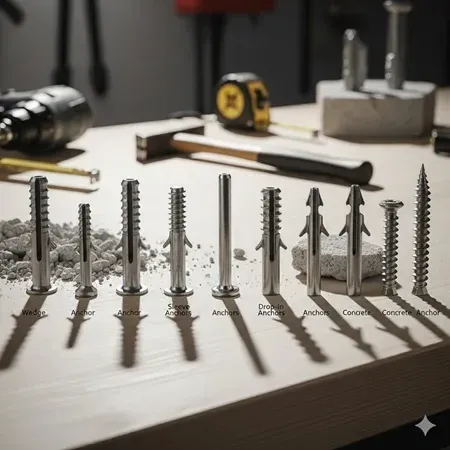
When a DIYer has to connect an object to a concrete/masonry surface, the amount of effort increases significantly compared to operations using drywall or a wood surface. Special tools, procedures, and hardware are all required to do the task. And determining which products are the best concrete anchors for each job can be difficult.
This guide will assist you by outlining the best
concrete anchors
for a specific situation and highlighting several goods to consider.
Our Top 5 Picks
Basic information about concrete anchors should shed some light on these materials. Check out the top 5 anchors below to make your purchasing experience easier.
Klein Tools Conical Anchor Kit 53729- Concrete Screw 1/4" x 3-3/4" Flat Phillips CONFAST
- Excellent Phillips Pan Head Self-Tapping Screws from T.K.
- Ribbed Plastic Anchor by The Hillman Group 370329
- 3/8" X 3" Stainless Wedge Anchor Bolt Dropper
1. Klein Tools 53729 Conical Anchor Kit
It's difficult to beat the versatility of a plastic anchor kit like this one from Klein Tools for light-duty applications like hanging pictures and decorations on stone walls.
The set comes with 100 plastic anchors and 100 matching plastic screws, enough hardware for a variety of applications. This kit is very versatile because you can use it on masonry surfaces such as brick, block, and concrete, as well as drywall and plaster applications.
Klein Tools provides a 14-inch masonry bit intended to fit with these anchors, so you don't have to guess. The anchors, screws, and drill bit are packaged in a plastic box for simple storage.
2. CONFAST 1/4" x 3-3/4" Flat Phillips Concrete Screw
Confast's Flat Phillips Concrete Screws are the best choice for medium-duty tasks that need a stronghold.
These screws are 14 inches thick and 334 inches long, giving them plenty of treads for cutting into concrete, brick, and block surfaces. These carbon steel screws have a corrosion-resistant blue coating that keeps them from rusting, but they're designed for dry conditions and shouldn't be submerged.
They also have a #3 Phillips bit, which provides a lot of driving force in power drills and impact drivers. Each package contains 100 screws, which is sufficient for most concrete fastening applications.
3. T.K.Excellent Phillips Pan Head Self Tapping Screws
T.K. Excellent Phillips Pan Head Self Tapping Screws may be the answer for those who aren't sure what size anchors they require.
This set includes 400 pieces, including 60 extra-small anchors, 60 tiny anchors, 40 large anchors, and 40 extra-large anchors, as well as screws for each size. The only thing missing from the set is the appropriate drill bit for each.
These anchors are strong enough for light-duty use in brick, block, or concrete. But they'll also function in plaster or drywall. A see-through plastic case lets the user see when it's time for a refill at a look.
4. The Hillman Group 370329 Ribbed Plastic Anchor
Regarding keeping a package of plastic anchors on hand for miscellaneous purposes, this set of ribbed plastic anchors is worth a look.
This 100-anchor kit can be used as a replacement for an existing anchor kit or as an addition to a box of pan head screws. This kit has a versatile design that may be used with concrete, brick, or block, as well as drywall or plaster.
When the user tightens the screw, the ribbed shape expands, cutting into the surface, providing a secure hold in light-duty applications. You can also use it with #8, #10, or #12 screws, allowing one set of anchors to replace multiple
5. Bolt Dropper 3/8" X 3" Stainless Wedge Anchor
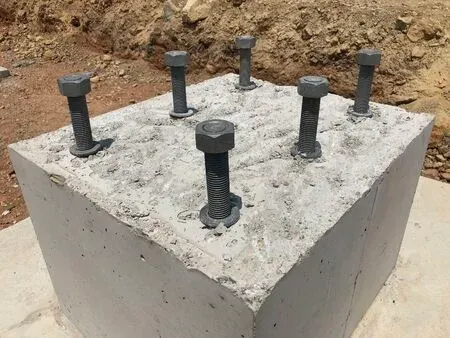
Heavy-duty applications necessitate tough hardware, such as Bolt Dropper's Stainless Wedge Anchors. These wedge-type anchors are made entirely of stainless steel, making them very corrosion-resistant and long-lasting.
To ensure heavy-duty fastening, the bolts are 38 inches thick and 3 inches long. The set includes ten anchors, each with the necessary nut, washer, and machine-thread anchor for placing concrete, block, or brick.
These anchor bolts are appropriate for nearly any application, including underwater installations and dry situations both indoors and outdoors. While they don't come with a drill bit, a 38-inch diameter masonry bit is all that's needed for installation.
Conclusion
When selecting a concrete anchor, choose one that does the job well and won't necessitate extra adjustments. You should choose to get one that's made of rust-resistant components, is simple to install, and has a long lifespan.
If you’re still unsure and need further help, contact
Fort Worth Concrete Contractors now!