When owners search for methods to upgrade and enhance the outside of their houses, one of the main things that spring to mind is a new concrete driveway. Aside from giving you a fresh way to access your property, the driveway also serves to create a nice surface for your automobiles.
As a result, you should be aware that the driveway sees a lot of wear and tear in comparison to other sections of your home that see a lot of foot traffic. The driveway is mainly built outside your home or office, and it is best to make it robust with concrete. Even if you wish to create them out of stone, the surface must be concrete. So it is preferable to avoid these extra costs by installing a concrete driveway on your property.
And if you're still wondering if it is actually worth the money to spend on a new concrete driveway. Then, hold on! We are going to make things simple for you by disclosing the benefits of a concrete driveway in Fort Worth TX, and why you should build one.
It's Versatile & Aesthetically Appealing
Concrete has a clean appearance, will brighten up your house and yard, and is available in various colors, textures, and design patterns. Choose between the classic broom finish and pattern stamped concrete that looks like cobblestone or tile.
You can also install an acid-colored concrete driveway. This provides a range of color and design possibilities, including a marble-look, earth tone browns, reddish browns, and even greens. Be unique with your driveway and concrete layout!
Increase the Resale Value of a Home
A fresh concrete driveway and walking walkways will boost curb appearance, attract potential customers, and raise the resale value. According to Bankrate.com, a strong first impact can increase the worth of your house by 5 to 10%. Consider this: your driveway and pathways direct potential buyers to your property... if yours is in a state of disrepair. You're giving a negative first impression. This is particularly true if all of the homes in your neighborhood have new concrete driveways while yours is cracked and dilapidated, gravel, or asphalt.
Clean Surface
Asphalt driveways cause the oils in the mixture to evaporate and ascend to the surface. These oils adhere to your shoes once they reach the surface, and you may track them through your home and into your carpet. This is exacerbated during the summer when temperatures rise.
On the other hand, concrete does not release any oils, so you don't have to be concerned about carrying these materials through your house.
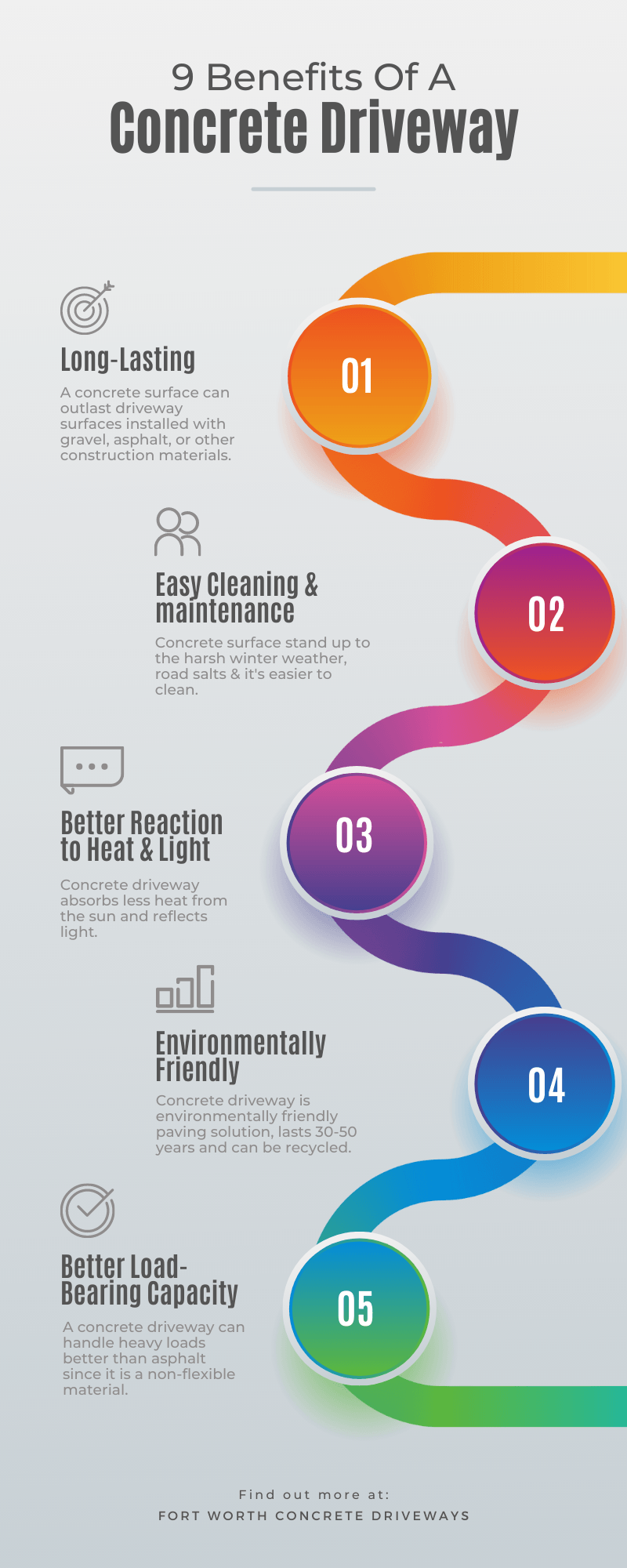
Concrete Driveway Is Long-Lasting
Your concrete driveway will last a long time. It is a durable substance that outlasts other materials. With little care, your concrete driveway might survive for 30 years or more before it has to be rebuilt. Furthermore, it will require less frequent maintenance and refinishing than other driveway materials like asphalt or gravel.
Concrete Driveway Remains Cool In Summers
Since concrete is light in color, it does not get as warm to the touch in the summer. On the other hand, asphalt is black and absorbs the sun's heat; it can get hot enough to fry an egg. There will be instances when it is simply too hot and unsafe to play on an asphalt driveway due to the risk of burns.
It's Easier To Shovel In Winters
Snow clearance is a major responsibility and a fact of life for Canadian households. Nothing is more frustrating than struggling to clear a gravel driveway or getting your shovel stuck in rough asphalt. A smooth concrete driveway makes shoveling easier and gives a better surface for snow removal with a snowplow. This is a major benefit for those who live in the great white north.
Load-Bearing Capacity
As concrete is a non-flexible material, it can withstand significantly more weight than asphalt. While asphalt can withstand the weight of a car or truck, large machinery can cause flexing, resulting in warped pavement layers. If you want to store a dumpster in your driveway for a week or two while doing repairs, your concrete driveway can withstand the weight and will not be damaged.
It Isn't Harmful To The Environment
Concrete in its natural form might be regarded as a green building material. It's finely ground rock combined with water and a few additional ingredients. It can also be produced from recyclable materials. Concrete construction and maintenance are much less detrimental to the environment than asphalt, and you can recycle your outdated concrete driveway into concrete aggregate.
Consult With Pros Of Concrete Contractors Fort Worth TX
Unique concrete design is something that Concrete Driveway Fort Worth TX is really dedicated to. Whatever your goal is, they can give you the information, figures, and procedures needed to make this a reality.
Concrete Driveway Fort Worth TX prioritizes concrete craftsmanship. They believe that every customer and project is essential for success; pride in the process is just as essential to them as the completed result.
Concrete Driveway Fort Worth TX covers a diverse range of concrete solutions by using apprentices, high-quality products, and exceptional customer service.
Contact us now if you're ready for a new concrete driveway or another concrete renovation!