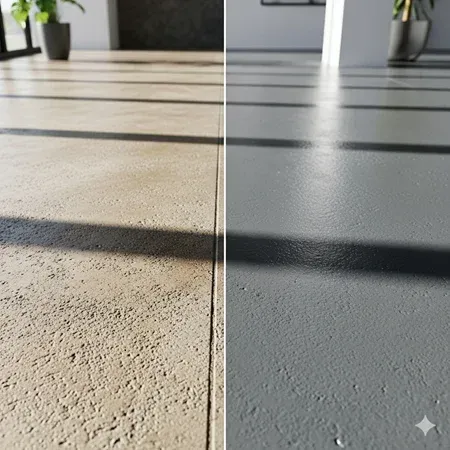
When it comes to coloring concrete, you have two choices: concrete stain or paint. Using a coating on the surface of fresh concrete does more than just provide a beautiful touch to it.
Most concrete coverings also protect it from chipping, discoloration, and other issues. Anyone considering an indoor or outdoor project that requires a colored concrete surface can choose between concrete stain and paint.
When weighing the benefits and drawbacks of both types of finishes, there are various aspects to consider. Continue reading to find out which choice is best for your house.
Which is Better: Concrete Paint or Stain?
Although few people favor outdoor concrete paint, most prefer the advantages of acid stain. The results are astounding, especially when using a high-quality product.
It is critical to understand how outdoor concrete paint differs from acid stain. Only the surface of the concrete is covered with paint, which gives a layer of security from harm. Painted concrete has an opaque appearance, which means that no concrete shows through, and comes in a variety of superb shades.
When properly put, the paint will stay for a long period without cracking or peeling and can also be used to conceal defects or patchwork on top of the concrete. Acid stain, on the other hand, penetrates the pores of the concrete and reacts with various components of the concrete.
This results in a more transparent appearance. With outdoor concrete paint, you get the same look every time, however, with acid stain, each project is different. In other words, if 10 patios were stained with the same color of acid stain, they would all have the same hue but have different results.
Is It Better to Paint or Stain Concrete?
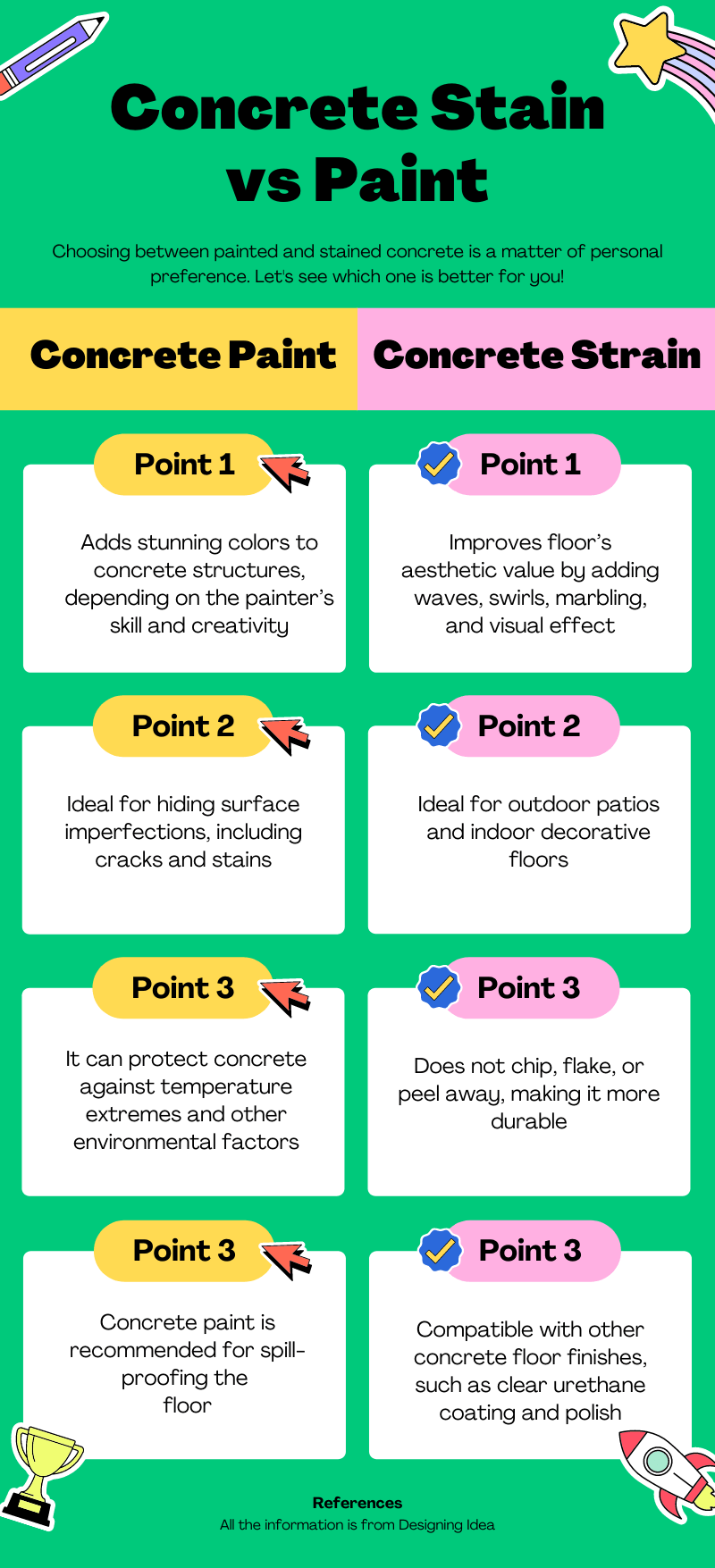
It is a question of personal choice whether to choose painted or stained concrete. Both concrete design strategies can improve the visual appeal of a structure.
However, due to its translucent nature, staining typically produces a more beautiful and polished concrete impression. Unlike paint, stain penetrates the surface of the concrete and requires less upkeep, and lasts longer. Applying the stain with a sealer is the best way to keep it looking nice while also protecting it from water, chemicals, and oil.
Painted concrete may also look lovely, especially when finished with a clear coating to give it a unique gloss. But, the greatest benefit of concrete paint is its capacity to conceal surface flaws such as cracks.
Paint would be a good choice for homeowners who have surface defects on their floors and other buildings.
Which Lasts Longer Concrete Stain or Paint?
When discussing the pigments used in staining or painting concrete, stains frequently come out on top. It is important to remember the differences in application approaches.
Painted concrete needs merely the application of color to the surface of the concrete. Because of its thinness, it is prone to peeling, flaking, and chipping. As a result, concrete painting necessitates extensive preparation to avoid such difficulties and provide more durable paint-to-surface contact.
Outside concrete paint typically lasts 3 to 5 years before requiring a new coat of paint. If the paint is kept in a protected place or is not exposed to the elements, it will stay longer.
Staining, on the other hand, involves the adding of pigments to the concrete mix, so the stain becomes an inherent component of the concrete. It sinks deep into the concrete rather than remaining on the surface.
Concrete that has been stained never chips, peels, or flakes. With proper resealing and upkeep, concrete stains can last up to 100 years. It does, however, dissipate over time. Purchase a UV stable stain to guarantee that the color stays consistent, especially in regions that receive direct sunlight.
Conclusion
The decision between concrete stain vs. paint comes down to personal preference, with both treatments having advantages and disadvantages. Homeowners who want to improve the concrete beauty of their property must balance their options. If not, they can always contact a specialist to find the best answer to their problems.