This is paragraph text. Click it or hit the Manage Text button to change the font, color, size, format, and more. To set up site-wide paragraph and title styles, go to Site Theme.
Foundations are crucial for buildings. They are the starting block of a construction process, and it is impossible to have a building without a solid foundation. Their advantage isn't limited to just providing a building a solid construction that can stabilize the structure and evenly distribute the entire load of the building.
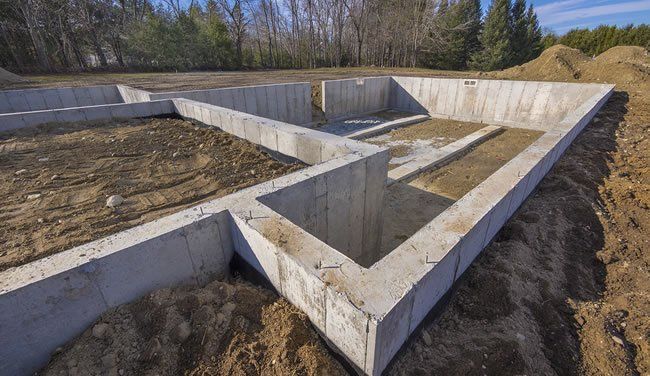
A concrete foundation is similar to a traditional foundation, and they serve the same purpose. They are also essential to prevent ground moisture from entering the building. However, the two differ as a concrete foundation is built straight into the ground and has no basement or crawlspace.
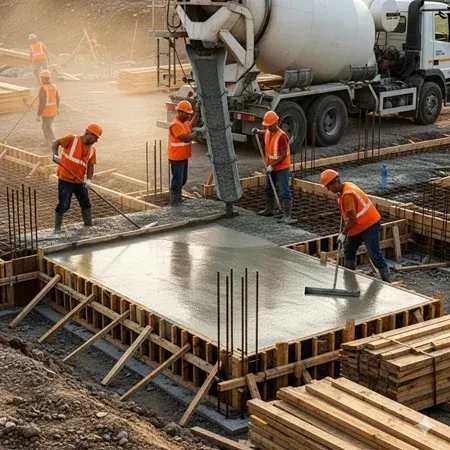
Laying a good foundation for a building is essential, and building one shouldn't be too hard if you hire a professional. Still, some challenges that may cause a long-term defect in the foundation may occur during construction; let's look at some of them below.
Challenges When Building a Concrete Foundation
Soil Leveling
The earth can serve as a solid base for foundation when compressed. So, the soil underneath should be compacted before pouring concrete for every foundation. However, if the soil is not compacted, the soil may settle unevenly under the foundation.
Sometimes, it might be difficult to level a soil surface, but a common challenge in concrete foundation is for the compacted soil to adjust directly to the bottom of the concrete. This occurrence can sometimes cause a void between the two, thus leading to cracks in the foundation.
Getting The Mix Right
There are different types of cement, and not all are appropriate for concrete. Plus, there are various methods of mixing for concrete applications. Depending on how strong you intend for a foundation to be, the ratio for the mix can be different.
A standard concrete mix for foundation should be 1 part cement to 3 parts of sand and 6 parts aggregates. A typical challenge of getting the combination of foundation right is mixing the materials properly.
Not doing so can cause uneven strength in the concrete mix. Thus, this can result in weak areas that can easily crack under the compressive weight of the building.
Inadequate Curing of Concrete
Curing of concrete requires providing adequate moisture and temperature for concrete to dry. A concrete foundation shouldn't dry too fast or be kept too moist for a long time; both scenarios can affect the concrete and cause cracks.
Inadequate concrete curing is a common challenge that can sometimes be caused by temperature. For instance, at a temperature below 40 degrees Fahrenheit, the chemical reaction that strengthens a concrete reduce, and this significantly reduces the strength of the concrete.
Concrete that is not appropriately cured affects its durability strength and makes it susceptible to early cracks.
Air Voids
Air voids are essential to improve the workability of the concrete by providing empty spaces that act as a reserve for underground water and relieving pressure. They occur when concrete is being poured, but too many air voids in concrete can reduce the strength of the concrete.
For every percent of air voids, there is about a 5% reduction in strength. Hence, even though it is essential, it shouldn't be too much. To reduce air voids in concrete, you can reduce the viscosity of cement by adding more sand to the mix.
Conclusion
Several challenges are associated with building a concrete foundation but hiring a professional to help you get the job done can make it seem as simple as a walk in a park. Still, sometimes some unplanned mistakes can occur, leading to a defect in your building foundation after years of use.