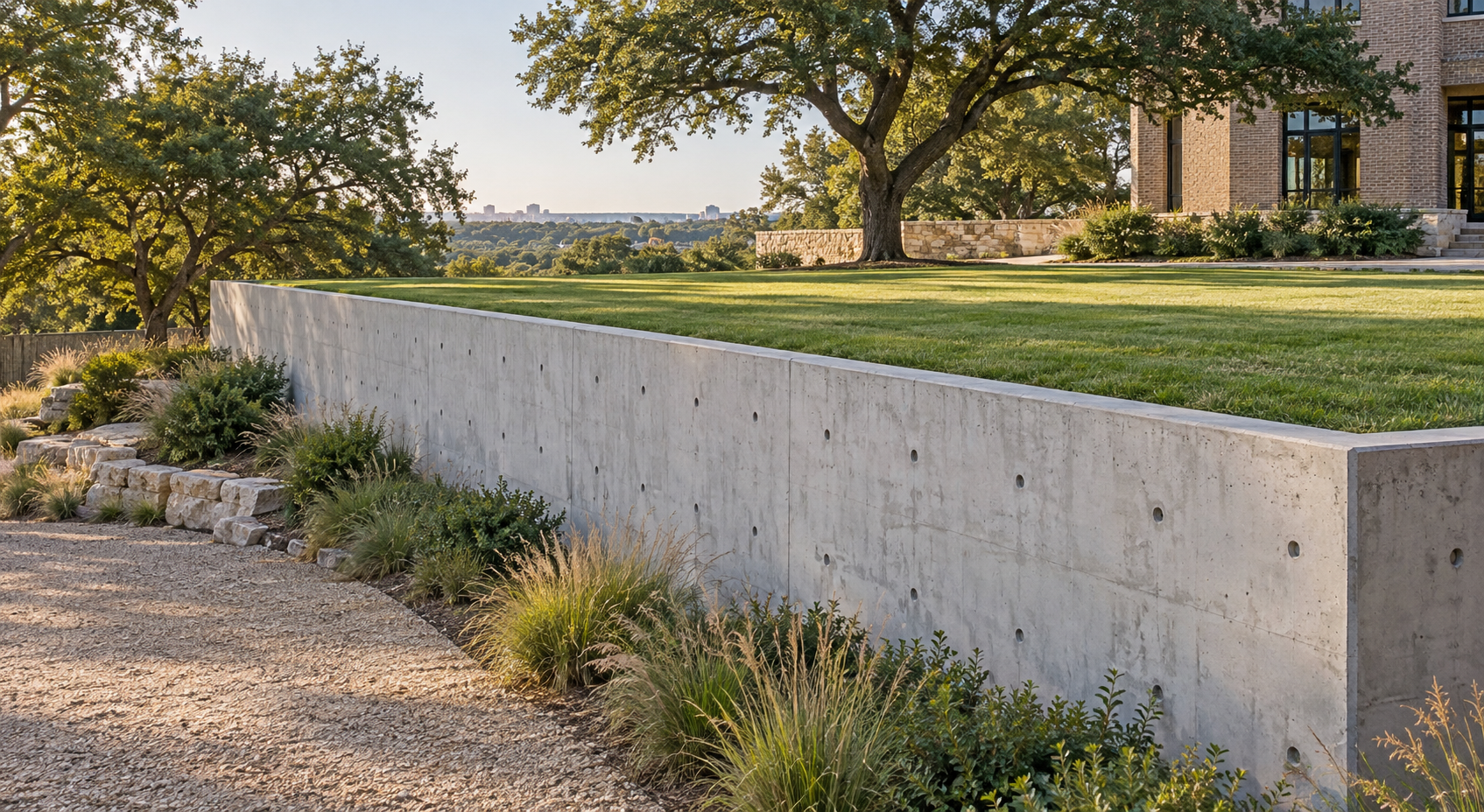
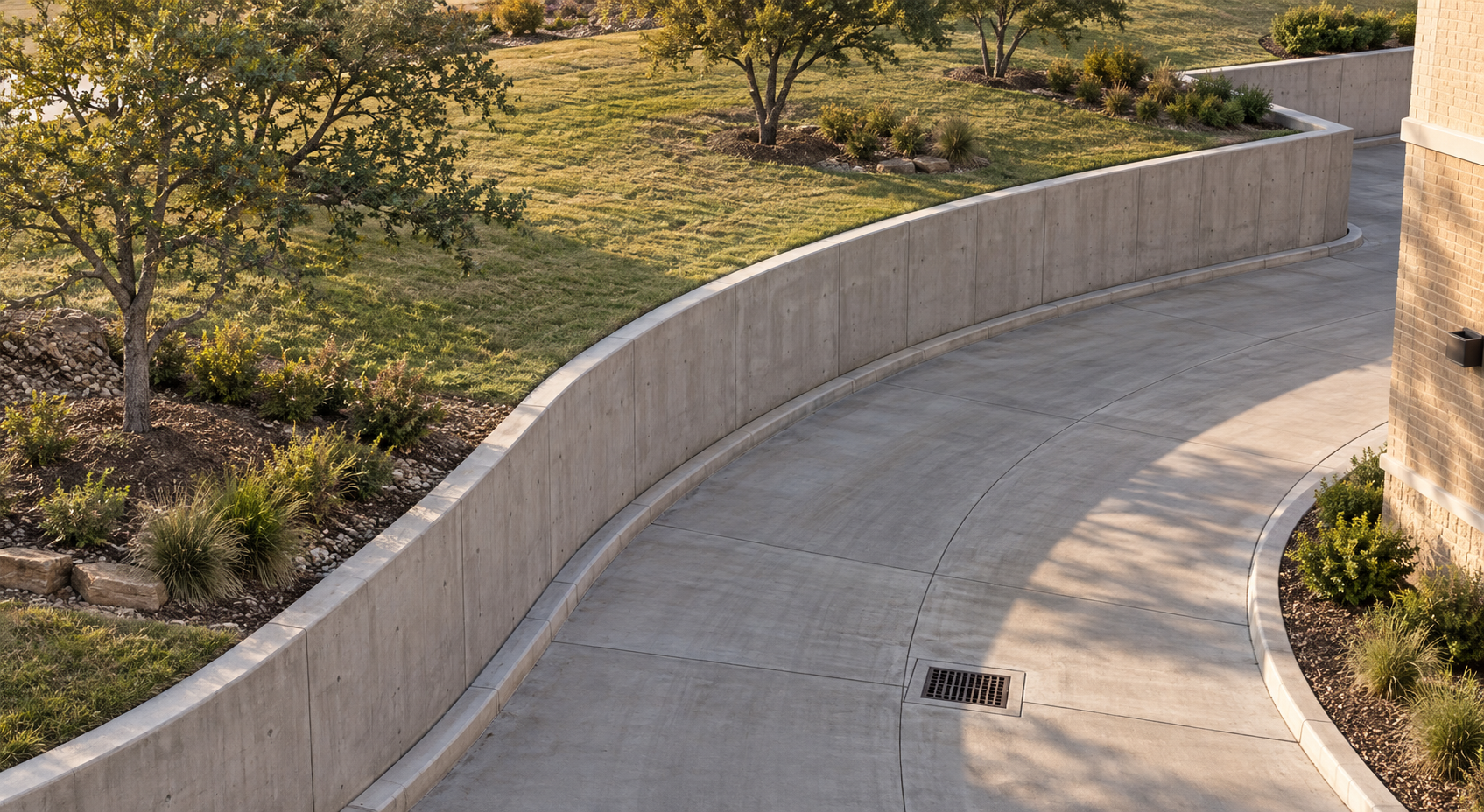
Concrete is the most widely used building material in the world of construction and design. Its durable, versatile, and long-lasting performance makes it the go-to resource when considering the next concrete project for your Fort Worth property.
With the evolution of design trends, green building, and sustainable construction, there is a wide range of innovative options our star material can incorporate into your upcoming concrete project.
Here we will be exploring the innovative trends this year 2024 has to offer.
Low Carbon and Sustainable Concrete
With the advancement of green technology comes the innovative evolution of integrating sustainable solutions into concrete, offering a low-carbon emitting material that will have less impact on the environment. Since concrete is the most widely used construction material in the world, incorporating an eco-friendly alternative without compromising quality and performance is beneficial for both the project and its long-term effect on the environment around it.
Pros
- Reduced carbon footprint
- Reduced waste
- Positive environmental impact
Cons
- Higher initial cost
- Limitation in market availability because some sustainable materials and technologies are not readily available everywhere
- Needs extra quality control due to the inconsistency of performance rom the use of recycled materials and alternative binders
Self-Healing Concrete
Self-healing concrete has taken over interest in the realm of construction due to its reduced need for concrete maintenance and repair due to its unique attribute of self-sufficiently repairing small cracks and minor fractures. This is a significant advancement in building technology where it offers a sustainable solution for improved durability and life-service performance for your concrete structure.
Pros
- Reduced maintenance
- Long-term cost-effectiveness
- Improved disaster resistance
Cons
- Higher initial cost
- Healing limitations due to the extent of its healing not covering too large cracks
- If the required environmental conditions are not met such as temperature and absence of water, the healing process in the concrete might not be activated.
Photocatalytic Concrete
Another addition to the sustainable category is the Photocatalytic concrete. From the process of photocatalysis where a substance, known as the photocatalyst, boosts a chemical reaction when exposed to light, usually UV light. This enables the photocatalytic concrete to activate its unique feature of self-cleaning and air-purifying.
Pros
- Reduced Pollution
- Self-cleaning
- Improvement in urban sustainability
Cons
- Higher initial cost
- Dependent on Light
- Deterioration of photocatalyst over time
Translucent Concrete
Painting light colors on your concrete will enable light to reflect and enhance the brightness of your material. But what if instead of bouncing off the surface of your concrete, it penetrates through?
Translucent concrete, also known as light-transmitting concrete is a type of concrete material that lets light pass through with the help of thousands of optical fibers within, combining the durability of concrete and the aesthetic of light play.
Pros
- Aesthetic features in design
- Durable
- Energy efficient
Cons
- Higher cost
- Although durable, translucent concrete can have limited load-bearing capacity compared to traditional concrete
- The life-span of the optical fibers can be uncertain especially in places with more difficult weather conditions
Concrete as an Energy Storage Medium
Also known as energy-storing concrete, this ground-breaking building technology combines both material and science that would enable it to store and release energy. Normally used for buildings or structures that require thermal changes which could effectively reduce the consumption of cooling, heating, and lighting.
Pros
- Energy efficiency
- Sustainable construction
- Temperature control
Cons
- Higher initial cost
- Limitations in market availability
- There is a limit to how much energy the concrete can store, this is especially concerning in places that demand high energy.
Flexible Concrete
Flexible concrete which can also be referred to as bendable concrete is a type of material that integrates microfibers like polymer, steel, and other synthetic fibers that are big contributors to effectively distributing stress and preventing cracks from forming. It is also because of these fibers that flexible concrete stands out from its traditional counterpart by being able to absorb large amounts of stress, deformation, and strain hardening before reaching its failing point.
Pros
- Crack resistant
- Reduced Maintenance
- Resilient to Earthquakes and heavy loads
Cons
- Higher initial cost
- Limitation in market availability due to it still being new
- Environmental factors like humidity and temperature can affect its performance over time
Pervious Concrete
For areas where stormwater management is a steady cause of concern, the integration of permeable concrete into your construction can greatly reduce the issues of run-off and flooding within your property. In addition to its flood mitigating performance is its feature of sustainability which includes its reduction of urban heat by allowing water to evaporate from its surface which cools the air around it, and its ability to filter pollutants from the water that passes through its material which improves its quality before they flow down to bodies of water.
Pros
- Stormwater management
- Reduced pollution
- Reduced Carbon Footprint
Cons
- Higher initial cost
- Limited load-bearing capacity
- Risk of clogging due to debris and small sediments
In 2024, Fort Worth, TX, is embracing innovative concrete trends, such as low-carbon and sustainable concrete, self-healing concrete, photocatalytic concrete, translucent concrete, energy-storing concrete, flexible concrete, and pervious concrete. These advancements promise reduced environmental impact, improved durability, and enhanced functionality, although they often come with higher initial costs and market availability challenges. For more information and to explore how these trends can benefit your next project, contact us.