It is really a great choice to stain your concrete surface. That's a smart decision! Staining your concrete can elevate the beauty and functionality of your floors, driveways, patios, and other commercial and residential spaces. If you are unfamiliar with the basics of concrete staining in Fort Worth, TX, we’ve already covered that in our previous article, which you can review. However, aside from the information provided, there is another question you need to answer: which stain should you use? Acid-based or water-based? Both can be used in concrete staining in Fort Worth, but have distinct properties, advantages, and considerations that can affect the final outcome. If you are unsure what to choose, we have compiled all the details you need to make a better choice about which type of stain suits your space and preferences. So, before you make a move, check these all out:
Acid-Based Concrete Stains
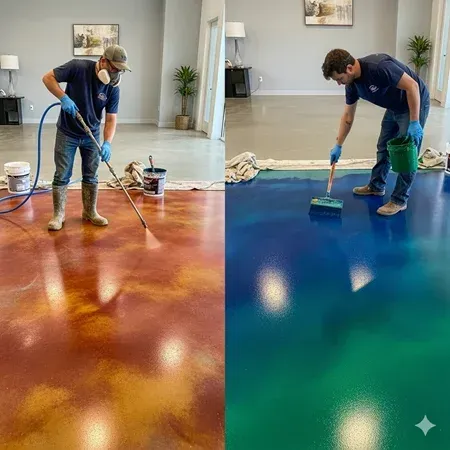
It is a combination of water, hydrochloric acid, and metallic salts which chemically react with the lime content in concrete, making wonderful color tones and patterns. This is how acid-based stains can copy the looks of natural stones, marble, or weathered surfaces. Here are the things you could get by using acid-based stains for your concrete surfaces:
Advantages of Acid-Based Stains
1.
Natural and Earthy Appearance: They can create a variegated look with natural tones.
2.
Durability: Acid-stained concrete is resistant to fading, peeling, and chipping.
3.
Low Maintenance: Require only occasional and simple sweeping and damp mopping once sealed.
4.
UV Resistant: Acid-based stains are generally highly resistant to UV rays, which improves your concrete surface’s durability.
Disadvantages of Acid-Based Stains
1.
Limited Color Options: The designs you can choose can be limited to earthy tones which may not be suitable for every design preference.
2.
Intricate Application Process: Handling acid-based stains requires skills and experience to get the result you have in mind.
3.
Neutralization Required: surface neutralization is important to stop the chemical reaction, which takes an extra step to the process.
4. Health and Environmental Risks: You have to be careful as acid-based stains require safety precautions and pose environmental risks if not disposed of properly.
Water-Based Concrete Stains
It is a type of stain that uses pigments and polymers to create a wide variety of colors and designs. The good thing about water-based stains is that, unlike acid stains, they do not rely on chemical reactions but instead bond with the concrete surface to produce a wonderful appearance that you may prefer. Here are more details you need to check before choosing:
Advantages of Water-Based Stains
1.
Wide Range of Color Selection: Water-based stains offer wonderful and diverse color options such as pastels, bold tones, and even metallic finishes, which provide greater creative flexibility for any project.
2.
Ease Application: It is user-friendly and can be applied with sprayers, rollers, or brushes, without needing a neutralization process—which is required in acid staining.
3.
Low Odor and Non-toxic: Water-based stains are environmentally friendly and safe to use in enclosed spaces.
4.
Layering and Customization: You can apply multiple layers of stain to create patterns, effects, or blended tones.
Disadvantages of Water-Based Stains
1.
Less Penetration: Unlike acid-based stains, water-based stains do not penetrate deeply into the concrete, which can be less durable over time.
2.
Require Sealing: A high-quality sealer is needed to protect that stain and improve its longevity.
3.
Susceptible to Wear: They may require more frequent maintenance and resealing, especially in high-traffic areas to maintain the integrity and visual appeal.
Acid-Based or Water-based: Which Stain Should You Choose?
Whatever type of stain you choose, there are still pros and cons, which you just need to balance by understanding your specific needs, aesthetic preferences, and project requirements. To help you determine which one is for you, here are the factors you need to consider:
Design Goals: If you prefer natural or earthy looks, go with acid-based stains. However, if you want greater flexibility in aesthetics, water-based stains are the way to go.
Budget: Acid-based staining may require additional cost due to professional help. On the other hand, water-based staining is cheaper as it is DIY friendly.
Maintenance: If you are looking for a low-maintenance option, acid-based stains are suitable for you as water-based stains require periodic sealing.
Location: If your space is exposed to sunlight, acid stains are more suitable as they are UV resistant, and water-based stains are ideal for indoor spaces due to their low odor and non-toxic nature.
Environmental Concerns: If sustainability is your priority, water-based stains are the better choice because acid stains can harm the environment if not disposed of appropriately.
Key Reminders
Both acid and water-based stains have their own advantages and applications. To ensure a successful staining project, always clean and repair the concrete surface before staining, test the stain first on a small area before applying it to the whole surface to confirm its effect, and apply a high-quality sealer to protect the surface and enhance the finish—whether you choose acid or water-based stains.
Most importantly, it is important to consult professionals if you are a beginner, if your project requires complex designs, or is on a large scale. Hiring experts like the professionals at Fort Worth Concrete Contractors ensures precision and quality for any project, including concrete staining in Fort Worth, TX, and surrounding areas. If you need assistance from the experts, message us right away. We are willing to help.