BOTTOM LINE:
Slip resistance is the most important safety factor in any Fort Worth athletic court coating system. Texas’s extreme heat, UV exposure, and seasonal rain create conditions that degrade surface texture faster than most facility managers expect. Choosing the right coating system — and maintaining it correctly — directly determines player safety and how long the surface performs.
Slip resistance gets less attention than color or court markings, but it is the detail that matters most. A court that looks great and plays inconsistently is frustrating. A court that looks great and creates injury risk from inadequate traction is a liability. In Fort Worth, where summer temperatures regularly push past 100 degrees and UV exposure degrades surface coatings faster than in milder climates, keeping a court’s slip resistance in the right range requires understanding what affects it and how to maintain it over time.
This article explains the coating systems used on athletic courts, how slip resistance is measured, how Fort Worth’s climate affects surface performance, and what property owners should know before specifying or recreating a court.
What Slip Resistance Actually Means on an Athletic Court
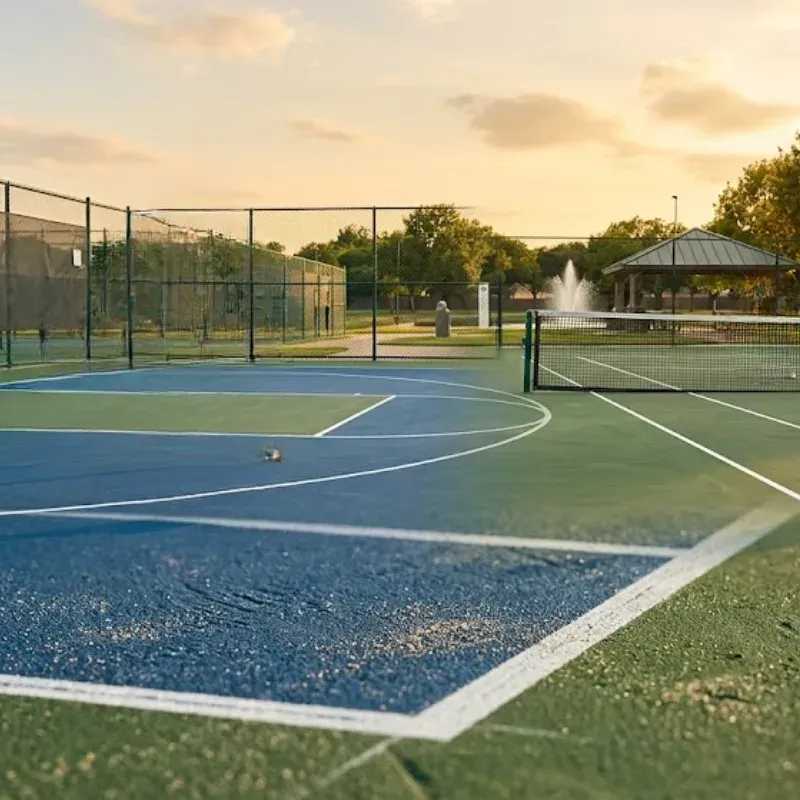
Slip resistance is measured by the coefficient of friction — the ratio of the force required to slide an object across a surface to the weight of that object. For athletic courts, a higher coefficient of friction means more traction, and the appropriate range depends on the sport. Basketball and tennis courts generally target a dynamic coefficient of friction between 0.5 and 0.8. Too low and the surface is slippery; too high and it creates excessive grip that increases the risk of ankle and knee injuries from sudden stops and changes of direction. Getting the number right matters as much as getting it high enough. Properly specified
athletic court surface coatings in Fort Worth account for this range from the start — because a court that was specified correctly and installed well should land in the target zone and stay there with proper maintenance.
The texture of the coating surface is what creates friction, and that texture is delivered through the aggregate mixed into the color coat — typically silica sand at a specific gradation and loading rate. Finer aggregate produces a smoother surface with lower friction. Coarser aggregate produces more texture and higher friction. The right aggregate specification depends on the sport, the anticipated traffic volume, and how the court will be used — a recreational pickleball court serving older players has different traction requirements than a competitive high school basketball court where players are moving at full speed.
How Fort Worth’s Climate Affects Surface Coatings
Texas sun is genuinely hard on acrylic court coatings. UV radiation breaks down the binder in acrylic systems over time, causing the surface to oxidize, lose its flexibility, and eventually chalk — a process where the degraded coating produces a fine powder on the surface that reduces traction and accelerates further wear. In Fort Worth’s climate, this process happens faster than it does in cooler or cloudier markets, which means the maintenance intervals that work elsewhere may not be adequate here.
Thermal cycling is the other significant climate factor. Fort Worth experiences large temperature swings — summer days exceeding 100 degrees followed by cool nights, and winter cold snaps that can drop temperatures dramatically within hours. Concrete expands in heat and contracts in cold, and a surface coating that does not accommodate that movement will crack, delaminate, or develop stress fractures that compromise both appearance and traction. Quality acrylic court coating systems are formulated with flexibility built in, but even the best systems have limits, and those limits are tested more aggressively in Texas than in most other parts of the country.
Rain and wet conditions add a separate dimension. Fort Worth receives significant seasonal rainfall, and a court’s wet traction characteristics can differ substantially from its dry traction characteristics depending on the coating system and its condition. A court that provides adequate dry traction but becomes significantly slippery when wet — a condition that develops as coatings age and surface texture is worn smooth — creates injury risk in exactly the conditions when players may not be expecting it.
Coating Systems: What Is Actually Being Applied
Most athletic court coating systems in use today are water-based acrylic. They consist of multiple components applied in layers: a crack filler and patching layer over any surface defects, a resurfacer layer that fills minor texture variations and creates a consistent base, one or more color coat layers that incorporate the aggregate providing traction, and a final finish coat that seals and protects the color layer.
The number of coats and the product specifications within each layer determine the system’s durability, color retention, and long-term traction characteristics. A two-coat color system applied over a properly prepared surface performs differently than a four-coat system — more thickness means more UV resistance, more flexibility, and a longer interval before the surface needs recoating. At Fort Worth Concrete Contractors, Lahi Kautai and the team have spent over two decades working on concrete surfaces across the DFW Metroplex, and every court coating project starts with an honest assessment of what the existing surface needs before a product is specified. The goal is a system that performs correctly for this climate and this court, not a generic application that looks good on paper.
Cushioned court systems add a rubberized layer beneath the color coat that provides impact absorption and a measurably different playing experience, particularly for older players or facilities with high daily traffic volumes. These systems cost more to install but deliver a surface that is easier on joints, reduces fatigue during extended play, and is often described by players as feeling more like an indoor court surface than a standard concrete slab. For facilities upgrading a court as part of a broader improvement program, the cushioned system option is worth including in the conversation even if it is not the final choice.
Maintaining Slip Resistance Over Time
The most common reason athletic court traction degrades is not product failure — it is deferred maintenance. The aggregate that provides traction is embedded in the color coat, and as that coat wears from foot traffic and UV exposure, the texture gradually smooths out. The process is slow enough that it often goes unnoticed until a player slips or a formal inspection flags the surface as out of specification.
The practical maintenance program for an athletic court coating system in Fort Worth involves regular cleaning to prevent contaminants from filling and smoothing the surface texture, annual inspection of the coating condition and traction characteristics, prompt repair of any cracks or delamination before they expand, and periodic recoating before the existing system wears to the point where traction is compromised.
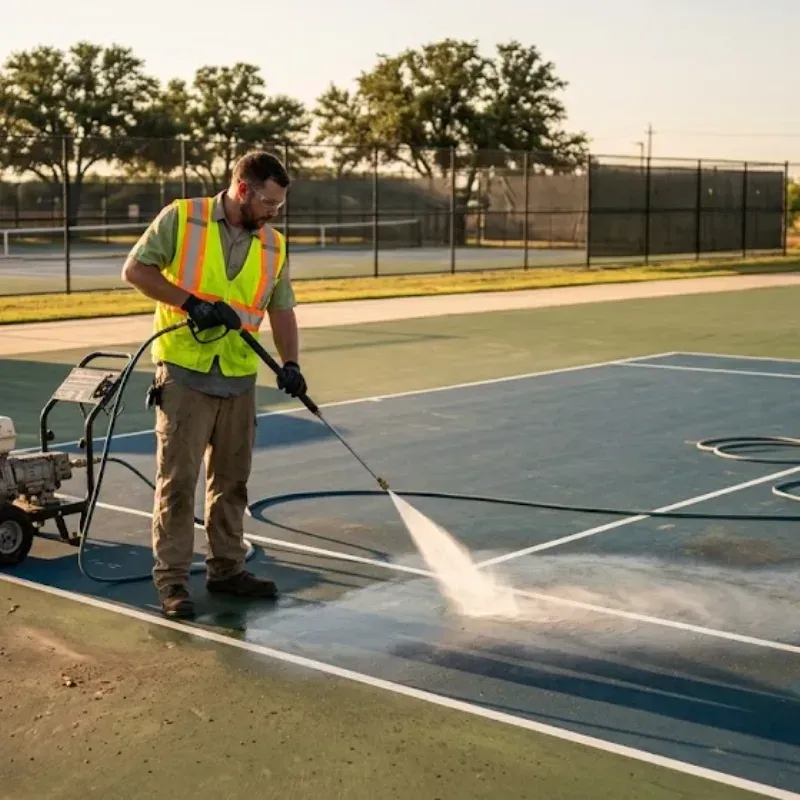
A court that receives this kind of proactive maintenance can extend its coating life significantly compared to one that is only addressed when problems become visible.
Cleaning protocol matters more than most facility managers realize. Oil, dust, algae, and fine debris all fill the texture of a court surface and reduce effective traction without changing how the court looks. A court can appear clean while still carrying enough surface contamination to reduce friction well below what the coating system is designed to provide. Regular cleaning with appropriate products — not harsh solvents that can damage the acrylic binder — is one of the most cost-effective maintenance steps available.
Sport-Specific Considerations
Different sports have different surface requirements, and a multipurpose court that is expected to serve basketball, tennis, pickleball, and volleyball simultaneously needs a coating system that performs adequately across all of those uses rather than optimally for just one. This is a real design tension — the surface texture preferred for tennis is different from what works best for basketball, and the line marking requirements for each sport create a layered painting challenge on a shared surface.
For facilities that serve primarily one sport, specifying a coating system tailored to that sport’s traction and performance requirements produces a better result than a generic multipurpose specification. A dedicated pickleball court, for example, can be coated to the specific texture and color contrast standards that tournament-level play requires, whereas a court spec’d as a general multipurpose surface typically compromises on all of those details to serve none of them optimally.
For facilities managing multiple courts or combining court work with broader site improvements, coordinating court-related concrete projects in Fort Worth can make multi-phase planning more efficient.
Making the Right Specification Decision
The coating system specification for an athletic court should be driven by the sport, the anticipated traffic volume, the climate exposure the court faces, and the maintenance program the facility is realistically committed to. A high-performance cushioned system on a court that will not receive consistent cleaning and maintenance will underperform a simpler system that is properly maintained. The most durable outcome comes from matching the system specification to the actual management capacity of the facility, not just the theoretical performance ceiling of the product.
Application timing and conditions also matter significantly in Fort Worth’s climate. Acrylic coatings should not be applied in direct sun when surface temperatures are extreme, in high-humidity conditions that prevent proper curing, or when rain is expected within the curing window. A coating applied under the wrong conditions will not bond correctly, will cure unevenly, and will underperform its specification from the day it goes down. Experienced contractors who know how to read Fort Worth’s weather windows and schedule application accordingly deliver consistently better results than those who work on a fixed schedule regardless of conditions.
For facilities that are evaluating contractors for court coating work and want a clear framework for what separates high-quality work from adequate work, our article on choosing the right concrete contractor in Fort Worth covers the specific qualities and questions that help property owners and facility managers make a well-informed decision before committing to a contractor for this kind of specialized surface work.
.

Written By:
Domenique Bomediano
Home Improvement Research Specialist
Domenique Jose Bomediano produces research-focused educational content on home renovation, construction, concrete services, and property improvement. He translates technical concepts, contractor workflows, and industry practices into clear, practical insights that help homeowners make informed decisions about projects, budgeting, and property planning.