Design Ideas: Retaining walls can transform curb appeal when designed with intention, combining structure and aesthetics through tiered layouts, natural stone, curves, and mixed materials. By prioritizing proportion, drainage, and integration with landscaping, homeowners can create visually striking walls that enhance both property value and long-term durability.
What if the thing keeping your soil in check could also make neighbors stop and stare? Retaining walls are often treated as purely functional structures, built to hold back soil and prevent erosion. That mindset leaves a huge amount of curb appeal on the table. When designed correctly, a retaining wall becomes one of the most visually impactful features on a property. It shapes the landscape, defines outdoor spaces, and instantly communicates quality and permanence.
The best retaining walls do more than manage elevation changes. They elevate the entire look of the home. Design choices matter, and cutting corners shows immediately.
Tiered Retaining Walls for Visual Depth
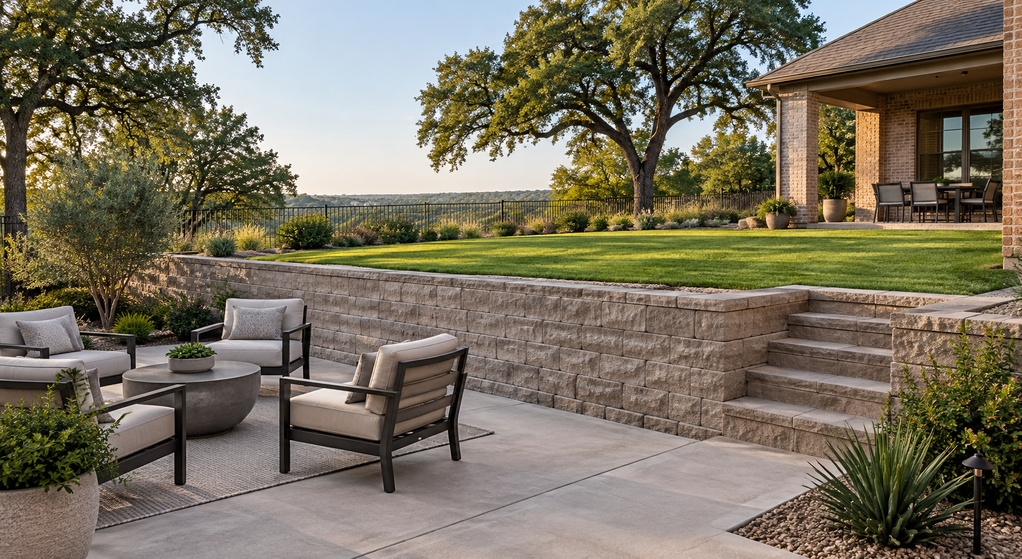
Single tall retaining walls often look heavy and industrial. Tiered retaining walls installed by professional retaining wall services in Fort Worth can solve that problem while adding dimension and interest. By stepping the wall back in levels, the landscape feels intentional rather than forced.
Tiered designs allow for planting beds between levels, which softens the structure and blends it naturally into the yard. This approach works especially well on sloped properties where a single wall would feel overwhelming.
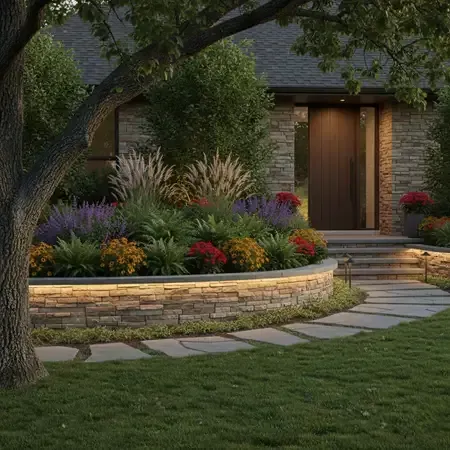
Each tier reduces pressure on the structure while creating opportunities for greenery, lighting, or decorative stone.
From the street, tiered walls create depth and movement that flat yards simply cannot match.
Natural Stone Walls for Timeless Appeal
According to our retaining wall experts, natural stone remains one of the strongest choices for curb appeal. Stone walls feel established and permanent, even when newly built. They work well with both traditional and modern homes because they do not rely on trends.
Stone textures hide wear better than smooth finishes and age gracefully over time. Variations in color and shape create visual interest without looking busy. When installed properly, stone walls appear integrated into the landscape rather than added later.
This is not a budget option, but it is one that consistently adds perceived value. A stone retaining wall signals craftsmanship and long-term investment.
Choosing the right material for your retaining wall is key to durability, function, and style. Discover block vs. stone vs. timber retaining walls to make an informed decision.
Concrete Walls With Architectural Finishes
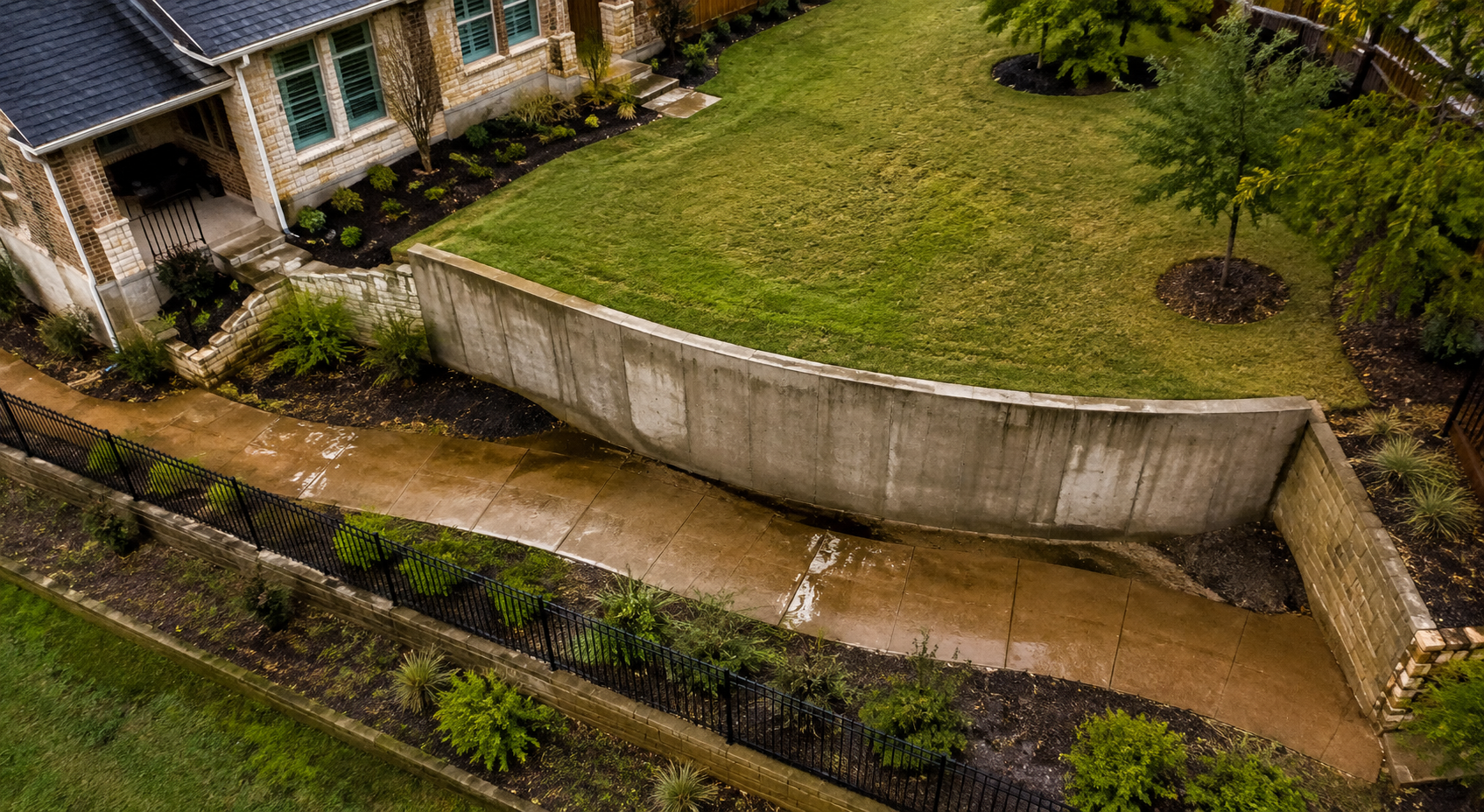
Plain concrete walls are functional but visually dull. That does not mean concrete should be avoided. It means it should be finished intentionally.
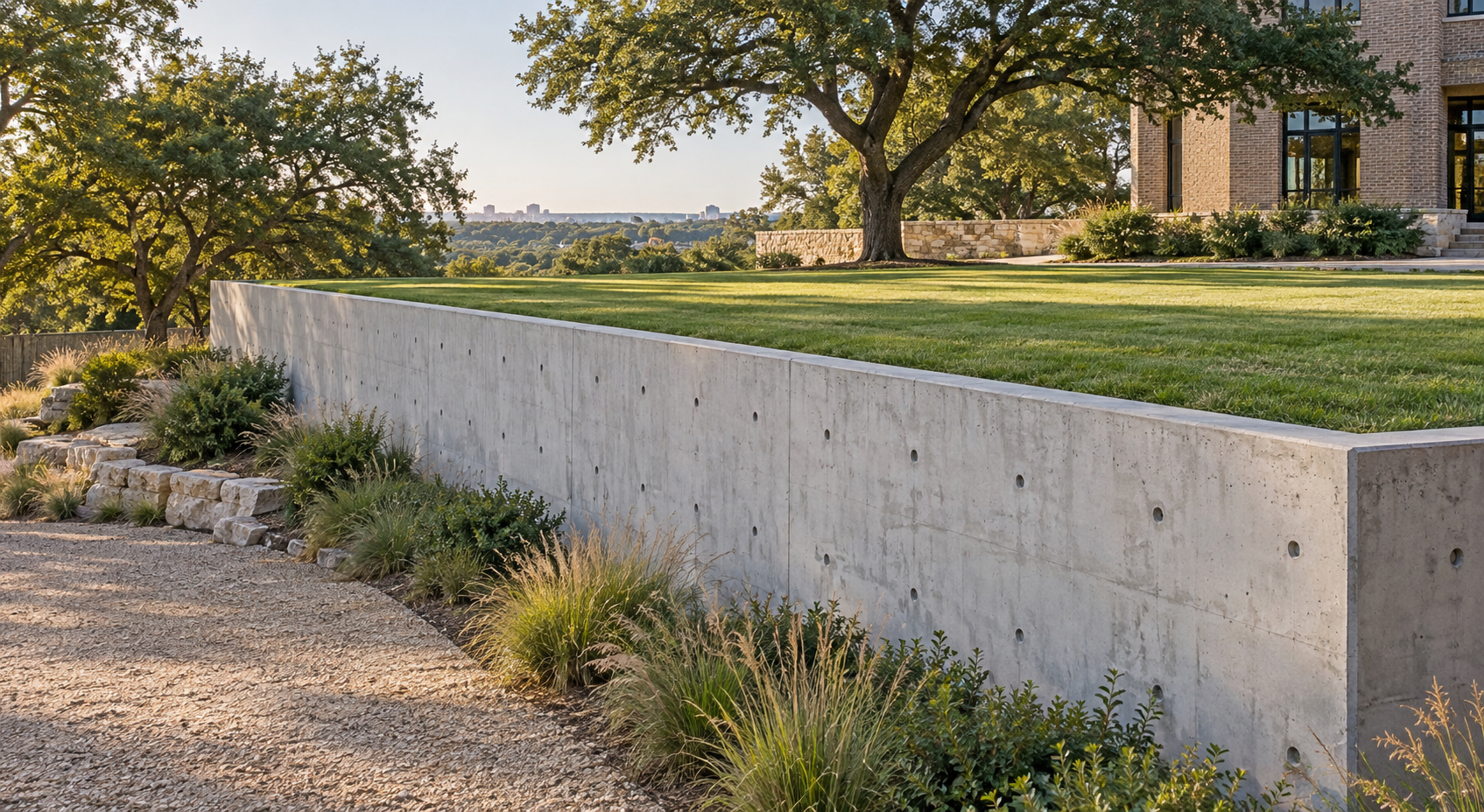
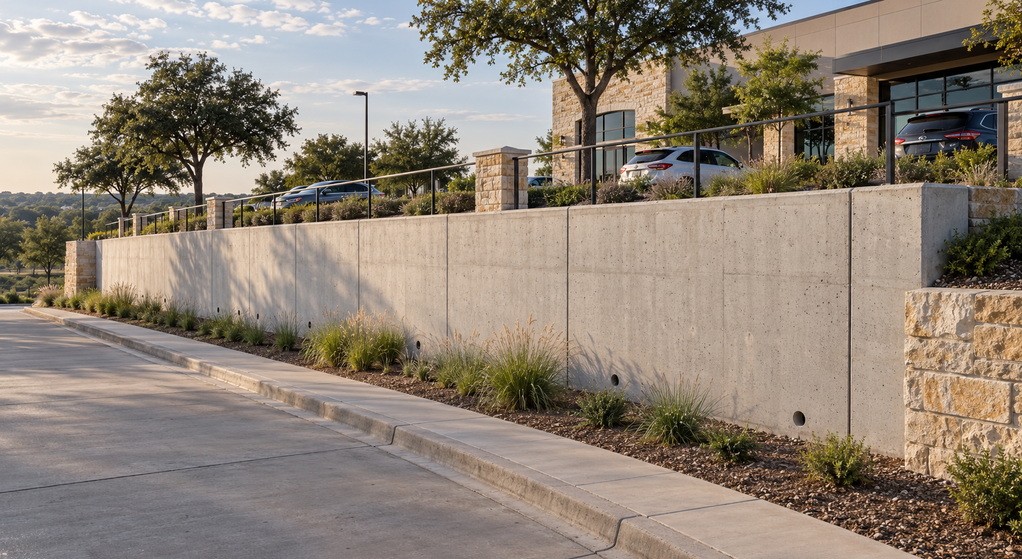
Stamped concrete, textured form liners, and stained finishes transform concrete retaining walls into architectural features. These treatments mimic stone, brick, or modern patterns while maintaining the structural strength concrete provides.
Concrete excels in areas that require clean lines and uniformity. Modern homes benefit from sleek concrete walls with subtle texture or color variation. When designed well, concrete looks deliberate rather than utilitarian.
Building a durable and attractive retaining wall starts with understanding the essentials. Learn retaining wall basics to ensure your project stands strong and looks great.
Curved Retaining Walls That Guide the Eye
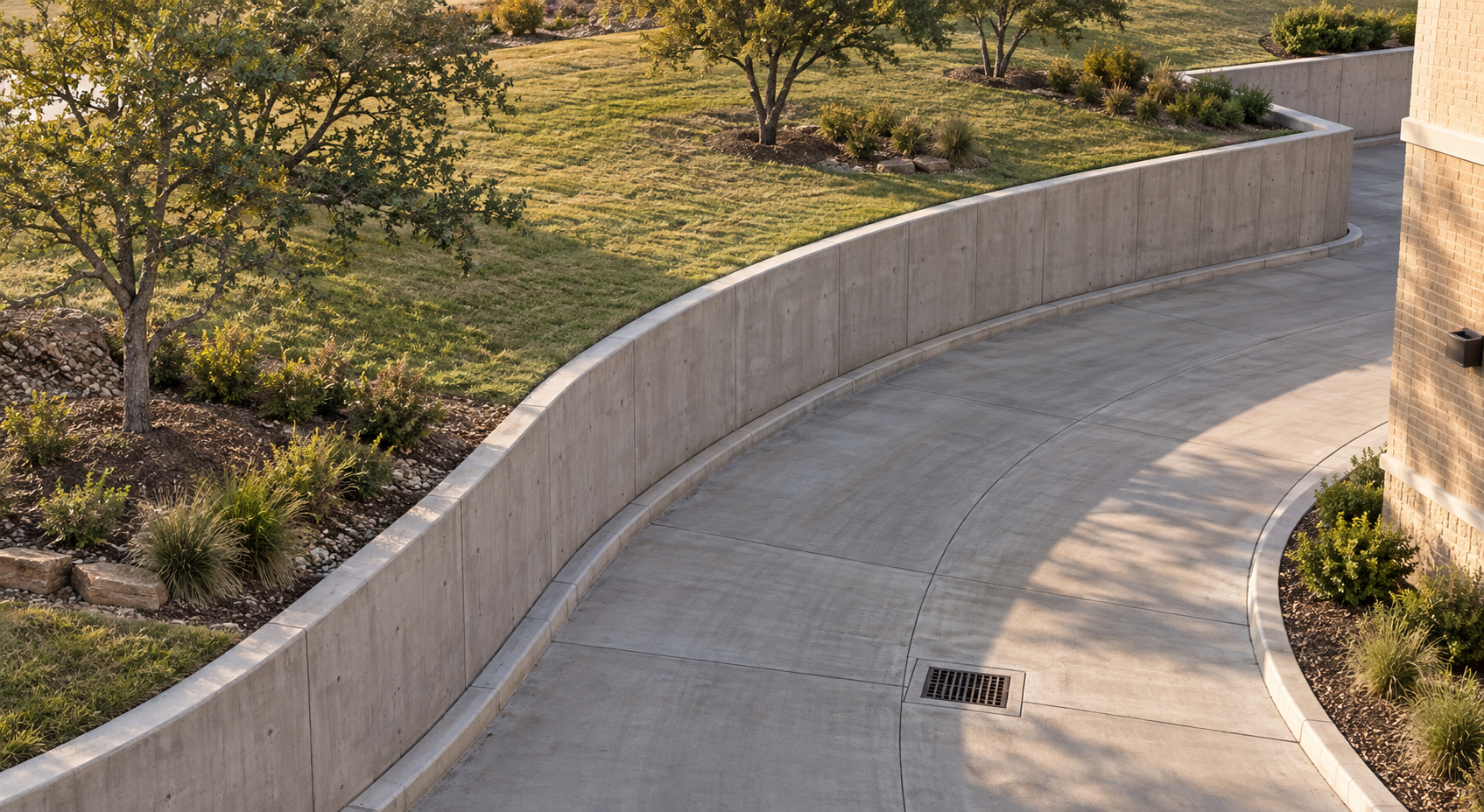
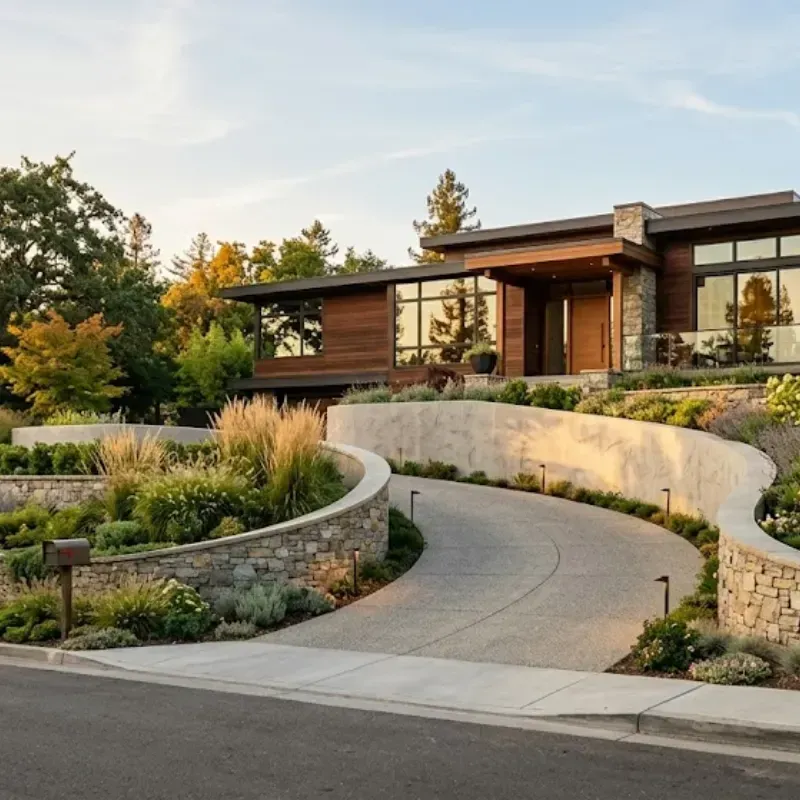
Straight retaining walls feel rigid. Curved walls introduce flow and softness that instantly improve curb appeal. A gentle curve guides the eye across the landscape and makes the yard feel larger and more dynamic.
Curved walls are especially effective along driveways, walkways, or garden borders. They reduce harsh transitions and create a natural sense of movement. From the street, curved walls draw attention without overpowering the home.
This design choice requires careful planning and precise installation, but the visual payoff is undeniable
Integrated Seating Walls for Function and Style
Retaining walls do not have to stand alone. When designed at the right height, they double as seating walls that add both utility and visual interest.
Seating walls work well in front yards near entry paths or in backyard spaces visible from the street. They create a welcoming feel and suggest that the outdoor space is meant to be used, not just viewed.
Capped seating walls with smooth stone or concrete tops provide comfort while protecting the wall from water intrusion. This blend of form and function increases usability without adding clutter.
Mixed Materials for Modern Contrast
Using a single material throughout a retaining wall can look flat. Mixing materials creates contrast and visual hierarchy. Stone paired with concrete caps, brick accents within concrete walls, or wood elements integrated into modern designs add depth.
The key is restraint. Mixed materials should complement each other, not compete. Neutral palettes with subtle texture changes tend to work best for long-term appeal.
Well-executed contrast signals thoughtful design rather than excess.
Retaining Walls That Frame Landscaping
The most successful retaining walls work in harmony with landscaping. Walls that frame garden beds, trees, or ornamental grasses feel purposeful and complete.
Planters built directly into retaining walls create clean edges and organized planting zones. This reduces maintenance while enhancing visual structure.

Lighting integrated into walls further elevates curb appeal at night, highlighting textures and guiding pathways.
A retaining wall should never feel isolated. It should anchor the landscape around it.
Height and Proportion Matter More Than Decoration
No amount of decorative finish will save a poorly proportioned wall. Walls that are too tall, too short, or awkwardly placed disrupt the balance of the property.
Good retaining wall design respects scale. The wall should feel proportional to the home, the yard, and surrounding features. Sometimes the most attractive solution is dividing one tall wall into multiple smaller sections or adjusting placement slightly for symmetry.
Drainage Is a Design Feature, Not an Afterthought
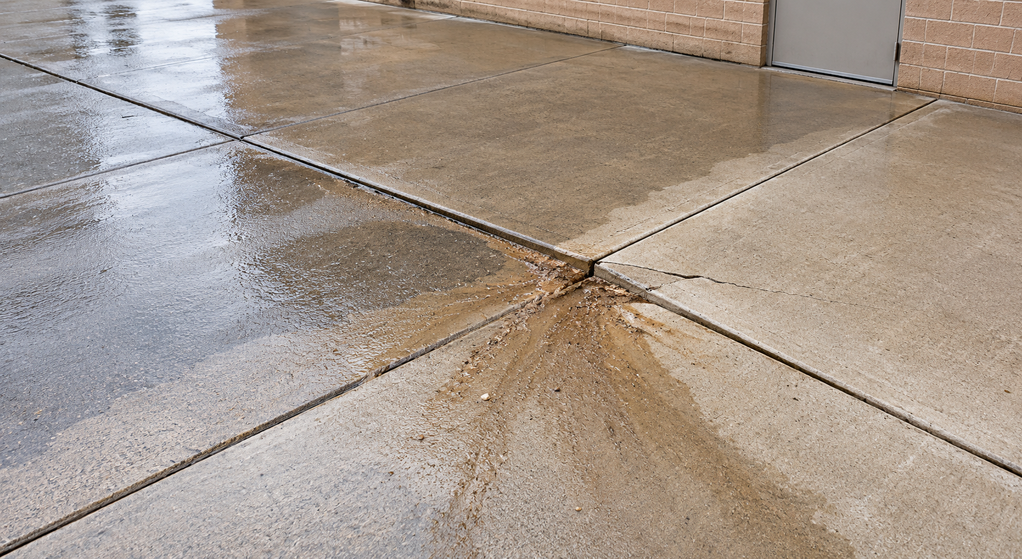
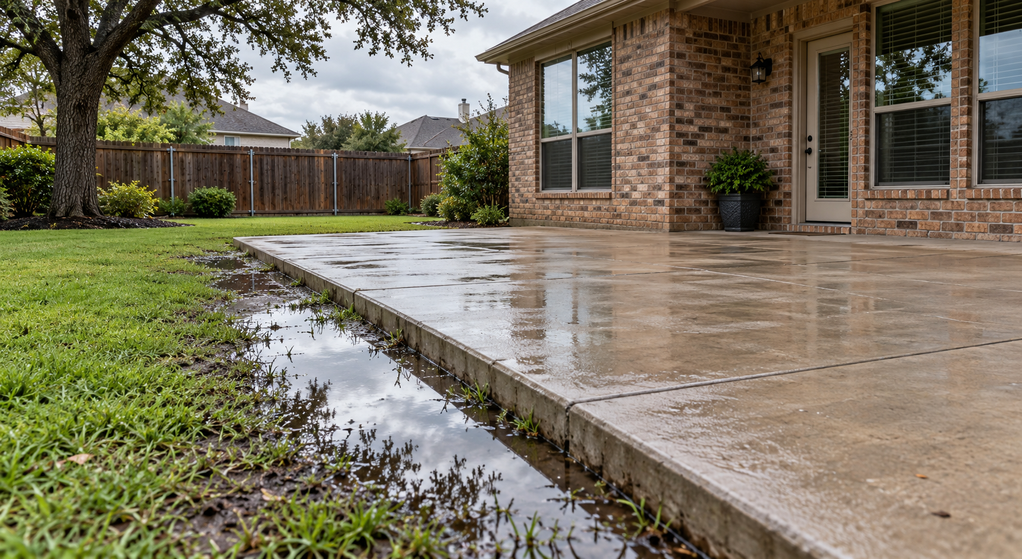
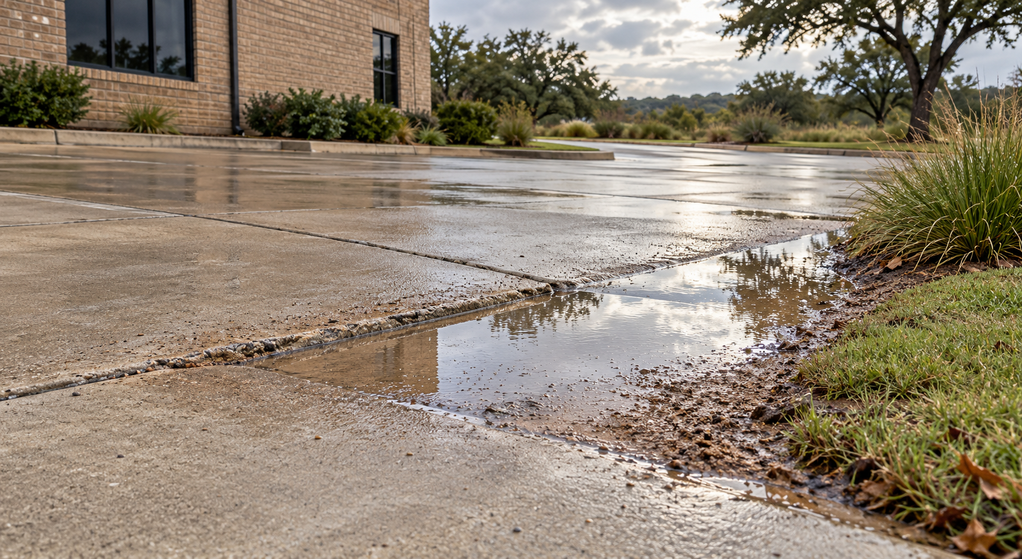
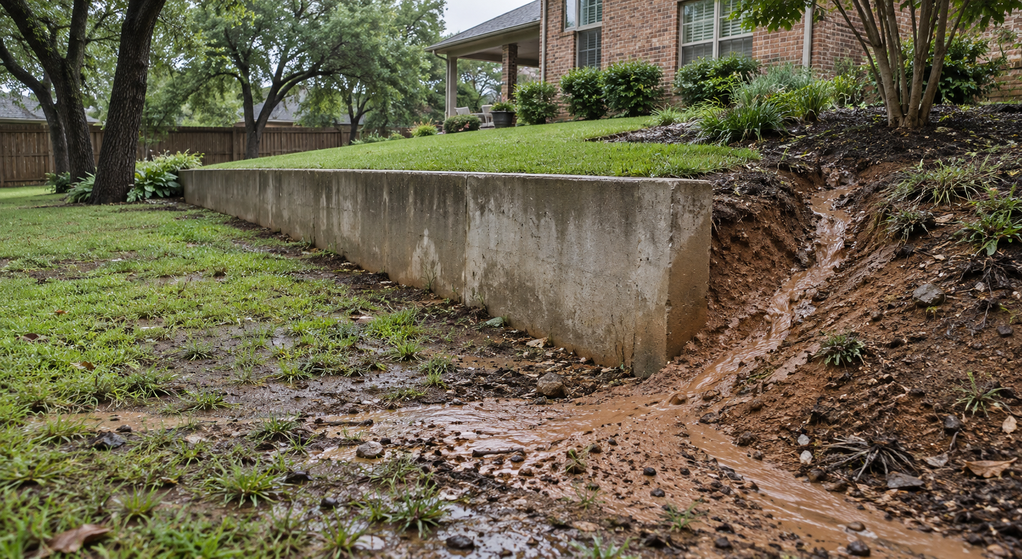
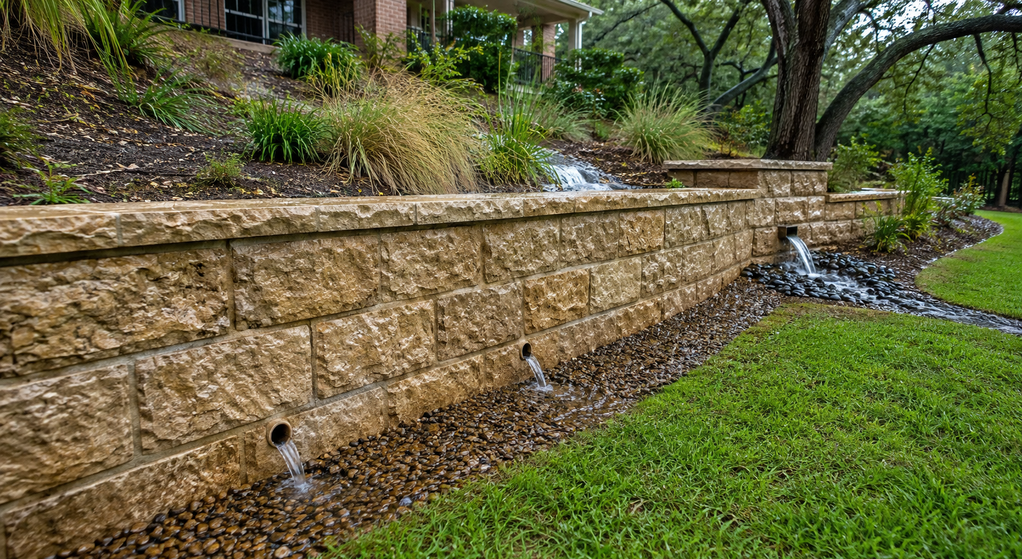
Poor drainage destroys retaining walls and the curb appeal that comes with them. Weep holes, gravel backfill, and proper grading are not optional details.