Bottom Line:
Retrofitting an existing concrete court in Fort Worth is often more cost-effective than full replacement. The right approach — resurfacing worn surfaces, repairing cracks before they spread, and adding performance coatings — can extend a court’s usable life by decades while improving safety, playability, and appearance for a fraction of the cost of starting over.
Concrete courts endure constant wear from play, weather, and surface movement. Whether it is a basketball court at a school, a tennis court at a residential complex, a pickleball court at a community center, or a multipurpose athletic surface at a commercial facility, the combination of foot traffic, ball impact, UV exposure, and Texas weather eventually catches up with the surface. Cracks develop. The surface oxidizes and loses its texture. Water infiltrates and the subbase slowly deteriorates. The court that looked great at installation starts to look tired, play inconsistently, and create liability exposure from uneven surfaces and trip hazards.
The good news is that replacement is rarely the only option. In Fort Worth’s climate — where summer heat, clay soil movement, and periodic heavy rain create specific stresses on outdoor concrete — a well-executed retrofit can restore a court to like-new performance without the cost and timeline of a full tear-out and repour. Here is how that process works, what it actually involves, and how to know which approach is right for your specific situation.
Start With an Honest Assessment of What You Are Working With
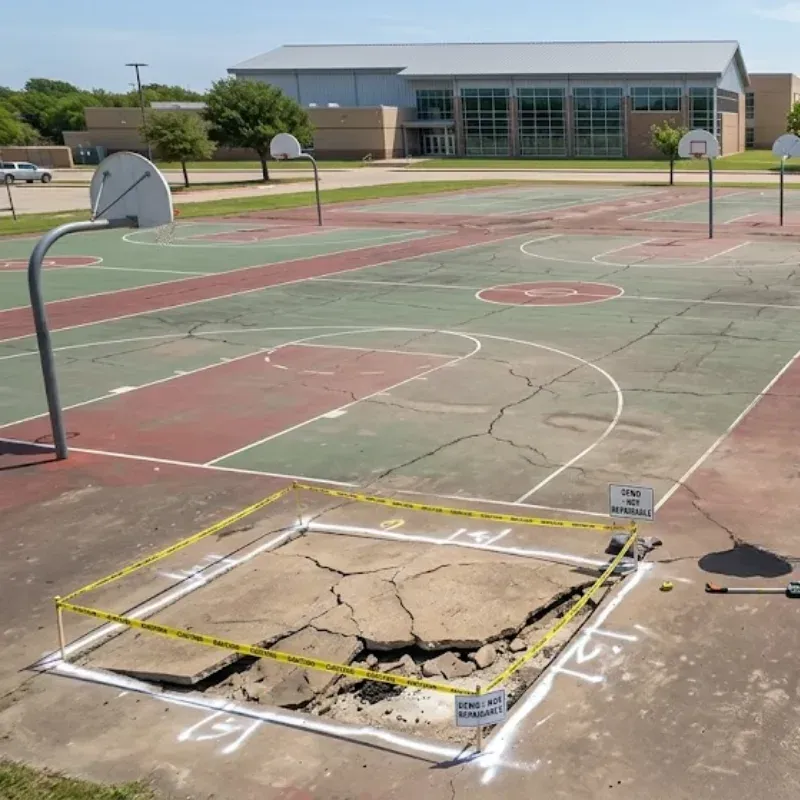
Not every court is a good retrofit candidate, and the first step is understanding what condition the existing slab is actually in beneath the surface. A court that has significant structural cracking — where sections of the slab have moved relative to each other, creating displacement rather than just surface cracking — or one where the subbase has eroded to the point of creating voids beneath the concrete, may need partial or full replacement rather than resurfacing. Resurfacing a structurally compromised slab covers the problem visually without solving it, and the new surface will reflect the underlying movement within a season or two. For a proper evaluation, experienced
concrete resurfacing and repair in Fort Worth starts with an honest assessment of the slab — not a sales pitch for resurfacing regardless of condition.
Courts that are good retrofit candidates typically have surface cracking that has not displaced, oxidized and worn finishes that no longer provide adequate texture and traction, faded or failed court markings, and drainage patterns that are still functional even if the surface is showing wear. These are all conditions that respond well to the retrofit approach, and addressing them in the right sequence produces results that can last another 15 to 25 years with reasonable maintenance.
Crack Repair: The Step That Determines Everything Else
Crack repair is the foundation of any successful court retrofit, and it is the step that most determines how long the finished work will hold up. The temptation is to move quickly to resurfacing because that is the visible improvement — but resurfacing over unrepaired or improperly repaired cracks produces a surface that reflects those cracks back through within one to two Texas summer cycles. Fort Worth heat quickly reveals whether the crack repair was done correctly.
The correct approach depends on the type and cause of the cracking. Hairline cracks that have not displaced and show no sign of ongoing movement can typically be filled with a flexible crack filler that moves with the concrete through thermal expansion and contraction cycles. Wider cracks, cracks with displacement, or cracks that have a pattern suggesting ongoing soil movement beneath the slab need to be routed — widened into a consistent channel — before filling, to ensure the repair material bonds properly and does not pop out under load.
In Fort Worth specifically, the expansive clay soil that underlies much of the DFW Metroplex creates a movement pattern in outdoor slabs that is more pronounced than in areas with more stable soil. Concrete courts in this area tend to develop cracks that reflect the seasonal swell and contraction of the soil beneath them, which means crack repair materials need to be selected for flexibility rather than just compressive strength. A rigid epoxy fill in a crack driven by soil movement will not stay in that crack — the concrete will move and the repair will fail.
Resurfacing: Restoring the Playing Surface
Once crack repair is complete and the repairs have cured fully, resurfacing can begin. Court resurfacing typically involves the application of one or more layers of acrylic resurfacer — a rubberized coating that bonds to the existing concrete, fills minor surface imperfections, and creates a new texture layer that provides the traction and playing characteristics the court needs. The number of coats and the specific product formulation depend on the court type, the condition of the existing surface, and the performance specifications required.
Acrylic resurfacer applied over a properly prepared surface bonds tightly and creates a finished court that plays and looks like new. Color coats go on top of the resurfacer layer, and court markings are painted last once the color coats have cured. The result is a surface that not only looks significantly better but also provides consistent ball bounce, appropriate traction for the sport, and UV-resistant color that holds up through Fort Worth’s intense summers. At Fort Worth Concrete Contractors, Lahi Kautai and the team approach every court resurfacing project the same way they approach every job — with honesty about what the surface actually needs and a commitment to not cutting corners on the prep work that determines how long the finished surface will perform.
Surface preparation before resurfacing deserves as much attention as the resurfacing itself. Pressure washing to remove dirt, oil, and loose material, followed by acid etching or mechanical profiling to open the concrete surface and ensure proper bonding, is what separates a resurfacing job that holds up from one that peels or delaminates within a year. Fort Worth’s summer heat accelerates the bonding process if conditions are right, but it also means that application timing and temperature matter — resurfacing applied in direct sun on a 95-degree afternoon does not bond or level the same way as a properly timed application.
Performance Enhancements Worth Adding
A court retrofit is also an opportunity to add performance features that were not part of the original installation or that have become available since the court was first built. Several of these are worth serious consideration depending on the court type and the users it serves.
Cushioned court surfaces — systems that incorporate a rubberized layer beneath the color coat — reduce the impact load on joints and improve the playing experience significantly, particularly for older players or facilities that serve a high volume of players daily. These systems add cost but they also add value that is difficult to quantify in player comfort and reduced injury risk. For facilities that are upgrading a court as part of a broader improvement program, the incremental cost of a cushioned system is often the best money spent in the project.
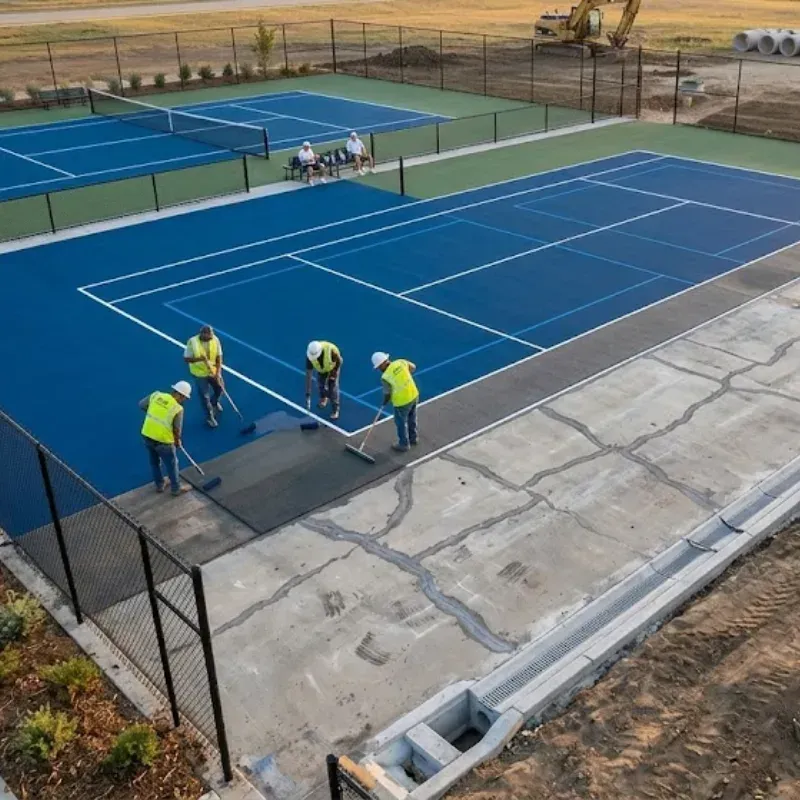
Drainage improvements can sometimes be incorporated at the retrofit stage as well, particularly if the court has areas where water consistently pools. Channel drains at the court perimeter, minor grading corrections to improve cross-slope, or the addition of permeable zones at specific locations can address drainage issues that have been creating surface deterioration over time.
Line restriping is the most visible performance enhancement and the one that immediately communicates that a court has been properly maintained. Crisp, accurate court markings on a fresh color coat give the impression of a new facility even on a court that is decades old. For facilities managing multiple courts or combining a court retrofit with other site improvements, coordinating court-related concrete work in Fort Worth can help keep the full project sequence aligned.
How Long Does a Retrofit Last
A properly executed concrete court retrofit — thorough crack repair, proper surface preparation, quality resurfacing materials applied correctly, and performance coatings — should deliver 10 to 20 years of service life with reasonable maintenance. The wide range reflects the variability in how courts are used, how they are maintained after resurfacing, and how aggressively Fort Worth’s climate affects the specific surface.
Post-retrofit maintenance is simpler than most facility managers expect. Annual cleaning, prompt attention to any new cracks that develop — filling them before they widen — and periodic reapplication of color coats and sealers as they show wear are the main items. A court that receives this basic maintenance is more likely to perform near the upper end of that lifespan range. A court that is ignored after resurfacing will be back to needing work closer to the bottom of it.
Choosing the Right Contractor for Court Retrofit Work
Court resurfacing and retrofit work looks straightforward from the outside but has enough technical nuance that contractor selection genuinely matters. The crack repair approach, the product selection, the surface preparation protocol, the application timing — all of these affect the outcome, and none of them are visible in the finished work until the surface starts failing prematurely.
The questions worth asking any contractor before awarding court retrofit work are the same questions worth asking for any concrete project. How many court resurfacing projects have they completed in this market? What products do they specify for crack repair and resurfacing, and why? What is their surface preparation process? Can they provide references from comparable projects you can actually visit and evaluate? A contractor who has confident, specific answers to those questions is a contractor whose work you can evaluate before committing.A contractor who deflects or speaks only in generalities is a risk on a project expected to last for decades.
For facilities that are making this decision for the first time or want a more complete picture of what separates high-quality concrete work from work that only looks good initially, our article on choosing the right concrete contractor in Fort Worth covers the specific qualities and questions that help facility managers and property owners make a well-informed decision before the first dollar is committed.

Written By:
Domenique Bomediano
Home Improvement Research Specialist
Domenique Jose Bomediano produces research-focused educational content on home renovation, construction, concrete services, and property improvement. He translates technical concepts, contractor workflows, and industry practices into clear, practical insights that help homeowners make informed decisions about projects, budgeting, and property planning.