Side-by-Side:
Concrete and modular tile courts differ significantly in Fort Worth, where expansive clay soil and extreme heat affect long-term performance. Concrete offers greater durability, stability, and consistent play, while modular tiles provide cushioning but depend heavily on a stable base and may require more frequent adjustments or replacements over time.
Is a modular tile court actually better than concrete, or does concrete still make more sense for Fort Worth homeowners?
That is the question most homeowners ask when planning a backyard basketball, pickleball, or multi-sport court. Modular tile systems promise flexibility, cushioning, and quick installation, while concrete courts are often viewed as permanent, heavy-duty, and traditional. The challenge is that many comparisons ignore one critical factor: how each option performs over time in Fort Worth’s soil, heat, and weather conditions. When those realities are taken seriously, the difference between concrete and modular tile courts becomes much clearer.
Understanding the Two Court Types
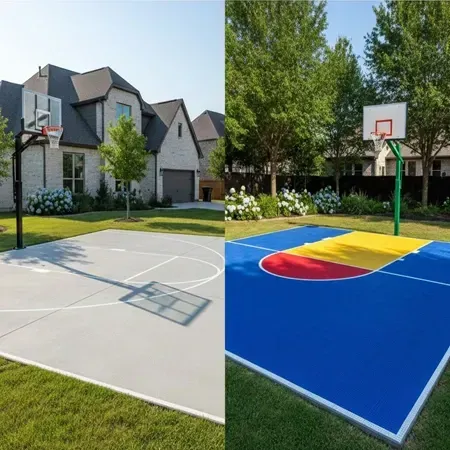
According to concrete sports court services In Fort Worth, a concrete court is a permanently poured slab, typically reinforced and finished to meet sport-specific needs. It can be left smooth, textured, or coated depending on use. A modular tile court uses interlocking plastic tiles installed over an existing surface, often concrete but sometimes asphalt or compacted base layers.
On paper, both create playable surfaces. In practice, how they handle Fort Worth weather, soil movement, and long-term wear makes the difference.
How Fort Worth Conditions Change the Equation
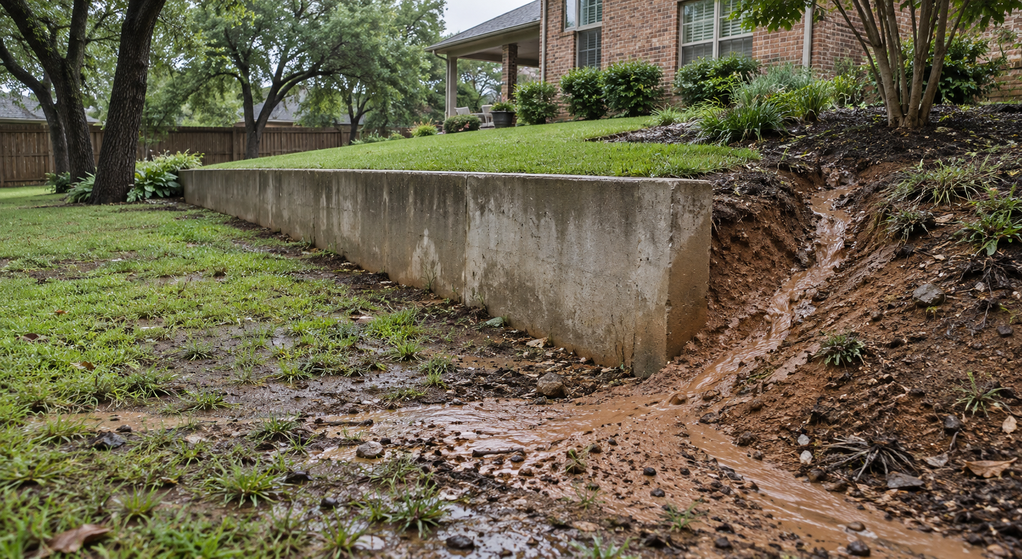
North Texas soil is expansive clay. It swells when wet and contracts during drought. We have seen this soil movement affect everything from driveways to foundations, and sports courts are no exception.
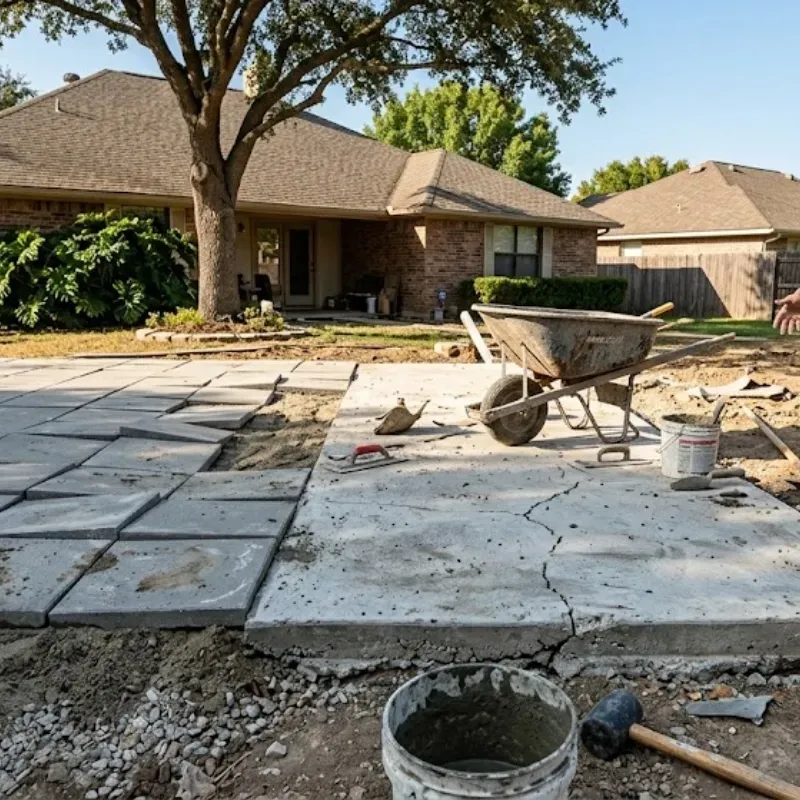
Concrete courts that are properly engineered account for this through subgrade preparation, reinforcement, and control joints. Modular tiles, however, rely heavily on whatever surface sits beneath them. If that base moves, cracks, or settles unevenly, the tile system cannot correct it. It only hides it temporarily.
Our concrete sports court installers note that heat is another factor. Fort Worth summers push surface temperatures well beyond what many plastic tile systems are designed to tolerate long term.
According to NASA’s Earth Science division, satellite data show that urban surfaces in the Dallas–Fort Worth area, including roads and other built infrastructure, can reach surface temperatures up to about 18°F (10°C) hotter than surrounding rural areas due to heat absorption and retention, demonstrating that summer surface temperatures can significantly exceed ambient air temperatures.
Over time, tiles can warp, fade, or loosen, especially in full sun installations.
Durability and Longevity
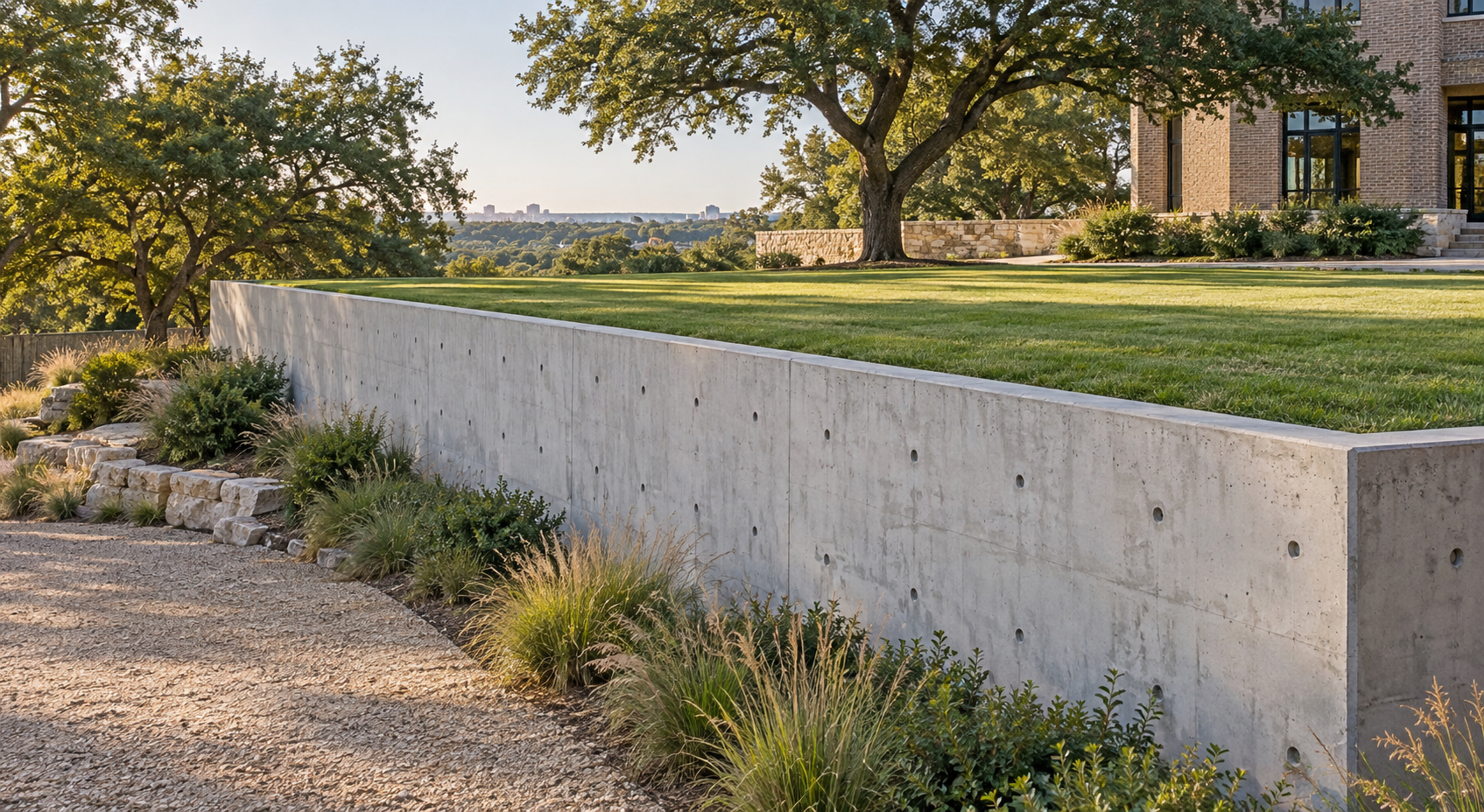
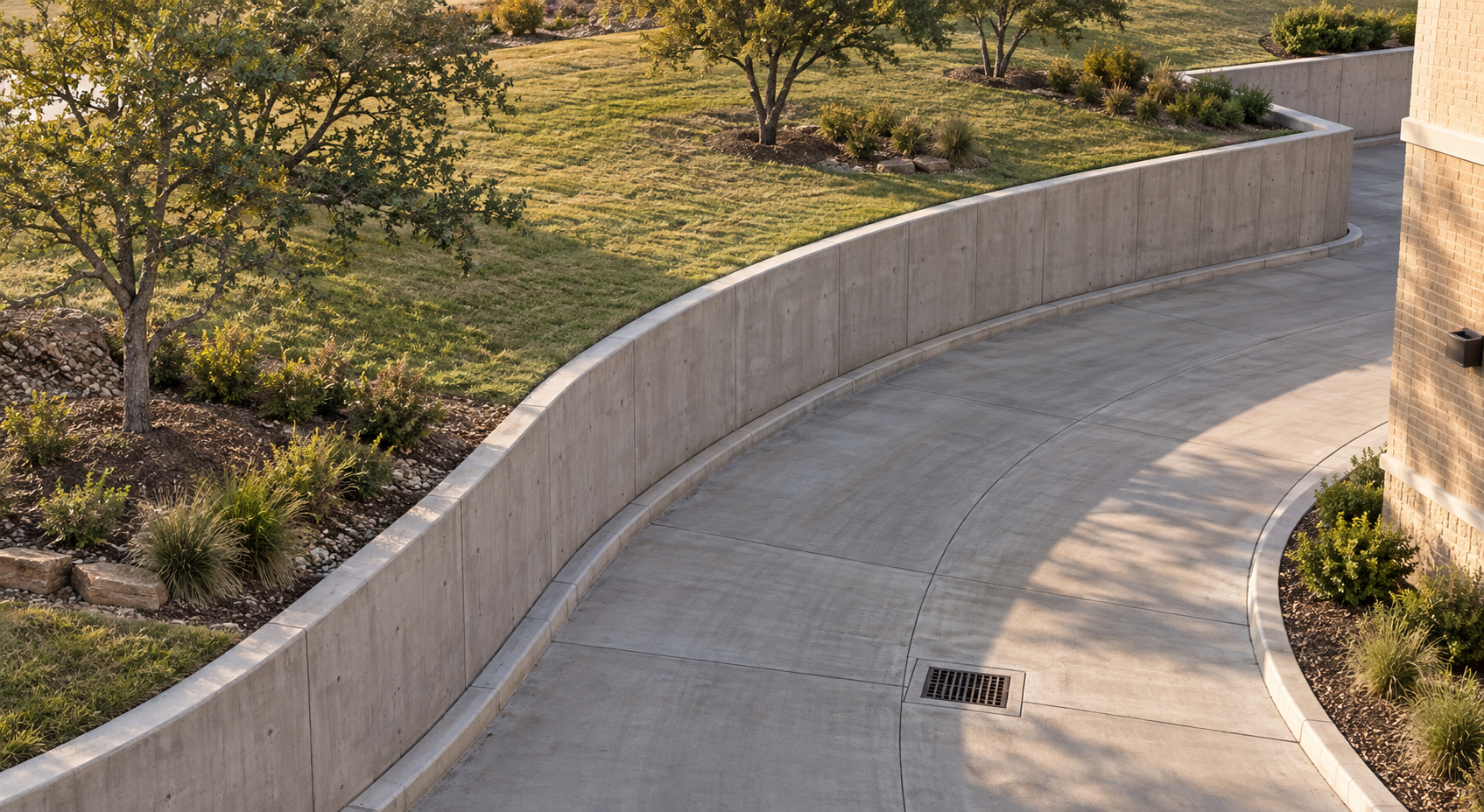
Concrete courts are built for permanence. A properly poured slab can last decades with minimal structural issues. Surface coatings may need refreshing, but the base itself remains solid. Explore how experts build strong foundations if you want to learn how experts create a strong base.
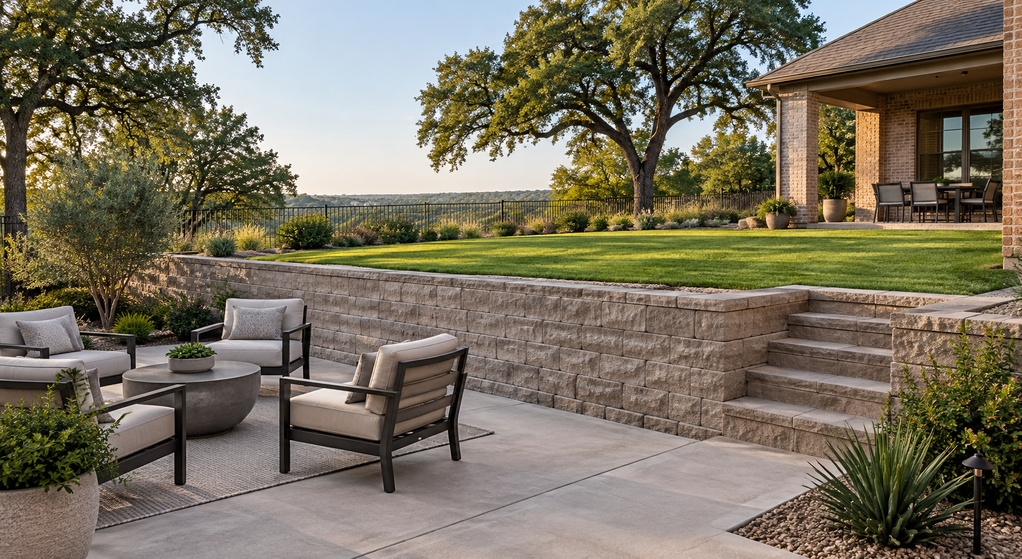
Modular tile courts typically have a shorter lifespan. While individual tiles can be replaced, the system depends on consistent locking strength and uniform support. We have seen tile courts begin to shift, separate, or feel uneven within a few years when installed over imperfect bases.
For homeowners planning to stay long-term or concerned about resale value, permanence matters.
Playability and Performance
According to the University of California, Los Angeles (UCLA) Physics & Astronomy instructional lab page on the coefficient of restitution, when balls impact a rigid surface, the resulting rebound follows a consistent, quantifiable physics relationship that depends on the material and surface properties.
This indicates that hard surfaces such as concrete produce repeatable, measurable ball rebound behavior, commonly referred to as consistent ball response. That matters for basketball, pickleball, and tennis, where predictable bounce affects play quality. Texture and coatings can be adjusted for grip and speed without compromising stability.
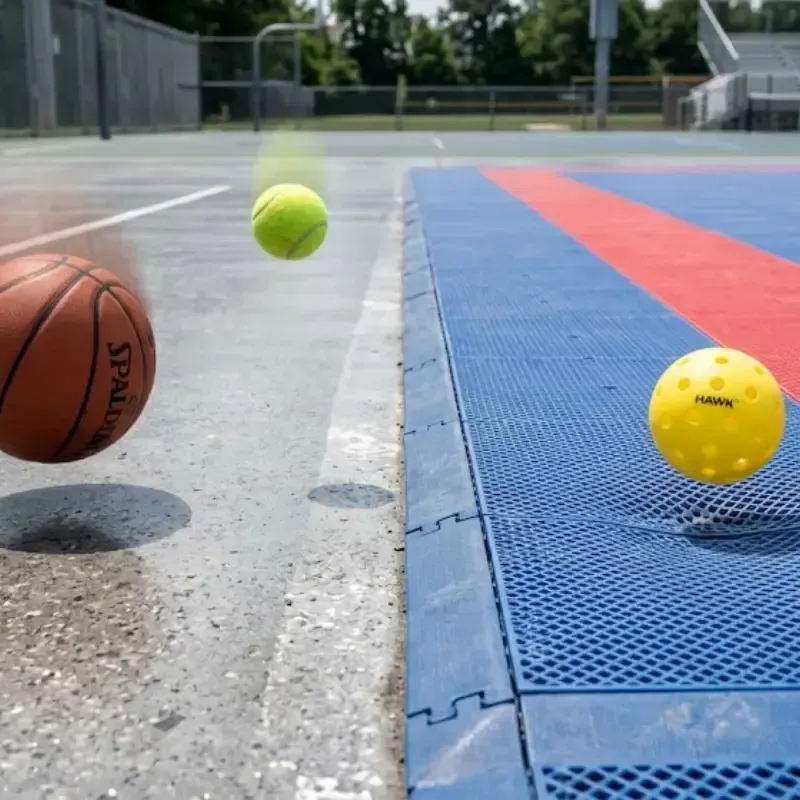
Modular tiles provide more surface cushioning, which some players prefer. However, ball response is less consistent due to the seams and flex points between tiles. This difference is subtle for casual play but noticeable for frequent users.
Based on experience, homeowners who initially choose tiles for comfort often later prioritize consistency once the novelty wears off.
Maintenance and Repairs
Concrete maintenance is straightforward. Occasional cleaning, crack sealing, and resurfacing extend lifespan significantly. Repairs address the root issue rather than masking it.
Modular tile systems require ongoing inspection. Dirt buildup beneath tiles, UV degradation, and connector fatigue are common issues. While replacing tiles seems simple, it often requires partial disassembly to fix underlying problems.
What matters is not how easy something is to fix once but how often it needs fixing.
Cost Considerations Beyond the Initial Price
Modular tile courts are often marketed as more affordable upfront. That can be true in some cases. However, cost should be evaluated over time.
Concrete is an investment. The initial cost is higher, but long-term ownership costs are lower due to durability and fewer repairs. Modular tiles may require replacements, adjustments, or full system updates far sooner than expected.
In Fort Worth, where soil movement is unavoidable, concrete consistently proves to be the better long-term value.
Common Mistakes Homeowners Make
One of the biggest mistakes is assuming modular tiles eliminate the need for a quality base. They do not. Another is choosing surface systems based on short-term convenience rather than climate compatibility.
We have also seen homeowners pour thin slabs without proper reinforcement to save money. This leads to cracking regardless of surface choice. Concrete performance depends entirely on correct preparation and mix design for Texas conditions.
The Clear Takeaway for Fort Worth Homeowners
If you want a permanent, reliable, and high-performing sports court, concrete is the smarter choice for Fort Worth conditions. It handles soil movement better, lasts longer, and delivers consistent play. If you are leaning toward a concrete court and want to understand how layout, sport compatibility, surface finish, and long-term usability come together, learn more about designing a multi-sport concrete court.
Modular tile courts can work for temporary setups or controlled environments, but they are often chosen for reasons that do not hold up long-term in Texas heat and soil.
The smartest next step is not choosing a surface first but understanding how your property behaves. Once the base is right, the decision becomes much clearer. You can also seek professional advice to ensure that you are choosing the right material for your court.