Local Insight:
Concrete court durability in Fort Worth depends on heat-aware mix design, disciplined curing, proper reinforcement placement, and stable subgrade preparation that accounts for expansive clay soils. When these factors are managed correctly, courts resist shrinkage cracking, surface wear, and long-term movement caused by extreme Texas summers.
Texas heat is unforgiving on exterior slabs, and that is exactly why
concrete sports court installation services in Fort Worth
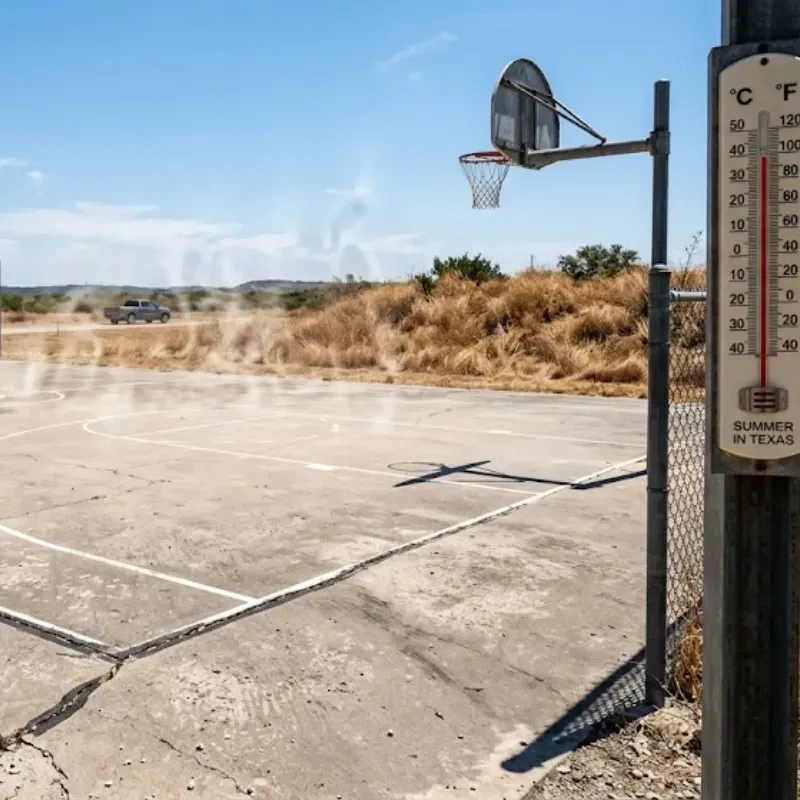
should never be approached like a standard flatwork project. In Fort Worth, summer surface temperatures can climb far beyond the air temperature, and that heat changes how concrete hydrates, cures, expands, and eventually cracks. Most durability failures blamed on “bad concrete” are actually preventable installation and curing mistakes made under hot-weather conditions.
Why Heat Changes Everything for Concrete Courts in Fort Worth
A sports court slab in Fort Worth deals with more than just weight. It takes constant UV exposure, repeated thermal expansion, direct afternoon sun, and fast surface drying caused by hot winds. These are not minor conditions. They directly affect surface hardness, crack resistance, and long-term playability.
Based on field experience across North Texas, the biggest issue is often rapid moisture loss during the first few hours after placement.
Our sports court installer observed that when the slab surface dries too fast, shrinkage cracks form before the concrete even develops enough internal strength to resist movement. The result is often hairline cracking that later spreads through heavy use and seasonal expansion.
The National Ready Mixed Concrete Association notes that hot weather increases water demand and accelerates setting time, both of which reduce long-term durability if not properly controlled.
Mix Design and Reinforcement Decisions Matter More Than Most Owners Realize
Not every concrete mix performs the same in Fort Worth summers. A court slab that uses excessive water for easier finishing may look smooth on day one, but it often sacrifices compressive strength, abrasion resistance, and surface density. That tradeoff becomes obvious after repeated basketball, pickleball, or tennis use.
The smarter decision is a lower water-cement ratio paired with admixtures that improve workability without weakening the slab. In our work, we have seen properly proportioned PSI mixes with fiber reinforcement and steel rebar significantly outperform basic residential slab mixes during long heat waves.
Reinforcement is another common failure point. Some installers rely too heavily on wire mesh without proper elevation control, which leaves the reinforcement ineffective. If steel sits at the bottom instead of in the slab’s tensile zone, crack control performance drops sharply.
That is why durability is rarely about thickness alone. It comes down to the full system: subgrade prep, reinforcement placement, mix design, and finishing timing. Also, understanding space, design, and material considerations plays a major role when installing a concrete sports court.
Soil Movement and Subgrade Preparation in Fort Worth
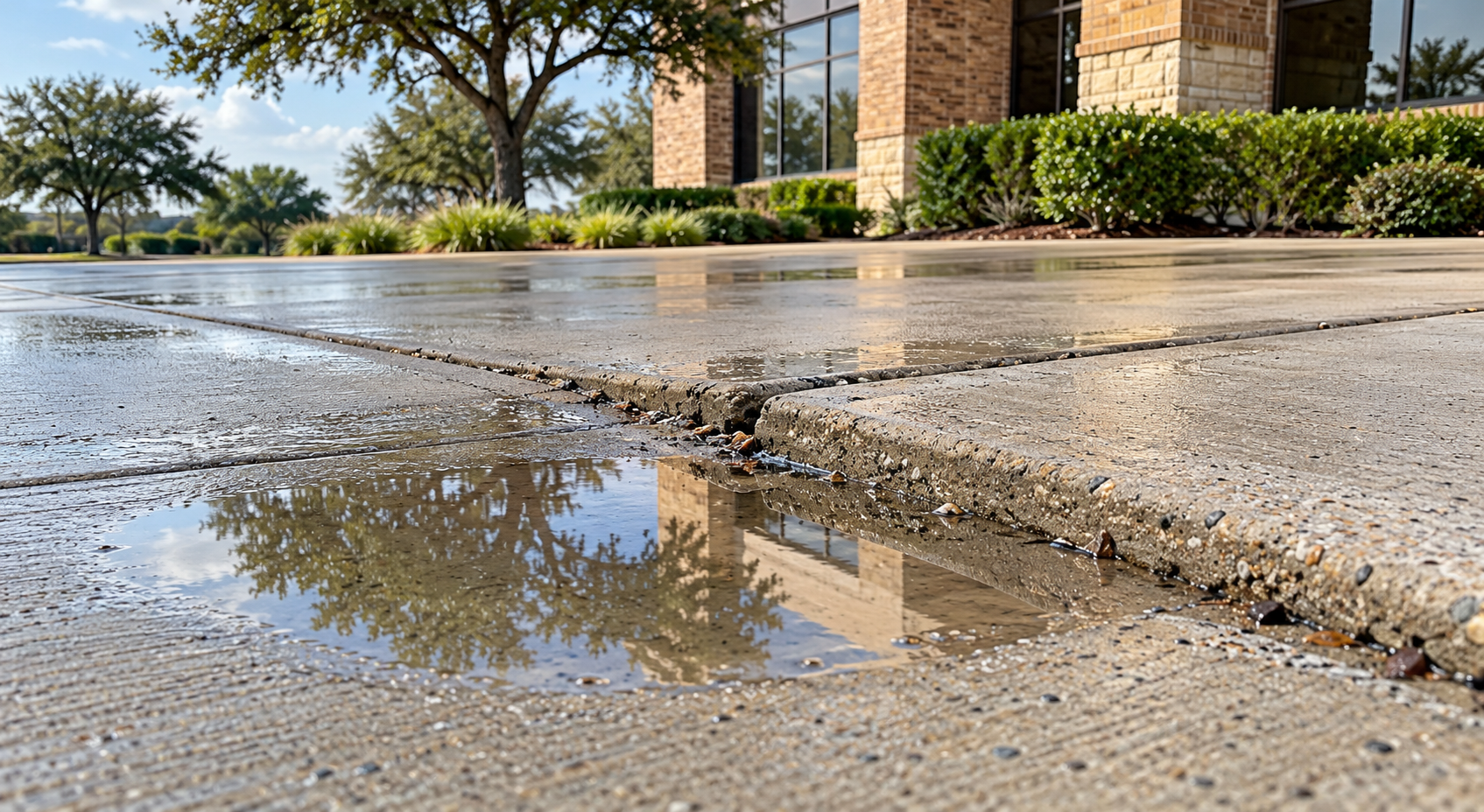
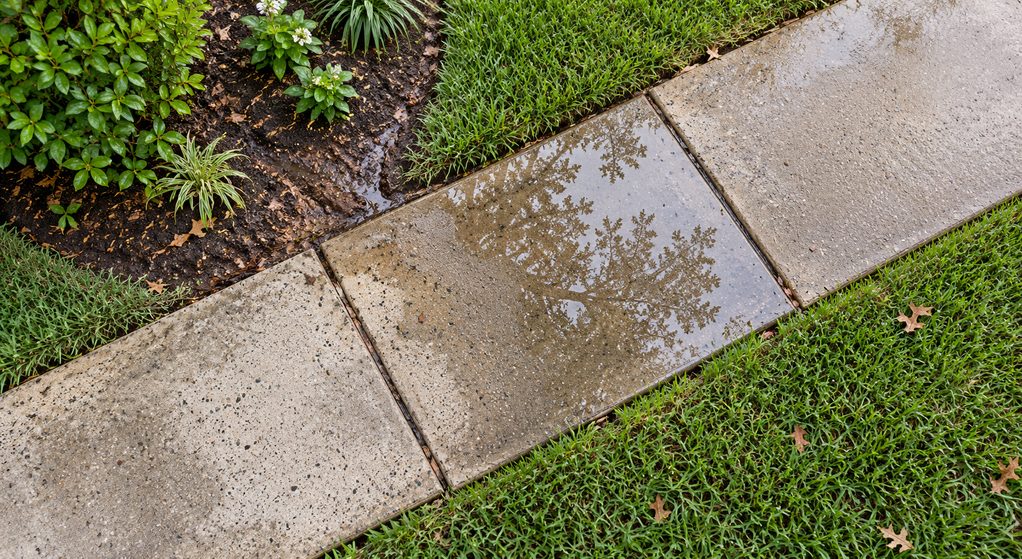
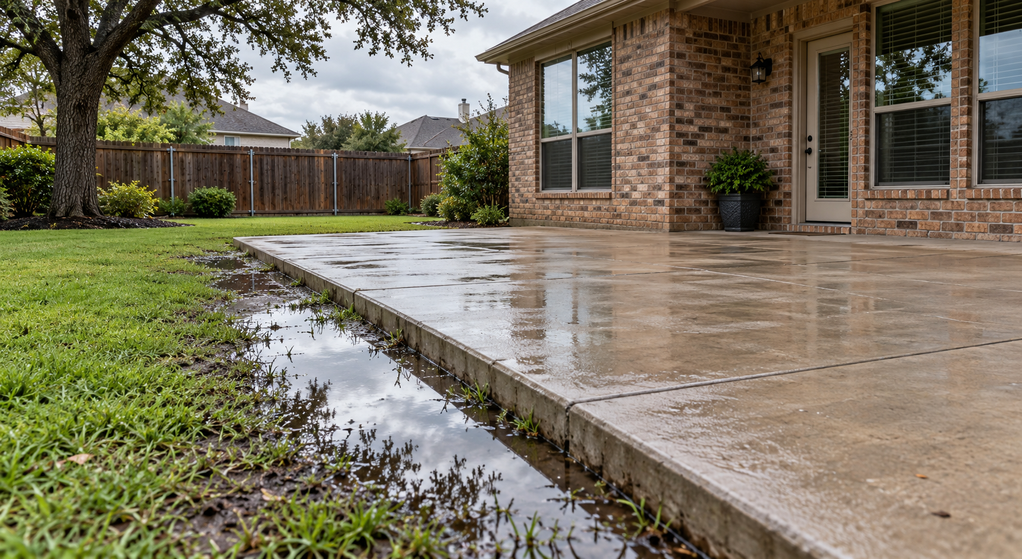
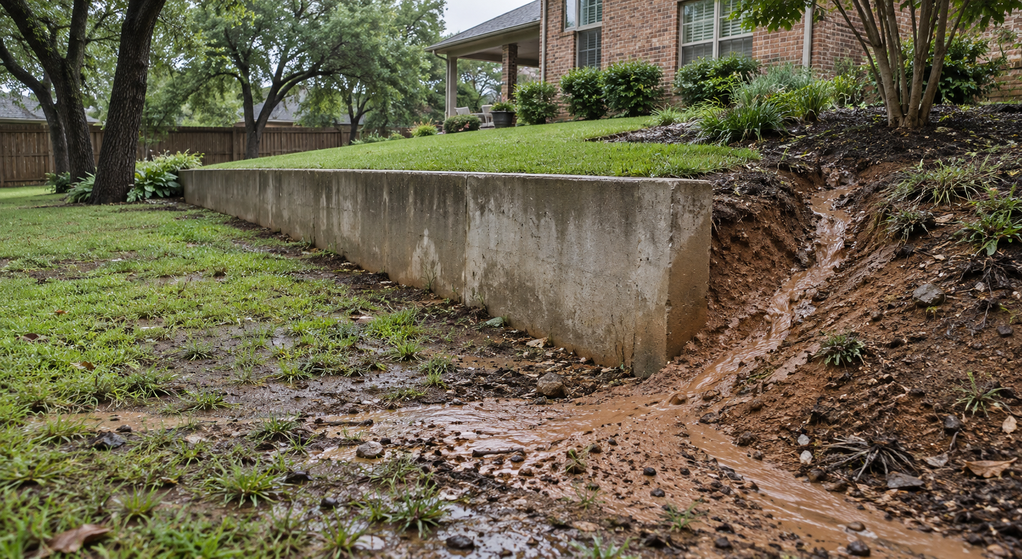
Fort Worth soil conditions make durability advice different from other regions. North Texas is known for expansive clay soils that swell when wet and contract during drought. Under hot summers, prolonged dry periods can pull moisture from the soil and create slab movement from below.
This matters because even a high-strength slab can fail if the base shifts.
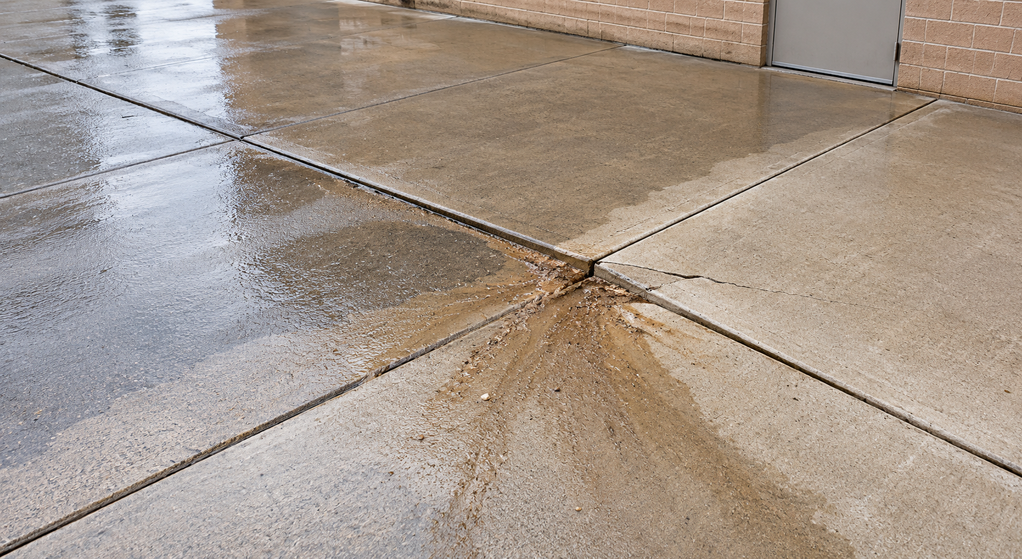
Subgrade preparation is where many court projects are won or lost. A poorly compacted base under Texas clay creates voids, uneven settlement, and reflective cracking that no surface coating can permanently hide.
The better approach is moisture-conditioned compaction, proper crushed stone base depth, and edge support planning based on the lot’s drainage behavior. We have seen slabs with excellent finishing still fail early because the soil prep was treated as an afterthought. That is why hiring professionals in Fort Worth often makes more sense than copying generic national slab recommendations. Fort Worth-specific installation logic matters more than copying generic national slab recommendations.
Finishing Timing During Peak Summer Heat
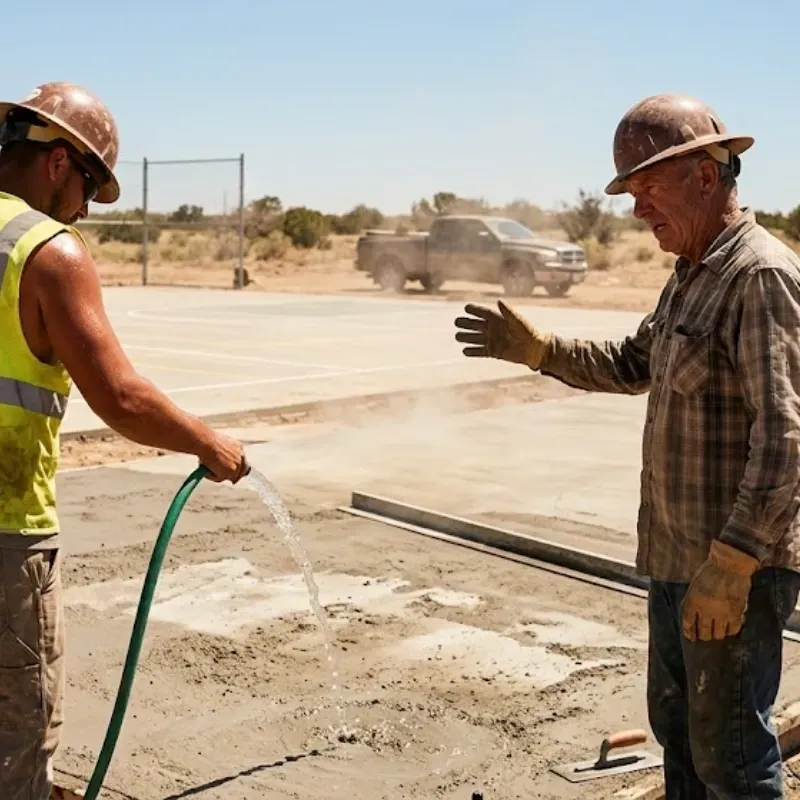
Adding water at the jobsite to “help finish faster” is one of the worst habits in summer concrete work.
Yes, hot weather speeds slump loss. Yes, finishing crews feel pressure. But the shortcut of surface watering or retempering weakens the paste layer that forms the wear surface of a sports court.
That surface is exactly what takes foot traffic, ball bounce, and coating adhesion loads.
Once the top layer becomes porous, the court becomes more vulnerable to scaling, dusting, and premature coating wear. The slab may still look acceptable structurally, but performance quality drops.
The right decision is timing placement early in the morning, coordinating the pour sequence, and using mix adjustments designed for hot weather instead of field-added water.
Curing Is the Real Durability Multiplier
If there is one factor that separates long-lasting courts from early failures, it is curing discipline.
In hot Texas summers, curing is not optional maintenance. It is the durability multiplier that determines whether the slab reaches its design strength and surface hardness.
Fast evaporation steals moisture needed for cement hydration. When that hydration process is interrupted, the slab becomes more permeable and less resistant to cracking.
In real-world Fort Worth installs, this is why curing compounds, wet curing blankets, or immediate membrane protection should be planned before the truck even arrives.
The University of Texas and FHWA literature on concrete curing consistently shows that curing quality directly affects permeability, shrinkage behavior, and long-term pavement performance.
A sports court exposed to triple-digit summer heat without disciplined curing may survive structurally, but its long-term performance usually falls short of owner expectations after several seasons.
Final Takeaway: Durability Starts Long Before the First Game
Concrete court durability in Fort Worth is shaped by heat management, soil preparation, mix design, reinforcement placement, finishing timing, and curing quality. The reason this matters is simple: Texas summers magnify every shortcut.
The smartest next step is to evaluate any planned court through a Fort Worth-specific lens rather than generic slab assumptions. When the installation process respects local heat, soil movement, and curing demands, the court surface stays stronger, flatter, and more reliable for years.