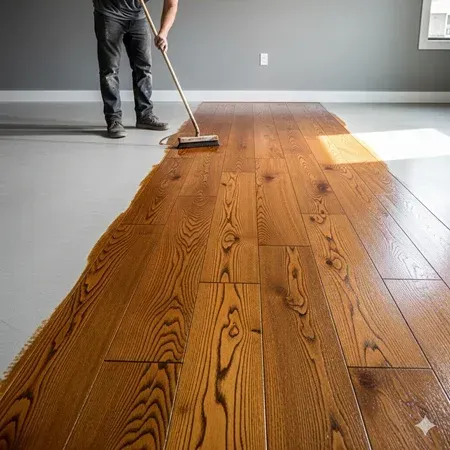
Concrete is among the most resilient building materials accessible. It's long-lasting and robust, and it's suitable for use on decks, patios, porches, inside flooring, and even counters!
Because of the adaptability of concrete, there are a plethora of current DIY methods that show you how to change the grey substance into something stunning and creative. One of these methods is an amazingly easy way to create concrete that looks like wood!
So, today, we’re sharing an easy method to make concrete look like wood. This procedure is for indoors. But, it’s equally effective on an outside patio, deck, or sidewalk. All of the components are highly long-lasting, sturdy, and waterproof.
Let's dive into it!
Material Required
Equipment
- Bristle Brush
- Cement / Drywall Mixing Attachment
- Vacuum
- Squeeze Bottle
- Blue Tape
- Bucket
- Protective Filmy Paper or Plastic
- Punch Tool
- Rounded Trowel
- Large Straight Edge / Ruler
- Pressure Pump Sprayer
- Rafter Angle Square
Materials
- Etching Solvent
- Powdered Quartz (Optional)
- Fast-Set Epoxy
- Thick, Colored Concrete
- Clear-Gloss Epoxy / Alternate Top-Coat
- Two Colors of Stain
- Protective Sealant / Urethane
Process of Staining Concrete To Look Like Wood
Clean The Surface
Thoroughly clean the concrete. Clear the area clean of dust and dirt, and remove everything that causes bumps on the ground, such as caulk.
To erase stains, scrub with a household degreaser. Use a high-pressure washer to clean. Let the area thoroughly dry.
Make Your Joint-Filling Mixture
Dissolve the dark colors stain. For every five gallons of water, add 1 cup of color. This allows you to change the color. More coats can be added to enhance the color, which is simpler than trying to lighten a stain that was applied too darkly.
To prevent inadvertent discoloration, cover nearby areas with plastic sheeting and painter's tape.
Fill In The Gaps And Links
While filling cracks and joints, a wise rule of thumb is not to overload them, particularly on the first pass. Using small sections, press a small bit of the epoxy-quartz solution into the crack, then let it sit for a few minutes for it to dry.
If you see it beginning to film, go again over the same place and perform a second pass, sealing the gap to the level of the concrete layer.
Lay Down The First Part Of Concrete
Using a paint sprayer, spray the stain on the concrete. Begin from the entrance and proceed your way back across the area.
For a smooth, uniform coat, use long, even motions with the sprayer. Let this dry entirely. To simulate the grain of the wood, drag a gentle brush all across the surface in regular strokes.
Create Wood Grain Streaks
To create wood grain streaks with stain:
Fill a squeeze bottle halfway using a dark brown color and water mixture.- Squeeze a few thin lines out onto the ground to function as wood streaks, beginning on one side of the concrete strip you just placed.
- Make your stain lines between 1-2 feet long and go in the way you need your "wood grain" to go.
- Swipe over streaks a fair few times with a curved hand trowel, moving back and forth in the path of the streak (wood grain).
Don't use too much stain mixture. Only a few strokes with the trowel are necessary to mix it into the concrete surface and make a marble-like wood pattern.
Finish The Rest of The Floor
Check the finished stain and repeat with the stronger and lighter stains to add thickness and texture. Work in small strips to get your area and distribute the concrete and stripes as you proceed.
Stain The Surface
Put a small coat of antiquing dark brown color on the whole surface. You can also experiment with different stain colors based on the final appearance you want to create.
Take a pressure pump sprayer to spray the stain to have an even, smooth finish with no brush traces. Spread evenly along the surface of the concrete to seal it. Wait several hours for full dryness.